
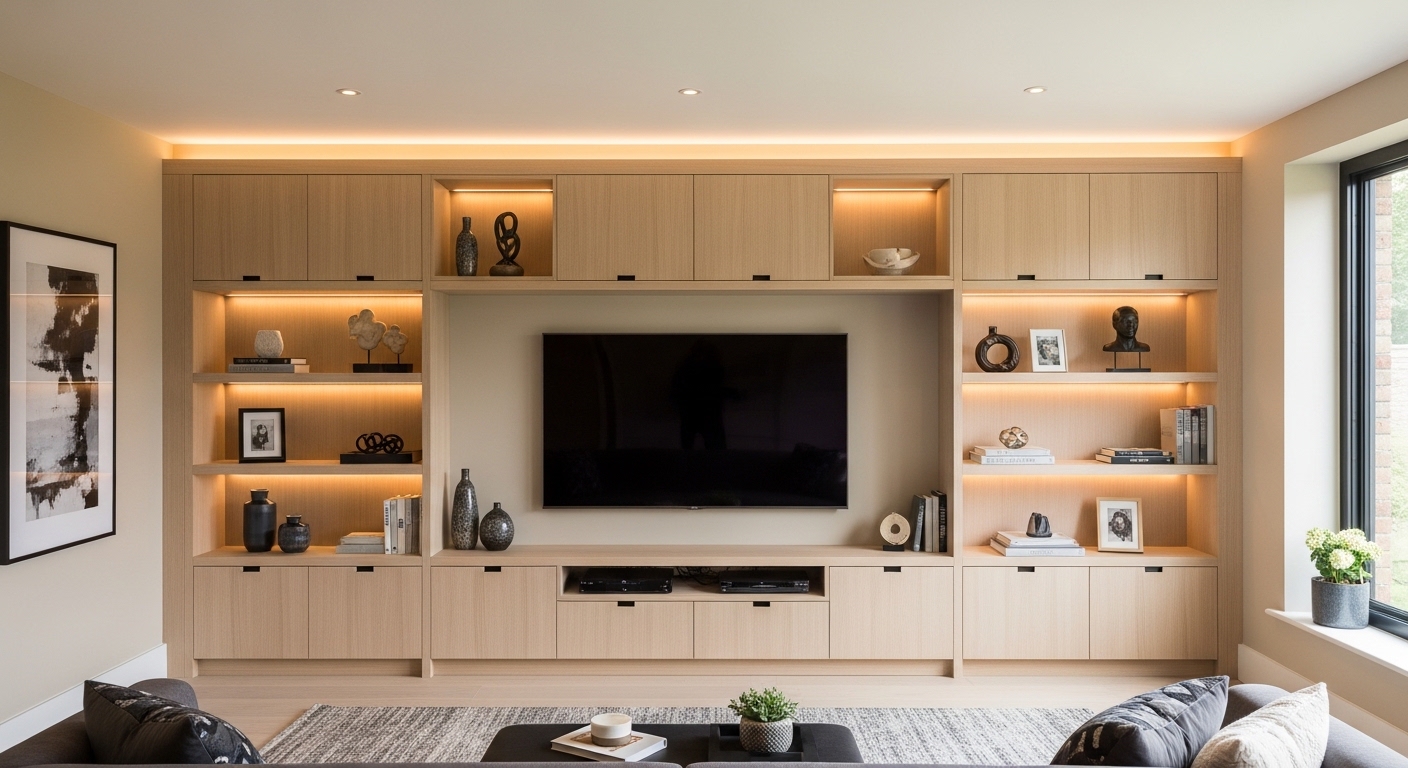
Your living room works harder than almost any other room in the house. It is where movie nights happen, where guests gather, where kids sprawl out with homework, and where you finally sit down at the end of a long day. Yet so many living rooms are held back by the same problem: not enough smart storage and a layout that does not quite reflect how the family actually lives.
Custom built-ins solve that problem in a way that off-the-shelf furniture never can. Instead of working around a bulky bookshelf or a media console that almost fits, a custom solution is designed around your walls, your ceiling height, your electronics, and your collection of books, games, and keepsakes. The result is a living room that feels intentional, organized, and noticeably more upscale.
If you have been searching for a way to upgrade your living room without a full renovation, custom built-ins are one of the highest-impact projects you can take on. Here is why they matter, what they can do for your space, and how to think through the design.
What Are Custom Built-Ins, Exactly?
Built-ins are cabinetry, shelving, or storage units that are constructed and installed directly into the architecture of a room, rather than dropped in as freestanding furniture. In a living room, this typically means cabinetry flanking a fireplace, a wall of shelving from floor to ceiling, a media center built around the television, or a window seat with hidden storage underneath.
Because every inch is custom-measured and custom-built, there is no wasted space and no awkward gap between the unit and the wall. A skilled craftsman can also match trim, paint, and stain to the rest of your home’s interior details, which is part of why custom cabinetry and built-ins tend to look like they were always part of the house rather than something added on later.
Why Built-Ins Make Such a Difference in a Living Room
1. They Maximize Functional Storage
Living rooms accumulate a surprising amount of stuff: books, board games, blankets, electronics, cables, photo albums, and decor. Without dedicated storage, all of it ends up on open shelves, in baskets, or worse, in a pile on the floor. Built-ins give every category of item a defined home. Closed cabinets hide clutter, while open shelving above or beside them displays the pieces you actually want people to see.
This is especially valuable for media equipment. Streaming boxes, gaming consoles, speakers, and routers all generate cords and heat that need to be managed. A well-designed built-in can include ventilated compartments and cord routing so your equipment stays cool and your cabinet front stays clean.
2. They Create a Visual Anchor
A living room without a clear focal point can feel scattered, even if the furniture is nice. Built-ins, especially those flanking a fireplace or wrapping around a television, give the eye somewhere to land. Symmetry on either side of a fireplace, in particular, has a calming, balanced effect that is hard to achieve with separate pieces of furniture pushed against the wall.
If your living room currently centers on a freestanding entertainment console, this is one of the most popular upgrades homeowners make. A purpose-built custom entertainment center can be sized precisely to your television and seating distance, with storage built in on either side instead of stacked on top in a way that always looks slightly temporary.
3. They Add Real Architectural Character
Builder-grade homes often have living rooms with plain, undecorated walls. Adding millwork-style built-ins instantly introduces depth, dimension, and craftsmanship to a space that might otherwise feel flat. Crown details at the top of a built-in, beadboard backing inside open shelves, and coordinated trim around the unit all contribute to a finished, high-end look.
This is one of the easiest ways to make a newer home feel more established, or to bring a dated room into a more current style, without touching the layout of the house.
4. They Increase the Functional Use of Awkward Spaces
Many living rooms have a corner, alcove, or odd nook that never quite gets used well. A window seat with built-in drawers underneath, a corner shelving unit, or cabinetry that wraps around an unusual angle can turn dead space into one of the most useful parts of the room. This is one of the biggest advantages of custom work over store-bought furniture: nothing has to be “close enough.” It is built to fit the exact space you have.
5. They Support Long-Term Home Value
Thoughtfully designed built-ins are consistently cited by real estate professionals as a feature that adds appeal during a home sale. Buyers respond well to organized, characterful spaces, and built-ins signal that a home has been cared for and upgraded with quality materials rather than quick fixes.
Popular Living Room Built-In Styles
Fireplace flanking cabinetry. Cabinets and shelving on either side of the fireplace, often with a mantel or feature wall tying the whole composition together. This remains the single most requested built-in layout for living rooms.
Wall-to-wall shelving units. Floor-to-ceiling bookshelves with a mix of open shelving and closed lower cabinets, ideal for homeowners with large book or display collections.
Media wall built-ins. Cabinetry designed specifically around a wall-mounted television, with concealed wiring, ventilated electronics storage, and display shelving above or beside the screen.
Window seats with storage. Built-in benches under a window, with drawers or lift-top storage underneath, perfect for smaller rooms that need seating and storage in one footprint.
Display and trophy cases. Glass-front cabinetry designed to showcase collectibles, awards, or family heirlooms while keeping dust and clutter contained.
If you are weighing built-ins against simply buying a large bookshelf, it helps to look at the difference in flexibility and finish quality side by side. Many homeowners find that once they see a real comparison, the case for custom shelving built specifically for their wall and ceiling height becomes obvious, since it eliminates the gaps, mismatched finishes, and weight limitations that come with mass-produced furniture.
Materials and Finishes Worth Considering
The material and finish you choose will shape both the look and the durability of your built-ins.
- Hardwoods such as oak, maple, and cherry offer durability and a traditional, furniture-grade appearance, especially when stained rather than painted.
- Painted wood and MDF combinations are popular for a clean, classic look, particularly in transitional or coastal-style homes, since they take paint smoothly and resist warping in humid climates.
- Mixed materials, like a wood frame with glass-front cabinet doors, allow you to combine closed storage with the ability to still display favorite pieces.
Hardware also matters more than people expect. Soft-close hinges, integrated lighting, and discreet pulls all contribute to the finished feel of a built-in and are worth specifying up front rather than adding later.
Planning Your Built-In: Questions to Ask Before You Start
Before any design work begins, it helps to think through how you actually use your living room day to day.
- What do you need to store, and how often do you need access to it? Items used daily should be at an easy reach height, while seasonal or rarely used items can go higher or lower.
- Do you want your television fully integrated into the design, or kept as a separate element?
- How much of the storage should be closed versus open? A balance of both usually creates the most livable and least cluttered look.
- Will the built-in need to accommodate electrical outlets, cable lines, or HVAC vents already in the wall?
- What style elements from the rest of your home, like trim profile, door style, or paint color, should carry through into the new built-in?
Answering these questions early helps a designer or builder create a layout that fits your life, not just your wall.
Bringing the Idea to Life
Custom built-ins are a collaborative process between your vision and a builder’s craftsmanship. The best results come from working with a team that takes time to understand your space, measures carefully, and builds with materials suited to your climate and usage. If you want a closer look at how a real fireplace-flanking built-in project can transform a living room from start to finish, this custom built-ins for your living room fireplace and TV project breakdown walks through exactly that kind of transformation.
Final Thoughts
A living room filled with mismatched furniture and visible clutter rarely feels as comfortable as it could. Custom built-ins solve storage problems, create a strong visual anchor, and add a level of architectural detail that store-bought furniture simply cannot replicate. Whether you are dreaming of a symmetrical fireplace wall, a floor-to-ceiling library, or a media center built precisely around your television, a well-planned built-in turns your living room into one of the most functional and beautiful rooms in your home.
If you are ready to start planning, take time to walk through your space, note what is and is not working, and bring those observations to a builder who specializes in custom cabinetry. The right design will not just store your belongings, it will elevate the entire room.


Comments are closed