
A kitchen remodel is one of the biggest investments a Houston homeowner will make in their property, and the layout is the one decision that’s hardest to fix after the cabinets are installed and the countertops are set. You can change a paint color in an afternoon. You can swap a faucet in an hour. But a poorly planned layout — one that ignores how your family actually cooks, gathers, and moves through the space — will frustrate you every single day for years to come.
Houston’s homes come with their own quirks: open-concept floor plans built for entertaining, humid Gulf Coast summers that affect material choices, and a wide mix of architectural styles from 1960s ranch homes in older neighborhoods to brand-new builds in Fulshear and Katy. A layout that works beautifully in a Northeast colonial doesn’t always translate well here.
Below are the ten most common kitchen layout mistakes we see Houston-area homeowners make, along with practical ways to avoid them as you plan your 2026 remodel.
1. Ignoring the Kitchen Work Triangle
The “work triangle” — the relationship between your sink, stove, and refrigerator — has guided good kitchen design for decades, and it’s still relevant even in today’s larger, more open layouts. The mistake homeowners make is placing these three zones too far apart, often because they’re trying to maximize counter space or accommodate an island without thinking through the walking distance between each point.
In a typical Houston kitchen, this often shows up when a refrigerator gets pushed to a far wall to make room for a large island, forcing anyone cooking to cross the entire room repeatedly during meal prep. The fix isn’t to abandon the triangle concept, but to adapt it: keep the three core zones within a reasonable, efficient distance of one another, even if your kitchen is large and open.
2. Undersizing or Misplacing the Island
Islands are the centerpiece of most modern Houston kitchens, but sizing them incorrectly is one of the most frequent layout errors. Too small, and the island feels like an afterthought with no real function. Too large, and it chokes off walking paths, making it difficult to open the dishwasher, oven, or cabinet doors without bumping into someone.
A good rule of thumb is to leave at least 36 inches of clearance around all sides of an island for comfortable movement, and 42 inches or more in zones where multiple people will be working or where appliance doors swing open. If your kitchen can’t comfortably support those clearances, a smaller island — or a peninsula instead — is usually the better call. When in doubt, working with a team experienced in custom kitchen cabinets can help you find island proportions that actually fit your room rather than a generic showroom size.
3. Not Planning for Enough Storage Before Choosing Layout
Many homeowners design their kitchen layout around appliances and counter space first, then try to squeeze in storage wherever space allows. This backwards approach almost always results in a kitchen that looks great on day one and feels cluttered within a year.
Before finalizing a layout, take real inventory of what needs to live in the kitchen — small appliances, bakeware, pantry goods, cleaning supplies, dishware for everyday use and entertaining. Houston families who frequently host gatherings, in particular, tend to underestimate how much serving and storage space they actually need. Building dedicated custom storage solutions into the layout from the start — rather than adding shelving as an afterthought — prevents the cramped, overflowing feeling that shows up in poorly planned kitchens.
4. Placing the Dishwasher Too Far from the Sink
This is a small detail with a big daily impact. The dishwasher should sit immediately adjacent to the sink so dishes can move from rinse to load in one motion, without dripping water across the floor or requiring an awkward reach. We still see this mistake in older Houston homes undergoing remodels, where the original plumbing layout gets reused without rethinking whether it still makes sense for a new floor plan.
If your remodel involves any plumbing relocation anyway — for a new sink position or an island sink, for example — this is the moment to correct dishwasher placement permanently.
5. Skipping Adequate Landing Space Near Appliances
Every major appliance needs “landing space” nearby — a stretch of open counter where you can set down groceries, a hot dish, or ingredients before and after using that appliance. A common layout mistake is positioning the refrigerator, oven, or microwave directly next to a wall or corner with zero counter space on the open side.
As a baseline, aim for at least 15 inches of counter space on at least one side of the refrigerator, oven, and microwave. Skipping this during the planning phase is one of the fastest ways to end up with a kitchen that looks finished but functions poorly.
6. Poor Traffic Flow Between the Kitchen and Adjoining Rooms
Open-concept living is extremely popular in Houston-area new construction and renovations alike, but it introduces a layout challenge that closed kitchens never had to deal with: traffic flow. When the kitchen connects directly to a dining area, living room, or mudroom entrance, the path people take through the kitchen matters just as much as the cooking zones themselves.
A frequent mistake is placing an island or peninsula directly in the natural walking path between the garage entrance and the rest of the house, or between the kitchen and dining table. This creates daily friction, especially with kids, pets, or guests moving through during meal prep. Before finalizing your layout, walk through how your household actually moves through the space at different times of day, and design around that flow rather than around the room’s dimensions alone.
7. Inadequate or Poorly Planned Lighting
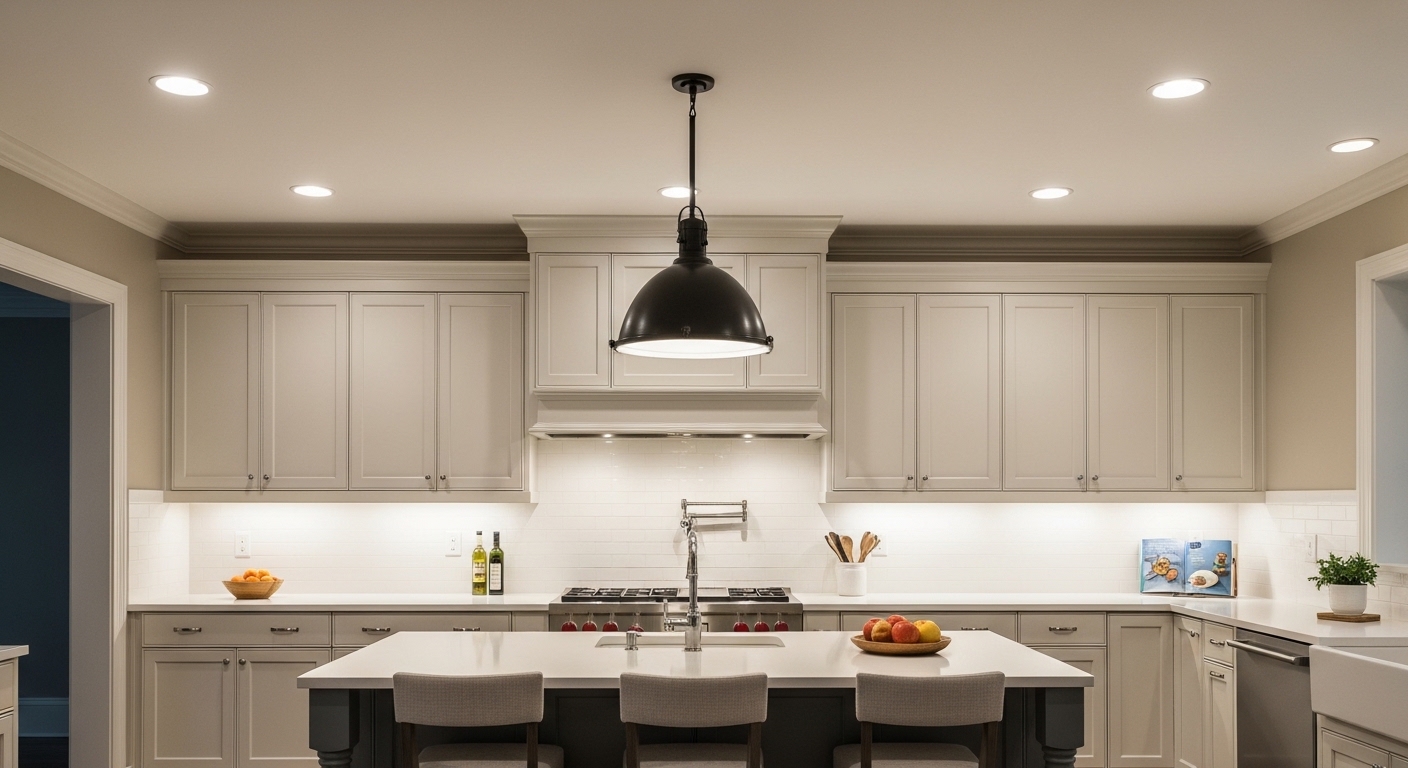
Lighting is frequently treated as a finishing touch rather than a layout consideration, and that’s a mistake. Where your cabinets, island, and prep zones sit should directly inform where task lighting, pendant fixtures, and under-cabinet lighting go. A beautifully laid-out kitchen with a single centered ceiling fixture will still have dark countertops and shadowed work areas.
This is especially important under upper cabinets, where shadows from your own body can fall directly onto the counter while you’re chopping or prepping food. Incorporating under and over cabinet lighting into the layout plan — not as an afterthought — ensures every work zone is properly lit and that the lighting design complements the cabinetry rather than competing with it.
8. Not Accounting for Houston’s Humidity in Material and Layout Choices
This one is specific to our region. Gulf Coast humidity affects how materials perform over time, and a layout that doesn’t account for ventilation, moisture exposure near sinks and dishwashers, or airflow around cabinetry can lead to premature wear. Homeowners sometimes focus entirely on aesthetics and traffic flow while overlooking where moisture will naturally accumulate in daily use.
A well-planned layout positions water-exposed zones — the sink, dishwasher, and any wet bar or beverage station — with enough surrounding clearance and ventilation to handle Houston’s climate, rather than tucking them into tight, poorly ventilated corners.
9. Designing for One Cook When Multiple People Use the Kitchen
Many existing Houston kitchens were designed decades ago around the assumption that one person cooks while everyone else stays out of the way. That doesn’t reflect how most modern households use the space, especially multi-generational homes or families who cook and entertain together.
A layout mistake we see often is a single, narrow galley-style work zone that simply can’t accommodate two people working at once without constant collisions. If multiple people regularly use your kitchen, plan for parallel workstations, wider walkways (42 inches minimum in primary zones, more if two cooks will pass each other regularly), and secondary prep areas like an island or butler’s pantry that can operate independently of the main cooking line.
10. Treating the Layout as Final Before Considering the Whole Remodel
The biggest mistake of all is locking in a kitchen layout in isolation, without considering how it connects to the rest of a broader remodel — flooring transitions, sightlines into adjoining rooms, where trim and millwork will tie everything together, and how the overall design will read once cabinetry, countertops, and finishes are all in place. A layout that looks good on paper can feel disconnected from the rest of the home if it’s planned without that bigger picture in mind.
This is exactly where working with an experienced design and build team pays off. A coordinated kitchen remodel approach considers layout, cabinetry, lighting, storage, and finishes together from day one, rather than making layout decisions in a vacuum and hoping everything else falls into place around it.
Getting Your Houston Kitchen Layout Right the First Time
A great kitchen layout isn’t about following trends — it’s about understanding how your household actually lives, cooks, and gathers, then designing a space that supports that daily reality for years to come. The mistakes above are common precisely because they’re easy to overlook when you’re focused on finishes, colors, and appliances rather than the underlying flow of the room.
If you’re planning a kitchen renovation in the greater Houston area and want a layout that’s built around your home and your family from the start, our team is happy to walk through your space and talk through what will actually work long-term. Feel free to reach out to our team to start the conversation about your 2026 kitchen remodel.


Comments are closed