
Fulshear and Cross Creek Ranch have quickly become two of the most sought-after addresses in the greater Houston area, and the homes here reflect that growth. Large lots, custom builds, and an upscale lifestyle have raised the bar for what homeowners expect from their kitchens. A builder-grade kitchen simply doesn’t match the character of a custom home in this part of Fort Bend County, which is why more homeowners are turning to a full luxury kitchen remodel to bring their space up to the same standard as the rest of their house.
If you’re considering a kitchen renovation in Fulshear, Cross Creek Ranch, or the surrounding Katy and Richmond communities, this guide walks through the design ideas, materials, and layout strategies that define a true luxury kitchen in this market.
Why Fulshear & Cross Creek Ranch Homeowners Are Investing in Kitchen Remodels
Cross Creek Ranch is known for its master-planned design, resort-style amenities, and a strong sense of community — and the homes reflect that same attention to detail. Many residents purchased new construction within the last several years, only to find that the kitchen finishes that came standard from the builder don’t quite match their vision or their lifestyle.
A custom kitchen remodel allows homeowners to:
- Replace builder-grade cabinetry with cabinetry designed around how the family actually cooks and entertains
- Open up the floor plan for better flow between the kitchen, dining, and living spaces
- Upgrade finishes to match the architectural style of homes throughout Fulshear and the Brazos Town Center area
- Add functional storage that supports a more organized, clutter-free kitchen
Because so many Fulshear and Cross Creek Ranch homes are designed for entertaining — think large islands, open sightlines to the living room, and easy access to covered patios — a luxury kitchen remodel isn’t just about appearance. It’s about creating a space that performs as beautifully as it looks.
1. Oversized Islands With Multi-Functional Design
The kitchen island has become the centerpiece of nearly every luxury kitchen remodel in this area. Instead of a simple prep counter, today’s islands are designed to do it all: seating for casual meals, a secondary sink, built-in beverage storage, and even a dedicated baking station.
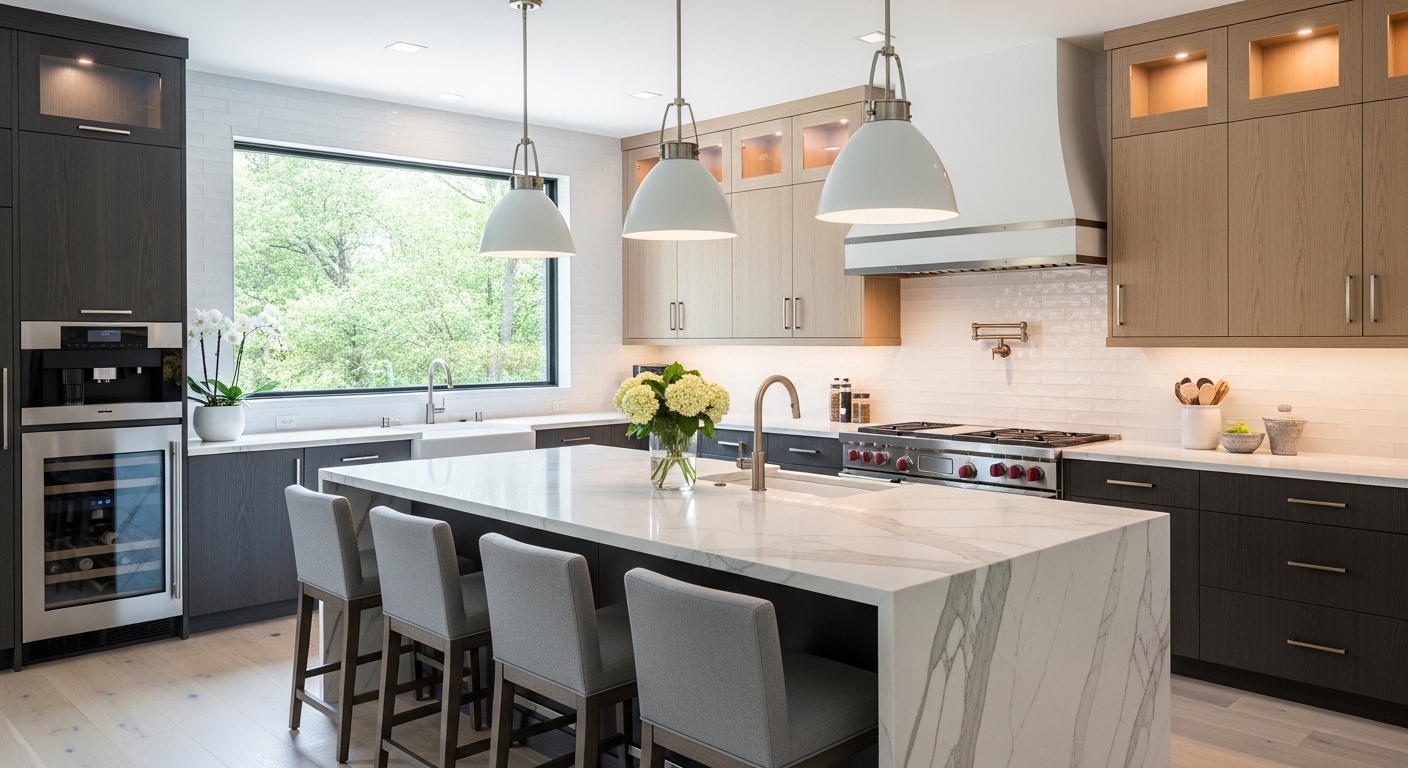
For larger Cross Creek Ranch floor plans, a waterfall-edge island finished in a natural stone or solid surface material creates a dramatic focal point the moment someone walks into the room. Pairing the island with custom kitchen cabinets built specifically for the space — rather than stock cabinetry retrofitted to fit — ensures every inch is used intentionally, from hidden charging stations to pull-out trash and recycling bins.
2. Floor-to-Ceiling Custom Cabinetry
One of the clearest signs of a luxury kitchen is cabinetry that runs all the way to the ceiling. This not only adds visual height and drama to the room, it also eliminates the dust-collecting gap above standard upper cabinets and adds meaningful storage for items that are used less frequently.
Two-tone cabinetry continues to be a favorite among Fulshear homeowners — a deep, moody tone on the island paired with a soft, warm neutral on the perimeter cabinets. This approach feels current without committing to a trend that will feel dated in a few years. For families who love a more dramatic look, a smoked walnut or espresso finish on the lowers paired with a creamy white upper creates beautiful contrast against light countertops.
3. Statement Range Hoods and Ceiling Details
A custom range hood, often clad in matching cabinetry or finished in plaster or shiplap, has become one of the most requested upgrades in luxury kitchens throughout the Houston suburbs. Rather than relying on a standard stainless steel hood, homeowners are choosing custom-built surrounds that draw the eye upward and tie the cooking zone into the rest of the room’s design.
Pairing a statement hood with a beamed or coffered ceiling adds even more architectural interest — a detail that’s especially popular in the larger, more traditional-style homes found throughout Cross Creek Ranch and the surrounding Fort Bend County communities.
4. Premium Countertops That Balance Beauty and Durability
Countertops are one of the most impactful — and most personal — decisions in any kitchen remodel. Homeowners in this area are gravitating toward materials that combine the look of natural stone with the practicality needed for everyday family life. Solid surface countertops have become especially popular for their consistency, durability, and resistance to staining, making them an excellent choice for busy households that still want a high-end look.
For homeowners drawn to the movement and depth of natural stone, large-format slabs with dramatic veining create a true showpiece, particularly when carried up the backsplash in a full slab application. This “waterfall” or full-height backsplash technique has become a signature look in upscale Texas kitchens.
5. Layered, Functional Lighting
Lighting plays a bigger role in a luxury kitchen than most homeowners initially expect. A well-designed kitchen layers several types of lighting:
- Statement pendants over the island for visual impact
- Recessed ceiling lighting for overall illumination
- Under-cabinet lighting for task lighting at the counters
- Interior cabinet lighting inside glass-front cabinets to showcase dishware or collectibles
This layered approach not only makes the kitchen more functional for cooking and entertaining, it also allows the space to transition smoothly from bright and energetic during the day to warm and intimate for evening gatherings.
6. Hidden Storage and a Truly Organized Pantry
Luxury isn’t only about how a kitchen looks — it’s about how it functions day to day. Many Fulshear and Cross Creek Ranch homeowners are reimagining their pantries entirely, moving away from a single shelf-lined closet toward a fully custom walk-in pantry with designated zones for small appliances, baking supplies, and bulk pantry storage.
Inside the main kitchen, hidden storage solutions are just as important: appliance garages that tuck away coffee makers and toasters, pull-out spice racks built into narrow cabinet gaps, and deep drawers for pots and pans instead of traditional lower cabinets with shelves. These details elevate the everyday experience of using the kitchen, not just its appearance in photos.
7. A Secondary Prep Kitchen or Butler’s Pantry
Many of the larger custom homes throughout Cross Creek Ranch already include a butler’s pantry or secondary prep space, but these areas are often underutilized in their original builder configuration. A remodel that fully outfits this space with its own counter, sink, and cabinetry transforms it into a true working pantry — ideal for prepping meals out of sight, storing small appliances, or staging food and drinks during a party.
This kind of secondary space is one of the clearest markers of a luxury kitchen remodels project, since it allows the main kitchen to stay picture-perfect while all the behind-the-scenes work happens elsewhere.
8. Mixed Materials and Metal Accents
Today’s luxury kitchens rarely rely on a single material. The most visually rich kitchens combine wood cabinetry, stone or solid surface counters, and metal accents — think brushed brass hardware, a matte black faucet, or iron shelf brackets on open shelving. This mixed-material approach adds texture and depth to the space without overwhelming it.
Open shelving, used selectively rather than throughout the whole kitchen, gives homeowners a place to display curated dishware or cookbooks while keeping the bulk of storage hidden behind closed cabinetry.
9. A Design That Honors the Architectural Style of the Home
Fulshear and Cross Creek Ranch include a wide mix of architectural styles, from modern farmhouse to transitional and traditional Texas Hill Country-inspired homes. A truly luxury kitchen remodel takes its design cues from the architecture of the home itself rather than chasing whatever is trending online.
For modern farmhouse homes, this might mean shaker-style cabinetry, matte black hardware, and a mix of wood and white finishes. For more traditional homes, raised-panel cabinetry, luxury cabinet finishes in rich stained woods, and ornate trim details feel more at home. Working with a designer who understands the architectural language of homes throughout this part of Fort Bend County helps ensure the finished kitchen feels like it was always meant to be there.
10. Seamless Indoor-Outdoor Flow
Because so many homes in this area are built around outdoor living — covered patios, outdoor kitchens, and pools — a luxury kitchen remodel often considers how the indoor kitchen connects to the outdoor entertaining space. Large sliding or folding glass doors, a beverage station positioned near the back door, and sightlines that carry through from the kitchen to the patio all help the home feel more connected and easier to entertain in, whether it’s a quiet family dinner or a full backyard gathering.
Bringing the Vision to Life
A luxury kitchen remodel is one of the most impactful renovations a Fulshear or Cross Creek Ranch homeowner can take on. It touches nearly every part of daily life — cooking, gathering, entertaining — and it’s one of the spaces guests notice first. The key to getting it right is working with a team that understands both the craftsmanship side of custom cabinetry and the design sensibility that fits homes in this specific part of Texas.
From oversized islands and floor-to-ceiling cabinetry to layered lighting and a fully organized pantry, the best luxury kitchens in this area balance beauty with everyday function. Whether you’re starting with a full kitchen remodels project or focusing on a single element like custom cabinetry or countertops, thoughtful design choices made early on will shape how much you love the space for years to come.
If you’re ready to start planning your own kitchen transformation, working with a local team that’s familiar with the homes throughout Fulshear, Cross Creek Ranch, and the surrounding Fort Bend County communities makes all the difference in bringing a cohesive, lasting design to life.


Comments are closed