
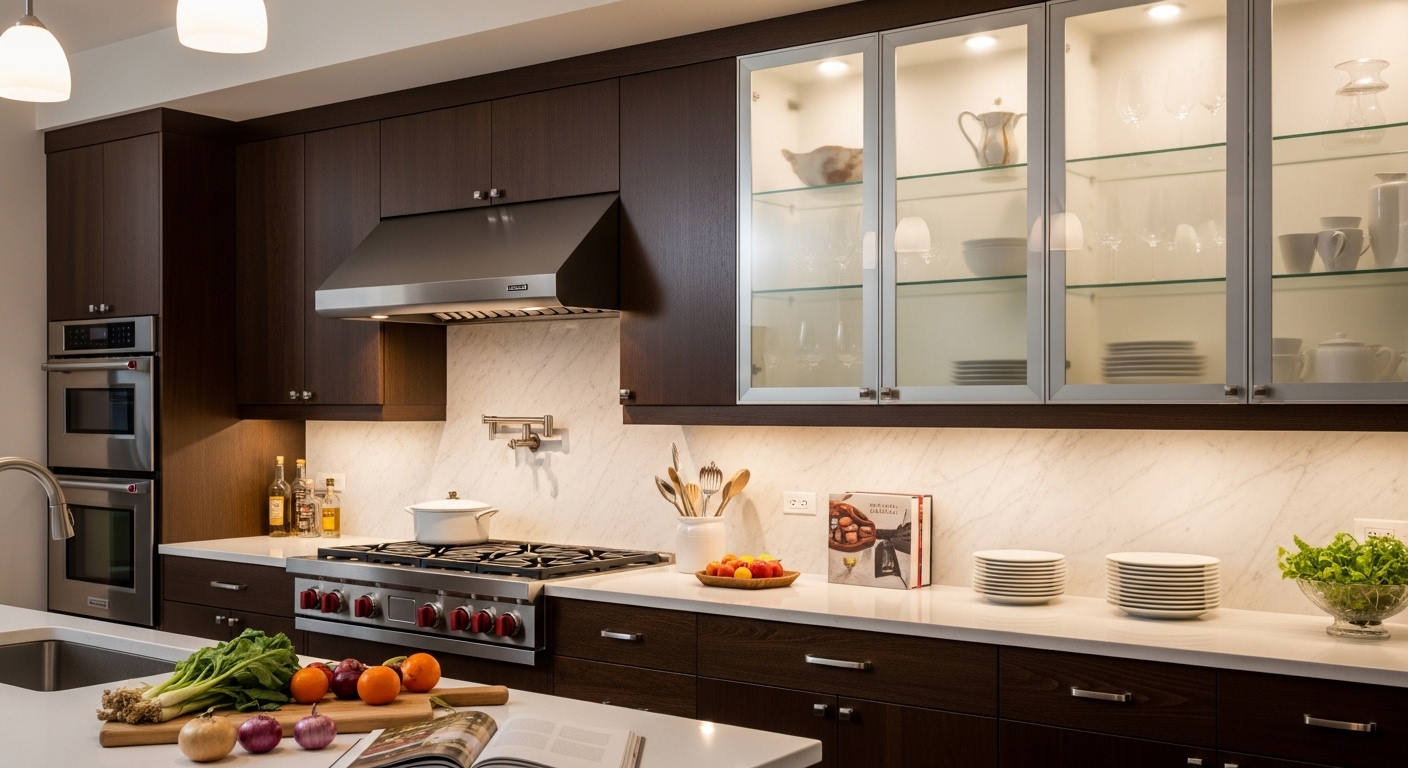
Lighting is one of the most underestimated elements in any home interior. You can have the most beautifully crafted cabinetry, the finest countertop materials, and a flawlessly designed kitchen — but without the right lighting, none of it reaches its full visual potential. That is exactly where under cabinet and in-cabinet lighting come in.
Whether you are remodeling your kitchen, upgrading your bathroom vanity, or investing in custom built-ins for your living room, understanding your lighting options can make a dramatic difference in both function and aesthetics. This guide walks you through everything you need to know — from the different types available to placement strategies and how to match lighting to your cabinetry setup.
What Is Under Cabinet Lighting and Why Does It Matter?
Under cabinet lighting refers to light fixtures mounted on the underside of wall cabinets, shelving units, or overhead cabinetry. The primary purpose is to illuminate the countertop or workspace directly below — an area that is often shadowed by the cabinets themselves when relying solely on overhead ceiling lighting.
In a kitchen, this means better visibility while prepping food. In a bathroom, it enhances the vanity surface and adds a layered, spa-like ambiance. In a home office or custom entertainment center, it highlights decorative items and reduces eye strain.
In-cabinet lighting, on the other hand, refers to fixtures placed inside the cabinet itself — typically behind glass doors, on interior shelving, or within display cabinets. The effect is entirely different: rather than illuminating a work surface, it creates a glowing, showcase-style look that adds depth and drama to your space.
Both approaches serve distinct purposes and work best when used together as part of a thoughtful lighting plan.
Types of Under Cabinet Lighting
Choosing the right type of under cabinet lighting depends on your cabinetry style, the size of your space, and the overall aesthetic you want to achieve.
LED Strip Lights
LED strips are the most versatile and widely used option. They come in flexible rolls that can be cut to size and adhered directly to the underside of your cabinets. They produce very little heat, consume minimal energy, and are available in a range of color temperatures — from warm white (2700K) to cool daylight (5000K+).
For kitchens with custom kitchen cabinets, LED strips offer a seamless, shadow-free glow across the full length of the countertop. They are especially effective in longer runs where a single puck light would leave dark spots.
Puck Lights
Puck lights are small, round, disc-shaped fixtures that are typically recessed into or surface-mounted on the underside of a cabinet. They create focused pools of light, which can look stunning for accent purposes but may produce uneven illumination when used as task lighting over a long stretch of countertop.
They work particularly well in shorter cabinet spans, inside shelving units, or inside glass-front display cabinets as in-cabinet fixtures.
Linear Bar Lights
Linear bar lights (also called hardwired light bars) are slim, elongated fixtures that run the full length of a cabinet section. They provide even, consistent illumination and are considered a premium, permanent installation. Unlike plug-in options, these are typically wired directly into your home’s electrical system during a renovation — making them ideal for new builds or major remodels.
Rope Lights
Rope lights are a budget-friendly and flexible option often used for decorative accent lighting rather than functional task lighting. They work well inside open shelving, along toe kicks, or above cabinets for an indirect glow. They are less common as primary under-cabinet solutions in custom-built settings.
Types of In-Cabinet Lighting
In-cabinet lighting is all about display and atmosphere. Here are the most common options:
Interior Shelf Lighting
Small LED puck lights or strip lights are placed on individual shelves inside a cabinet, typically one with glass doors. When activated, the light cascades downward through the shelves, creating a layered, illuminated display effect. This is a popular choice for custom cabinetry and built-ins used to showcase dishware, glassware, trophies, or collectibles.
Glass Door Accent Lighting
In kitchen cabinets with frosted or clear glass panels, internal lighting creates a soft, lantern-like effect that adds warmth to the entire room. This technique works beautifully in transitional or traditional kitchens where cabinet style leans toward raised-panel or decorative door designs.
Toe Kick Lighting
Technically a subset of under-cabinet lighting, toe kick lights are installed at the base of cabinets along the floor. They create a floating effect — the cabinet appears to hover slightly — which adds a modern, architectural quality to the kitchen or bathroom.
Wired vs. Plug-In vs. Battery-Powered: Which Should You Choose?
This is one of the most practical decisions homeowners face when planning cabinet lighting.
Hardwired systems are the most permanent and polished option. They are connected directly to your home’s electrical wiring and typically require a licensed electrician. However, they eliminate visible cords, allow dimmer switch integration, and look completely built-in. If you are investing in high-quality custom bathroom vanities or custom kitchen cabinetry, hardwired lighting is the professional-grade choice.
Plug-in systems offer a middle ground. They require an outlet nearby and the cord must be routed neatly — often along the back of the cabinet — but they are far easier to install and can be a DIY-friendly upgrade. Many high-quality LED light bars come in plug-in formats.
Battery-powered and rechargeable systems are ideal for rentals, temporary setups, or areas without convenient outlet access. Motion-sensing battery lights inside pantries or closets are a particularly practical application. The downside is the ongoing need to replace or recharge batteries and the fact that they tend to dim over time.
Color Temperature: Getting the Mood Right
One of the most overlooked aspects of cabinet lighting is color temperature, measured in Kelvins (K).
Warm white (2700K–3000K) mimics the soft, cozy glow of incandescent bulbs. It flatters wood tones, cream cabinetry, and natural stone countertops. This range is almost always the right choice for living spaces, bedrooms, and bathrooms where ambiance is the priority.
Neutral white (3500K–4000K) offers a clean, crisp light that works well in kitchens where task visibility matters. It is not too harsh but bright enough for food prep and cooking.
Cool white or daylight (5000K+) is the brightest and most clinical option. It is commonly used in garages, workshops, and laundry rooms — not typically recommended for kitchen or bathroom cabinetry unless you have a very modern, industrial aesthetic.
If you are pairing under-cabinet lighting with custom entertainment centers or built-in bookshelves, warm or neutral tones will almost always look more intentional and elevated.
Dimming and Smart Controls
Modern under-cabinet and in-cabinet lighting systems are increasingly compatible with dimmers and smart home controls. This gives you the flexibility to shift from bright task lighting during cooking to a low, ambient glow during dinner — all without changing a single fixture.
When planning your lighting, confirm that any LED strips or bars you choose are listed as “dimmable.” Not all LED products are compatible with standard dimmer switches, and using the wrong combination can cause flickering or buzzing.
Smart home integration through systems like Zigbee, Z-Wave, or Wi-Fi-connected controllers allows you to control cabinet lighting via smartphone apps, voice assistants, or automated schedules. This is an especially appealing feature in newly remodeled kitchens or custom home offices.
Placement and Installation Tips
Getting the placement right is just as important as choosing the right product.
For under-cabinet lights, position fixtures toward the front edge of the cabinet underside rather than the back. This directs light downward and outward onto the work surface instead of directly at the backsplash, which reduces glare.
For in-cabinet lights, spacing matters. If using puck lights inside a tall cabinet, space them evenly so each shelf receives consistent illumination. Avoid placing fixtures directly at eye level with reflective surfaces — this can create uncomfortable glare when the doors are open.
Concealment is key. One hallmark of high-quality custom cabinetry work is how discreetly the lighting is integrated. Lighting rails, channels, and diffusers help hide the actual bulb or strip and create a smoother, more professional-looking glow. A well-executed installation should make it appear as though the light is simply emanating from the cabinet itself.
If you are working with a custom cabinetry specialist, discuss lighting placement before construction begins. Routing for wiring, adding built-in channels, and planning outlet placement are all far simpler to incorporate at the build stage than to retrofit later.
Matching Lighting to Cabinet Style
Your lighting choice should complement the style of your cabinetry.
Shaker-style cabinets pair beautifully with warm LED strips or linear bars. The clean, unfussy lines of shaker doors benefit from understated lighting that highlights the work surface without competing visually with the cabinet design.
Raised-panel or traditional cabinets often look stunning with warm puck lights or soft interior shelf lighting behind glass doors. The added glow reinforces the classic, furniture-like quality of the cabinetry.
Flat-panel or modern cabinets are an ideal canvas for cool-toned LED strips, toe kick lighting, or backlit glass panels. These bolder, more architectural lighting choices complement sleek, minimalist designs.
For custom closets and custom storage solutions, motion-activated interior lighting is both practical and impressive — illuminating exactly what you need the moment you open the door.
Maintenance and Longevity
LED lighting is the dominant technology in cabinet lighting for good reason: it lasts. Quality LED strips and fixtures can last anywhere from 25,000 to 50,000 hours of use. That translates to over a decade of daily use before replacement is necessary in most cases.
To keep your lighting looking its best, wipe down fixtures during regular cabinet cleaning. Avoid harsh chemical sprays near the electrical components. If a section of LED strip dims or stops working, most systems allow you to replace individual segments rather than the entire run.
Final Thoughts: Lighting Is Part of the Design
Under-cabinet and in-cabinet lighting are not afterthoughts — they are integral parts of a well-designed interior. Whether you are illuminating a kitchen workspace, showcasing a built-in display, or adding ambiance to a custom bathroom vanity, thoughtful lighting elevates the entire project.
If you are planning a custom cabinetry project in the Greater Houston area, Ace Kustoms brings precision craftsmanship together with an eye for detail — including the lighting integrations that make your cabinetry truly shine. Reach out today to discuss your project and discover how the right lighting can transform your space from functional to extraordinary.


Comments are closed