
The Great Shelf Debate Why Your Walls are Bored
You know that feeling when you walk into a room and it just feels… finished? Like every piece was meant to be there? Usually, when that happens, your eyes are being drawn to a feature that grounds the entire space. Nine times out of ten, it’s the shelving.
I’ve spent a lot of time in living rooms where a couple of shaky, “flat-pack” bookshelves were trying their best to hold a heavy collection of hardcovers. They look okay, sure. But they always feel like they’re just visiting. They don’t quite reach the ceiling, there’s a weird gap behind them where dust bunnies go to retire, and you’re always a little worried they might tip if the dog runs by too fast.
Choosing between Built-In Bookshelves vs. Freestanding isn’t just about where you put your books. It’s about how you want the room to feel. Do you want furniture that moves with you, or do you want architecture that defines the house?
Honestly, I’ve seen both work beautifully, but they serve very different masters. If you’re trying to decide whether to call a cabinet maker or head to a furniture store, this guide is for you. We’re going to walk through the “how-to” of choosing the right fit so you can finally give your library the home it deserves.
Prerequisites: What You Need to Know Before You Choose
Before we look at the steps, you need to be real with yourself about three things:
- Your “Stay” Power: Are you in your “forever home”? Built-ins are a long-term relationship. Freestanding is a casual date.
- The Budget Reality: Custom work costs more upfront because it’s tailored to your specific wall. Freestanding is generally more wallet-friendly but has a shorter lifespan.
- The Wall’s Job: Is the shelving meant to hide a weird alcove, or is it just meant to hold a few plants?
Step-by-Step Instructions: Navigating the Shelving Maze
1. Assess the Architectural “Flow”
Built-in bookshelves are essentially custom cabinetry and built-ins that become part of the wall. If your home has traditional bones, built-ins look like they were born there. Freestanding units, however, are great for adding a pop of metal or a mid-century modern vibe that stands out as an accent piece.
- The Pro Move: Look at your baseboards and crown molding. Built-ins allow you to wrap that trim and finishing work right around the shelves for a seamless look.
- Expected Outcome: A room that feels either “integrated” (Built-in) or “eclectic” (Freestanding).
2. Determine Your Storage “Weight”
This is where the physics come in.
- Built-Ins: Usually anchored directly into the wall studs. They can hold your entire collection of Encyclopedia Britannica without a single sag.
- Freestanding: Most are made of particle board or thin veneers. Over time, heavy books will cause that “smile” (sagging) in the middle of the shelf.
Pro Tip: If you have high ceilings (9 feet or more), freestanding shelves often leave a “dead zone” at the top that gathers dust. Built-ins can go all the way to the ceiling, giving you 30% more storage.
3. Evaluate Long-Term Home Value
In my experience working with homeowners in The Woodlands and Conroe, custom built-ins are treated like a kitchen upgrade by appraisers. They add “permanent value.” Freestanding shelves are just furniture; you take them with you when you leave, and they add zero dollars to your home’s equity.
- Action Step: If you’re looking to increase your home’s “wow factor” for a future sale, go custom. If you’re a renter, freestanding is your only real choice.
4. Solve the “Weird Wall” Problem
Every house has that one wall with a strange bump-out or a shallow niche that fits… nothing. This is where Built-In Bookshelves vs. Freestanding becomes a no-brainer.
- Freestanding will always leave awkward gaps on the sides.
- Built-ins can be engineered to hide those flaws, turning an architectural mistake into a custom entertainment center or a focal point.
Visual Descriptions: What “Better” Looks Like
Notice how the shelving flows directly out of the mantle. This creates a massive visual anchor for the room that freestanding shelves simply can’t mimic.
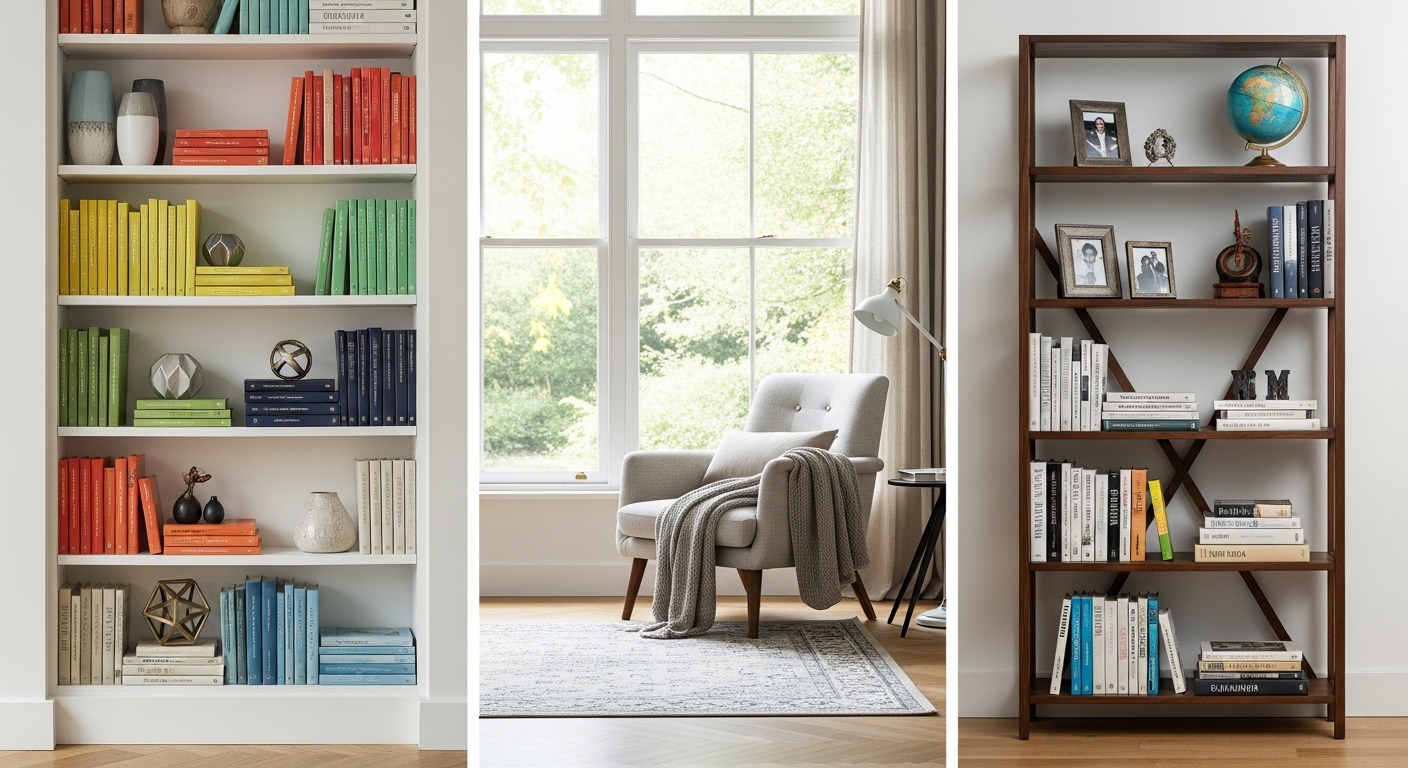
Freestanding has its place! These look airy and light, making them perfect for a custom office solution where you don’t want the walls to feel “heavy.”
Troubleshooting the “Built-In” Fear
- “Is it too permanent?”: Some people worry they’ll get bored. But remember, you can change the look of built-ins just by changing the paint or updating the cabinet hardware.
- “Will it make the room feel smaller?”: Actually, the opposite is often true. Because built-ins are recessed or flush with the architecture, they reduce visual clutter compared to multiple pieces of mismatched furniture.
- “The Cost Factor”: Yes, custom work is an investment. But when you consider that you won’t have to replace them in five years like a cheap shelf, the “cost per year” is often lower.
Expert Tips for a High-End Look
- Add Lighting: One thing that separates “DIY” from “Designer” is custom under-cabinet lighting or puck lights at the top of your built-ins. It turns a shelf into a gallery.
- Mix Your Media: Don’t just pack them with books. Leave “breathing room” for art, photos, and heirlooms.
- The “Base” Secret: If you’re going with built-ins, put doors on the bottom third. It gives you a place to hide the “ugly” stuff (board games, tangled cords) while showing off your library on top.
Summary & Next Steps
When it comes to Built-In Bookshelves vs. Freestanding, the winner depends on your goal.
- Go Freestanding if you need a quick, mobile fix or you’re on a temporary budget.
- Go Built-In if you want to maximize storage, increase home value, and create a “finished” designer look.
If you’re tired of the “furniture gap” and you’re ready to see what your walls are actually capable of, we can help. Whether you’re in Harris County or Fort Bend County, we’ve spent years turning boring walls into heirloom-quality libraries.
Take a look at our gallery to see some of our recent built-in projects, or reach out to us for a real-talk consultation. We’d love to help you figure out if a custom unit is the missing piece of your home’s puzzle.
Would you like me to help you measure your wall and provide a rough estimate of how many books a custom built-in unit could actually hold compared to a standard store-bought shelf?


Comments are closed