
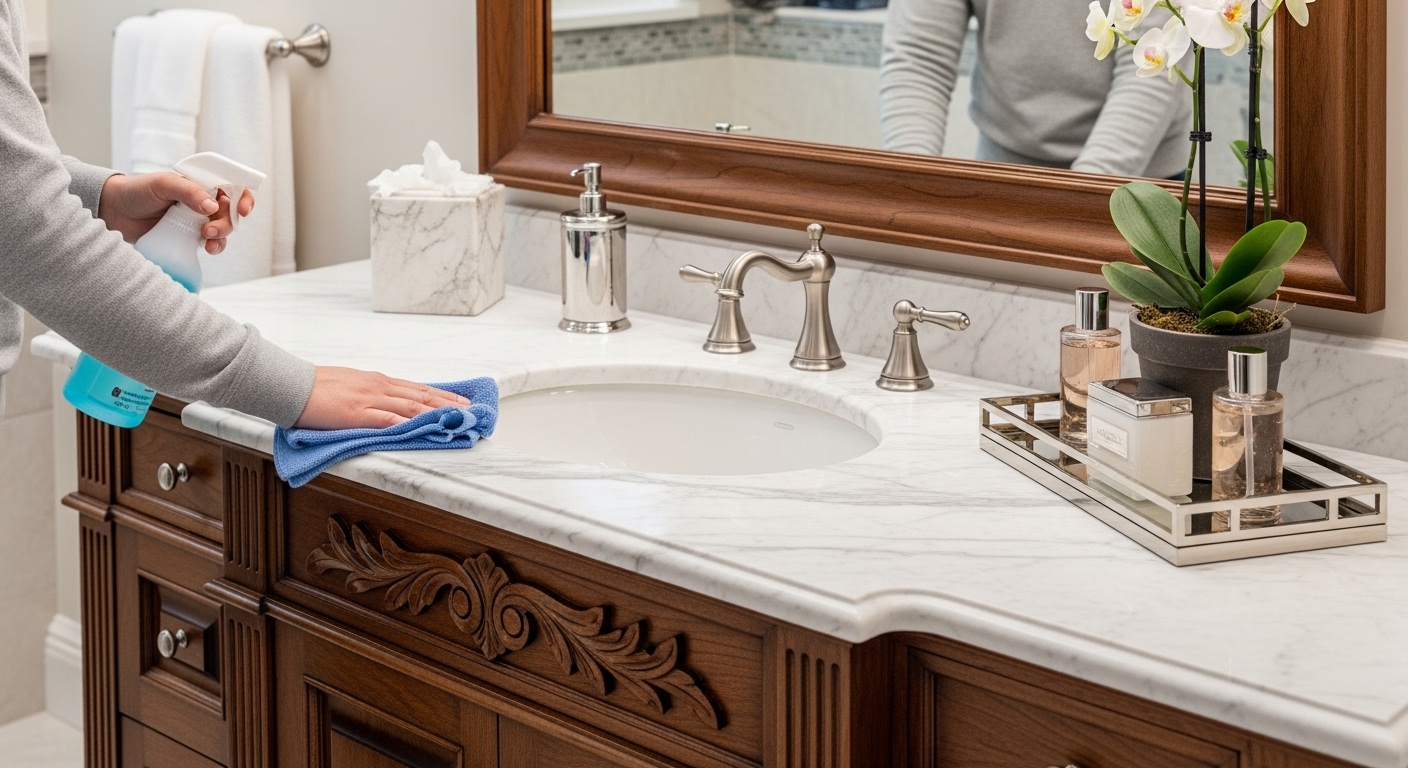
A custom bathroom vanity is one of those investments that quietly upgrades your daily routine. It’s the first thing you see in the morning and the last thing you see at night, and when it’s built from solid materials with careful joinery, it deserves a maintenance routine that matches its quality. Unlike mass-produced, particleboard vanities that are designed to be replaced every few years, a well-built custom bathroom vanity is meant to last for decades – but only if it’s cared for properly.
Bathrooms are uniquely tough environments for cabinetry. Between steam from hot showers, splashed water around the sink, humidity that lingers long after you’ve left the room, and daily contact from hands, towels, and toiletries, a vanity takes more abuse than almost any other piece of furniture in your home. The good news is that protecting your investment doesn’t require anything complicated. A few smart habits, the right cleaning products, and some attention to seasonal changes will keep your vanity looking and functioning like new for years to come.
In this guide, we’ll walk through everything you need to know about caring for your custom vanity – from daily wipe-downs to long-term humidity control – so you can protect the craftsmanship you paid for.
Why Vanity Care Matters More Than You Think
Many homeowners treat their bathroom vanity the same way they treat a bathroom sink: something to be cleaned occasionally and otherwise ignored. But a vanity is built from wood, engineered panels, finishes, and hardware – all materials that respond differently to moisture, heat, and chemical exposure than tile or porcelain.
Neglecting vanity care doesn’t usually show damage right away. Instead, it shows up months or years later as:
- Swollen or warped cabinet doors near the sink basin
- Cloudy or peeling finish where water sits
- Loose hinges and drawer slides from humidity-related wood movement
- Faded or blotchy color from harsh cleaning chemicals
- Mold or mildew developing inside cabinets due to trapped moisture
Each of these issues is preventable. The key is understanding what your vanity is made of and adjusting your habits accordingly.
Daily and Weekly Cleaning Habits
Most vanity damage comes from small, repeated moments of neglect rather than one big incident. Building a few habits into your routine goes a long way.
Wipe up water immediately. Whenever water splashes onto the vanity surface or pools near the sink basin, dry it with a soft cloth right away. Standing water is the single biggest threat to a wood or painted vanity finish, especially around the sink cutout where seals can wear thin over time.
Use a soft, slightly damp microfiber cloth for daily cleaning. Avoid paper towels, which can be abrasive on some finishes, and skip anything with rough texture. Wipe in the direction of the wood grain if your vanity has a stained finish.
Avoid harsh chemical cleaners. Bleach, ammonia-based glass cleaners, and abrasive scouring products can strip protective finishes and dull the color of your cabinetry over time. Stick to a mild dish soap diluted in water, or a cleaner specifically formulated for wood or painted cabinetry.
Dust the vanity weekly. Dust might seem harmless, but combined with bathroom humidity, it can create a grimy film that’s harder to remove the longer it sits. A quick weekly dusting with a dry microfiber cloth prevents buildup.
Clean hardware separately. Cabinet pulls, knobs, and hinges accumulate oils from hands and product residue from toiletries. Wipe hardware with a separate cloth and mild soap solution to keep it from staining the surrounding wood or finish.
Caring for Different Vanity Materials
Not all vanities are built the same way, and the material your vanity is made from determines exactly how it should be cleaned and protected. Solid wood, engineered wood with veneer, and painted MDF each have slightly different care needs. If you’re unsure what your vanity is made from, or you’re planning a future remodel and want to understand your options before committing, it’s worth reviewing the best materials for custom bathroom vanities before deciding on a cleaning routine, since the right product choices depend heavily on the substrate underneath the finish.
Solid wood vanities are the most durable option long-term but the most sensitive to humidity swings. Wood naturally expands and contracts with moisture in the air, which is why bathrooms with poor ventilation can cause doors to stick or gaps to appear between panels. Keeping humidity levels stable is the single best thing you can do for a solid wood vanity.
Painted finishes show fingerprints, water spots, and scuffs more visibly than stained wood, but they’re generally easier to wipe clean. The tradeoff is that painted surfaces can chip if hit with a hard object, so use coasters under toiletry bottles and avoid placing sharp or heavy items directly on painted surfaces.
Engineered wood with veneer offers excellent moisture resistance but should never be soaked or scrubbed aggressively, since damaging the veneer layer exposes the core material underneath and is difficult to repair.
Whatever your vanity is made from, test any new cleaning product on a small, hidden area first before using it across the entire surface. This simple step prevents accidental discoloration or finish damage from spreading.
Protecting the Countertop and Sink Area
The countertop and sink basin take the most direct hit from daily water exposure, makeup, toothpaste, and skincare products. If your vanity features solid surface countertops, you’re already starting with a material that resists staining and moisture better than laminate, but it still benefits from consistent care.
A few habits to protect this high-traffic zone:
- Use a bath mat or small tray under toiletries to catch drips before they reach the countertop surface
- Clean spilled toothpaste, makeup, and skincare products promptly, since some contain pigments or acids that can stain over time
- Avoid placing extremely hot items, like curling irons fresh off the heat, directly on the countertop
- Reseal natural stone countertops periodically if your vanity uses granite or marble, since these porous materials need a sealant barrier to resist staining
- Check the caulk line where the countertop meets the wall and where the sink meets the countertop – recaulking when you notice gaps prevents water from seeping underneath and damaging the cabinet box below
Managing Humidity and Moisture
Bathrooms in humid climates face an extra layer of challenge, and this is especially true here in the Houston area, where year-round humidity and Gulf Coast moisture put extra stress on wood cabinetry compared to drier regions.
Run your exhaust fan during and after every shower. Ideally, let it run for at least 15-20 minutes after bathing to clear residual steam from the air. This single habit prevents more long-term vanity damage than almost any cleaning product.
Crack a window or door when possible to improve air circulation, especially if your bathroom doesn’t have a strong exhaust fan.
Watch for condensation on mirrors and walls. If you notice consistent condensation, it’s a sign your bathroom’s ventilation isn’t keeping up with moisture levels, which puts your vanity at risk over time.
Keep cabinet doors slightly ajar after showers if humidity tends to linger, allowing air to circulate inside the cabinet and preventing musty odors or mildew from developing on interior shelving.
Use a small dehumidifier in bathrooms that consistently struggle with moisture, particularly in homes without strong mechanical ventilation.
Small Bathroom Considerations
If your vanity lives in a compact powder room or guest bathroom, space constraints can sometimes mean less airflow around the cabinetry, which makes humidity control even more important. Homeowners working with tighter layouts often explore creative vanity solutions designed for small bathrooms, and these space-conscious designs can also make day-to-day cleaning easier since there’s simply less surface area to maintain. Whatever the footprint, the same fundamentals apply – keep moisture moving, wipe up spills quickly, and avoid letting water sit against any cabinet surface.
Hardware and Hinge Maintenance
It’s easy to forget about hardware until something stops working smoothly, but a little attention here prevents bigger headaches later.
- Tighten loose screws on hinges and drawer pulls as soon as you notice wobble
- Lubricate squeaky hinges with a small amount of silicone-based lubricant rather than oil-based products, which can attract dust and grime
- Check drawer slides periodically to make sure they glide smoothly and aren’t catching due to humidity swelling
- Replace worn-out soft-close mechanisms before they fail completely, since a damaged soft-close hinge can allow doors to slam and stress the cabinet frame over time
Seasonal Deep Cleaning
Beyond your regular weekly routine, set aside time each season for a more thorough check-up:
- Inspect the caulk and seals around the sink and backsplash for cracking or gaps
- Deep clean the cabinet interior, removing all stored items and wiping down shelves to catch any moisture or mildew that’s developed out of sight
- Check for finish wear on high-touch areas like drawer fronts and door edges, touching up with appropriate products if the manufacturer or installer recommends it
- Test all hardware for tightness and smooth operation
- Reassess your bathroom’s humidity levels, especially after seasonal weather shifts, and adjust ventilation habits accordingly
This seasonal check-up takes less than an hour but catches small issues before they become expensive problems.
When to Call in a Professional
Most day-to-day vanity care is well within reach for any homeowner, but some situations call for professional attention. If you notice persistent warping, a finish that’s peeling beyond a small touch-up area, water damage that’s reached the cabinet box itself, or hardware that’s failed structurally, it’s worth consulting with the craftsmen who understand custom cabinetry construction. A professional can often repair or refinish sections of a vanity rather than requiring a full replacement, which preserves the investment you’ve already made.
If your current vanity has reached the end of its serviceable life, or you’re simply ready for an upgrade that better fits your space and style, working with a team experienced in custom bathroom vanities ensures you get cabinetry built specifically for your bathroom’s layout, humidity conditions, and daily use – designed from the start to hold up beautifully for years.
Final Thoughts
Caring for a custom bathroom vanity isn’t complicated, but it does require consistency. Wipe up water before it sits, dust regularly, use gentle cleaning products suited to your specific material, and keep humidity under control with proper ventilation. These small, repeated habits protect the craftsmanship, joinery, and finish that make a custom vanity worth having in the first place.
A vanity built with quality materials and proper installation can genuinely last a lifetime – but only with a little ongoing attention. Treat it well, and it will continue to be the dependable, good-looking centerpiece of your bathroom for many years to come.


Comments are closed