
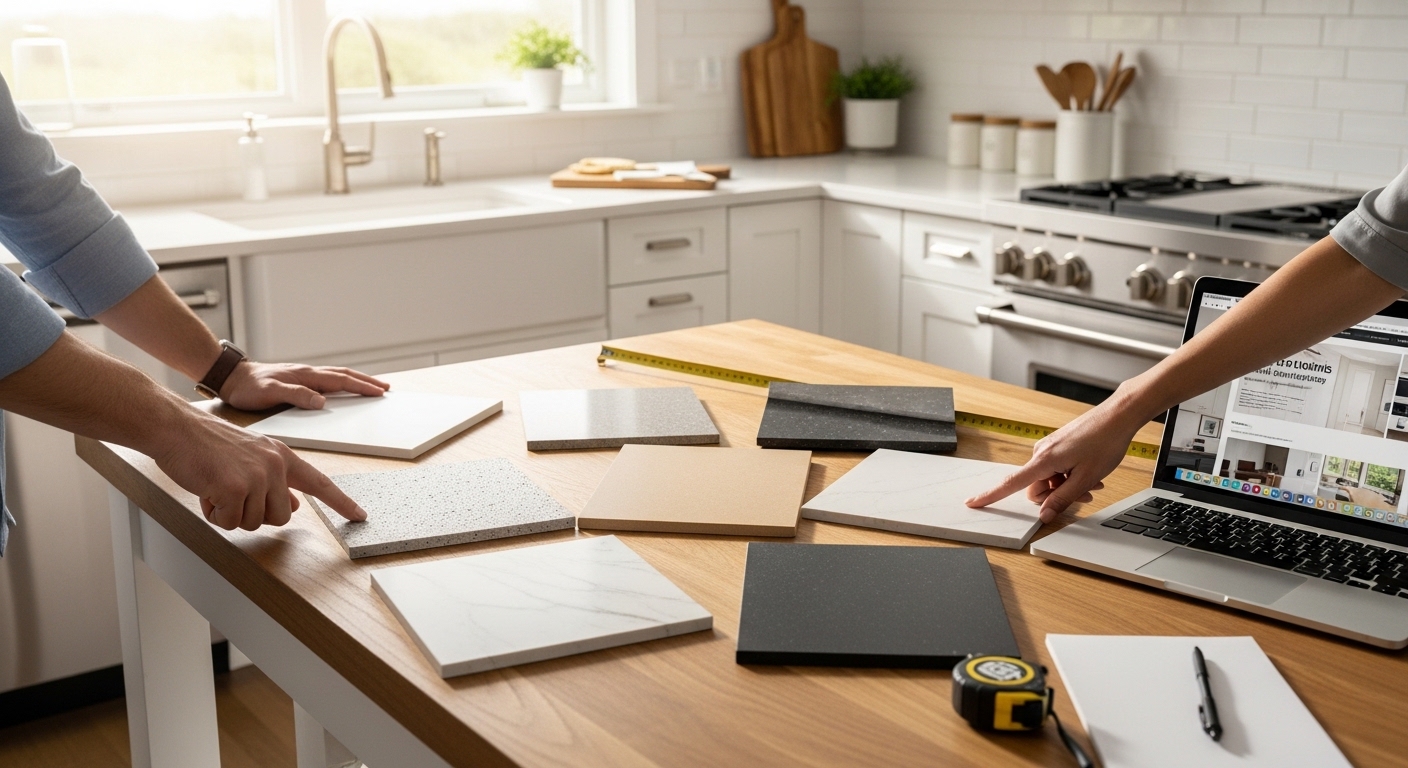
When it’s time to renovate a kitchen or refresh a bathroom, few decisions carry as much weight as the countertop you choose. It’s the surface your family touches every single day – where coffee gets poured, meals get prepped, and kids do their homework while you cook dinner. With so many solid surface materials on the market today, picking the right one can feel overwhelming. This guide breaks down everything you need to know about solid surface countertops, so you can make a confident, informed decision for your home.
What Are Solid Surface Countertops?
Solid surface countertops are engineered materials made from a blend of acrylic or polyester resins combined with natural minerals. Unlike natural stone such as granite or marble, solid surface material is manufactured to be completely non-porous, which means it doesn’t have the tiny natural fissures and pores that stone can have. This single characteristic is what makes solid surface such a popular choice for homeowners who want a clean, consistent look without worrying about sealing or staining.
Because the material is manufactured rather than quarried, it comes in an enormous range of colors, patterns, and finishes – from solid, uniform tones to designs that mimic the veining of natural granite or marble. It can also be seamlessly joined, meaning multiple pieces can be fused together so the countertop looks like one continuous slab, even around curves, sinks, and backsplashes.
Why Homeowners Choose Solid Surface
There are a handful of reasons solid surface continues to be a go-to option for kitchens and bathrooms alike:
Seamless integration. Because seams can be virtually invisible, solid surface allows for integrated sinks, backsplashes, and even drainboards molded directly into the countertop. This creates a sleek, modern look that’s difficult to achieve with other materials.
Non-porous surface. Since there are no pores for bacteria, mold, or liquids to seep into, solid surface is naturally more hygienic than many alternatives, which is part of why it’s so common in healthcare settings as well as homes.
Repairable finish. Minor scratches, scorches, or dents can often be sanded or buffed out, restoring the surface to like-new condition. This is a meaningful advantage over materials that show permanent wear over time.
Design flexibility. Solid surface can be thermoformed into curves, integrated backsplashes, and custom edge profiles that aren’t possible with rigid stone slabs, giving designers and homeowners more creative freedom.
Consistent color and pattern. Because it’s manufactured rather than cut from natural stone, every slab matches predictably – there’s no surprise variation between the sample you saw in the showroom and what arrives at your home.
Solid Surface vs. Other Popular Countertop Materials
It’s natural to compare solid surface against quartz, granite, and other options before making a final decision. Each material has its own strengths depending on how you use your space and the look you’re going for. If you want a deeper side-by-side breakdown of how these materials stack up in terms of durability, maintenance, and appearance, our Quartz vs. Granite vs. Quartzite Countertops Guide walks through the differences in detail.
Generally speaking, solid surface tends to offer more design flexibility and a more forgiving repair process, while natural stone options bring unique veining and a heat resistance that’s hard to replicate with engineered materials. Neither option is universally “better” – it really comes down to your household’s habits, your design vision, and how the surface will be used day to day.
Where Solid Surface Countertops Work Best
Kitchens
In the kitchen, solid surface shines when homeowners want a clean, integrated look – particularly when paired with an undermount or integrated sink. The seamless transition between countertop and sink eliminates the grout lines and crevices where crumbs and grime typically collect, making cleanup significantly easier. If you’re already in the planning stages of a larger kitchen renovation, it’s worth exploring how your countertop choice fits into the broader layout. Our team’s approach to Kitchen Remodels considers how every surface – countertops, cabinetry, and backsplash – works together as a cohesive design.
Solid surface also pairs beautifully with custom cabinetry, since both can be designed around the same color palette and style direction from the very beginning. If you’re rethinking your cabinet layout alongside your countertops, our guide to Custom Kitchen Cabinets is a helpful next step for coordinating the two.
Bathrooms
Bathrooms are another natural fit for solid surface, especially for vanity tops. Because the material resists moisture penetration and can be molded with an integrated sink basin, it eliminates the seams and caulk lines that tend to collect mildew over time in a high-humidity environment. If you’re considering a vanity update as part of a larger bathroom project, take a look at our approach to Custom Bathroom Vanities, which covers how vanity design, storage, and surface materials come together for a cohesive finished space.
Key Factors to Consider Before Choosing
1. How You Use the Space
Think honestly about how your kitchen or bathroom gets used. A household that cooks daily and frequently sets down hot pans directly on the counter has different needs than a household that primarily uses the kitchen for light meal prep. Solid surface handles everyday wear well, but like most engineered materials, it benefits from the use of trivets or hot pads for very hot cookware.
2. Maintenance Expectations
One of the biggest draws of solid surface is how low-maintenance it is. There’s no sealing required, ever – a stark contrast to natural stone, which often needs to be resealed periodically to maintain its stain resistance. Cleaning is typically as simple as wiping the surface down with a mild soap and water or a non-abrasive cleaner.
3. Visual Style and Color Range
Because solid surface is manufactured, it offers an extensive palette of colors and patterns – from clean, minimalist whites and neutrals to designs that replicate the look of natural stone. Take time to view physical samples in your actual lighting conditions before committing, since colors can read very differently under kitchen lighting versus a showroom.
4. Edge Profiles and Design Details
The edge profile you choose has a bigger visual impact than many homeowners expect. Solid surface can be shaped into a wide variety of edges, from simple eased edges to more elaborate bullnose or ogee profiles, and because the material can be thermoformed, even curved or waterfall edges are achievable in ways that aren’t always possible with rigid stone.
5. Integration with the Rest of Your Design
Your countertop doesn’t exist in isolation – it needs to work with your cabinetry, flooring, backsplash, and overall color scheme. This is where working with a team that handles both cabinetry and surface work pays off, since the materials can be planned together from the outset rather than as separate, disconnected decisions.
Common Questions Homeowners Ask
Does solid surface scratch easily? Like any countertop material, solid surface can scratch, particularly with knife use directly on the surface. The good news is that most surface scratches can be sanded out, restoring the original finish – something that isn’t always possible with other materials.
Can solid surface handle heat? Solid surface has moderate heat resistance, but it’s not designed for direct contact with very hot cookware or appliances. Using trivets and hot pads will keep your countertop looking its best for years to come.
Is solid surface a good choice for outdoor kitchens? Solid surface is generally best suited for indoor applications. Extended exposure to direct sunlight and significant temperature swings can affect the material over time, so it’s worth discussing your specific climate and usage with your contractor before finalizing the material for an outdoor space.
How does solid surface compare for resale value? Countertop material is one of many factors buyers consider, and a well-maintained, attractively finished solid surface counter can absolutely contribute to a kitchen or bathroom’s overall appeal. The seamless, integrated look tends to read as a thoughtful, higher-end design choice.
Making the Final Decision
Choosing a countertop material ultimately comes down to balancing your design goals with how your household actually lives day to day. Solid surface earns its popularity by offering a rare combination of design flexibility, a hygienic non-porous surface, and the ability to repair minor damage rather than live with it permanently. For homeowners who want a clean, seamless look – particularly when paired with an integrated sink – it’s hard to beat.
That said, the best way to know if solid surface is right for your home is to see and feel actual samples, talk through how your kitchen or bathroom gets used, and look at how the material will work alongside your cabinetry and overall design. A thoughtful renovation brings every element together intentionally, rather than choosing each piece in isolation.
If you’re in the planning stages of a kitchen or bathroom project and want guidance on choosing the right countertop material for your space, our team is happy to walk you through samples, design options, and what will hold up best for the way you actually live. Reach out to start the conversation, and let’s design a space that’s both beautiful and built to last.


Comments are closed