
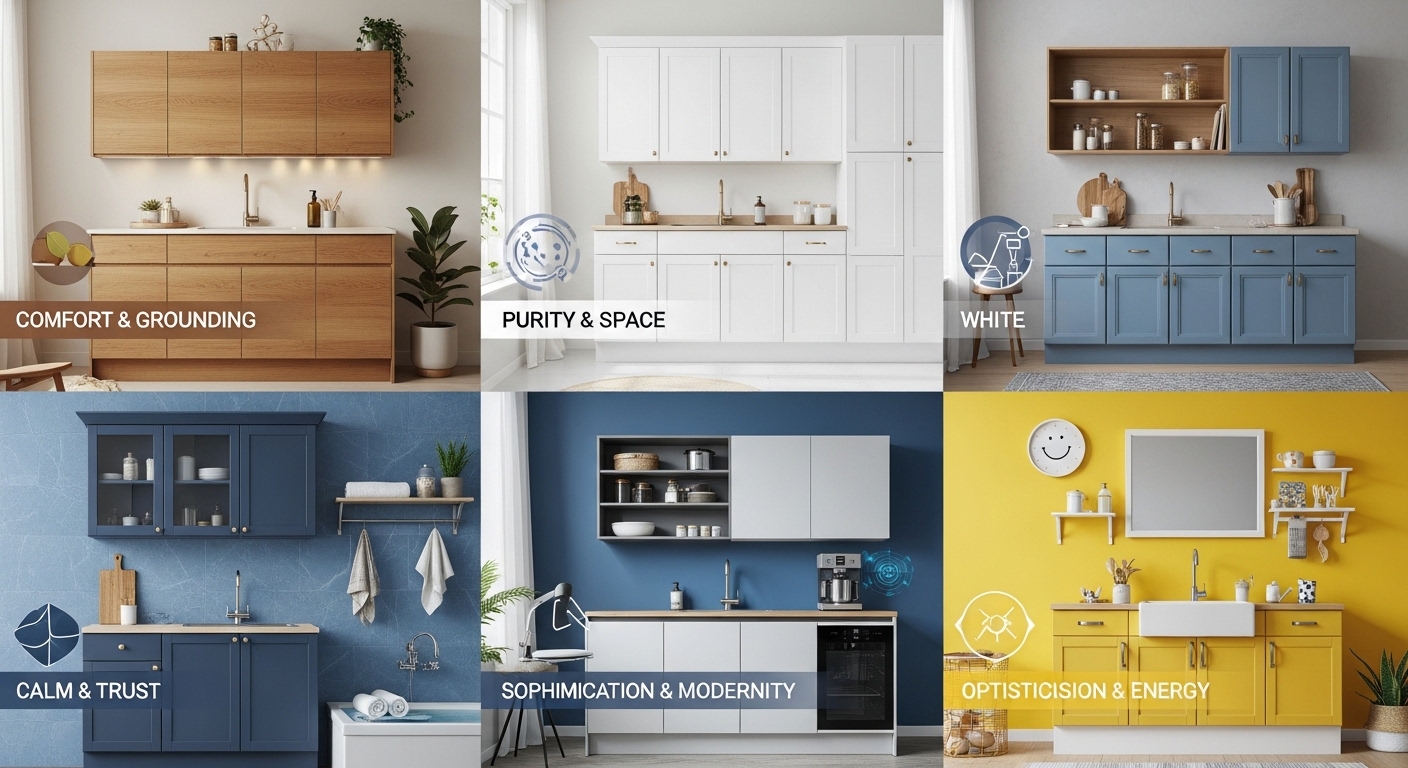
Walk into any kitchen and, before you notice the layout or the countertops, your brain has already reacted to the color of the cabinets. That reaction happens in a fraction of a second, long before you consciously register why a space feels warm, cold, busy, or calm. Color is one of the most powerful — and most overlooked — tools in home design, and nowhere is that more true than in cabinetry, which often covers more visual surface area in a kitchen or bathroom than any other single element.
Choosing a cabinet color isn’t just a matter of personal taste or what’s trending this year. It’s a psychological decision that shapes how you feel every time you walk into the room, how guests perceive your home, and even how functional a space feels day to day. Understanding the science behind color psychology can help you make a choice you’ll still love years from now, rather than one driven purely by a passing trend.
Why Color Affects Us the Way It Does
Color psychology is the study of how hues influence human emotion and behavior. It’s not pseudoscience — decades of research in environmental psychology and design have shown consistent patterns in how people respond to color in built spaces. Warm colors tend to feel stimulating and energizing, while cool colors tend to feel calming and grounding. Neutrals act as a visual reset, allowing other design elements to take center stage.
In a kitchen or bathroom, where cabinets dominate the visual field, this effect is amplified. Unlike a wall you might glance at occasionally, cabinetry is something you interact with multiple times a day — opening doors, reaching for items, standing in front of it while cooking or getting ready. That repeated, close-range exposure means the emotional impact of cabinet color compounds over time in a way that a small accent wall never could.
This is one of the reasons working with a team that understands both design and craftsmanship matters. Thoughtful custom kitchen cabinets aren’t just built to fit your space — they’re an opportunity to choose a color palette that actually supports how you want to feel in that room every single day.
Warm Tones: Energy, Comfort, and Connection
Warm cabinet colors — think rich browns, terracotta, warm reds, and golden woods — tap into feelings of comfort, groundedness, and hospitality. These tones are often associated with natural materials like wood, earth, and fire, which may explain why they trigger such a deep sense of familiarity and warmth.
Brown and wood-tone cabinets, in particular, carry a psychological association with stability and reliability. They feel timeless because they echo materials humans have lived alongside for thousands of years. A kitchen with warm wood cabinetry often feels more like a gathering space than a sterile workstation, which is part of why farmhouse and traditional kitchen styles have remained so consistently popular.
Deep reds and burnt oranges, while less common as a full cabinet color, can create a bold, energetic anchor point in a room. These shades stimulate appetite and conversation, which is why you’ll sometimes see them used in dining-adjacent kitchen spaces or as an accent on a kitchen island.
Cool Tones: Calm, Clarity, and Control
On the other end of the spectrum, cool colors like navy blue, sage green, and soft gray-blues have surged in popularity over the past several years — and not by accident. These tones are linked psychologically to calmness, focus, and a sense of order.
Navy cabinetry has become a favorite in kitchen design because it strikes a balance: it’s bold enough to feel intentional and designed, but cool enough to stay calming rather than overwhelming. Sage and muted greens carry an additional psychological layer — they’re associated with nature, growth, and renewal, which can make a kitchen feel fresher and more connected to the outdoors even without a single plant in sight.
Blues and greens are also known to have a subtle appetite-suppressing effect compared to warm tones, which is an interesting consideration for anyone trying to create a more mindful relationship with a kitchen space rather than one centered purely around snacking and indulgence.
If you’re leaning toward a cooler, more dramatic palette, it helps to plan the whole room around that mood. A full kitchen remodel gives you the flexibility to coordinate cabinet color with countertops, hardware, and lighting so the psychological effect you’re going for doesn’t get diluted by mismatched elements.
Neutral Tones: The Psychology of Restraint
White, cream, and gray cabinets dominate a huge share of kitchens for a reason beyond just resale value. Neutral tones reduce visual noise. They give your brain fewer colors to process, which creates a sense of order and spaciousness — something particularly valuable in smaller kitchens or bathrooms where a busier palette could feel cramped.
White cabinetry specifically is tied to perceptions of cleanliness and simplicity. It’s why so many bathroom and kitchen spaces default to white: it photographs well, it feels timeless, and it doesn’t compete with other design choices. But white isn’t emotionally neutral in the way people sometimes assume — it can read as cold or clinical if it’s not balanced with warm materials elsewhere, like natural wood floors, brass hardware, or woven textures.
Gray sits in an interesting middle ground psychologically. It’s calming like blue, but more grounded and less emotionally expressive. This is part of why gray cabinetry has remained a steady, low-risk choice for homeowners who want a modern look without making too bold a statement.
Two-Tone Cabinetry and the Psychology of Visual Hierarchy
One of the more interesting recent shifts in cabinet design is the rise of two-tone kitchens — pairing a darker color on lower cabinets or the island with a lighter tone on upper cabinets. This isn’t purely aesthetic; it plays directly into how our eyes naturally process a room.
Darker colors at the base of a space create a sense of grounding and stability, similar to how floors are typically darker than ceilings in most architecture. Lighter colors above draw the eye upward and outward, making ceilings feel higher and rooms feel larger. This is a clever bit of applied psychology: the color choice is doing structural work, not just decorative work.
For homeowners weighing different layout and storage options alongside color, it’s worth exploring how custom cabinetry and built-ins can be designed specifically to take advantage of this visual hierarchy, rather than retrofitting a two-tone idea onto a layout that wasn’t built with it in mind.
Matching Cabinet Color to How You Actually Use the Room
Color psychology isn’t just about what looks good in photos — it’s about how a space functions for the people living in it. A few practical questions can help translate psychological principles into a decision that fits your actual life:
- Do you want this room to feel energizing in the morning, or calming at the end of the day?
- Is this a space for quiet, focused tasks, or for entertaining and social gatherings?
- Does natural light flood the room, or is it more dimly lit, which can shift how a color reads?
- Will this space need to feel larger than it is, or do you want it to feel cozy and enclosed?
There’s no universally “correct” cabinet color — only the right color for the mood and function you’re trying to create. Someone who works from home and wants a calm, focused kitchen environment might lean toward sage or soft blue-gray. A family that uses their kitchen as the social hub of the house might prefer warm wood tones or a bold, energizing accent color on an island.
It’s also worth thinking beyond the kitchen. Bathroom cabinetry, for instance, often benefits from calmer, cooler palettes since bathrooms are typically spaces associated with relaxation and routine rather than high energy. If you’re exploring options there, it’s worth looking at custom bathroom vanities, where the same psychological principles apply but the desired emotional outcome is usually a bit different from a kitchen.
Lighting Changes Everything
No discussion of cabinet color psychology is complete without addressing light, because color doesn’t exist in isolation — it exists in relationship to the light hitting it. The same navy cabinet that looks rich and moody under warm pendant lighting can look flat and almost black under harsh fluorescent light. A soft sage that feels organic and calming in natural daylight can shift toward a muddier, less appealing tone under cool-toned LED bulbs.
This is why color swatches in a showroom or on a screen rarely tell the full story. The psychological effect you’re hoping to achieve depends heavily on how light interacts with your chosen finish throughout the day. Testing a sample in your actual space, at different times of day, is one of the most reliable ways to confirm that a color will deliver the emotional response you’re aiming for once it’s installed.
Style and Color Work Together
It’s also worth remembering that color psychology doesn’t operate independently from cabinet style. A sleek, handle-less flat-panel cabinet in navy reads very differently than a traditional raised-panel cabinet in the same color — one feels modern and minimal, the other feels classic and layered. The door style either reinforces or softens the emotional message the color is sending.
If you’re still narrowing down your overall direction, it can help to look at how different door profiles change the feel of a space before locking in a color. Comparing options like those covered in Shaker vs. Flat vs. Raised cabinets can clarify whether your chosen color will feel as intentional as you want it to once it’s paired with the right silhouette.
Making a Choice You Won’t Want to Undo
Trends in cabinet color move faster than the cabinets themselves last. A color that feels fresh today can feel dated in a decade if it was chosen purely because it was trending, rather than because it genuinely matched how you wanted the space to feel. This is where understanding the psychology behind your choice becomes a practical advantage, not just an interesting design concept.
When you choose a color because it supports the mood, function, and energy you actually want in your home — rather than chasing a trend you saw online — you end up with a space that feels right for far longer. That’s the real value of thinking psychologically about cabinet color: it shifts the question from “what’s popular right now” to “what will make this room feel like mine every single day.”
Whether you’re drawn to grounding wood tones, calming blues and greens, or clean, restrained neutrals, the goal is the same — a space that supports how you actually live, not just how it photographs. Taking the time to understand that connection before committing to a color is one of the simplest ways to make sure your renovation still feels right years down the road.


Comments are closed