
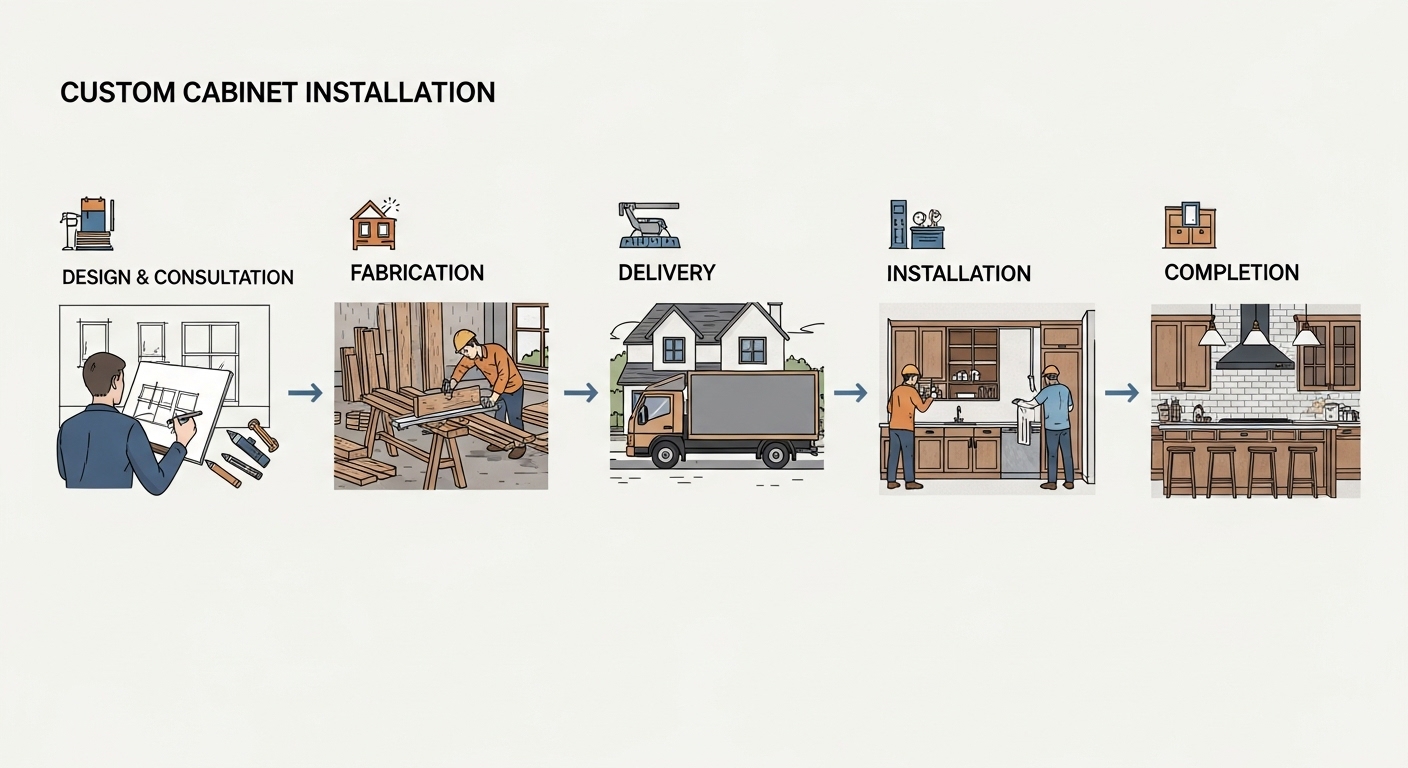
Magnolia is one of the fastest-growing communities in Montgomery County, and that growth shows up in two very different ways inside local homes. Some homeowners are working with brand-new construction and trying to upgrade flat, builder-grade cabinetry before they even unpack a single box. Others are sitting in a home that’s ten or fifteen years old and finally ready for a kitchen or bathroom that actually fits how they live. Either way, the question we hear most often from Magnolia homeowners is simple: “How long is this actually going to take?”
It’s a fair question, and the honest answer is “it depends” — but that’s not a very satisfying answer when you’re trying to plan around contractors, kids, holidays, or a move-in date. So instead, let’s break down exactly what a realistic custom cabinet installation timeline looks like, step by step, so you know what to expect before you ever sign a contract.
Why Timelines Matter More in a Growing Area Like Magnolia
When demand for skilled trades is high — and in a booming submarket like Magnolia, it usually is — lead times can stretch longer than homeowners expect. New subdivisions, custom home builds, and a steady stream of renovations all compete for the same pool of cabinet makers, finish carpenters, and installers. That’s not a reason to panic, but it is a reason to plan ahead and build in some buffer, especially if you’re coordinating cabinetry work around a closing date, a move, or other renovation trades like countertops, flooring, or plumbing.
If you’re researching options, it’s worth looking at what local cabinetry and trim services in Magnolia typically involve, since pricing, scheduling, and material availability can vary by region. A company already established in your area will usually have a clearer, more accurate timeline than a national average you might find online.
Step 1: Initial Consultation & Site Visit (Week 1)
Every legitimate custom cabinet project starts with a consultation — either in person or, in many cases now, a combination of a phone call and an in-home site visit. During this stage, a project consultant or designer will:
- Walk through the space and take measurements
- Discuss your goals, storage needs, and design preferences
- Talk through budget ranges and material options
- Identify any structural issues (uneven walls, outdated wiring, plumbing in the way, etc.)
For most Magnolia homeowners, this step takes anywhere from a few days to a week to schedule and complete, depending on availability. If you’re working on a larger project like a full kitchen overhaul, this is also when you’d start talking through custom kitchen cabinets versus a more targeted built-in or storage upgrade.
Step 2: Design & Material Selection (1–3 Weeks)
This is where the project really starts to take shape — and it’s also the phase most homeowners underestimate. Design isn’t just picking a cabinet door style. It includes:
- Finalizing layout and cabinet configuration
- Choosing wood species, finishes, and hardware
- Deciding on functional add-ons (pull-out shelves, soft-close drawers, lighting, etc.)
- Reviewing 3D renderings or detailed drawings, if offered
For a single vanity or a small built-in, design might wrap up in a week. For a full kitchen remodel involving custom cabinetry, islands, and built-in features, expect closer to two to three weeks — especially if you’re still deciding between several finish options or waiting on samples.
This stage often overlaps with broader custom cabinetry and built-ins planning, particularly if your project spans more than one room (a kitchen and an adjoining mudroom, for example, or a primary bathroom and an attached closet system).
Step 3: Quoting, Contract & Deposit (3–7 Days)
Once the design is locked in, you’ll receive a formal quote. This typically includes:
- Material and labor costs broken down by phase
- A projected production and installation timeline
- Payment schedule (usually a deposit, a progress payment, and a final payment)
Most homeowners take a few days to review this before signing, and a deposit is generally required before your project moves into production. This is also a good time to confirm in writing what happens if material costs shift or if your scope changes mid-project — a conversation that saves a lot of frustration later.
Step 4: Fabrication & Manufacturing (4–10 Weeks)
This is almost always the longest stretch of the entire timeline, and it’s the phase that catches people off guard the most. Custom cabinetry isn’t pulled off a shelf — it’s built specifically for your space, which means:
- Lumber and panel materials need to be sourced
- Cabinet boxes are built, assembled, and finished
- Doors, drawer fronts, and hardware are fitted
- Quality control checks happen before anything leaves the shop
For a smaller project — a single bathroom vanity or a built-in bookshelf — fabrication might take around four to six weeks. For a full custom kitchen with an island, pantry cabinetry, and specialty storage, eight to ten weeks (sometimes longer) is realistic, particularly during busy seasons or when specialty wood species are involved.
This is the single biggest reason cabinet projects take longer than people expect going in. If your contractor quotes a two-week turnaround for a full custom kitchen, that’s worth asking follow-up questions about.
Step 5: Pre-Installation Prep (1–2 Days)
While cabinets are being built, there’s prep work that needs to happen on your end of things, usually scheduled in the final week or two before delivery:
- Removing old cabinetry, if applicable
- Confirming electrical, plumbing, and gas lines are positioned correctly
- Patching or painting walls before new cabinets go in
- Clearing the workspace of furniture, rugs, and breakables
Homeowners in Magnolia juggling a renovation alongside daily life often appreciate having this conversation early, since it’s much easier to plan around kids, pets, or work schedules when you know prep day is coming.
Step 6: Installation Day(s) (1–5 Days)
Installation timing depends heavily on project size:
- Single vanity or built-in unit: Often completed in a single day
- Closet system or office built-ins: Usually one to two days
- Full kitchen remodel: Typically three to five days, sometimes longer if it includes an island, crown molding, or extensive trim work
During installation, your team will set cabinet boxes, level and secure them, install doors and drawers, attach hardware, and make any final adjustments for a precise fit. If your project includes a closet system in a primary suite or a full custom closet build, this is also when shelving, rods, and drawer units get integrated into the existing footprint.
Step 7: Final Walkthrough & Punch List (1–2 Days)
Once installation wraps up, a good contractor will walk the space with you to check:
- Door and drawer alignment
- Hardware placement and function
- Caulking, trim, and finish touch-ups
- Any final adjustments needed for a flawless fit
Minor touch-ups are normal and usually resolved within a day or two. This is your opportunity to flag anything that doesn’t look or function the way you expected before final payment is due.
Putting It All Together: A Realistic Magnolia Timeline
For a single room project (one vanity, one built-in unit, a small storage upgrade): Total: roughly 6–9 weeks from first consultation to finished installation.
For a full kitchen remodel with custom cabinetry, an island, and specialty storage: Total: roughly 10–16 weeks, depending on design complexity and current shop demand.
These ranges assume no major surprises — no hidden structural issues, no significant scope changes mid-project, and no extended material delays. Building in a little extra cushion, especially around holidays or peak renovation season in spring and early summer, is a smart move for anyone planning around a specific deadline.
Factors That Can Stretch (or Shrink) Your Timeline
A few things tend to move the needle more than homeowners expect:
Project scope changes. Adding an island halfway through design, or deciding you want a different wood species after fabrication has started, resets parts of the clock.
Material availability. Certain finishes, specialty hardware, or less common wood species can extend lead times, particularly during high-demand seasons.
Coordination with other trades. If cabinetry installation depends on electrical or plumbing rough-in being finished first, delays in those trades will cascade into your cabinet schedule.
New construction vs. renovation. Homes in newer Magnolia developments sometimes have tighter tolerances or unfinished details that need coordination with a builder, which can add a layer of scheduling complexity compared to a straightforward renovation.
Local demand. In a fast-growing area, popular installers can book out several weeks in advance, so getting your initial consultation scheduled early matters more than people assume.
Tips to Keep Your Project on Schedule
- Start the consultation process early — ideally before you’re emotionally committed to a specific move-in or event date.
- Lock in your design decisions before fabrication starts. Changes after this point are the single biggest cause of delays.
- Order long-lead materials first, especially if you’re set on a less common finish or hardware line.
- Coordinate trades in the right order — electrical and plumbing rough-in before cabinet installation, not after.
- Ask for a written timeline with phase-by-phase milestones, not just a single end date. It’s much easier to spot a slipping schedule early when you have checkpoints along the way.
Final Thoughts
A custom cabinet project is, by definition, not an off-the-shelf process — and that’s exactly why it looks and fits the way it does once it’s finished. For most Magnolia homeowners, a realistic expectation is somewhere between six weeks for a smaller, single-room project and three to four months for a full kitchen remodel, with fabrication time being the biggest single factor in that timeline.
If you’re in the early planning stages and want a timeline specific to your space, scope, and material preferences, reach out and a local team can walk you through what to expect before you commit to anything.


Comments are closed