
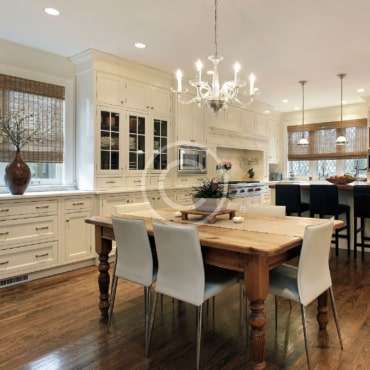
Lighting Transforms Custom Cabinetry Design
Lighting is often the deciding factor between cabinetry that simply functions and cabinetry that genuinely impresses. It’s not only about skilled joinery and finish work—the way light interacts with each piece determines whether it reads as a true design feature or just another storage box. More and more Harris County homeowners are realizing that smart lighting choices can turn ordinary cabinets into the centerpiece of a room.
How Light Shapes the Way We See Cabinetry
The way we perceive color, texture, and depth is directly tied to lighting. A poorly lit space can make even a flawlessly built custom kitchen look flat and unfinished. Experienced designers rely on three core categories of lighting, each serving its own purpose:
- Task lighting — concentrated light aimed at specific work areas
- Ambient lighting — the general light that sets the mood of a room
- Accent lighting — light used to draw attention to architectural or decorative details
When these three layers are combined thoughtfully, the results are dramatic. Many Montgomery County homeowners say that getting cabinet lighting right makes their kitchens feel noticeably larger and more inviting.
Under-Cabinet Lighting: Where Most Projects Start
For most cabinetry lighting plans, under-cabinet fixtures are the starting point. They remove dark shadows from countertops and add a soft glow that warms up the whole room. LED fixtures, in particular, bring several practical benefits to the table:
- Lower energy use — roughly 75% more efficient than older bulb types
- Long-term durability — many quality LEDs are rated for 25,000+ hours of use
- Stable color output — color temperature stays consistent over the fixture’s lifespan
- Cooler operation — minimal heat output protects cabinet finishes and contents
In Liberty County, dimmable LED strips are a favorite because they can be adjusted as the day goes on—bright enough for cooking, then softened for evening gatherings.
Rethinking the Inside of the Cabinet
Reaching into a dark cabinet shouldn’t feel like searching blind. Interior lighting changes that experience, turning storage into something organized and easy to access. Motion-activated fixtures have made this even more convenient, switching on automatically when a door opens and off again when it closes.
Common interior lighting choices include:
- Puck-style lights mounted on vertical dividers
- LED strips run along the interior walls of the cabinet
- Small recessed fixtures built into the cabinet ceiling
- Flexible ribbon lighting that bends to fit curved or irregular spaces
This kind of lighting is especially useful in custom bathroom vanities, where being able to quickly spot what you need matters most during a rushed morning routine.
Letting Display Lighting Do the Talking
Glass-front cabinets and open shelves call for their own lighting approach. The right display lighting can turn a collection, a set of fine china, or a few decorative pieces into something that looks gallery-worthy. Homeowners in Fort Bend County tend to favor a handful of techniques here:
- Focused spotlights aimed at standout pieces
- Even wash lighting spread across an entire shelf
- Color-adjustable LEDs for changing the mood by season or occasion
- UV-filtered fixtures that help prevent fading on valuable items
Entertainment centers benefit from this approach as well, since display lighting can create a striking backdrop for media equipment while cutting down on screen glare.
Why Color Temperature Deserves More Attention
Not every “white” light looks the same. Color temperature, measured in Kelvin, has a big impact on how cabinet finishes and surrounding colors actually appear in the room:
Warm White (2700K–3000K)
- Builds a cozy, relaxed feel
- Brings out the richness in warm wood tones
- Well suited to dining rooms and living spaces
- Pairs naturally with traditional design
Cool White (3500K–4100K)
- Gives a sharp, clean look
- Strong choice for task-focused areas
- Complements modern, sleek finishes
- Works well in prep and workspaces
Daylight (5000K and above)
- Renders colors with the most accuracy
- Useful for detailed, close-up work
- Can feel harsh or clinical in a home setting
- Generally limited to specific residential uses
Bringing Smart Controls Into the Mix
Galveston County homeowners are increasingly pairing their cabinetry with smart lighting systems that make day-to-day use far more convenient. These setups typically include:
- Voice commands through a smart home assistant
- Remote control and adjustment from a smartphone app
- Automatic scheduling tied to time of day
- Preset scenes built around different activities or moods
Today’s under- and over-cabinet lighting solutions can even respond to motion, fade gently at night, or gradually brighten in the morning.
Solving the Lighting Problems That Come Up Most
No two spaces have the exact same lighting needs, and experienced designers know how to work around the usual obstacles:
Shadows — layering multiple light sources removes harsh shadows and keeps coverage even across the space.
Glare — thoughtful fixture placement, paired with diffusion materials, keeps the light comfortable without sacrificing brightness.
Heat damage — LED fixtures stay cool to the touch, which protects both finishes and stored items.
Maintenance — a well-planned system allows bulbs and fixtures to be replaced without taking cabinetry apart.
Matching Lighting to the Room
Lighting needs shift depending on the room. Chambers County homeowners working through a design plan often look closely at these scenarios:
Kitchen islands — pairing pendant fixtures with under-counter strips creates layered light that works for both cooking and entertaining.
Walk-in closets — vertical strips near hanging clothes, combined with overhead lighting, make it easier to tell colors apart accurately.
Home offices — adjustable task lighting cuts down on eye strain during long stretches of work, while ambient light keeps the room comfortable overall.
Office cabinetry is increasingly built with circadian-friendly lighting that shifts color temperature throughout the day to support healthier sleep patterns.
Planning It Out Before Installation
Getting cabinet lighting right starts at the design stage, not after the cabinets are already built. A few things worth planning for early:
- Electrical layout — making sure circuits and switches are placed where they’re actually needed
- Heat management — proper airflow for any enclosed fixtures
- Ease of access — designing for maintenance without having to take cabinets apart
- Clean integration — fixtures that look like part of the cabinetry, not an add-on
Is It Worth the Investment?
A quality lighting setup is a practical investment in how your home looks and functions day to day. Brazoria County homeowners often notice that well-lit cabinetry makes the whole house feel more polished and efficient. And because LED technology uses so little energy, the upfront installation cost is typically recovered within just a few years through lower utility bills.
Built to Grow With New Technology
Lighting technology isn’t standing still. Choosing a system that’s easy to upgrade means your setup can keep pace with future innovations. Modular fixtures and standardized connections make it possible to update components later without a full renovation.
Custom storage solutions that build in flexible lighting from the start tend to adapt more easily as needs change down the road.
Thoughtful lighting is what separates cabinetry that simply stores things from cabinetry that becomes a genuine design feature. Whether the project is a built-in library shelving unit or a full kitchen overhaul, the right lighting plan turns every cabinet into something worth showing off — and adds lasting beauty, function, and value to the home.


Comments are closed