
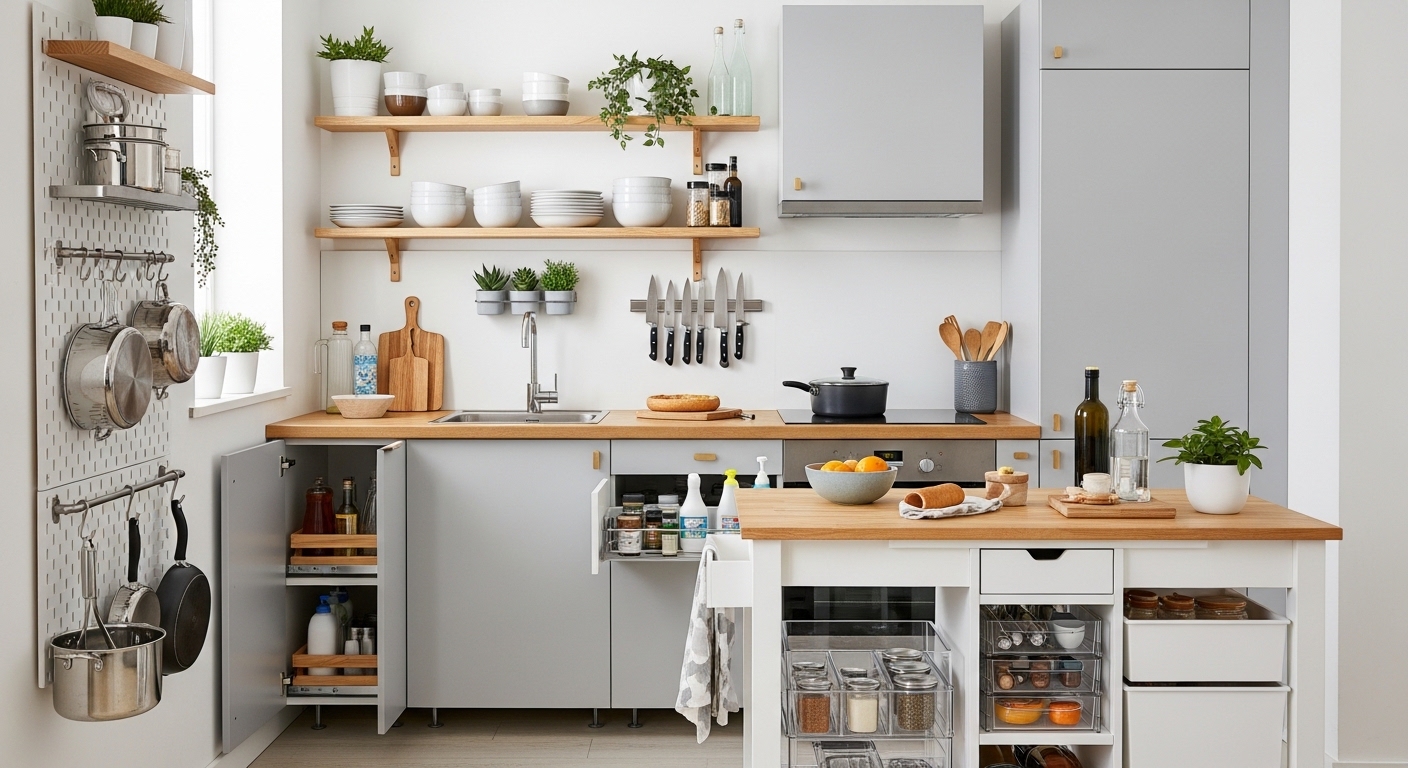
A small kitchen doesn’t have to mean constant clutter, cramped countertops, or the frustration of never finding what you need. In fact, with the right strategies and a few targeted upgrades, you can completely transform how your kitchen feels and functions — without tearing out a single wall or going through a full renovation.
Whether you’re cooking for a family, entertaining guests, or simply trying to make your daily routine more efficient, smart storage solutions can make an enormous difference. The key is knowing where to look, what to add, and how to make every inch count. Here’s how Houston-area homeowners are doing exactly that.
Start by Rethinking Your Cabinet Layout
Most homeowners assume their cabinets are working as hard as they can. But walk into almost any kitchen and you’ll find the same problems: a cabinet stuffed with mismatched lids, a corner cabinet that’s nearly impossible to reach into, or shelves that are too far apart to use efficiently.
Before buying anything new, take stock of what you have. Pull everything out of your cabinets and evaluate what you actually use on a weekly basis. Be honest about what’s taking up premium space unnecessarily. Once you’ve done this audit, you’ll likely find more usable space than you thought — it just needs to be organized differently.
The next step is adjusting shelf heights. Many stock cabinets come with shelves set at a single height, which means you’re often wasting the vertical space between items. Adding adjustable shelf pins and repositioning shelves to match the actual height of your stored items can double your effective storage with zero investment.
For deeper cabinets, lazy Susans, pull-out trays, and stacked shelf risers are game-changers. These simple additions mean you no longer have to dig to the back of a cabinet to find something — everything becomes accessible, and you’ll be surprised how much more fits when it’s well-organized.
If you’re ready to take it further, investing in custom kitchen cabinets designed specifically for your kitchen’s dimensions and your household’s needs is one of the most effective upgrades available. Unlike stock options, custom cabinets are built to fit your exact space, maximizing every corner and wall.
Go Vertical: Use the Full Height of Your Walls
One of the most underused storage opportunities in any kitchen is the vertical space above the cabinets and between the tops of upper cabinets and the ceiling. Most kitchens leave this zone completely empty, but it’s prime real estate for items you use less frequently.
Adding a second row of upper cabinets that reach all the way to the ceiling eliminates the dead zone above your existing cabinetry. This is where you can store seasonal bakeware, serving platters for holidays, or small appliances you rotate through occasionally. Use clear bins or labeled baskets to keep things organized and easy to grab when needed.
If extending your upper cabinets isn’t an option, open floating shelves installed above the existing cabinetry offer a stylish, functional alternative. You can display decorative items while storing everyday dishes and glasses within easy reach.
For kitchens with a pantry wall or tall wall space, consider tall pull-out pantry units or column-style cabinet towers. These provide enormous storage capacity without requiring additional floor space. This pairs beautifully with custom storage solutions that Ace Kustoms designs to work with your exact layout and cooking habits.
Don’t overlook the insides of cabinet doors, either. Mounted racks, hooks, and organizers on the interior of cabinet doors can hold spices, cleaning supplies, cutting boards, and more — effectively creating an extra shelf without adding any bulk.
Make the Most of Countertop Space
In a small kitchen, countertop space is everything. Losing even a few inches to clutter or inefficient appliance placement can make cooking feel chaotic. Here are practical ways to reclaim that surface.
First, get your frequently used small appliances off the countertop and into a cabinet or appliance garage. If you use your coffee maker or toaster every morning, keep them accessible but tucked away. Consider a custom cabinet section with interior electrical outlets so appliances can be stored and used from within the cabinet, keeping counters clear.
Magnetic knife strips mounted on a backsplash or wall eliminate the need for a bulky knife block on the counter. Similarly, a wall-mounted paper towel holder frees up a surprising amount of space.
Pull-out cutting boards built into the cabinetry are another excellent upgrade. They extend when you need them and tuck back in when you don’t, giving you workspace on demand without permanently occupying counter real estate.
Undermount sinks maximize the usable counter area compared to drop-in styles. If you’re updating plumbing anyway, this small change can create noticeably more prep space in compact kitchens.
Under-cabinet lighting not only improves visibility when cooking but also creates the illusion of a more open, spacious kitchen. Bright, well-lit counter space feels larger and more functional. For a full breakdown of your options, custom under/over cabinet lighting solutions can help you choose the right fixtures for your layout.
Optimize the Kitchen Island or Peninsula
If your small kitchen has a portable island or a small peninsula, you may not be using it to its full potential. The base of an island is often wasted on open shelving that collects dust, when it could house drawers, pull-out shelves, or even a wine rack.
Consider adding a custom kitchen island with built-in storage tailored to what you actually need. Deep drawers are ideal for pots and pans. Shallow drawers work well for utensils, foil, and plastic wrap. A combination of both gives you flexibility.
For kitchens without an island, a rolling butcher block cart can provide extra prep surface and storage without being permanent. Tuck it away when not in use, or position it as a coffee bar or snack station.
If you have a peninsula with seating, the underside facing the kitchen can be fitted with cabinetry while the other side serves as a breakfast bar. This dual-purpose approach is common in well-designed small kitchens where every surface does double duty.
The Pantry Problem: Smart Solutions for Small Kitchens
Many small kitchens either have no pantry at all or have one that’s never been organized efficiently. But you don’t need a walk-in pantry to have great food storage — you just need the right systems.
A pull-out pantry column installed in a narrow gap between appliances or beside the refrigerator can hold an impressive amount of canned goods, condiments, and dry staples. These slim pull-out units slide out completely, giving you full visibility and access to everything stored inside.
If wall space allows, a built-in pantry cabinet with adjustable shelving, pull-out drawers, and door-mounted racks can house a week’s worth of groceries for a family. Organizing categories into zones — baking supplies, snacks, canned goods, oils and condiments — and labeling sections makes it easy for everyone in the household to find and return items to the right spot.
Lazy Susans installed in corner pantry sections eliminate the dreaded black hole effect where items disappear behind each other and are forgotten. Turntables also work well on pantry shelves to keep spices, oils, and jars accessible from any angle.
For households that are serious about kitchen organization, custom cabinetry and built-ins offer the most tailored solution. Rather than working around the limitations of pre-built products, a custom approach builds storage specifically for how you shop, cook, and live.
Hidden Storage You May Be Missing
Experienced kitchen designers know that the best storage is often the storage you don’t see. Here are some hidden opportunities many homeowners overlook.
Toe-kick drawers. The narrow space beneath base cabinets — the toe kick — is usually completely wasted. Specially designed shallow drawers can slide into this space and hold baking sheets, cutting boards, tablecloths, or flat items that are otherwise awkward to store.
Above-refrigerator cabinet. The space above the refrigerator is frequently ignored, but a built-in cabinet here can hold large platters, extra paper products, or infrequently used appliances.
Appliance garages. A built-in appliance garage with a roll-up or hinged door keeps countertop appliances hidden when not in use while keeping them plugged in and accessible. These are particularly useful for coffee stations and toaster setups.
Drawer organizers and dividers. Even existing drawers can be dramatically improved with custom-fitted organizers. A drawer that holds twenty utensils jumbled together is effectively wasted — proper dividers can organize that same drawer to hold twice as much cleanly.
Pull-out trash and recycling cabinets. A dedicated pull-out cabinet for trash and recycling keeps bins off the floor and frees up floor space that was previously occupied by freestanding bins.
Upgrade Strategically, Not Completely
One of the biggest mistakes small kitchen owners make is assuming they need to do everything at once — or that nothing short of a full remodel will make a meaningful difference. The reality is that strategic, targeted upgrades have an outsized impact in compact spaces.
Start with the changes that address your biggest daily frustrations. If you’re constantly digging for pots and pans, pull-out lower cabinet organizers should come first. If counter clutter is the main issue, start with storage solutions that move items off the surface.
For homeowners in Houston and the surrounding areas, Ace Kustoms specializes in exactly this kind of targeted kitchen improvement — from single cabinet upgrades to complete custom cabinetry systems. You can explore the full range of kitchen remodels available to understand what level of service makes sense for your goals and space.
The key is to prioritize changes that compound — each improvement makes the next one more effective. Clear the countertops first, then organize the cabinets, then add pull-outs and inserts. Over time, these incremental changes add up to a kitchen that functions as well as one twice its size.
Final Thoughts
A small kitchen doesn’t have to be a constant source of frustration. With smart vertical storage, optimized cabinet layouts, creative use of hidden space, and targeted custom solutions, you can dramatically improve how your kitchen functions — without the disruption and expense of a full remodel.
The best storage systems are the ones designed around how you actually live: what you cook, how often you shop, how many people use the kitchen, and what your daily routine looks like. That’s where working with a custom cabinetry specialist makes all the difference.
If you’re ready to explore what’s possible in your kitchen, Ace Kustoms works with homeowners across Houston and the greater Gulf Coast region to design and install storage solutions that are built to last and tailored to fit. The transformation often starts with a single conversation about what’s not working — and ends with a kitchen that finally does.


Comments are closed