
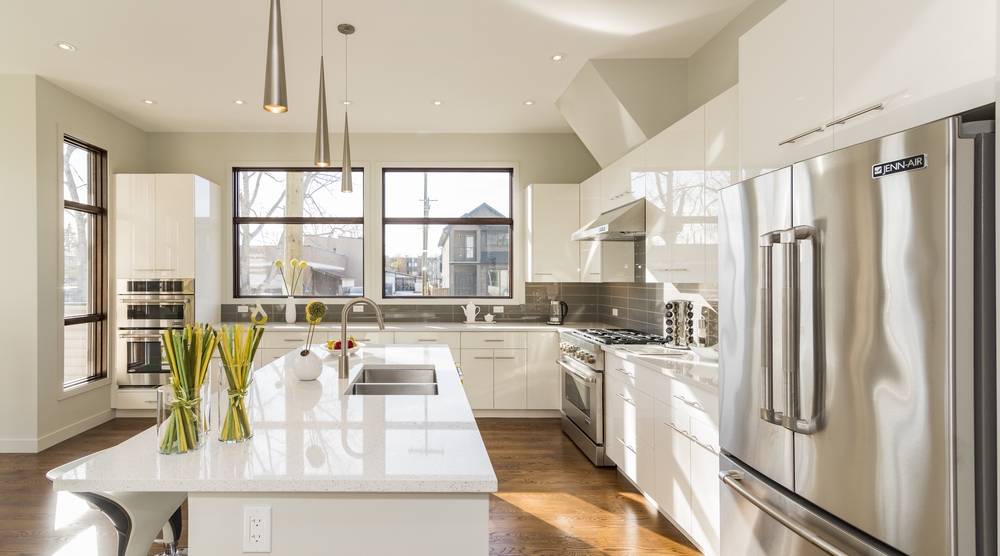
Walk into a kitchen or bathroom that just feels right, and you’re rarely thinking about the reason why. You’re not bending awkwardly to reach a pot, you’re not standing on your toes for a coffee mug, and you’re not banging your knee on a cabinet door that swings the wrong way. That ease is not an accident. It’s the result of ergonomic design — the practice of shaping a space around how real human bodies actually move, reach, and function, rather than forcing people to adapt to a one-size-fits-all layout.
As more homeowners think long-term about their houses — whether they’re raising young kids, caring for aging parents, or simply planning to stay in their home for decades — ergonomic and accessible cabinetry has moved from a “nice extra” to a genuine design priority. This article breaks down what ergonomic cabinet design actually means, why it matters at every stage of life, and how thoughtful custom cabinetry can make a home more comfortable, safer, and more functional for everyone who lives in it.
What Does “Ergonomic Cabinet Design” Actually Mean?
Ergonomics is the science of designing spaces, tools, and systems to fit the people using them. In the context of cabinetry, that means paying close attention to things like:
- Reach zones — the height ranges a person can comfortably access without straining, stretching, or bending.
- Grip and motion — how hardware, drawers, and doors are operated, and how much force or dexterity that requires.
- Sightlines — whether you can actually see what’s stored inside a cabinet without crouching or craning your neck.
- Clearances — the open floor space needed to approach, turn, and use a cabinet, especially for anyone using a wheelchair, walker, or cane.
Traditional cabinetry is often built to standardized, generic dimensions that assume a single “average” user. Ergonomic design throws that assumption out and instead asks: who is actually going to be using this kitchen, this bathroom, this mudroom — and what do they need?
Why Ergonomics Matters More Than Most Homeowners Realize
1. It Reduces Physical Strain Over Time
Repeated bending, reaching overhead, and twisting to access cabinets isn’t just inconvenient — over years, it contributes to back pain, shoulder strain, and joint stress. Lower drawer banks instead of deep base cabinets, pull-down shelving in upper cabinets, and properly placed work zones all reduce the repetitive strain that builds up from daily kitchen and bathroom use.
2. It Supports Aging in Place
Most homeowners want to stay in their homes as they age, rather than relocating to assisted living. Ergonomic cabinetry is one of the most practical ways to support that goal. Features like lowered countertop sections, knee clearance under sinks, lever-style hardware instead of small knobs, and well-lit, easy-to-reach storage all make a home safer and more livable for older adults — often without making the space look clinical or “medical.” Done well, accessible design simply looks like good design.
3. It Makes Homes More Inclusive for People With Disabilities
For anyone using a wheelchair, walker, or living with limited mobility, dexterity, or vision, standard cabinet heights and hardware can turn everyday tasks into real obstacles. Ergonomic design addresses this directly through wider clearances, lower work surfaces, accessible storage solutions, and hardware that doesn’t require fine motor control or significant grip strength to operate.
4. It Benefits Children and Multigenerational Households
Ergonomics isn’t only about reducing difficulty for adults — it’s also about making spaces genuinely usable for kids. Lower drawer pulls, accessible everyday-item storage, and rounded edges all make a kitchen safer and more independence-friendly for younger family members, which matters more and more as multigenerational households become common.
Core Principles of Ergonomic and Accessible Cabinet Design
Varying Counter and Cabinet Heights
A single uniform counter height across an entire kitchen assumes everyone using that space is the same height and has the same mobility. In reality, ergonomic kitchens often include multiple work-surface heights — a lower section for seated food prep or for shorter household members, and a standard-height section for other tasks. This kind of zoning is far easier to plan into custom kitchen cabinets from the outset than to retrofit later.
Smart Storage Placement
Ergonomic design follows a simple rule: the things you use most should be the easiest to reach. That means everyday dishes, utensils, and pantry staples belong in the “prime zone” — roughly between hip and shoulder height — while rarely used items can go higher or lower. Pull-out shelves, drawer organizers, and pull-down upper shelving all help bring storage within comfortable reach rather than requiring stretching or stepping stools. This is where well-planned custom storage solutions make a real difference, since they can be tailored to a household’s actual habits instead of a generic layout.
Accessible Hardware
Hardware is one of the simplest, highest-impact ergonomic upgrades. Lever-style handles and D-shaped pulls are far easier to operate than small round knobs, especially for anyone with arthritis, limited grip strength, or reduced dexterity. Soft-close drawers and doors also reduce the force needed to operate cabinetry safely and prevent slamming, which matters for both small children and aging hands alike.
Knee and Toe Clearance
In kitchens and bathrooms designed for wheelchair access or seated use, clearance beneath counters and sinks is essential. Open knee space allows someone to roll up to a counter or vanity and work comfortably, rather than being blocked by a solid cabinet base. This kind of thoughtful clearance planning is especially important in bathroom design, where space is often tighter to begin with — something worth discussing early when planning custom bathroom vanities.
Closet and Wardrobe Accessibility
Closets are an often-overlooked piece of the accessibility conversation. Lowered hanging rods, pull-down clothing racks, and well-organized shelving at varied heights can make a huge difference for anyone who struggles with overhead reaching. A thoughtfully designed custom closet solution can incorporate these features without sacrificing storage capacity or visual appeal.
Lighting as an Ergonomic Tool
Good lighting is just as much a part of ergonomic design as physical layout. Poor visibility inside cabinets and drawers forces people to feel around blindly or strain to see what they’re reaching for — both of which increase the risk of dropped items or accidental injury. Under-cabinet and in-cabinet lighting brightens work surfaces and storage interiors, making it far easier (and safer) to locate items at a glance, particularly for household members with reduced vision.
Designing for the Whole Household, Not Just One Person
One of the biggest misconceptions about accessible design is that it only benefits one person in the household — typically whoever has a mobility limitation. In practice, the best ergonomic cabinetry is designed with everyone in mind simultaneously. A kitchen with a lowered prep section, accessible storage, and easy-grip hardware doesn’t just help a grandparent with arthritis; it also helps a child reach their own snacks independently, a tired parent unloading groceries after work, and a guest who’s simply unfamiliar with the space.
This is sometimes called “universal design” — the idea that spaces built to be accessible for people with the widest range of physical abilities end up working better for everyone, not just those with specific needs. It’s a useful mindset shift: instead of treating accessibility as a special accommodation, it becomes simply good design practice.
Where to Start: Practical Entry Points for Ergonomic Upgrades
You don’t need to renovate an entire home at once to start incorporating ergonomic principles. Some of the most effective starting points include:
- Reworking base cabinets to include more drawers instead of deep, hard-to-reach lower cabinets with doors.
- Upgrading hardware throughout the kitchen and bathrooms to lever-style or D-pulls.
- Adding pull-down or pull-out shelving to upper cabinets that are otherwise hard to access.
- Reassessing closet layouts, especially in primary bedrooms, to lower frequently used hanging and shelf space.
- Improving lighting in cabinets, pantries, and closets that tend to be dim or shadowed.
For larger projects, ergonomic thinking is best introduced at the planning stage of a full kitchen remodel, where counter heights, clearances, and storage zones can be designed holistically rather than bolted on afterward.
A Long-Term Investment in Comfort and Independence
Ergonomic cabinet design isn’t a passing trend — it reflects a deeper shift in how homeowners think about their living spaces. Rather than designing a kitchen or bathroom for a single moment in time, ergonomic design plans for the full arc of a household’s life: young families, busy working years, and the later years when mobility and ease of use become increasingly important.
The good news is that ergonomic and accessible features no longer mean sacrificing style. Modern cabinetry can incorporate varied heights, accessible hardware, smart storage, and better lighting while still looking sleek, custom, and intentional — because it is. When these principles are built in from the start by a team that understands both the functional requirements and the aesthetic goals, the result is a home that adapts to its occupants instead of asking them to adapt to it.
Whether you’re planning ahead for aging in place, designing a home that works for multiple generations under one roof, or simply want a kitchen and bathroom that feel genuinely comfortable to use every day, ergonomic cabinet design is one of the most practical investments you can make in your home’s long-term livability.


Comments are closed