
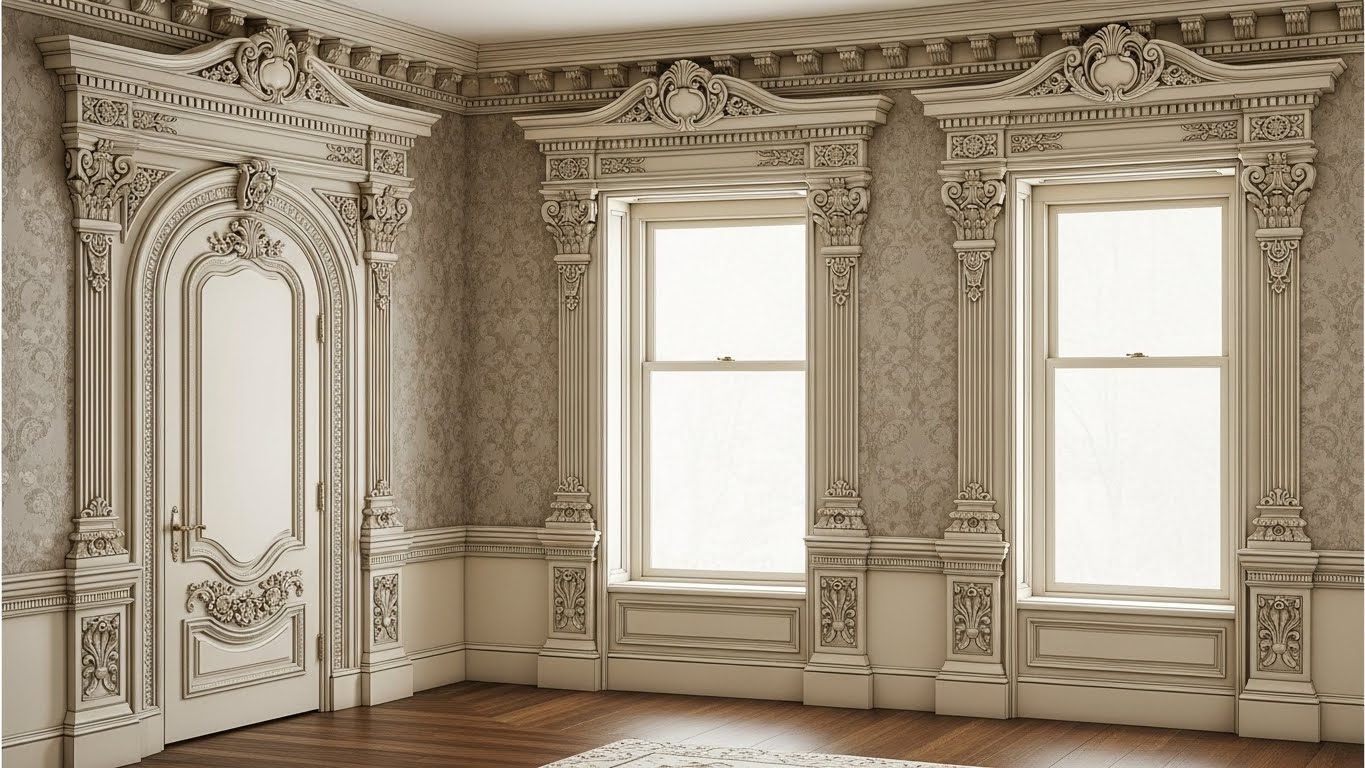
Walk into any home that feels “finished” and chances are you’re noticing trim without even realizing it. Crown molding tracing the ceiling line, clean baseboards grounding the walls, door casings that frame an entryway just right — trim is the quiet detail that pulls a room together. Skip it, or get the style wrong, and even a beautifully painted, well-furnished room can feel unfinished or oddly proportioned.
For Houston homeowners planning a renovation or new build in 2026, choosing the right interior trim style is one of those decisions that pays off for years. It affects resale value, ties your design choices together, and has to hold up against our specific climate. This guide walks through everything you need to know to choose trim that fits your home, your style, and the realities of living in Southeast Texas.
Why Trim Style Matters More Than You Think
Trim isn’t just decorative filler. It serves real architectural functions — covering gaps between walls, floors, and ceilings, protecting wall edges from daily wear, and creating visual transitions between spaces. But beyond function, trim sets the tone for your entire interior.
A home with simple, minimal trim reads modern and understated. A home with layered crown molding, deep baseboards, and detailed casings reads traditional and formal. Get a mismatch — say, ornate Victorian-style crown molding in a sleek contemporary kitchen — and the disconnect is jarring, even if you can’t immediately put your finger on why.
This is especially relevant in Houston, where you’ll find everything from 1940s bungalows in the Heights to brand-new builds in Fulshear and Katy. The “right” trim style depends heavily on your home’s architecture, your neighborhood’s character, and how you actually want the space to feel.
Start With Your Home’s Architecture
Before you fall in love with a trim style on Pinterest, look at your home’s bones. The architecture should guide the decision, not fight against it.
Traditional and Craftsman homes (common throughout older Houston neighborhoods and parts of Montgomery County) generally call for more substantial trim — wider baseboards, multi-piece crown molding, and chunky door and window casings. These details echo the era the home was built in and tend to increase perceived value when done well.
Modern and transitional homes (frequently seen in newer developments across Fort Bend and Harris counties) lean toward cleaner lines. Think flat-panel baseboards, simple square casing, and crown molding that’s understated or skipped entirely in favor of a clean ceiling-to-wall transition.
Farmhouse and ranch-style homes, popular in suburban pockets around the Houston metro, often mix it up — shiplap accents, simple board-and-batten detailing, and trim that feels handcrafted rather than mass-produced.
If you’re unsure which category your home falls into, our team at Ace Kustoms Cabinets & Trim can walk through your space and recommend a style that complements what’s already there. Our Trim Installations service covers everything from crown molding to baseboards and decorative paneling, tailored to your home’s existing character.
The Main Interior Trim Styles to Consider
1. Baseboards
Baseboards are the foundation of any trim package — literally. They run along the bottom of your walls and come in a range of heights and profiles.
- Traditional baseboards (often 5 to 7 inches tall with decorative profiles) suit older homes and add a sense of formality.
- Modern baseboards (typically flat-profile, 3 to 5 inches) work well in contemporary spaces where you want a clean, low-key transition.
- Tall baseboards have become a popular 2026 trend in Houston-area new builds, even in otherwise modern homes, because they add a subtle architectural statement without overwhelming the room.
2. Crown Molding
Crown molding sits where the wall meets the ceiling and is one of the most impactful upgrades you can make to a room’s perceived quality.
- Simple crown molding (a single, narrow profile) adds polish without drawing too much attention.
- Layered or built-up crown molding combines multiple profiles for a more dramatic, formal look — ideal for dining rooms, primary suites, or formal living areas.
- Coffered ceilings, while technically a step beyond standard crown molding, have grown in popularity for Houston living rooms and studies that want a custom, high-end feel.
3. Door and Window Casing
Casing frames your doors and windows, and the profile you choose should generally match your baseboard style for visual consistency.
- Colonial casing features classic curves and is a safe, versatile choice for most traditional homes.
- Flat or square casing is the go-to for modern and transitional interiors, offering clean lines that don’t compete with other design elements.
- Craftsman-style casing, with its flat boards and simple header detail, pairs beautifully with the Craftsman and bungalow homes scattered throughout the Houston Heights and surrounding historic neighborhoods.
4. Wainscoting and Board-and-Batten
These wall treatments go beyond baseboards and casing to add texture and dimension to an entire wall.
- Traditional wainscoting (raised or recessed panel) suits formal dining rooms and entryways.
- Board-and-batten, a simpler vertical-strip style, has surged in popularity for mudrooms, hallways, and accent walls in farmhouse and transitional Houston homes alike.
If your renovation includes a full room overhaul, it’s worth thinking about door and trim details together for a cohesive finish. Our Door Installations service pairs naturally with trim work so the two elements are installed and finished as one seamless project.
Matching Trim to Room Function
Not every room needs the same trim treatment, and in fact, varying it slightly room to room can add intentional rhythm to a home.
- Living and dining rooms are where homeowners tend to invest in more detailed crown molding and wainscoting, since these are the spaces guests see most.
- Kitchens often call for simpler trim that won’t compete with cabinetry, backsplash, and countertop details.
- Bedrooms can handle a slightly more relaxed approach — clean baseboards and simple casing are usually enough.
- Bathrooms and mudrooms benefit from moisture-conscious trim choices and simpler profiles that are easier to clean and maintain.
Speaking of cabinetry, trim style and cabinet style should feel like they belong to the same design language. If you’re updating trim throughout your home, it’s worth a look at our Custom Cabinetry & Built-Ins options to make sure your millwork and casework tell a consistent story from room to room.
Houston Climate Considerations for Trim Materials
Trim style is one decision — trim material is another, and in Southeast Texas, material choice matters more than homeowners often expect.
Houston’s humidity, heat swings, and occasional flooding risk in low-lying areas mean that trim materials need to handle moisture without warping, swelling, or attracting mold. A few practical points to keep in mind:
- Solid wood trim offers the richest look and can be stained or painted, but it’s more sensitive to humidity fluctuations and may require more maintenance in coastal Galveston County or Chambers County homes.
- MDF (medium-density fiberboard) trim is a popular, cost-effective option for painted finishes and performs well in climate-controlled interiors, though it’s less forgiving of direct moisture exposure.
- PVC and composite trim have become increasingly common for Houston-area bathrooms, mudrooms, and homes in flood-prone zones because they resist moisture far better than wood or MDF.
A knowledgeable trim contractor will factor in your home’s specific location — whether you’re closer to the Gulf in Galveston County or further inland in Montgomery County — when recommending materials, not just style.
2026 Trim Trends Worth Knowing
Trim styles evolve more slowly than paint colors or furniture trends, but a few directions are clearly shaping Houston interiors this year:
- Tall, simple baseboards are replacing the ornate, multi-step profiles that dominated for the past decade, even in otherwise traditional homes.
- Matte black and dark-painted trim is showing up as an accent choice for window casing and door frames, adding contrast against white or neutral walls.
- Textured wall treatments like vertical board-and-batten and shiplap continue to expand beyond accent walls into full rooms, hallways, and stairwells.
- Minimal crown molding or none at all is increasingly common in new-construction homes across Fort Bend and Harris counties, reflecting a broader shift toward clean, uncluttered ceiling lines.
None of these trends mean you should abandon a style that suits your home’s architecture just to chase what’s current. The best trim choices balance what’s timeless for your home’s structure with details that feel current and intentional.
How to Make the Final Decision
If you’re still weighing options, a few practical steps can help narrow things down:
- Walk through your home room by room and note which trim elements are already present. Matching or thoughtfully evolving existing trim usually looks more cohesive than a jarring contrast.
- Pull inspiration from homes with similar architecture, not just homes you like in general. A trim style that looks stunning in a modern Katy new build may feel out of place in a 1960s ranch in Pearland.
- Think beyond the current trend cycle. Trim is a long-term investment, and overly trendy choices can date a home faster than neutral, well-proportioned trim that suits the architecture.
- Get a professional opinion. An experienced trim installer can spot proportion and material issues that aren’t obvious until the work is complete — and can save you from costly do-overs.
Final Thoughts
Choosing the right interior trim style for your Houston home comes down to understanding your architecture, your local climate, and how each room functions — then layering in personal style on top of that foundation. Whether you’re drawn to tall modern baseboards, layered crown molding, or a board-and-batten accent wall, the goal is the same: trim that looks intentional, not incidental.
If you’re ready to explore options tailored specifically to your home, the team at Ace Kustoms Cabinets & Trim has spent years helping Houston-area homeowners get this detail right — from material selection to final installation. Reach out to start the conversation about what trim style makes the most sense for your space.


Comments are closed