
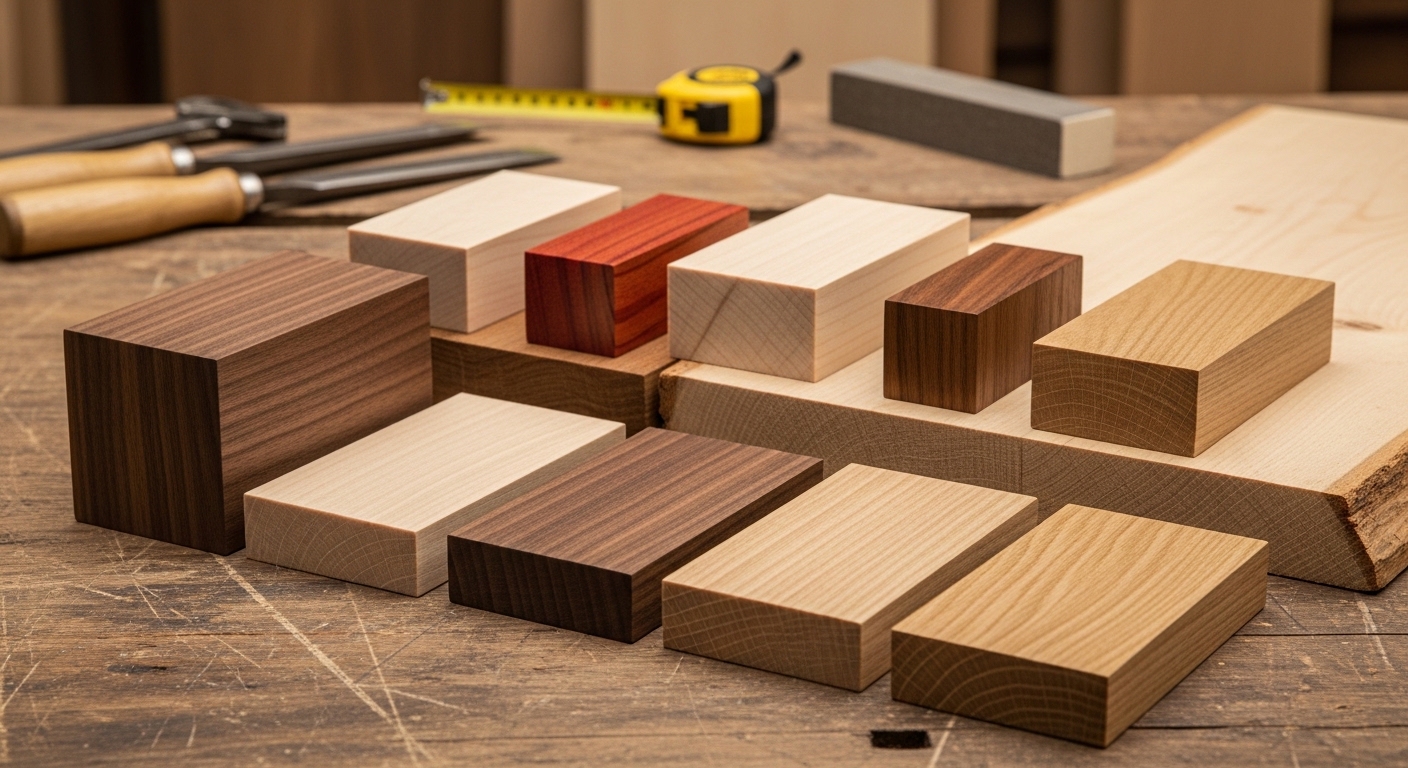
When homeowners invest in custom cabinetry, the excitement usually centers on door styles, hardware, and finishes. But experienced craftsmen know the most important decision happens long before any of that — it’s the wood itself. Choose the right species and you’ll have cabinets that age beautifully, hold up under daily use, and complement your home’s character for decades. Choose poorly, and even the most stunning finish can’t save them.
This guide walks you through everything you need to know about selecting wood for custom cabinets, from understanding how different species behave to matching the right wood to the right room in your home.
Why Wood Species Matters More Than You Think
Every wood species has a unique combination of hardness, grain pattern, moisture resistance, and workability. These properties directly affect how your cabinets look, how they hold up, and how well they accept stains or paints. A wood that’s ideal for kitchen cabinets may be a poor fit in a humidity-prone bathroom, and a wood that’s perfect for painted finishes may be completely wrong if you want a natural wood look.
Understanding these properties upfront saves a lot of heartache later. When you work with a skilled team on custom cabinetry and built-ins, the wood selection conversation should happen at the very beginning of the design process — not as an afterthought.
Hardness: The Foundation of Durability
The Janka hardness scale measures how much force it takes to embed a small steel ball halfway into a wood sample. It’s the most widely used indicator of a wood’s resistance to dents, scratches, and everyday wear. For cabinets, especially in kitchens and high-traffic areas, hardness matters a great deal.
Soft maples have a Janka rating around 950 lbf, which is enough for cabinet boxes but can show wear on heavily used doors and drawer fronts over time. Hard maple, on the other hand, scores around 1,450 lbf — one of the hardest domestic species available, and a top choice for custom kitchen cabinets that need to stand up to years of opening, closing, bumping, and cleaning.
Red and white oak both fall in the 1,200–1,360 lbf range, making them durable everyday performers. Cherry comes in at around 950 lbf — slightly softer, but still more than adequate for most residential cabinetry.
The takeaway: for kitchen cabinets and bathroom vanities, aim for a Janka rating of at least 900 lbf. For light-use spaces like home offices or entertainment centers, you have more flexibility.
The Most Popular Cabinet Wood Species
Maple
Maple is arguably the most versatile cabinet wood available. Its tight, consistent grain makes it ideal for painted finishes, as it absorbs paint evenly without blotchy spots. Hard maple’s pale, creamy color is also beautiful when stained, especially in lighter tones.
One thing to know about maple: it doesn’t take dark stains well. The grain can become blotchy when dark pigments are applied, so if you have your heart set on a deep espresso or walnut-style finish, maple may not be your best choice.
Best for: Painted cabinets, light stains, high-traffic kitchens
Oak
Oak has been a cabinet staple for generations, and for good reason. Its pronounced, open grain gives it a strong visual character that works beautifully with traditional and rustic design aesthetics. Red oak has a warm, slightly pinkish undertone, while white oak is cooler and more neutral.
White oak, in particular, has surged in popularity in recent years. Its tighter grain compared to red oak makes it more moisture-resistant, and its contemporary, Scandinavian-influenced look has made it a favorite for modern and transitional kitchens.
Best for: Traditional, farmhouse, or modern designs; natural and medium stains
Cherry
Few woods age as gracefully as cherry. It starts out as a warm, pale pinkish-tan and deepens over time into a rich reddish-brown through a process called photosensitivity — exposure to light slowly transforms the color. Homes with cherry cabinets that are fifteen or twenty years old often display a depth and warmth that’s genuinely impossible to replicate with a stain.
Cherry has a fine, straight grain with occasional wavy or curly figuring that adds visual interest. Because it darkens naturally, it’s best used with light to medium stains that complement rather than fight its natural evolution.
Best for: Traditional, transitional, and formal designs; homeowners who appreciate aged character
Walnut
Walnut is a premium option that delivers unmatched natural beauty. Its rich, chocolate-brown tones with darker streaking create a look that’s distinctive and luxurious. Because walnut is already so visually striking, it’s often finished with clear coats rather than opaque stains, letting the natural color take center stage.
At around 1,010 lbf on the Janka scale, walnut is a touch softer than maple or oak but still durable enough for most residential applications. It’s an especially popular choice for high-end kitchens, home offices, and custom entertainment centers where the visual impact of the wood is a central part of the design.
Best for: Upscale kitchens, home offices, entertainment centers; natural or clear finishes
Alder
Alder is worth mentioning because it’s sometimes underrated. Softer than maple or oak at around 590 lbf, it’s not ideal for heavy-use applications, but it has a remarkably uniform grain and accepts stains beautifully and evenly. In fact, alder is sometimes called “poor man’s cherry” because it can mimic the look of cherry at a lower point on the cost spectrum while still being a genuine hardwood.
Best for: Painted or medium-stain finishes; lower-traffic spaces
Grain and Figure: What You’re Actually Looking At
Wood grain refers to the direction and pattern of the wood fibers. “Straight grain” means the fibers run parallel and consistent — producing a cleaner, more uniform look. “Irregular grain” means the fibers are wavy, interlocked, or swirling, producing visual complexity that some homeowners love and others find busy.
Open-grain woods like oak and ash have large, visible pores that create a texture you can feel with your hand. These pores need to be filled before applying certain finishes, but they also contribute to the visual character of the wood. Closed-grain woods like maple and cherry have tiny pores that create a smoother surface, making them easier to paint or clear-coat cleanly.
When planning custom bathroom vanities, grain choice also matters for practicality. Tighter, closed-grain woods are generally better in moisture-prone environments because they offer fewer pathways for water to penetrate the surface.
Matching Wood to Finish: A Critical Relationship
The wood you choose shapes what finishes are available to you. Here’s how it breaks down:
Painted finishes work best on maple, poplar, and MDF (medium-density fiberboard) for flat-panel doors. These materials have consistent surfaces that show fewer grain lines through the paint. If you’re set on a painted look, hard maple is the most durable solid-wood option.
Stained finishes require woods with interesting natural grain — oak, walnut, cherry, and hickory all excel here. The grain pattern becomes the visual focal point, and the stain enhances rather than covers it.
Natural and clear finishes show the wood in its purest form. Walnut and cherry are the stars here, though any well-selected species can look stunning with a well-applied clear coat.
Considering the Room: Environment and Use
Every room in your home presents a different set of demands on your cabinet wood.
Kitchens are the toughest environment. Heat from cooking, steam from boiling water, cleaning chemicals, and constant physical use all take a toll. For kitchen cabinetry, prioritize hardness (Janka 1,000+ lbf) and a durable finish. Maple, oak, and hickory are all strong performers here.
Bathrooms add moisture to the equation. Solid wood in bathrooms requires proper ventilation and a quality finish that seals the wood. Tighter-grain species like maple and cherry perform better in humid conditions than open-grain woods like oak. Properly finished plywood cabinet boxes are also a smart structural choice in bathrooms for moisture resistance. When planning a bathroom remodel, discuss your ventilation situation with your contractor before settling on a wood species.
Home offices and entertainment centers are lower-stakes environments in terms of moisture and wear. This opens the door to more visually expressive choices — a dramatic walnut for a home library built-in, or a statement piece in cherry for a custom entertainment wall. Explore what’s possible with custom entertainment centers designed around the wood you love.
Closets and storage areas are often candidates for cost-effective choices since visibility and wear resistance are less critical. Alder, poplar, or high-quality plywood with a painted finish can work beautifully and efficiently in these applications.
Solid Wood vs. Plywood: Understanding the Difference
Many homeowners assume custom cabinets are made entirely from solid wood, but that’s not typically the case — and for good reason.
Solid wood is used for cabinet doors, drawer fronts, and face frames because these are the visible elements where wood’s natural beauty shines. However, solid wood expands and contracts significantly with humidity changes, which can cause panels to crack or warp if used in large flat sections.
Plywood is the preferred material for cabinet boxes, shelves, and interior panels. It’s dimensionally stable (it doesn’t move with humidity the way solid wood does), strong, and flat. Quality plywood uses real wood veneer on the surface, so you still get the look of wood inside your cabinets.
When a cabinetmaker talks about “maple cabinets,” they typically mean maple solid wood on the doors and face frames, with maple-veneer plywood for the box. This is the industry standard for good reason — it combines solid wood’s beauty with plywood’s stability.
Questions to Ask Before You Decide
Before finalizing your wood selection, walk through these questions with your cabinetmaker:
What finish are you envisioning? If the answer is painted, maple or poplar are usually the right call. If you want to see the wood grain, oak, cherry, or walnut will serve you better.
How will the cabinets be used? High-traffic kitchens need harder species. Softer, more decorative woods can shine in lower-traffic spaces.
What’s the humidity situation in the room? Bathrooms and basements need tighter-grain species and moisture-resistant finishes.
What other materials will the cabinets sit next to? The wood you choose should complement your countertops, flooring, and wall colors. A skilled designer can help you see these relationships before committing.
How do you feel about natural aging? Cherry will look dramatically different in ten years than it does on day one. That’s a feature, not a flaw — but it’s something to decide intentionally.
Putting It All Together
Choosing wood for your custom cabinets is one of the most rewarding decisions in any home renovation because it’s so personal. There’s no single right answer — only the right answer for your home, your lifestyle, and your aesthetic. The best custom cabinetry work happens when you approach wood selection not as a checkbox on a list, but as a foundational creative decision.
Whether you’re outfitting a full kitchen renovation, adding a bathroom vanity, building out a home office, or creating custom storage solutions throughout your home, the wood species you choose will define how those spaces feel for years to come.
Work with a cabinetmaker who takes the time to walk you through your options, understands the properties of each species, and helps you connect your wood choice to every other decision in the project. That conversation — early, honest, and thorough — is where great custom cabinetry begins.


Comments are closed