
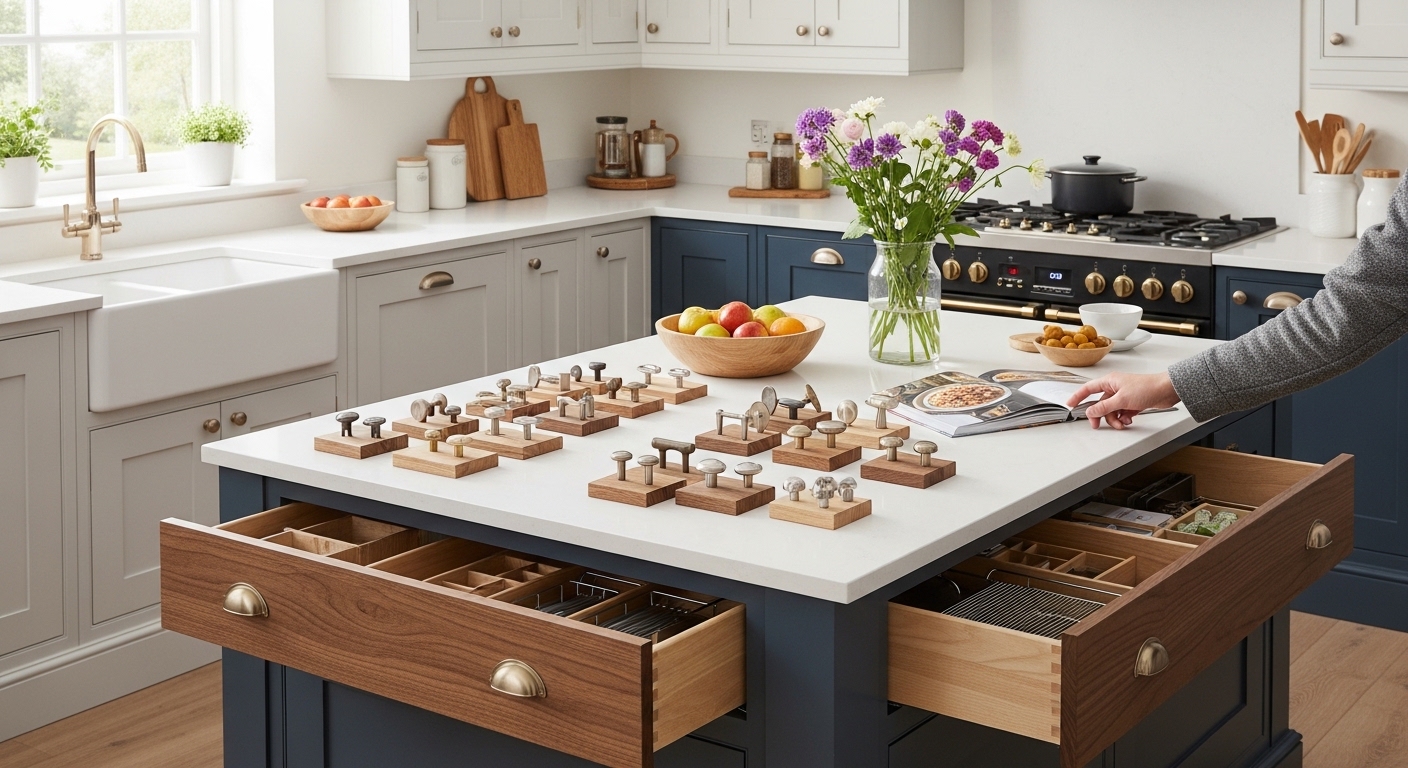
Walk into any beautifully designed kitchen and you’ll notice the cabinetry first — the clean lines, the rich finish, the thoughtful layout. But look closer, and you’ll find the real finishing touch isn’t the cabinet door itself. It’s the hardware. Knobs, pulls, and handles are small in size but enormous in impact. They’re the jewelry of the kitchen, the detail that ties an entire design together or, if chosen poorly, the detail that quietly undermines it.
Choosing cabinet hardware is one of those decisions homeowners often save for last, almost as an afterthought once cabinets, countertops, and flooring are already selected. In reality, hardware deserves just as much intention as any other element in your kitchen. It’s the part of the cabinet you touch every single day, and it’s often the first thing a guest’s eye catches when they walk into the room.
In this guide, we’ll walk through everything you need to know to choose cabinet hardware that complements your space, suits your lifestyle, and stands the test of time.
Why Cabinet Hardware Matters More Than You Think
Hardware does more than open a drawer. It sets the tone for your entire kitchen’s personality. A sleek matte black pull signals modern minimalism. An ornate bronze knob whispers traditional elegance. A brushed brass bar pull leans transitional, warm, and timeless.
Because hardware is one of the few elements you can change without a full renovation, it’s also one of the most powerful tools for refreshing a kitchen’s look. If you’ve ever wondered how a kitchen can look dramatically different with the same custom kitchen cabinets just by swapping the hardware, this is exactly why. The cabinets provide the structure and style foundation, but hardware adds the layer of character that makes a kitchen feel finished, intentional, and yours.
Start With Your Kitchen’s Overall Design Style
Before you fall in love with a particular knob shape or finish, take a step back and consider the design language of your kitchen as a whole. Hardware should feel like a natural extension of the space, not a separate decision made in isolation.
Traditional kitchens often pair beautifully with ornate, detailed hardware in finishes like oil-rubbed bronze, antique brass, or polished nickel. Look for rounded knobs, cup pulls, or hardware with subtle decorative etching.
Modern and contemporary kitchens lean toward simplicity. Think slim bar pulls, geometric knobs, and finishes like matte black, brushed gold, or stainless steel. The goal here is clean lines and understated sophistication.
Transitional kitchens, which blend traditional warmth with modern simplicity, tend to look best with hardware that splits the difference — simple shapes in warmer finishes like brushed brass or champagne bronze.
Farmhouse and rustic kitchens often call for hardware with a slightly weathered or matte texture, such as black iron, aged bronze, or unlacquered brass that will naturally patina over time.
If you’re working through a full kitchen renovation and not just a hardware refresh, this is also the right moment to think holistically about cabinetry, layout, and storage. Our team’s approach to kitchen remodels always considers hardware as part of the bigger design conversation from day one, rather than tacking it on at the end.
Match Hardware Finish to Your Fixtures
One of the most common mistakes homeowners make is choosing cabinet hardware in isolation, without considering the finishes already present in the room. Your faucet, light fixtures, and even cabinet hinges all contribute to a cohesive look.
That said, perfectly matching every metal finish in the kitchen isn’t actually necessary, and in many cases, a strictly matched palette can feel flat. Many designers now recommend mixing two complementary finishes — for example, a brushed nickel faucet paired with brushed gold cabinet pulls — to add depth and visual interest. The key is intentionality. A coordinated mix feels designed; a random mix feels disjointed.
If your kitchen includes multiple metal tones already, choose a hardware finish that either matches your primary fixture finish or pulls in a secondary accent color already present in the space, such as a metal accent in your lighting or barstools.
Knobs, Pulls, and Bars: Choosing the Right Hardware Type
Not all cabinet hardware functions the same way, and the type you choose can affect both the look and the daily usability of your kitchen.
Knobs are typically used on cabinet doors and are a great fit for smaller cabinets or upper sections where a compact piece of hardware looks proportionate. They come in countless shapes — round, square, oval, and sculptural designs — making them a versatile choice for almost any style.
Pulls are generally used on drawers, especially larger ones, because their horizontal orientation makes it easier to grip and pull with one motion. Longer pulls are particularly useful on wide drawers, such as those found in kitchen islands or pantry cabinetry, since they distribute pulling force more evenly and reduce strain on the drawer slides.
Cup pulls offer a more traditional, vintage-inspired look and work particularly well on furniture-style cabinetry or kitchens designed with a classic aesthetic in mind.
Edge pulls and integrated/finger pulls are popular in modern kitchens where a hardware-free, ultra-clean look is the goal. These recessed designs eliminate visible knobs and pulls altogether while still providing functional grip.
For kitchens with custom storage features — pull-out spice racks, deep drawer organizers, or specialty cabinetry — hardware selection becomes even more important, since certain pull styles function better with heavier or deeper drawers. If your project includes specialty storage, it’s worth discussing hardware compatibility early in the design process. Our custom storage solutions are designed with these functional details in mind, ensuring hardware isn’t just decorative but genuinely practical for how you use your kitchen.
Sizing and Proportion: The Detail Most People Miss
Hardware size matters more than most homeowners realize. A knob that’s too small on a large cabinet door looks lost and disproportionate, while an oversized pull on a narrow drawer can feel clunky and overwhelming.
As a general guideline:
- For drawers under 24 inches wide, a pull roughly one-third the width of the drawer typically looks balanced.
- For drawers over 24 inches, especially island or pantry drawers, longer pulls — sometimes spanning half the drawer’s width or more — tend to look more proportionate and provide better functional leverage.
- Knobs on cabinet doors generally look best when placed near the edge closest to the opening direction, at a height that feels natural to reach without bending.
If you’re unsure, it can help to mock up your hardware choices with painter’s tape on your existing cabinets before committing. Seeing the actual size and placement in your real kitchen lighting often reveals issues that are hard to judge from a small product photo.
Don’t Overlook Durability and Daily Use
Cabinet hardware gets touched, pulled, and gripped dozens of times a day, which means it needs to hold up to real wear. Finishes vary significantly in how they age:
- Powder-coated and PVD (physical vapor deposition) finishes tend to resist fingerprints, tarnishing, and scratching far better than standard plated finishes.
- Unlacquered brass will develop a natural patina over time — a feature some homeowners love for its lived-in character, but one to be aware of if you prefer a consistently uniform look.
- Matte finishes, particularly matte black, can show fingerprints more visibly than brushed or textured finishes, which is worth considering for high-traffic kitchens with kids or frequent cooking.
Choosing hardware with quality plating or coating now will save you the hassle of replacing tarnished, chipped, or discolored pieces just a few years down the road.
Bringing It All Together With Color and Finish Trends
Hardware doesn’t exist in a vacuum — it interacts directly with your cabinet color and finish. Warm cabinet tones like natural wood or cream often pair beautifully with brass, gold, or bronze hardware, while cooler cabinet finishes like navy, charcoal, or pure white tend to look striking with matte black, chrome, or brushed nickel.
If you’re still deciding on a cabinet color and want to understand how finish choices influence the overall mood and feel of a kitchen, our breakdown of cabinet finish color psychology is a great next step before finalizing your hardware selection. Making these two decisions together, rather than separately, almost always results in a more cohesive final design.
Final Thoughts: Small Details, Big Impact
Cabinet hardware truly is the jewel of the kitchen. It’s a small investment of attention that pays off in a polished, intentional, and personalized space. Whether you’re leaning toward sleek modern bar pulls, warm traditional knobs, or a mixed-metal modern-meets-classic look, the key is choosing hardware that feels connected to the rest of your kitchen’s story — not chosen in isolation at the last minute.
If you’re planning a kitchen update and want guidance on cabinetry, finishes, and hardware that work together seamlessly, our team is happy to walk you through the process from concept to installation, ensuring every detail — down to the smallest knob — feels like it belongs.


Comments are closed