
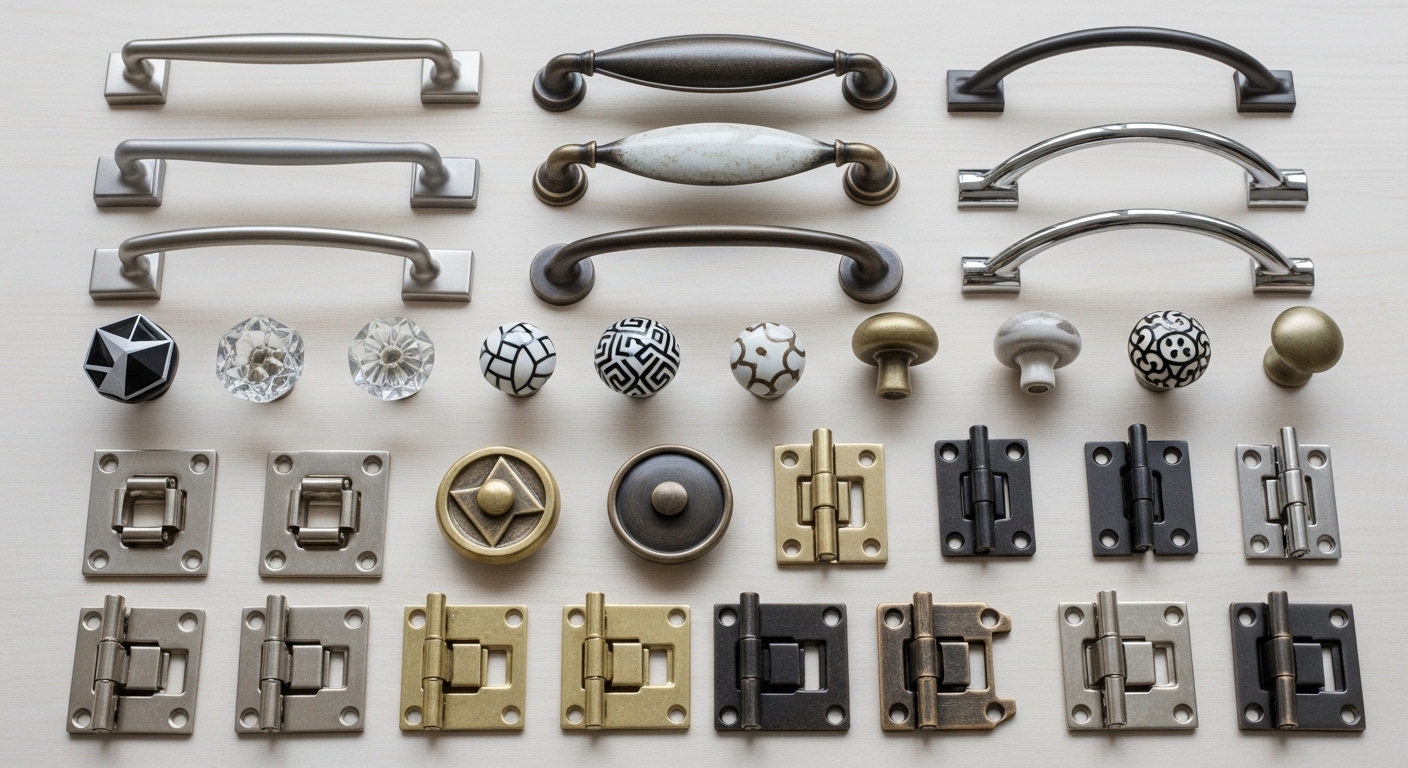
Why “Jewelry” for Your Cabinets is a Big Deal
You know that feeling when you put on a perfectly tailored suit or a great dress, but then you realize your shoes are falling apart? That’s exactly what happens when you spend thousands on gorgeous custom kitchen cabinets but settle for the cheapest hardware you can find at a big-box store.
I like to think of hardware as the jewelry of the room. It’s the finishing touch that ties everything together. But here’s the kicker: unlike a necklace, you actually have to use this jewelry fifty times a day. If it’s flimsy, it won’t just look bad—it’ll drive you crazy. Squeaky hinges, loose knobs, and pulls that catch on your pockets are the tiny annoyances that turn a dream kitchen into a headache.
This Cabinet Hardware Guide isn’t just about picking “pretty” things. It’s about understanding the mechanics, the materials, and the installation tricks that ensure your cabinets feel as good as they look for the next twenty years. Honestly, if you’re investing in your home, you deserve hardware that doesn’t feel like a toy.
If you’re ready to get into the nitty-gritty of metal and mechanics, let’s go. We’re going to walk through this step-by-step so you can make decisions like a pro.
Prerequisites: What You Need to Know First
Before you start scrolling through endless pages of brass and matte black, you need to do a little homework. You don’t need a degree in engineering, but a little preparation goes a long way.
- The “Count”: This sounds obvious, but you’d be surprised how many people miss a door or a drawer. Count twice. Buy three extra of everything. Trust me, if a screw breaks or a finish is slightly off, you’ll be glad you have spares.
- Hole Distance (C-C): If you’re replacing old hardware, measure the “center-to-center” distance between the screw holes. Standard sizes are usually 3 inches, 96mm, or 128mm. If you pick something different, you’re looking at wood filler and a whole lot of sanding.
- The Style Vibe: Are your cabinets Shaker, slab, or raised panel? Your hardware should complement the lines. Thick, chunky pulls look great on heavy doors but can overwhelm a delicate vanity.
Step-by-Step Instructions for Choosing Hardware
1. Decide Between Knobs, Pulls, or Both
Look, there aren’t any hard rules here, but there are definitely “best practices.” Knobs are generally cheaper and easier to install (one hole!). Pulls are more ergonomic, especially for heavy drawers or for people with arthritis.
- The Pro Approach: Use knobs on doors and pulls on drawers. It creates a nice visual hierarchy.
- Expected Outcome: A balanced look that feels functional. Pulling a heavy drawer open with a tiny knob is a recipe for a sore finger and a loose screw.
2. Choose Your Material (Metal Matters!)
This is where people usually get tripped up. Not all “brass” is brass.
- Solid Brass: The gold standard. It’s heavy, it doesn’t rust, and it feels expensive because it is.
- Zinc Alloy: Very common. It’s lighter and cheaper. It’s fine for low-traffic areas, but the finish can wear off over time.
- Stainless Steel: The winner for durability. If you’re doing a bathroom remodel, stainless is a smart play because it laughs at humidity.
A Quick Aside: I once saw a client choose these gorgeous, trendy “leather” pulls for a high-traffic kitchen. Within six months, the oils from their hands turned the leather into a sticky, stained mess. Stick to metals for the kitchen; save the exotic materials for thecustom office solutions.
3. The “Hinge” Factor: Don’t Ignore the Guts
Hinges are the unsung heroes. You won’t see them much, but you’ll feel them every time you open a door.
- Soft-Close: Just get them. Seriously. Life is too short for slamming cabinet doors.
- Overlay vs. Inset: This depends entirely on how your cabinets are built. If the door sits inside the frame, you need inset hinges. if it sits on top, you need overlay hinges.
4. Determine Placement and Scale
Placement is where the “art” comes in.
- The Rule of Thirds: For pulls on drawers, the pull should be about 1/3 the width of the drawer. A tiny 3-inch pull on a 36-inch wide drawer looks… well, it looks like an accident.
- Vertical vs. Horizontal: Knobs on doors usually go 2-3 inches from the bottom/top corner. Pulls on doors should be vertical; pulls on drawers should be horizontal. Simple, right?
Visual Descriptions: What to Look For
This visual helps you see how light reflects off different finishes. Notice how Satin Brass has a warm glow, while Polished Nickel has a slight yellow undertone compared to the “blue” of Chrome.
When we talk about hardware that lasts, this is it. Notice how the slide is hidden underneath the drawer? That’s what you’re looking for when you invest in custom cabinetry and built-ins.
Troubleshooting Common Issues
- The “Wobble”: If your knob keeps spinning, the screw might be too long. Don’t just tighten it until you strip the wood. Use a shorter screw or add a small washer inside the cabinet.
- Misaligned Pulls: It happens to the best of us. If you’re a DIYer, buy a plastic hardware template. It costs five dollars and will save you from a lifetime of crooked handles.
- Finishes Don’t Match: “Brushed Brass” from Company A might look like “Champagne Bronze” from Company B. Try to buy all your hardware from the same manufacturer to ensure the color is consistent.
Expert Tips for a High-End Finish
- Weight Test: Before you buy 50 handles, order one. Hold it in your hand. If it feels hollow and light, it’s probably made of cheap pot metal. High-quality hardware has some “heft” to it.
- The “Pocket” Test: If you’re choosing pulls, make sure the ends are closed or curved. Open-ended “T-bar” pulls are notorious for catching on headphone cords or pockets. I’ve seen many a ripped pair of jeans thanks to trendy hardware.
- Think About the Finish: Matte black is beautiful, but it shows fingerprints like crazy. If you have kids with peanut butter fingers, a brushed nickel or aged brass is much more forgiving.
Summary & Next Steps
Choosing the right hardware is about finding that sweet spot where durability meets style. Remember:
- Count your doors and drawers carefully.
- Invest in solid materials like brass or stainless steel for high-traffic areas.
- Prioritize soft-close hinges—they save the “bones” of your cabinets.
- Use a template for installation to keep things square.
If you’ve already picked out your hardware but you’re staring at a kitchen that needs more than just new knobs, we can help. Whether you’re in The Woodlands or Conroe, we’ve spent years helping homeowners turn “okay” kitchens into “wow” spaces.
Maybe it’s time to stop looking at hardware and start looking at the cabinets themselves? If you’re ready to see what fully custom storage solutions could look like in your home, give us a shout. We can even show you some hardware samples that we know stand the test of time.
Would you like me to help you find some specific hardware brands that match the “Professional” or “Modern Farmhouse” style you’re going for?


Comments are closed