
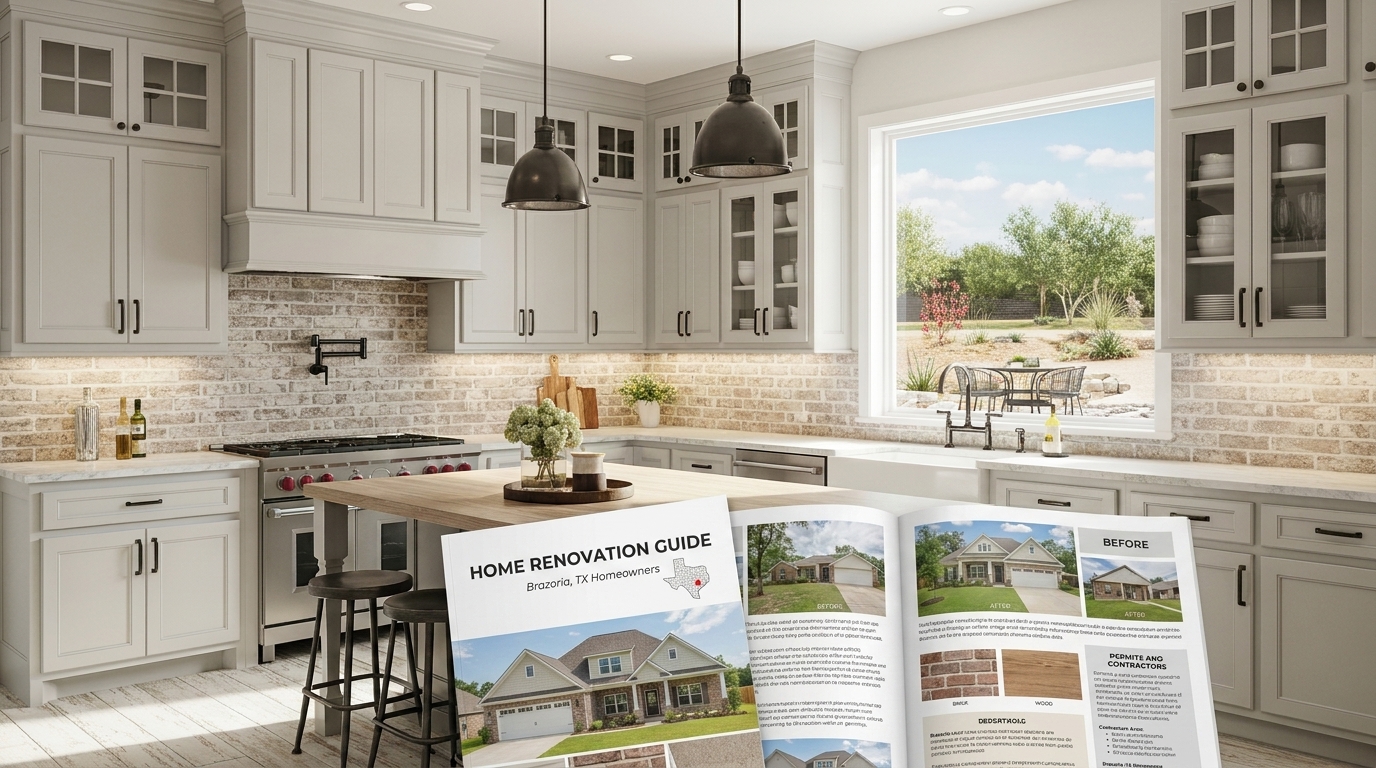
The Brazoria TX Homeowner’s Guide to Home Renovation in 2026
There’s this moment that most homeowners know well. You’re standing in a room that you’ve walked through a thousand times, and something finally tips over. Maybe it’s the cabinet door that’s been sticking since forever. Maybe it’s the trim that’s peeling near the baseboard. Maybe you just sold the house down the street for more than you expected, and now you’re looking around your own place thinking: it’s time.
That moment is exactly where this guide starts.
If you’re a homeowner in Brazoria, TX thinking about renovating in 2026 – whether it’s one room or a whole-house refresh – this is the practical, honest walkthrough you wish someone had handed you from the beginning. Not a sales pitch. Not a list of generic tips. A real guide, written for real people living in real houses along the Gulf Coast.
If you want a local team who already knows the Brazoria County market, Ace Kustoms covers cabinets, trim, and renovation work throughout Brazoria. But first, let’s get you ready.
Step 1: Get Honest With Yourself About What You Actually Want
Before you call a single contractor or browse a single cabinet catalog, you need to do something most homeowners skip: get really clear on what success looks like for you.
And I don’t mean ‘I want a nice kitchen.’ I mean specifics. Do you want more storage? A more open feel? Better resale value? Are you planning to stay for 20 years or sell in 3? The answer changes everything about how you should approach the project.
Here’s what I’ve seen happen when people skip this step: they get halfway through a renovation, realize they optimized for resale but actually hate how it looks, and feel stuck. Or they go all-out on custom finishes in a house they’re selling next year and don’t recoup the investment.
So before anything else – write it down. Even a rough list. Why are you doing this, and what does done look like?
[IMAGE: Homeowner sitting at a kitchen table with a notepad, sketching out renovation priorities – warm, natural lighting]
Step 2: Know What Brazoria Specifically Throws at Your Home
Renovating in Brazoria TX isn’t like renovating in, say, Colorado or the Pacific Northwest. The Gulf Coast climate is genuinely different – and if you don’t plan for it, it’ll cost you.
Humidity Is Not Optional
Brazoria County averages 85-90% relative humidity in summer. That’s not just uncomfortable – it’s structurally significant. Wood swells. Paint bubbles. Cabinets that look beautiful in a showroom can warp within a year if they’re not designed for high-humidity environments.
When you’re choosing materials – especially for kitchens and bathrooms – ask directly: how does this perform in high humidity? If a contractor can’t answer that question confidently, that tells you something.
Flooding and Drainage History Matter
If you’re renovating a home that’s been around for a few decades, it’s worth pulling its history before you open walls. Brazoria County has experienced flooding events – Harvey being the most recent major one – and older homes sometimes have hidden water damage that wasn’t fully remediated. You don’t want to install new flooring on top of a subfloor that’s quietly compromised.
This isn’t a reason not to renovate. It’s just a reason to look before you leap. A good contractor will check. Make sure yours does.
Heat and Sun Exposure
Exterior finishes, windows, and roofing take a real beating from the Texas sun. If exterior work is part of your plan, don’t underestimate how fast low-quality materials degrade here. Spend a little more on the right products and you’ll be replacing them half as often.
[IMAGE: Map or graphic showing Brazoria County’s climate zone – humidity levels, heat index, flood zone overview]
Step 3: Set a Real Budget (With Cushion Built In)
Okay, let’s talk money. Because this is where most renovation projects go sideways – not because of bad contractors or bad luck, but because of budgets that were never realistic to begin with.
Here’s a rough framework for Brazoria-area renovations in 2026:
- Cosmetic refresh (paint, fixtures, hardware): $3,000-$10,000
- Single room update (kitchen or bath, surfaces only): $10,000-$30,000
- Full kitchen or bath remodel: $25,000-$60,000
- Multi-room or whole-home renovation: $60,000-$150,000+
These are honest ranges based on the local market. You can find cheaper – but cheaper usually means cutting somewhere that matters. You can spend more, too, especially if you’re doing custom work.
The number that most people forget: add 15-20% for contingencies. Not 10%. Not ‘I’ll figure it out.’ Fifteen to twenty percent, set aside before you start. Because something always comes up once the walls are open. It’s just how renovation works.
I know that’s frustrating to hear. But building that cushion in upfront means you get to say yes when it matters, instead of making stress decisions mid-project.
Step 4: Figure Out What You’re Doing Yourself vs. Hiring Out
There’s no shame in DIY. And there’s no shame in hiring everything out. What causes problems is misunderstanding which is which.
Here’s a simple way to think about it:
- DIY-friendly: Painting, basic landscaping, demo work (tearing out old tile, removing cabinet doors), installing light fixtures if you’re comfortable with electrical, simple trim installation
- Hire out: Anything touching plumbing or electrical beyond the basics, structural changes, custom cabinetry, anything requiring a permit in Brazoria County
- Honestly assess: Flooring installation, cabinet installation, finish carpentry – you can do these if you have real experience, but botched trim work or crooked cabinets are obvious and expensive to redo
For cabinets and trim specifically – Ace Kustoms’ cabinet and trim work in Brazoria is worth a look if you want it done right. Trim work especially is one of those things that looks straightforward until you’re 40 minutes in and nothing is level.
[IMAGE: Side-by-side comparison: amateur trim installation vs. professionally finished trim – clear visual quality difference]
Step 5: Pull Your Permits (Seriously, Do It)
This one feels like a hassle. It is a hassle. Do it anyway.
Brazoria County and the City of Brazoria have permit requirements for most structural, electrical, and plumbing work. Skipping permits to save time or money creates real problems: it can void your homeowner’s insurance coverage for those areas, complicate a future sale, and leave you personally liable if unpermitted work causes injury or damage.
The permit process in Brazoria is more straightforward than people expect. Your contractor should handle it if they’re licensed and experienced. If a contractor tells you permits aren’t necessary for work that clearly requires them – that’s a red flag, not a convenience.
Step 6: Choose the Right Contractors for This Market
Hiring a contractor is genuinely hard. There are a lot of them, references can be cherry-picked, and the gap between a good crew and a bad one is enormous in practice.
Here’s what actually matters when you’re evaluating contractors in Brazoria County:
- Licensed and insured in Texas. Not just their word – ask for proof. A general liability certificate and workers’ comp should be easy for any legitimate contractor to produce.
- Local track record. Have they done work in Brazoria specifically? The local climate, soil conditions, and building codes have quirks. Someone who’s worked here for years knows things a newcomer doesn’t.
- Clear written estimates. Not ballpark numbers over the phone. A written scope of work with line items. This protects both of you.
- References you can actually contact. Not just names on a sheet – people willing to take a call and describe their experience. Three to five is reasonable.
- Communication style. This sounds soft, but it’s real: how a contractor communicates when things are easy predicts how they’ll communicate when things get complicated. Trust your gut here.
And honestly? Word of mouth still goes a long way in a smaller market like Brazoria. Ask your neighbors who they’ve used. Ask at the hardware store. Ask anyone who’s done visible exterior work on their house in the last couple of years.
Step 7: Plan the Work Sequence Carefully
If you’re doing multiple projects at once – or even sequencing them across a few months – the order matters a lot. Doing things in the wrong sequence means redoing work, and that’s where budgets really blow up.
The general rule:
- Structure and systems first (roofing, plumbing, electrical, HVAC)
- Walls and insulation next
- Flooring before cabinets in most cases
- Cabinets and built-ins
- Countertops after cabinets are set and level
- Trim and finish work last
- Painting – ideally after trim is installed, before floors are done or with floors protected
The one that trips people up most: don’t install new flooring and then have heavy cabinet installation on top of it. You’ll end up with compressed, scratched floors. Do the cabinets first.
[IMAGE: Flowchart showing the correct sequence of renovation steps from structural to finish work]
Step 8: Focus on What Actually Moves the Needle for Resale (If That’s Your Goal)
If you’re renovating partly with an eye toward selling – now or down the road – here’s the honest truth about what buyers in Brazoria County care about most.
Kitchens and baths are still the big ones. Not just updated, but functional and clean-feeling. Buyers notice cabinet quality immediately – it’s one of the first things their eyes go to. Good cabinets and clean trim work read as ‘this house was taken care of.’ Beat-up cabinets read as ‘what else did they ignore?’
If the kitchen or bath is on your list, Ace Kustoms’ cabinet and trim services for Brazoria County are worth getting on the radar early. Lead times on quality cabinet work matter – you don’t want to be rushed.
Beyond kitchens and baths: fresh exterior paint, updated lighting, and clean landscaping punch way above their cost. These are the things that make buyers feel good before they even walk in the door.
What doesn’t move the needle as much as people think: hyper-personalized design choices (bold color schemes, very specific tile patterns), high-end finishes in entry-level neighborhoods, and pool additions. The market in Brazoria is specific – talk to a local real estate agent before making big decisions based on what you read in a national article.
Troubleshooting: When Things Go Sideways
Because they will. Here are the most common mid-project crises and how to handle them:
You Found Water Damage or Mold Behind the Walls
Stop. Don’t try to work around it or cover it up. Get a remediation assessment before continuing. This isn’t negotiable – mold in wall cavities is a health issue and a liability issue. A good contractor will pause the project and get it handled. If yours suggests just putting up drywall over it… find a different contractor.
The Project Is Running Over Budget
First: is this within your contingency buffer? If yes, that’s what the buffer is for. Use it and breathe. If you’re beyond the contingency, you need to have an honest conversation with your contractor about where the overrun is coming from. Some overruns are legitimate (unexpected structural issues). Some aren’t (scope creep that wasn’t communicated well). Know the difference before you pay.
Your Contractor Goes Dark Mid-Project
This is scary and unfortunately not rare. If a contractor goes quiet – isn’t responding to calls, isn’t showing up – don’t just wait. Get in writing what’s been paid, what’s been completed, and what the contract says about timelines and communication. You may need to involve the Texas Department of Licensing and Regulation if the situation doesn’t resolve. Document everything.
Expert Tips: What the Pros Know That Most Homeowners Don’t
- Buy 10-15% extra on tile and flooring. Always. Dye lots change. You’ll need extras for repairs down the road. Running out mid-install is a nightmare.
- Don’t pick paint colors off a chip under store lighting. Take samples home and look at them in your actual light, at different times of day. Paint changes dramatically based on context.
- Measure twice, order once – but also verify cabinet dimensions in person. Cabinets are the one item where measurement errors are extremely expensive. Have your contractor verify before ordering.
- Ask about lead time on every major material before you schedule work. In 2026, supply chain issues are less wild than they were a few years ago, but specialty items – custom cabinets, specific tile, certain fixtures – still have real lead times.
- The final 10% of a project takes 40% of the time. Punch list items, touch-ups, final trim work – plan for this. It’s not just your contractor dragging their feet. Finish work is genuinely detail-intensive.
Summary: Your Renovation Roadmap for Brazoria TX
Here’s the short version of everything we just covered:
- Get clear on your actual goal before starting anything.
- Account for Brazoria’s specific climate – humidity, heat, flooding history.
- Set a real budget with 15-20% contingency baked in.
- Know which work you can handle and which needs a pro.
- Pull the permits. Every time.
- Vet your contractors carefully – license, insurance, references, communication.
- Do the work in the right sequence so you’re not undoing things.
- Focus renovation dollars on what actually matters for your goals.
Renovation is one of those things that’s genuinely more manageable when you go in with eyes open. The surprises are less surprising. The decisions are less stressful. And the finished result – that moment when you walk into a room that finally feels right – is worth all of it.
Really.
If you’re ready to talk through what your Brazoria home needs specifically – whether it’s cabinets, trim, or a bigger renovation conversation – reach out to Ace Kustoms. They work in this market, they know the climate, and they’ll give you straight answers. That’s all you can really ask for.

Comments are closed