
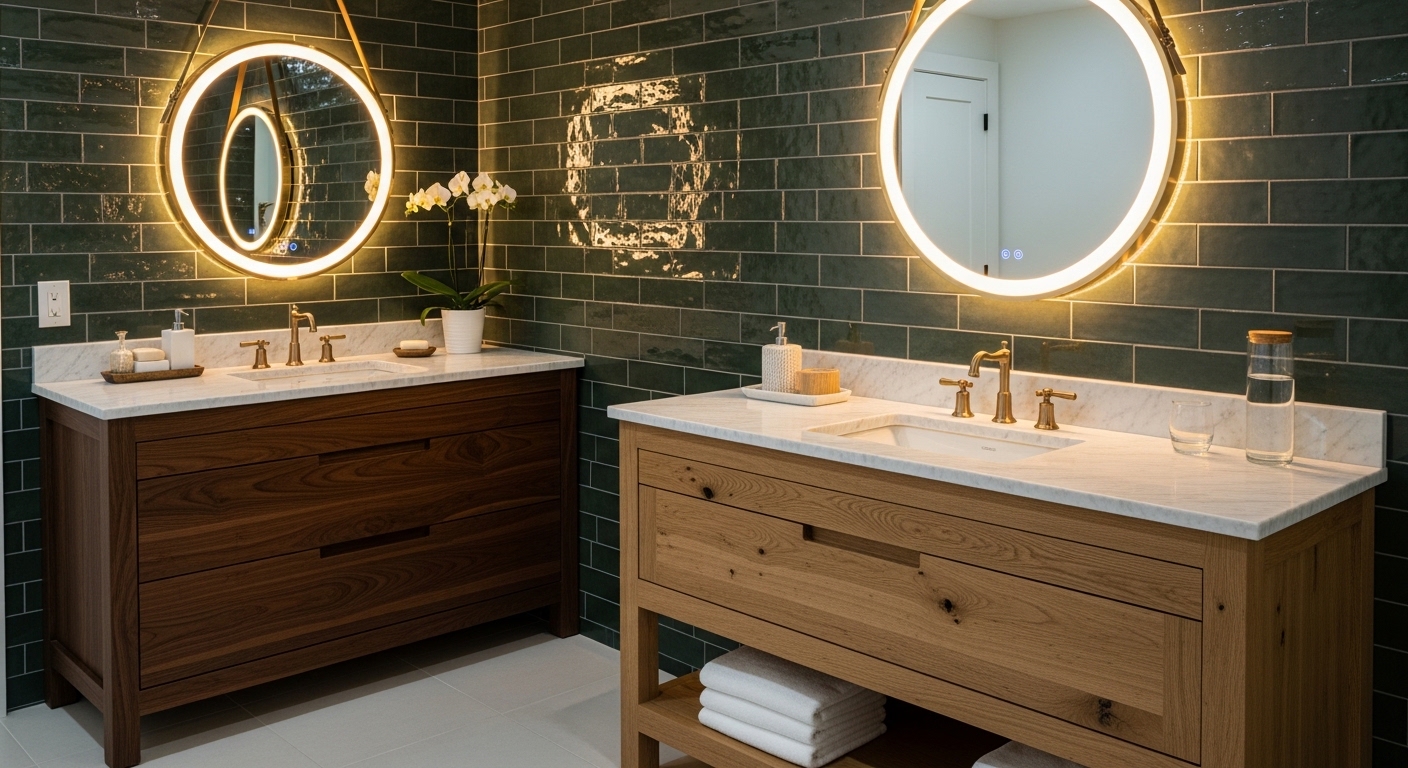
When it comes to designing a bathroom that feels both luxurious and built to last, the material you choose for your vanity matters just as much as the style. Houston’s climate brings its own set of challenges — humidity, temperature swings, and the occasional Gulf Coast moisture creeping into bathrooms — which means homeowners need to think carefully before settling on a material. The right choice can mean the difference between a vanity that looks stunning for decades and one that warps, swells, or fades within a few years.
If you’re planning a remodel or building a new home, understanding the strengths and weaknesses of each material will help you make a confident decision. Below, we break down the most popular options for custom bathroom vanities in Houston, along with what makes each one a smart (or risky) choice for our local environment.
Why Material Choice Matters More in Houston
Houston’s subtropical climate means high humidity for much of the year, especially during the long, hot summers. Bathrooms are already humid spaces because of daily showers and baths, so when you combine that with the region’s outdoor moisture levels, vanities face more stress than they would in a drier climate. Materials that aren’t properly sealed, treated, or chosen with humidity resistance in mind can swell, crack, or develop mold over time.
This is why working with an experienced custom bathroom vanities specialist matters. A professional who understands the local climate can recommend materials and finishes specifically suited to Houston homes, rather than generic options that might work fine in a drier region but fail here.
1. Solid Hardwood
Solid hardwood remains one of the most sought-after materials for custom vanities because of its timeless beauty and durability. Woods like maple, oak, cherry, and walnut offer rich grain patterns and a warmth that synthetic materials simply can’t replicate. Each plank carries its own unique character, which means no two vanities ever look exactly alike.
The challenge with solid wood in a humid climate is movement. Wood naturally expands and contracts with changes in moisture, and in a poorly sealed bathroom, that movement can eventually lead to warping or cracking at the joints. The solution isn’t to avoid hardwood altogether — it’s to ensure the wood is properly kiln-dried, sealed with a moisture-resistant finish, and installed by craftsmen who understand how to account for seasonal movement.
For homeowners who want the authentic look and feel of real wood, hardwood vanities can absolutely thrive in Houston bathrooms when built correctly. Pairing solid wood doors and frames with a humidity-resistant base structure is a common approach that balances aesthetics with longevity.
2. Marine-Grade Plywood
Marine-grade plywood has become a favorite among builders working in humid or coastal regions, and for good reason. Originally designed for boatbuilding, this material is constructed with tightly bonded layers and waterproof adhesives that resist delamination even when exposed to consistent moisture.
Unlike standard plywood, marine-grade plywood doesn’t have voids or gaps between its layers, which means there’s nowhere for moisture to collect and cause rot from the inside out. This makes it an excellent substrate for vanity cabinet boxes, especially in bathrooms with poor ventilation or frequent steam exposure from showers.
While marine-grade plywood is often used as the structural core of a vanity rather than the visible surface, its presence behind a beautiful wood veneer or painted finish gives homeowners peace of mind that the cabinet won’t deteriorate from the inside. If you live closer to the coast — areas like Galveston County or other parts of our areas we serve — this material becomes even more valuable given the added humidity exposure.
3. Medium-Density Fiberboard (MDF) with Quality Sealing
MDF often gets a bad reputation because lower-quality versions can swell when exposed to water. However, high-grade moisture-resistant MDF, when properly primed, sealed, and painted, can perform remarkably well in bathroom environments. It’s prized for its smooth, consistent surface, which makes it ideal for painted vanity finishes, shaker-style doors, and detailed millwork that would be harder to achieve with natural wood grain showing through.
The key with MDF is quality control. Builder-grade MDF without proper sealing will absolutely fail in a humid bathroom over time. But moisture-resistant MDF, finished with multiple coats of primer and paint, creates a smooth, durable surface that resists chipping and holds paint exceptionally well — something solid wood can struggle with if it expands and contracts.
4. Plywood with Hardwood Veneer
A hybrid approach that’s growing in popularity combines the structural stability of plywood with the natural beauty of a hardwood veneer on the visible surfaces. This gives homeowners the best of both worlds: a core that resists warping and moisture damage, paired with an exterior that looks just as rich and authentic as solid hardwood.
This approach is especially popular for larger vanities, double-sink configurations, and pieces with wide, flat door panels where solid wood movement would be more noticeable. Because the veneer is bonded to a stable substrate, there’s significantly less risk of cupping or warping compared to using solid boards of the same width.
5. Solid Surface and Quartz Countertops
While the cabinet base is one half of the equation, the countertop surface plays an equally important role in a vanity’s overall durability and function. Materials like quartz and solid surface composites have become the go-to choice for bathroom vanity tops because they’re non-porous, resistant to staining, and don’t require regular sealing like natural stone.
Quartz, in particular, offers a consistent appearance with a wide range of colors and patterns, making it easy to match with virtually any cabinet finish. Because it’s engineered rather than quarried, it tends to be more resistant to the kind of moisture absorption that can affect natural stone over time, which is especially important directly around sinks and faucets where water exposure is constant.
If you’re exploring countertop options for your vanity, it’s worth browsing our dedicated page on solid surface countertops to see how these materials can be paired with different cabinet styles.
6. Natural Stone (Granite and Marble)
Natural stone brings an undeniable luxury factor to any bathroom. Granite offers durability and a wide variety of natural patterns, while marble delivers a classic, elegant look that’s hard to replicate with engineered materials. Both options are popular for vanity tops, especially in primary bathrooms designed to feel like a personal retreat.
The tradeoff with natural stone is porosity. Both granite and marble require sealing to prevent moisture and staining issues, and that sealing needs to be reapplied periodically to maintain its protective qualities. In a humid environment like Houston, staying on top of this maintenance is essential to keep the stone looking its best and prevent water from seeping into the surface over time.
7. Thermofoil and Laminate Finishes
For homeowners looking for a more budget-conscious option without sacrificing moisture resistance, thermofoil and high-pressure laminate finishes offer a practical solution. These materials are essentially a vinyl or laminate layer fused to an MDF substrate, creating a completely sealed surface with no exposed wood grain for moisture to penetrate.
The seamless nature of thermofoil makes it particularly resistant to water damage since there are no seams or joints where moisture could work its way in. While it doesn’t offer the same natural texture as real wood, modern laminate technology has improved significantly, with realistic wood-grain patterns and a wide range of color options that can mimic higher-end materials convincingly.
Choosing the Right Material for Your Bathroom
There’s no single “best” material for every bathroom — the right choice depends on your specific space, usage patterns, and design goals. A guest bathroom that sees occasional use might be a great candidate for solid hardwood with proper sealing, while a busy family bathroom with kids splashing water everywhere might benefit more from a moisture-resistant MDF base with a durable laminate or veneer finish.
It’s also worth thinking about how the vanity material will interact with the rest of your bathroom design. If you’re working on a broader renovation, coordinating your vanity material with your overall kitchen remodels or home renovation plans can help create a cohesive look throughout your home, especially if you’re using similar wood tones or finishes across multiple rooms.
Maintenance Matters Just as Much as Material
Even the most humidity-resistant material will benefit from proper care over its lifetime. Wiping down surfaces after use, ensuring proper bathroom ventilation, and addressing any water pooling around the sink promptly can extend the life of your vanity regardless of which material you choose. For wood-based vanities specifically, reapplying protective finishes every few years helps maintain that moisture barrier as the original sealant naturally wears down.
If you already have a custom vanity and want to keep it looking its best, our guide on how to care for your custom bathroom vanities walks through practical maintenance tips that apply across most material types.
Final Thoughts
Choosing the right material for your custom bathroom vanity is about more than aesthetics — it’s about understanding how that material will hold up against Houston’s humid climate over the years ahead. Solid hardwood and hardwood veneers offer timeless beauty when properly sealed, marine-grade plywood and moisture-resistant MDF provide a sturdy, humidity-resistant foundation, and quartz or solid surface countertops round out the package with a surface that resists staining and water damage at the points of heaviest use.
Working with an experienced local builder who understands these regional challenges ensures your vanity isn’t just beautiful on day one, but remains a durable, functional centerpiece of your bathroom for years to come. Whether you’re drawn to the natural warmth of hardwood or the practical resilience of engineered materials, the right combination of cabinet construction and countertop surface will give you a vanity that truly stands the test of time — and Houston’s humidity.


Comments are closed