
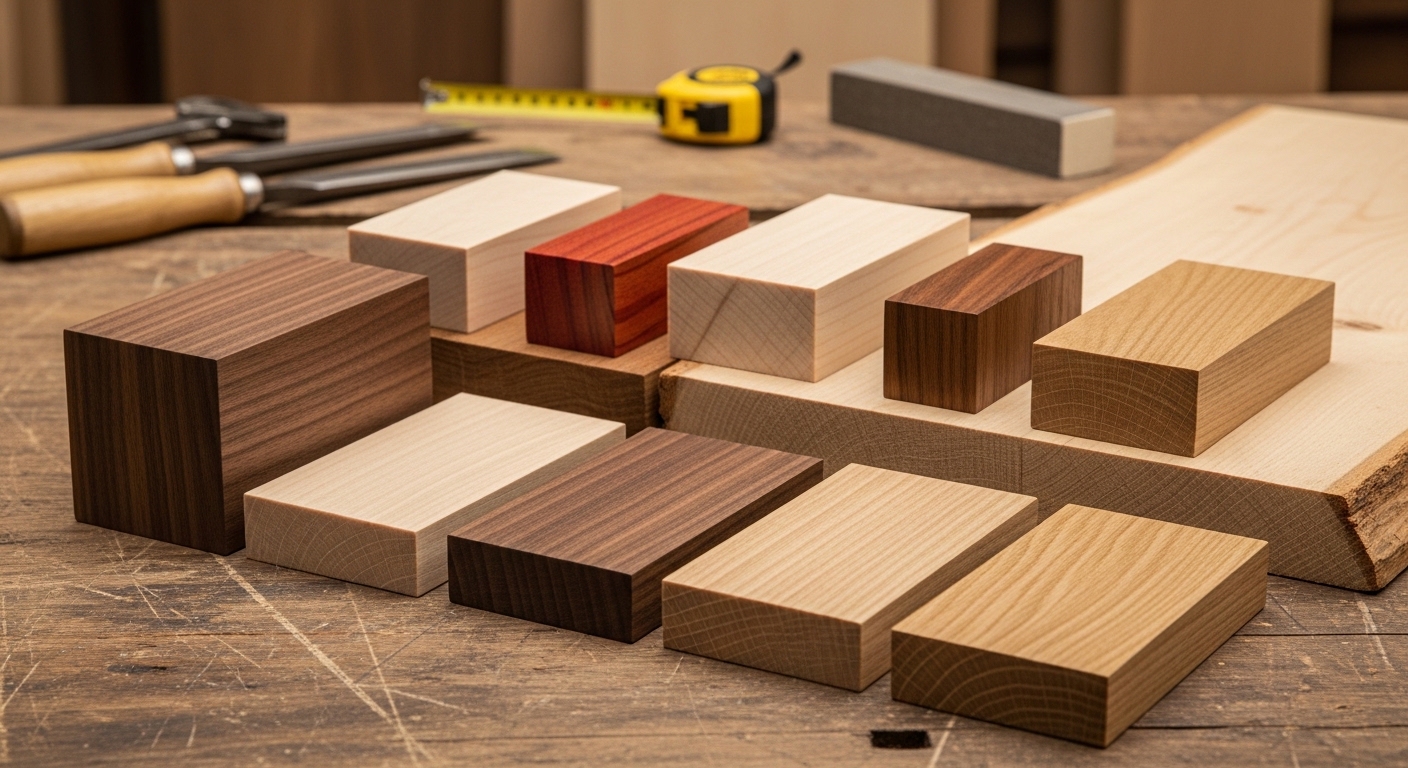
The Big Wood Debate: Choosing What’s Right for You
You know that feeling when you finally decide to go for it? You’ve committed to the remodel, you’ve been scrolling through Pinterest until your eyes blur, and you’ve decided that custom cabinets are the way to go. It’s an exciting moment. But then, the contractor or the cabinet maker asks that one question that stops you cold: “So, what wood species were you thinking?”
Suddenly, “brown” isn’t a specific enough answer.
Choosing the right wood isn’t just about picking a color—you can stain almost anything, after all. It’s about the “soul” of the room. It’s about how the grain looks under your under-cabinet lighting, how it stands up to your toddler’s toy trucks, and how it feels when you run your hand over it while waiting for the coffee to brew.
Honestly, it’s a lot of pressure. These cabinets are going to be with you for a long time. But don’t worry—I’ve seen enough “wood fails” and “dream kitchens” to help you navigate this. Let’s walk through the heavy hitters so you can figure out which one actually fits your life.
1. Maple: The Reliable All-Rounder
If wood species had a “straight-A student,” it would be Maple. It’s incredibly popular for custom kitchen cabinets because it’s dense, tough, and has a very smooth, fine grain. It doesn’t scream for attention; it just does its job beautifully.
Maple is usually a creamy off-white, though it can have some light reddish-brown tones. Because the grain is so subtle, it’s the absolute gold standard if you’re planning on painting your cabinets. You won’t get those “pores” or deep lines showing through the paint like you would with Oak.
A Quick Scenario: I once worked with a family in Pearland who had three dogs and a very active kitchen. They wanted a bright, white “modern farmhouse” look. We went with Maple because they needed that durability against scratches, but they wanted a finish as smooth as glass. Three years later? Still looks brand new.
Pro Tip: If you’re staining Maple, go with a lighter or medium stain. Because it’s so dense, it can sometimes take dark stains a bit “blotchy” if the person finishing it isn’t a pro.
2. Red Oak: The Traditional Workhorse
Look, Red Oak gets a bad rap sometimes because people associate it with those dated, honey-colored cabinets from the 90s. But let’s be fair—Oak is a classic for a reason. It is tough as nails. You could probably drive a tank through an Oak kitchen and the cabinets would still be standing.
It has a very distinct, “open” grain pattern. You can feel the texture. If you love a rustic, traditional, or even a “modern industrial” look, Oak is fantastic. It takes stain like a champ—especially dark, moody colors that settle into those deep grain lines to create a beautiful contrast.
Think about it this way: Oak is like a pair of high-quality leather boots. It’s got character, it’s got texture, and it’s not trying to hide what it is. If you want your custom cabinetry to feel substantial and organic, Oak is your friend.
3. Cherry: The Sophisticated Aging Beauty
Cherry is for the romantics. It starts out as a light pinkish-brown and then, as it’s exposed to light, it “ripens” into a deep, rich reddish-brown. It’s like a fine wine—it literally gets better with age.
The grain is smooth and circular, giving it a very elegant, high-end feel. It’s softer than Maple or Oak, so if you have a kitchen that sees a lot of “heavy combat,” you might see a few more dings over the years. But many people think those little marks just add to the story.
I’ve seen this happen: A client once panicked about a month after their Cherry bathroom vanities were installed because they looked “darker” than the day they arrived. I had to remind them: “That’s the wood waking up!” By month six, the color was so rich they didn’t even need a dark stain—the wood did the work itself.
4. Walnut: The High-End Showstopper
If you want people to walk into your home and say “Wow,” Walnut is the answer. It’s the darling of modern and mid-century design. The color is naturally a deep, chocolatey brown, often with some stunning swirls and “calico” (lighter) streaks.
It’s expensive. I’m not going to sugarcoat that. But because it’s so naturally beautiful, you rarely stain it. You just put a clear coat on it and let nature show off. It’s a softer hardwood, so it requires a bit of a “gentle touch” compared to Oak, but for a custom entertainment center or a statement kitchen island, nothing compares.
The “Vibe”: Walnut feels like a tailored suit. It’s sophisticated, warm, and looks incredibly expensive because, well, it is. It’s perfect for those “clean line” designs where the wood grain is the main decoration.
5. Alder: The Great Imposter
Alder is often called “the poor man’s Cherry.” I think that’s a bit mean, honestly. Alder is a great wood in its own right. It has a very uniform grain and is naturally a light brown with reddish undertones.
The coolest thing about Alder is how versatile it is. It takes stain incredibly well. You can make it look like Cherry, or even Walnut, for a fraction of the price. It’s a “clear” wood (few knots), but you can also get “Knotty Alder” if you want that rugged, cabin-in-the-woods feel.
Just a heads up: Alder is quite soft. It’s the softest of the “hardwoods” we usually use for cabinets. If you have kids who like to bang pots and pans against the base cabinets, you’re going to see some “character marks” pretty quickly.
Wood Species Comparison at a Glance
| Wood Species | Durability | Best For… | Grain Pattern |
| Maple | Very High | Painted finishes, modern looks | Very Subtle/Fine |
| Red Oak | Extremely High | Traditional, rustic, textured looks | Bold/Open |
| Cherry | Moderate | Formal, elegant, warming over time | Smooth/Flowing |
| Walnut | Moderate | Modern, luxury, statement pieces | Rich/Swirly |
| Alder | Low-Moderate | Budget-friendly “Cherry” look, rustic | Uniform/Fine |
Key Takeaways for Your Project
- Think about the finish first: If you want paint, go Maple. If you want a dark, textured stain, go Oak. If you want natural beauty, go Walnut or Cherry.
- Consider your lifestyle: Be honest. Are you “careful” in the kitchen, or is it a high-traffic zone? If it’s the latter, stick to the harder woods like Maple or Oak.
- Lighting matters: Wood looks different under 3000K LEDs than it does in natural sunlight. Always look at samples in your actual room!
- Embrace the “natural”: Wood is a living thing. There will be variations in grain and color. That’s not a defect; it’s the whole point of getting custom cabinets.
So, What’s the Verdict?
At the end of the day, there is no “wrong” choice, only the choice that fits your home. Whether you’re building out a new home office or finally gutting that 70s kitchen, the wood you choose sets the stage for everything else.
I know it’s a lot to take in. You’re trying to balance budgets, aesthetics, and the reality of how your family actually lives. If you’re feeling a bit stuck, or you just want to see some of these woods in person and feel the difference for yourself, give us a shout. We love talking shop, and honestly, we’d love to help you figure out which species is going to make you smile every time you walk into the room.
What are you leaning towards? The rock-solid reliability of Maple or the moody elegance of Walnut? Either way, it’s going to be beautiful.
Would you like me to help you draft a specific design plan for one of these wood types, or perhaps look into the cost differences for a standard kitchen layout?

Comments are closed