
If you’ve started planning a kitchen update, you’ve probably run into this question almost immediately: should you reface your existing cabinets or replace them entirely? It’s one of the most common questions Houston homeowners ask before starting a kitchen remodel, and for good reason — the choice affects everything from your timeline to the final look of your space.
There’s no universal right answer here. Refacing and replacing both have a place, and the right choice depends on your cabinet boxes, your goals for the space, and how much change you actually want to make. This guide breaks down both options in plain terms so you can walk into your next conversation with a contractor already knowing what questions to ask.
What Is Cabinet Refacing, Exactly?
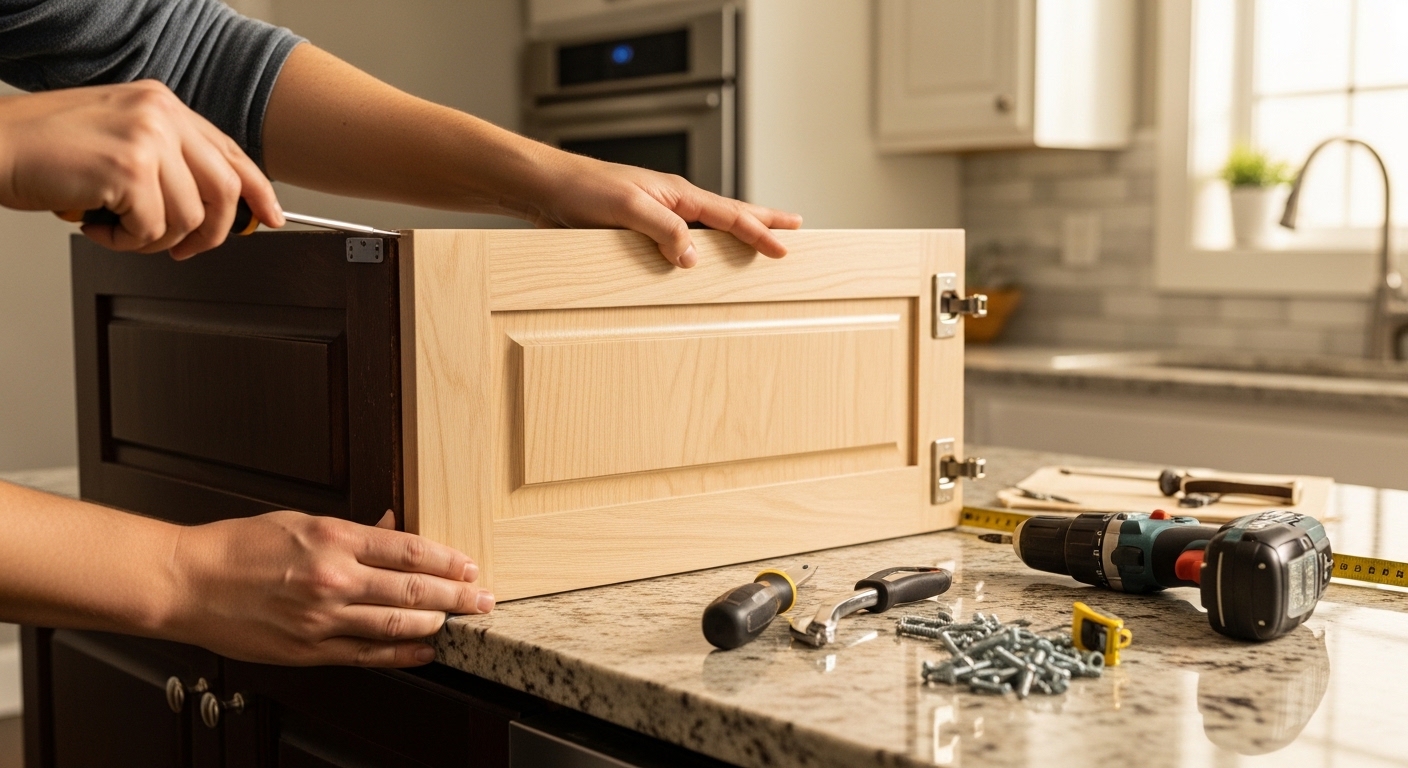
Cabinet refacing means keeping your existing cabinet boxes — the structural framework attached to your walls — and updating everything you see and touch. That typically includes new doors, new drawer fronts, fresh veneer or laminate on exposed box surfaces, and new hardware like handles and hinges.
Think of it like a facelift rather than a transplant. The “bones” of your kitchen stay exactly where they are. The cabinet layout doesn’t change, the plumbing and electrical stay untouched, and the disruption to your daily routine is far smaller than a full renovation.
Refacing tends to work best when:
- Your cabinet boxes are still structurally sound (no water damage, warping, or sagging shelves)
- You’re happy with your current kitchen layout
- You want a quick style update rather than a layout overhaul
- You’re trying to minimize downtime in your kitchen
It’s a popular choice for Houston homes built in the last 15–20 years, where the underlying carpentry is often still solid even if the doors and finishes feel dated.
What Does Cabinet Replacement Involve?
Replacement is exactly what it sounds like — the old cabinets come out entirely, and new ones go in. This opens the door to changing your layout, adding or removing cabinet runs, adjusting cabinet heights and depths, and incorporating features that didn’t exist in your original kitchen, like pull-out drawers, built-in lighting, or a redesigned island.
Replacement makes the most sense when:
- The cabinet boxes themselves are damaged, warped, or showing signs of water intrusion
- You want to change your kitchen’s footprint or flow
- You’re combining the cabinet update with a larger renovation involving countertops, plumbing, or electrical
- Your current layout no longer fits how your family actually uses the kitchen
If you’re picturing a kitchen that looks fundamentally different — not just freshened up, but reimagined — replacement is usually the path that gets you there. Many homeowners pair this kind of project with custom kitchen cabinets designed around their exact space, rather than standard stock sizes that force compromises in storage or layout.
How to Tell Which One Your Kitchen Actually Needs
The honest answer is that you usually can’t tell from a quick glance. A cabinet door might look tired while the box behind it is in great shape — or the opposite could be true, where the doors look fine but the boxes are quietly failing underneath. Here’s what to check before making a decision.
Check the Condition of the Boxes
Open a few cabinet doors and look at the interior structure. Soft or swollen particleboard, especially near the sink or dishwasher, is a sign of water damage that refacing won’t fix. Run your hand along the shelves and base — if anything feels spongy, sags, or has visible mold or discoloration, you’re likely looking at a replacement situation.
In Houston’s humid climate, moisture exposure under sinks and around exterior walls is one of the most common reasons cabinet boxes deteriorate faster than homeowners expect, even when the cabinet fronts still look presentable. It also helps to check the corners and joints where panels meet — separation, gaps, or a slightly loose feel when you push on a side panel can indicate the glue and fasteners holding the box together are starting to fail, which is another sign that refacing alone won’t hold up long term.
Look at the Hardware and Hinges
While you’re inspecting, take a moment to test the drawers and doors themselves. Drawers that stick, doors that don’t sit flush, or hinges that have been adjusted repeatedly over the years can sometimes be solved with refacing alone, since new hardware and properly fitted doors often resolve these issues. But if the drawer boxes themselves are falling apart at the joints, that’s a sign the problem goes deeper than what refacing addresses.
Think About Whether the Layout Works for You
Refacing changes how your kitchen looks, not how it functions. If your real frustration is a lack of counter space, an awkward triangle between the stove, sink, and fridge, or simply not enough storage, no amount of new doors will solve that. That’s a layout problem, and layout problems call for replacement.
Consider How Long You Plan to Stay
If you’re planning to sell within the next couple of years, refacing can deliver a meaningfully updated look with less disruption. If this is a long-term home and you want the kitchen to serve your family for the next decade or two, investing in full replacement — built around how you actually cook, store, and gather — tends to pay off in daily usability.
The Houston Factor: Why Climate and Home Age Matter Here
Houston’s combination of humidity, heat, and occasional flooding plays a bigger role in this decision than homeowners often expect. Older homes throughout neighborhoods inside the Loop, as well as established communities across Harris, Fort Bend, and Galveston counties, frequently have cabinet boxes built from materials that don’t hold up as well to decades of humidity swings as more modern moisture-resistant materials do.
If your home is older or has a history of humidity exposure, it’s worth having a contractor physically inspect the boxes before committing to refacing. A few extra minutes of inspection up front can save you from refacing cabinets that need replacing within a few years anyway.
A Middle Ground: Partial Replacement
It’s worth knowing that refacing and full replacement aren’t the only two options. Many Houston kitchens end up with a hybrid approach — refacing cabinets that are structurally fine while fully replacing a section that’s damaged, like the run under the sink or along an exterior wall where humidity has taken more of a toll. This approach lets you preserve what’s working while addressing the parts that genuinely need attention, often resulting in a more tailored outcome than an all-or-nothing decision.
This is also a natural opportunity to revisit other elements of the kitchen at the same time. If you’re already opening up wall cabinets or adjusting layout, it’s worth considering custom cabinetry and built-ins for awkward corners or underused spaces — areas that stock cabinetry often leaves wasted. A hybrid project also gives you the flexibility to phase the work, tackling the damaged section now and revisiting the rest of the kitchen down the road if budget or timing makes a full replacement harder to justify in one go.
Style and Finish Considerations
The decision between refacing and replacing also shapes what’s possible stylistically. Refacing works within the existing door style and box dimensions, which means you’re generally choosing from new veneers, paint colors, and door profiles that fit the current opening sizes. It’s a great way to move from dated oak finishes to a cleaner shaker or flat-panel look without altering the kitchen’s structure.
Replacement removes that constraint entirely. You can change door style, drawer configuration, cabinet depth, and even introduce features like glass-front uppers, open shelving sections, or furniture-style legs on an island — details that simply aren’t possible when you’re working within an existing box. If a specific aesthetic is driving your renovation more than function or condition, it’s worth weighing how much that style depends on structural changes versus surface-level updates.
What This Means for the Rest of Your Kitchen
Cabinets rarely exist in isolation. Whichever direction you choose, it’s worth thinking about how the decision affects the rest of the room.
Refacing pairs naturally with keeping your existing countertops, since the cabinet box dimensions stay the same. Replacement, on the other hand, is the better time to reconsider counter height, depth, and material, since the boxes are coming out anyway. If you’re already leaning toward replacement, it’s worth reading through the bigger picture of what a full kitchen remodel typically involves, since cabinets are usually just one piece of a larger sequence that includes countertops, lighting, and sometimes flooring.
For homeowners weighing this decision in more detail, our dedicated guide on refacing vs. replacing cabinets walks through additional considerations specific to material types and finish options, and is worth a read if you’re still on the fence.
Questions to Ask Before You Decide
Before committing either way, it helps to walk through a short checklist with whoever you’re considering hiring for the project. These questions cut through a lot of the back-and-forth and get you to a clear answer faster than weighing pros and cons in the abstract:
- Are the cabinet boxes free of water damage, warping, or structural wear? If not, replacement is likely necessary regardless of how the doors look.
- Does your current layout actually work for how you cook and live? Refacing won’t fix a layout that frustrates you daily.
- How long do you plan to stay in the home? Shorter timelines often favor refacing; longer timelines often favor replacement.
- Are you planning other kitchen updates at the same time? If countertops, lighting, or flooring are also changing, replacement may make more sense to coordinate everything at once.
- What’s your tolerance for disruption? Refacing typically keeps your kitchen more usable throughout the project than a full teardown.
Walking through these questions honestly — ideally with an experienced eye on the actual condition of your boxes — will get you to the right answer faster than guessing based on appearance alone. Bring a notepad or your phone when you inspect your own kitchen, and jot down what you find under each cabinet and behind each door. That record will make the conversation with your contractor far more productive than trying to describe everything from memory.
Getting a Professional Opinion
Because so much of this decision depends on what’s happening behind the cabinet doors, it’s hard to make a fully confident call without an in-person look. A contractor who’s spent time in Houston homes will know which signs of wear are cosmetic and which point to deeper structural issues, and can help you avoid the common mistake of refacing cabinets that were already on borrowed time.
If you’re still weighing your options, reaching out for a walkthrough is usually the fastest way to get clarity — someone can assess your boxes directly, talk through your goals for the space, and help you decide whether refacing, replacing, or a hybrid approach makes the most sense for your specific kitchen.
Final Thoughts
Refacing and replacing both have a place in Houston kitchens, and neither is universally “better” — they simply solve different problems. Refacing is about refreshing a kitchen that’s already structurally sound and laid out well. Replacing is about rebuilding a kitchen so it finally works the way you need it to. Understanding which problem you’re actually trying to solve is the real first step, and everything else — material choices, finishes, timeline — follows naturally from there.
Whichever direction fits your home, taking the time to inspect your cabinet boxes honestly, think through your layout frustrations, and consider how long you’ll be in the space will put you in a much stronger position to make a decision you won’t second-guess a year from now.


Comments are closed