
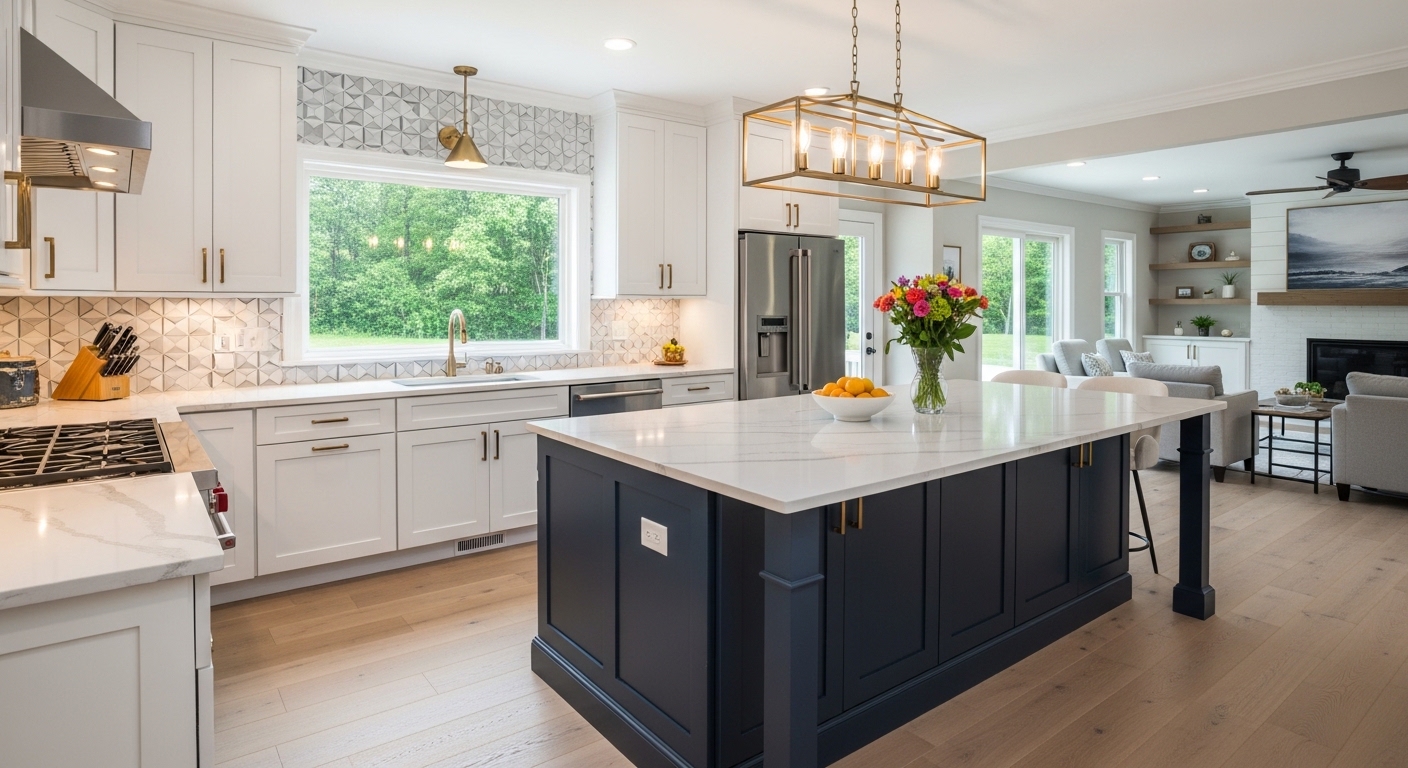
Every homeowner eventually faces the same fork in the road during a renovation: do you chase the look that’s everywhere on social media right now, or do you invest in something that will still look intentional a decade from now? It’s a more important decision than most people realize. The choices you make in your kitchen, bathroom, and living spaces don’t just shape how your home feels today — they directly influence how quickly it sells and how appealing it looks to the next buyer.
For homeowners across the Houston area, this question comes up constantly during kitchen and bathroom projects, cabinetry upgrades, and whole-home remodels. The good news is that you don’t have to choose one extreme or the other. Understanding which elements of a renovation hold their value over time — and which ones are better treated as easily swappable accents — lets you build a home that feels current now while protecting your investment for the future.
In this guide, we’ll walk through what separates a truly timeless renovation choice from a trend that’s likely to fade, where it’s safe to experiment with current style, and how to apply that thinking room by room so your next project pays off both in everyday enjoyment and in long-term resale value.
Why Resale Value Hinges on Broad Appeal
When a home goes on the market, it has to appeal to a wide range of buyers, not just the current homeowner’s personal taste. A kitchen styled around a hyper-specific trend might feel exciting to you today, but a future buyer walking through during a showing may see it as dated, polarizing, or simply “not their style.” That hesitation translates directly into longer days on market and lower offers.
Timeless design works differently. It’s built around proportion, quality materials, and classic forms that have proven their staying power across decades of design cycles. A well-built set of Custom Kitchen Cabinets in a clean, classic profile photographs well, shows well in person, and doesn’t require a buyer to mentally “renovate around” your choices. That broad, lasting appeal is exactly what protects resale value.
The Trend Trap: What Fades Fast
Design trends move quickly, and what feels fresh today can feel noticeably dated within just a few years. Some of the riskiest trend-driven choices for resale include:
- Highly saturated cabinet colors. Deep navy, forest green, or matte black cabinetry can look striking in a magazine spread, but it’s a strong personal statement that not every buyer wants to inherit.
- Novelty tile patterns. Bold geometric or oversized statement tile in a kitchen backsplash or bathroom floor can quickly read as “very 2024” rather than timeless.
- Open shelving as a primary storage solution. It photographs beautifully when styled, but most buyers actually want enclosed storage, not exposed dishes and clutter.
- Ultra-specific hardware finishes. Finishes tied to a particular design moment can clash with whatever comes next, making the kitchen feel locked into a single era.
None of these choices are wrong if you’re renovating purely for your own enjoyment and plan to stay long-term. But if resale value is part of your decision-making, it’s worth understanding that these are higher-risk, shorter-shelf-life choices.
Timeless Choices That Consistently Win
On the other end of the spectrum, certain renovation decisions have proven themselves again and again as safe, value-protecting investments.
Classic cabinetry profiles. Shaker-style and simple recessed-panel cabinet doors have remained popular for generations because their clean lines work with almost any interior style — traditional, transitional, modern farmhouse, or contemporary. Carrying this same profile through custom built-ins elsewhere in the home — a home office, mudroom, or entertainment area — creates a sense of cohesive, high-quality craftsmanship that buyers immediately notice and trust.
Neutral, durable countertops. Solid surface materials in classic veining and neutral tones remain a safer long-term choice than heavily patterned or boldly colored stone. Solid Surface Countertops in versatile tones complement nearly any cabinet color or wall finish a future buyer might choose, which keeps the kitchen feeling adaptable rather than locked into one look.
Quality trim and millwork. Crown molding, baseboards, and door casings are architectural details that signal craftsmanship without screaming “trend.” Well-executed trim work tends to age gracefully because it’s rooted in proportion and architecture rather than passing style.
Functional layouts over decorative gimmicks. A kitchen that flows well, with adequate counter space, storage, and a logical work triangle, will always outperform a kitchen designed primarily around a visual trend. Layout and function are the bones of the home — they matter far more to resale value than any single finish choice.
Where Trends Can Still Add Value
This doesn’t mean trends have no place in a smart renovation. The key is knowing where to introduce them. Trend-forward choices work best when they’re applied to elements that are easy and low-effort to update later, rather than to the structural or built-in elements of the home.
Good places to experiment with current trends include:
- Hardware and fixtures. Cabinet pulls, faucets, and lighting fixtures can be swapped out far more easily than cabinetry or countertops, making them a low-risk way to bring in a current aesthetic.
- Paint colors on walls. Unlike cabinetry, wall paint is one of the simplest and fastest things for a new owner to change if it’s not to their taste.
- Lighting accents. Statement pendant lighting or accent under-cabinet and over-cabinet lighting can add real warmth and visual interest to a kitchen or bathroom without committing the whole room to a single design era. Because lighting fixtures are relatively simple to swap, the trend lives in something easily updated later, not in the bones of the room.
- Decor, rugs, and textiles. These are the easiest of all to refresh, so they’re the ideal home for whatever trend currently has your attention.
This layered approach — timeless bones, trend-forward accents — gives you the best of both worlds. You get to enjoy a home that feels current and personal to you right now, while the structural choices that are disruptive to change stay broadly appealing for resale.
Applying This Strategy to a Bathroom Remodel
Bathrooms follow the same logic as kitchens, but the stakes can be even higher because bathrooms are smaller spaces where trend-driven choices dominate the visual field more intensely. A boldly colored or patterned vanity, for example, has nowhere to “hide” the way it might in a larger room.
For the vanity itself — typically the largest single design element in a bathroom — a timeless approach pays off. Custom Bathroom Vanities built in classic profiles and versatile finishes give the room a polished, high-end feel without anchoring it to a specific design moment. From there, trend elements like statement mirrors, updated faucet finishes, or a bold accent wall color can be layered in without risk, since those are simple to change down the road.
The Risk of Getting It Wrong
It’s worth being direct about what happens when a renovation leans too heavily into trend-chasing. Buyers touring an overly trend-specific home often mentally subtract value, assuming they’ll need to redo the kitchen or bathroom to suit their own taste — even if the underlying construction and materials are excellent. That perception gap can weaken a seller’s negotiating leverage, regardless of how much care and craftsmanship actually went into the original work.
On the flip side, a too-conservative, builder-grade approach with no personality at all can also underwhelm buyers in a competitive market, since today’s buyers do expect some warmth and character. The sweet spot is a home that feels current, well-designed, and thoughtfully finished — built on timeless choices, accented with tasteful, swappable trend elements.
How a Custom Approach Helps You Strike the Balance
This is exactly where working with an experienced cabinetry and remodeling team makes a real difference. Off-the-shelf renovation packages tend to push homeowners toward whatever is trending in stock inventory that season, since that’s what’s easiest to source in bulk. A custom approach flips that dynamic: instead of being limited to trend-driven stock options, you can choose classic, durable forms for the big structural elements of your kitchen or bathroom, then layer in current style through finishes, hardware, and lighting exactly where it makes sense.
Whether you’re planning a full Kitchen Remodel or a more targeted cabinetry update, thinking through which elements are “permanent” versus “easily refreshed” from the very start of the design process helps you avoid frustrating missteps later. It also gives you a renovation that feels personal and current today, without sacrificing the broad, lasting appeal that protects your home’s value when it’s time to sell.
Flooring and Wall Color: Easy Wins for Broad Appeal
Flooring deserves special attention in this conversation because it covers more visual surface area than almost any other material in the home, and it’s far more disruptive to replace than paint or hardware. Wide-plank flooring in warm, mid-tone neutrals tends to outperform very dark, very light, or heavily distressed finishes when it comes to broad buyer appeal. Dark floors photograph dramatically but show dust and wear more visibly, while extremely pale or gray-washed finishes can feel tied to a specific design moment that’s already cycling out of favor in many markets.
Wall color follows a similar pattern. Soft, warm neutrals give a home a clean, move-in-ready feel without erasing all personality, and they make it easy for a buyer to picture their own furniture and decor in the space. Saving bolder color statements for an accent wall, a powder room, or an interior door is a smart compromise — it lets you enjoy the personality of a current color trend in a small, contained area that’s simple for a future owner to repaint if they choose.
A Practical Checklist Before You Start
Before committing to a finish or material, it can help to run each major decision through a few quick questions:
- Will this still look intentional in ten years, or is it tied to a specific year or social media trend?
- If I needed to change this later, would it require a contractor, or could I do it myself in an afternoon?
- Does this choice work with multiple design styles, or only one very specific aesthetic?
- Am I making this choice for myself, or with an eye toward how a buyer might perceive it?
Running cabinetry, countertops, flooring, and trim through these questions tends to push homeowners toward timeless choices, while paint, hardware, lighting, and decor naturally sort themselves into the “safe to experiment” category.
Final Thoughts
The most successful renovations aren’t purely timeless or purely trendy — they’re a deliberate blend of both. Lean on classic, well-proportioned cabinetry, durable neutral surfaces, and quality trim work for the elements that are disruptive and time-consuming to change. Then have fun with trends in the places where personality lives most comfortably: hardware, lighting, paint, and decor. That balance is what keeps a home feeling fresh today while still appealing to the widest possible pool of buyers whenever you decide to sell.
This approach also takes the pressure off any single decision. You don’t have to get every choice “perfectly timeless” to protect your investment — you just need to be intentional about which elements are structural and which are cosmetic, and weight your boldest ideas toward the side of the home that’s simplest to refresh later. Over time, that discipline compounds: a home built this way tends to need fewer disruptive updates before resale, because its bones were never tied to a trend that expired.
If you’re planning a renovation and want guidance on which choices will hold their value long-term, working with a team that builds custom, made-to-last cabinetry and finishes is one of the smartest ways to protect your investment while still getting a home you love living in right now.


Comments are closed