
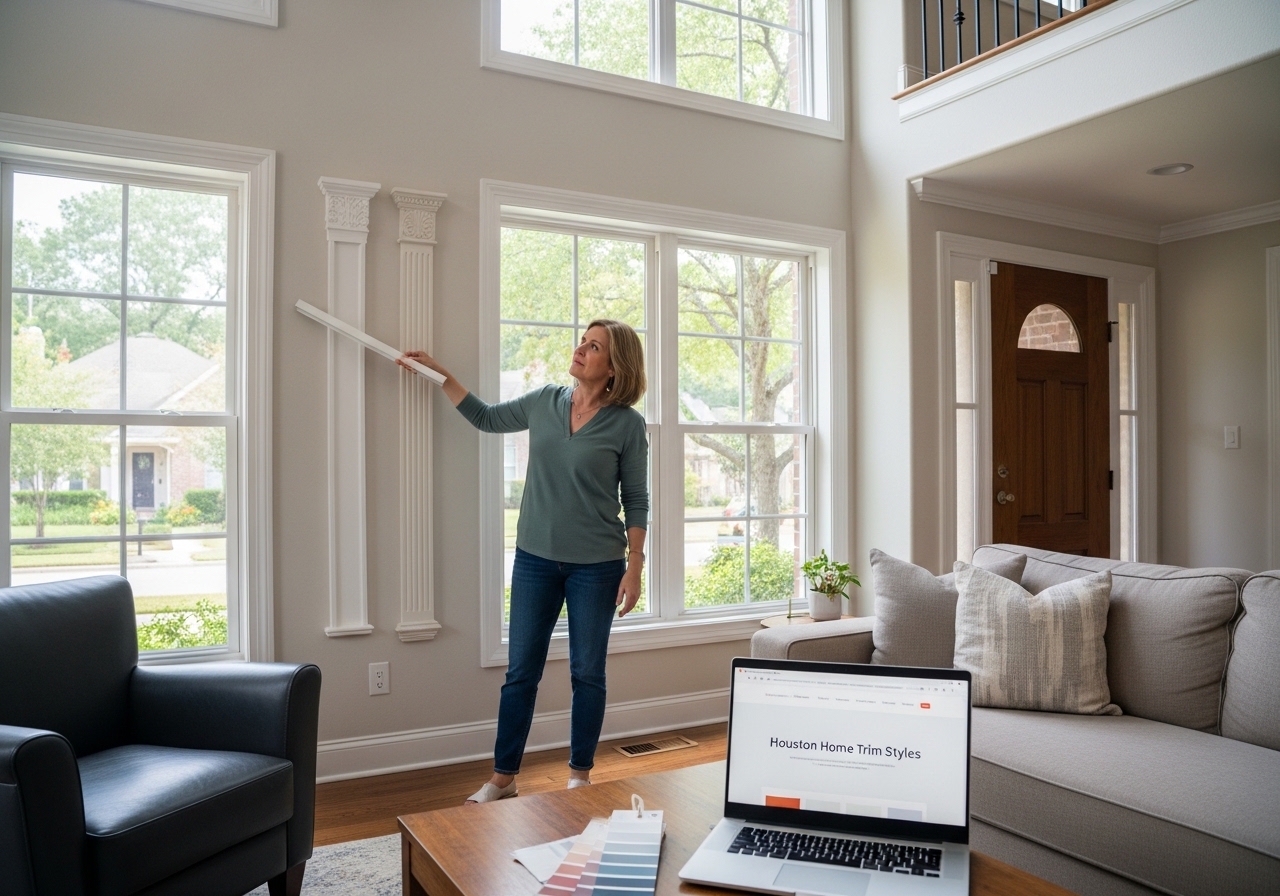
When most homeowners think about remodeling, they picture new countertops, fresh paint, or a kitchen overhaul. Trim is often the last thing on the list — but it probably shouldn’t be. The right trim style is what ties a room together. It frames your doors, crowns your ceilings, grounds your floors, and gives your home a finished, intentional look that visitors notice even if they can’t quite name why.
In Houston, TX, where homes range from historic Heights bungalows to sleek modern builds in The Woodlands, choosing the right trim style matters more than ever. Your trim has to suit your architecture, survive our humid Gulf Coast climate, and reflect your personal taste. This guide walks you through everything you need to know — the styles, the terminology, and the practical decisions — so you can make a choice you’ll love for years to come.
Why Trim Style Matters More Than You Think
Trim is not decoration in the superficial sense. It’s a structural and visual element that defines the character of every room in your home. Walk into a space with tall, detailed crown molding and you immediately feel a sense of grandeur. Step into a room with clean, minimal trim and the whole space feels modern and uncluttered. Swap those elements and the same furniture, same paint color, and same flooring will feel completely different.
Beyond aesthetics, quality trim work protects your walls and floors from wear, covers imperfect transitions between surfaces, and adds genuine resale value to your Houston home. Buyers notice the details — and trim done well signals that a home has been cared for at every level.
If you’re in the planning stages of a renovation, it pays to consult professionals early. The team at Ace Kustoms Trim Installations works with Houston homeowners to match trim style to architecture, room function, and personal taste — handling everything from crown molding to baseboards with precision craftsmanship.
Know Your Trim Types First
Before you pick a style, it helps to understand what the different types of trim actually are. Each one plays a different role in your home.
Baseboards run along the bottom of walls where they meet the floor. They protect the wall from scuffs, hide gaps, and visually ground the room.
Casing frames your doors and windows — it’s the trim that surrounds the opening on the face of the wall. It creates a finished border and connects the window or door to the surrounding wall.
Crown Molding installs at the junction of the wall and ceiling. It’s one of the most dramatic and impactful types of trim, adding elegance and height to any room.
Chair Rail runs horizontally along a wall, typically about one-third of the way up. It was originally designed to protect walls from chair backs but is now used as a decorative divider.
Picture Rail sits near the top of the wall and was historically used to hang artwork. It’s making a comeback in traditional and transitional homes.
Panel Molding creates rectangular or square patterns on walls — popular in formal dining rooms, entryways, and hallways.
Understanding these elements helps you have a more productive conversation with your contractor and make choices that are consistent throughout your home.
The Major Trim Styles and What They Mean for Your Houston Home
1. Traditional / Colonial Trim
Traditional trim is the most common style found in Houston homes built before 2000. It features detailed profiles — curved, layered, and ornamental — that reference classical architecture. Think fluted casings, built-up crown molding with multiple pieces, wide baseboards with decorative caps, and rosette corner blocks at door and window intersections.
This style suits: Colonial Revival, Victorian, craftsman bungalows, and most brick ranch-style homes common across older Houston neighborhoods like Montrose, Garden Oaks, and Oak Forest.
If your home has high ceilings and formal rooms, traditional trim can be one of the most cost-effective ways to dramatically upgrade the feel of the space. The layering effect of built-up crown molding especially works well in rooms with 9-foot or taller ceilings.
2. Craftsman Trim
Craftsman-style trim is clean but not cold. It’s characterized by wide, flat casings with square or slightly tapered profiles, substantial baseboards, and a lack of fussy ornamentation. The focus is on solid, honest woodwork that highlights material quality over decoration.
Craftsman homes tend to use thick door casings with a flat head and simple side profiles, wide window aprons, and chunky baseboards — often 4 to 5 inches tall. There’s a warmth to it that feels both traditional and refreshingly uncomplicated.
In Houston’s newer suburban communities — areas like Katy, Sugar Land, and Pearland — craftsman trim has surged in popularity because it pairs beautifully with open floor plans, wood-look tile, and transitional kitchen designs.
If you’re also planning updates to your kitchen or bathrooms, this trim style pairs naturally with the kind of cabinetry featured in Ace Kustoms’ kitchen and bath remodels — where clean lines and purposeful design are the whole philosophy.
3. Modern / Contemporary Trim
Modern trim is defined by what it doesn’t have: curves, ornamentation, and visual complexity. Clean square edges, thin profiles, and minimal baseboards create a stripped-back aesthetic that lets the architecture and furnishings do the talking.
In truly modern homes, trim is sometimes reduced to just a thin reveal — a small shadow gap or a thin piece of metal or wood that marks the transition without calling attention to itself. This works exceptionally well in open-plan, light-filled spaces with high-end finishes and minimal decor.
Houston’s newer construction in neighborhoods like Midtown, EaDo, and the Heights’ newer builds often feature this approach. If your home has concrete floors, large windows, and flat-panel cabinetry, modern trim is almost certainly the right direction.
Keep in mind that modern trim requires more precision in installation. The minimal profile means there’s nowhere to hide imperfections — which is why professional installation is especially important in this style.
4. Transitional Trim
Transitional trim splits the difference between traditional and modern. It takes the warmth and substance of traditional profiles but strips away the decorative complexity. You’ll typically see clean, slightly-rounded casings, substantial but unfussy baseboards, and simple crown molding without layered buildup.
This is arguably the most popular trim style for Houston homeowners today — and for good reason. It’s versatile enough to suit a wide range of architectural styles, and it won’t feel dated the way highly ornate traditional trim can over time.
If you’re not sure which direction to go, transitional trim is almost always a safe, stylish choice that adds value without making a strong stylistic commitment you might regret.
5. Farmhouse Trim
Farmhouse style has had a massive moment over the past decade, and while it has cooled slightly as a trend, it remains a genuinely appealing aesthetic for the right home. Farmhouse trim features wide, flat profiles — similar to craftsman but with an even more rustic, shiplap-influenced feel. Board and batten walls, thick window casings, and heavy beadboard paneling are all hallmarks of this style.
In Houston, farmhouse trim works well in single-story homes in suburban and semi-rural areas. It pairs naturally with open shelving, barn doors, and reclaimed wood accents.
Matching Trim Style to Your Houston Home’s Architecture
Here’s the most important rule: your trim should agree with your architecture, not fight it. Here’s a quick guide:
- Ranch-style homes — Traditional or craftsman trim tends to work best. The low roofline and horizontal orientation suits wide, substantial baseboards and simple casings.
- Two-story colonials — Traditional with crown molding and built-up details suits the formal proportions of this style.
- Craftsman bungalows — Craftsman trim is the obvious choice, but transitional works well too.
- Modern or contemporary builds — Keep it minimal and clean. Thin profiles and simple reveals.
- Open-plan interiors — Transitional or modern trim prevents the space from feeling over-decorated.
- Formal rooms (dining, study) — Traditional with panel molding or wainscoting adds gravitas.
The Houston Climate Factor: Choosing Materials That Last
Houston’s humidity is not a small variable. It’s one of the most humid major metros in the United States, and that has real consequences for trim materials. Wood trim can expand, contract, and warp when moisture levels fluctuate — which they do year-round in Houston.
MDF (Medium Density Fiberboard) is the most popular trim material in Houston for good reason. It’s dimensionally stable, takes paint beautifully, and doesn’t react to humidity the way solid wood does. It’s also more affordable, which makes it practical for whole-home trim projects.
Solid wood — particularly poplar or pine — is preferred by purists and works well for stained trim or high-end installations, but it requires proper sealing and maintenance in Houston’s climate.
PVC or composite trim is gaining ground, especially in areas like bathrooms, laundry rooms, and exterior trim applications where moisture exposure is high. It won’t swell, rot, or peel.
When working with Ace Kustoms on trim installations, material selection is always part of the conversation — because the right style in the wrong material won’t hold up in Houston’s heat and humidity.
Don’t Forget Interior Consistency
One of the most common trim mistakes homeowners make is inconsistency. They use one casing style in the master bedroom, another in the hallway, and a third in the living room — often because the work was done in stages or by different people.
The result is a home that feels slightly “off” without anyone being able to say exactly why. Trim should be consistent throughout connected spaces. You can adjust scale — heavier crown molding in formal rooms, simpler profiles in secondary bedrooms — but the profile family should stay the same.
This is especially important if you’re planning other storage or built-in upgrades. Well-matched custom shelving and built-ins use the same trim profiles as your door and window casings, creating a seamless, custom look throughout the home.
How Trim Interacts With Your Cabinetry
If you have custom cabinetry in your kitchen, bathrooms, or living areas, your trim style should complement — or at minimum not conflict with — your cabinet door style.
Shaker cabinets (clean, flat-panel with simple inset frame) pair perfectly with craftsman or transitional trim. Raised-panel cabinets suit traditional trim. Flat-front European-style cabinets call for modern minimal trim.
When these elements align, the entire home feels like it was designed with intention. When they clash, even beautiful individual elements can undermine each other. Ace Kustoms’ custom cabinets are designed with exactly this holistic approach in mind — ensuring that your cabinetry and trim work as a unified design system rather than competing elements.
Working With a Professional vs. DIY
Trim installation looks deceptively straightforward on YouTube. In practice, it requires precise miter cuts, coping joints at inside corners, careful nailing patterns, and expert caulking and painting to look truly finished. A slight gap in a coped crown molding joint or a casing that’s slightly out of plumb is immediately visible to the eye.
For a single accent wall or a small room, an experienced DIYer can certainly succeed. But for whole-home trim work — especially crown molding at height or complex built-up profiles — professional installation is almost always worth the investment. You’ll get cleaner results, less wasted material, and a finished product that holds its value.
Ace Kustoms’ trim installation services cover the full scope of interior trim work for Houston homeowners, from baseboards to ornate crown molding, with the kind of finish-carpentry precision that shows in every joint and corner.
Final Thoughts: Make the Choice That Fits Your Home — and Your Life
Choosing the right trim style for your Houston home isn’t about following trends. It’s about understanding your architecture, respecting your home’s proportions, and making choices that will look right five, ten, and twenty years from now.
Take the time to walk through your home and look at what’s already there. Notice the door styles, the ceiling height, the era of construction. Then find a trim style that speaks the same visual language — and invest in having it installed by craftspeople who take the details seriously.
In Houston, where home renovation is a constant conversation in neighborhoods across the city, the homes that hold their value and their beauty are the ones where every detail — including the trim — was chosen with care and installed with skill.


Comments are closed