
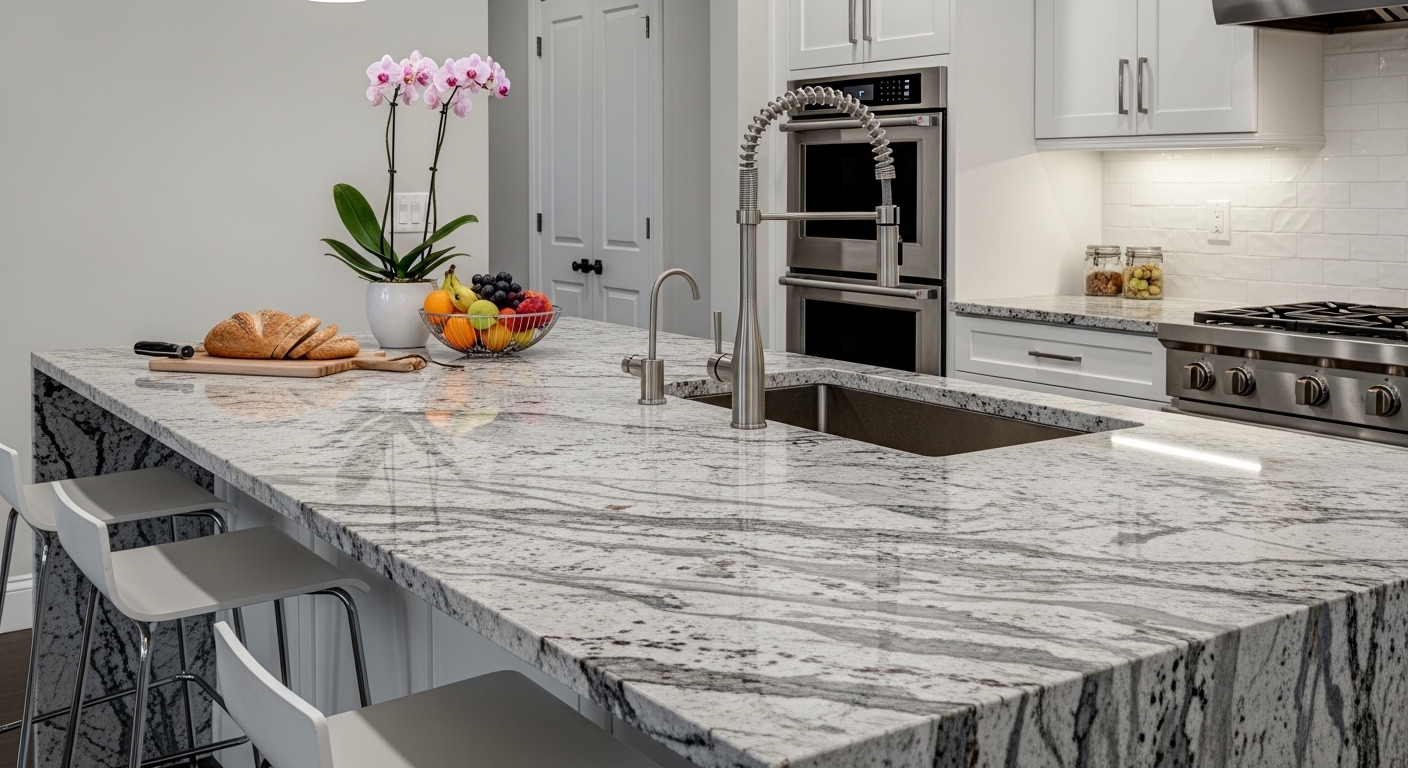
Choosing a countertop in Houston isn’t just about picking something that looks beautiful. It’s about picking something that can survive Gulf Coast humidity, scorching summers, big family meals, and years of everyday wear — all while keeping your kitchen or bathroom looking magazine-worthy. With so many options on the market, three materials come up again and again: quartz, granite, and quartzite.
Each one has passionate fans. Each one has real drawbacks. And each one behaves differently in Houston’s specific climate and lifestyle. In this guide, we break down all three — honestly — so you can walk into your next remodel with confidence.
Understanding the Basics: What Are These Materials?
Before comparing, let’s get clear on what each material actually is, because a lot of homeowners confuse quartzite with quartz — and they couldn’t be more different.
Granite is a 100% natural igneous rock quarried from the earth. It’s formed over millions of years from cooled magma, giving it its iconic speckled, multi-tonal appearance. No two granite slabs are identical, which is a major selling point for homeowners who want a truly one-of-a-kind kitchen.
Quartz countertops are engineered stone. They’re made from roughly 90–95% crushed natural quartz crystals combined with resins, polymers, and pigments. This manufacturing process gives quartz its consistent color patterns and makes it one of the most practical countertop options on the market. If you’re researching all your options, a great place to start is by learning about solid surface countertops — which covers engineered materials including quartz in depth.
Quartzite is a 100% natural metamorphic rock. It begins as sandstone and transforms under intense heat and pressure deep within the earth. The result is a dense, incredibly hard stone that often resembles marble — white and grey veining, elegant movement — but with far superior durability. It’s the option that frequently surprises homeowners who assumed they had to choose between beauty and toughness.
How Houston’s Climate Affects Your Choice
Houston’s climate is no joke. The city averages over 100 days above 90°F annually, and humidity regularly sits between 70–90%. That combination creates unique demands on building materials — including countertops.
Heat matters. Placing a hot pan directly on a countertop is something Houston cooks do frequently, especially during summer grilling season when the kitchen is already warm. Granite and quartzite are both natural stones and handle heat exceptionally well. Quartz, because of its resin binders, can discolor or crack under sudden high heat — placing a 400°F cast iron skillet directly on it is risky.
Humidity matters. Natural stone that isn’t properly sealed can absorb moisture over time. In Houston’s humid environment, granite that isn’t sealed annually can develop staining or even harbor bacteria in its pores. Quartz, being non-porous, doesn’t have this problem at all — it’s naturally resistant to moisture absorption, making it a strong contender for Houston kitchens and bathrooms.
Thermal expansion matters. Houston homes experience dramatic indoor/outdoor temperature swings. All three materials handle this well structurally, but natural stones like granite and quartzite require proper installation with adequate support and spacing to account for any minimal movement over decades.
Quartz Countertops: Practical, Consistent, and Low-Maintenance
Quartz is the best-selling countertop material in the U.S. right now, and for good reason. For Houston homeowners who want something that’s easy to live with, hard to damage, and available in dozens of colors and patterns, quartz is extremely compelling.
The pros of quartz:
Quartz is non-porous, which means it never needs sealing. You clean it with soap and water, and it resists staining from wine, coffee, oils, and the kinds of spills that happen constantly in active family kitchens. It’s consistent in appearance — if you’re doing a large kitchen with multiple slabs, they’ll match perfectly, which is harder to achieve with natural stone. It’s also harder than granite in practical everyday terms, resisting chips and scratches well.
From a design flexibility standpoint, quartz is unbeatable. Manufacturers can produce it in virtually any color — including looks that mimic Calacatta marble, concrete, or even exotic stones — without the maintenance requirements of the real thing. When you’re choosing the right solid surface countertop for a modern Houston home, quartz often tops the list for its balance of aesthetics and practicality.
The cons of quartz:
Quartz does not like direct heat. The resin binders can scorch or crack if exposed to temperatures above 300°F. Always use trivets. It’s also not ideal for outdoor kitchens — UV exposure over time can cause the color to fade or yellow. Given how many Houston homes have outdoor cooking spaces, this is worth noting.
Quartz also lacks the natural uniqueness of stone. If having a one-of-a-kind slab matters to you, quartz won’t deliver that.
Best for: Busy Houston families, rental properties, homeowners who want low maintenance without sacrificing style.
Granite Countertops: Timeless, Unique, and Built to Last
Granite has been the gold standard of kitchen countertops for decades, and it’s not going anywhere. In Houston’s luxury home market especially, granite remains a highly desirable material — both for its natural beauty and its proven track record.
The pros of granite:
Every slab is genuinely unique. The natural variation in granite — the swirls, the crystals, the color shifts — means your countertop is a piece of the earth that no one else has. It handles heat well (hot pots are generally safe). It’s extremely durable when properly installed and maintained. And in Houston’s real estate market, granite countertops are still a recognized value-add that buyers respond positively to.
Granite also pairs beautifully with the rich wood tones and traditional architectural details common in Houston’s older neighborhoods like Memorial, River Oaks, and West University. If your home has custom kitchen cabinets with ornate profiles or raised panel doors, granite’s natural depth and movement tend to complement that aesthetic far better than the flat consistency of engineered quartz.
The cons of granite:
Granite is porous and requires sealing — ideally once a year in a high-use kitchen. Without sealing, it can absorb oils, wine, and acidic foods, leading to staining that’s difficult or impossible to remove. It’s also susceptible to chipping at edges if heavy objects strike it, and certain colors (particularly lighter granites) show staining more readily.
From a cost standpoint, premium exotic granites can be surprisingly expensive, and because each slab is unique, matching slabs for a large kitchen can be challenging.
Best for: Houston homeowners who want natural stone character, have the discipline for basic maintenance, and are designing a traditional or transitional kitchen.
Quartzite Countertops: The Premium Natural Stone Option
Quartzite is having a moment — and deservedly so. For Houston homeowners who love the look of marble but have heard horror stories about marble’s fragility, quartzite is often the answer they’ve been searching for.
The pros of quartzite:
Quartzite is extraordinarily hard — harder than granite in most cases — and naturally dense. It handles heat beautifully. Its veining and movement are genuinely stunning, with popular varieties like Super White, Taj Mahal, and Calacatta Macaubas regularly appearing in high-end Houston remodels. It has a depth and luminosity that engineered stone simply cannot replicate.
In humid environments like Houston, quartzite’s density works in its favor. While it does need sealing (like granite), properly sealed quartzite is quite resistant to moisture penetration. For homeowners investing in a full bathroom remodel — particularly a primary bath with a freestanding tub surround or large vanity — quartzite delivers a spa-like luxury that’s difficult to achieve with any other material.
The cons of quartzite:
Here’s the catch: not all stone sold as “quartzite” is actually quartzite. Some softer stones get mislabeled. Always ask for a scratch test or hardness verification from your supplier. True quartzite should scratch glass easily.
Quartzite is also the most expensive of the three options typically, and because it’s a natural stone with dramatic veining, book-matching large slabs requires skilled fabrication. It needs sealing, and while it’s harder than marble, it’s not impervious — acidic foods can etch the surface if left sitting.
Best for: Houston homeowners investing in a luxury kitchen or master bathroom, those who prioritize natural beauty above all else, and buyers in the higher end of the market.
Side-by-Side Comparison for Houston Homeowners
–$$–$$
| Feature | Quartz | Granite | Quartzite |
|---|---|---|---|
| Heat Resistance | ⚠️ Moderate | ✅ Excellent | ✅ Excellent |
| Humidity Resistance | ✅ Excellent | ⚠️ Needs sealing | ⚠️ Needs sealing |
| Maintenance | ✅ Very low | ⚠️ Annual sealing | ⚠️ Annual sealing |
| Uniqueness | ❌ Engineered | ✅ Natural | ✅ Natural |
| Outdoor Use | ❌ Not ideal | ✅ Yes | ✅ Yes |
| Price Range | $$ | ||
| Best Room | Kitchen/Bath | Kitchen | Kitchen/Bath |
Making the Final Decision: Questions to Ask Yourself
Still unsure? Run through these questions:
How much time do I want to spend on maintenance? If the answer is “as little as possible,” quartz wins. If you’re comfortable doing an annual seal, granite or quartzite opens up.
Do I cook heavily? If cast iron, woks, and hot pans are regular in your kitchen, lean toward granite or quartzite. If you’re a moderate cook who uses trivets, quartz is fine.
Is this an indoor or outdoor kitchen? For outdoor Houston kitchens — a growing trend given the city’s long grilling season — avoid quartz entirely. Granite or quartzite are your options.
What’s my design direction? Modern and minimal? Quartz. Traditional with rich wood cabinetry? Granite. Luxury transitional with a spa feel? Quartzite.
What’s my budget? All three are available at various price points, but quartzite tends to run highest, especially for premium varieties.
Working with a Local Houston Professional
Whatever material you choose, installation quality matters as much as material quality. A beautiful quartzite slab poorly fabricated and installed will underperform a well-installed quartz countertop every time. Seams, edge profiles, cutouts for sinks and cooktops — all of these require skilled hands.
Houston has a thriving remodeling industry, and working with a local professional means they understand the city’s specific climate conditions, the building codes, and the aesthetic preferences of different neighborhoods. Whether you’re doing a full kitchen overhaul with custom kitchen cabinets or a focused bathroom remodel, pairing great countertop material with expert installation is how you protect your investment long-term.
Final Verdict
There’s no single “best” countertop for Houston homes — but there is a best countertop for your Houston home.
Choose quartz if you want zero-maintenance performance, consistent aesthetics, and a material that laughs at humidity and spills.
Choose granite if you want natural beauty, proven durability, and a timeless look that complements traditional Houston architecture.
Choose quartzite if you’re investing in a premium remodel, want the most stunning natural stone available, and are willing to do basic maintenance to protect it.
All three are excellent materials when properly sourced, fabricated, and installed. The key is matching the material to your lifestyle, your home’s design direction, and the specific room where it will live. Take your time, see slabs in person, and work with a Houston professional who can walk you through the options with your specific project in mind.
Your countertops will likely outlast your appliances, your paint colors, and maybe even your kitchen cabinets. Choose accordingly.


Comments are closed