
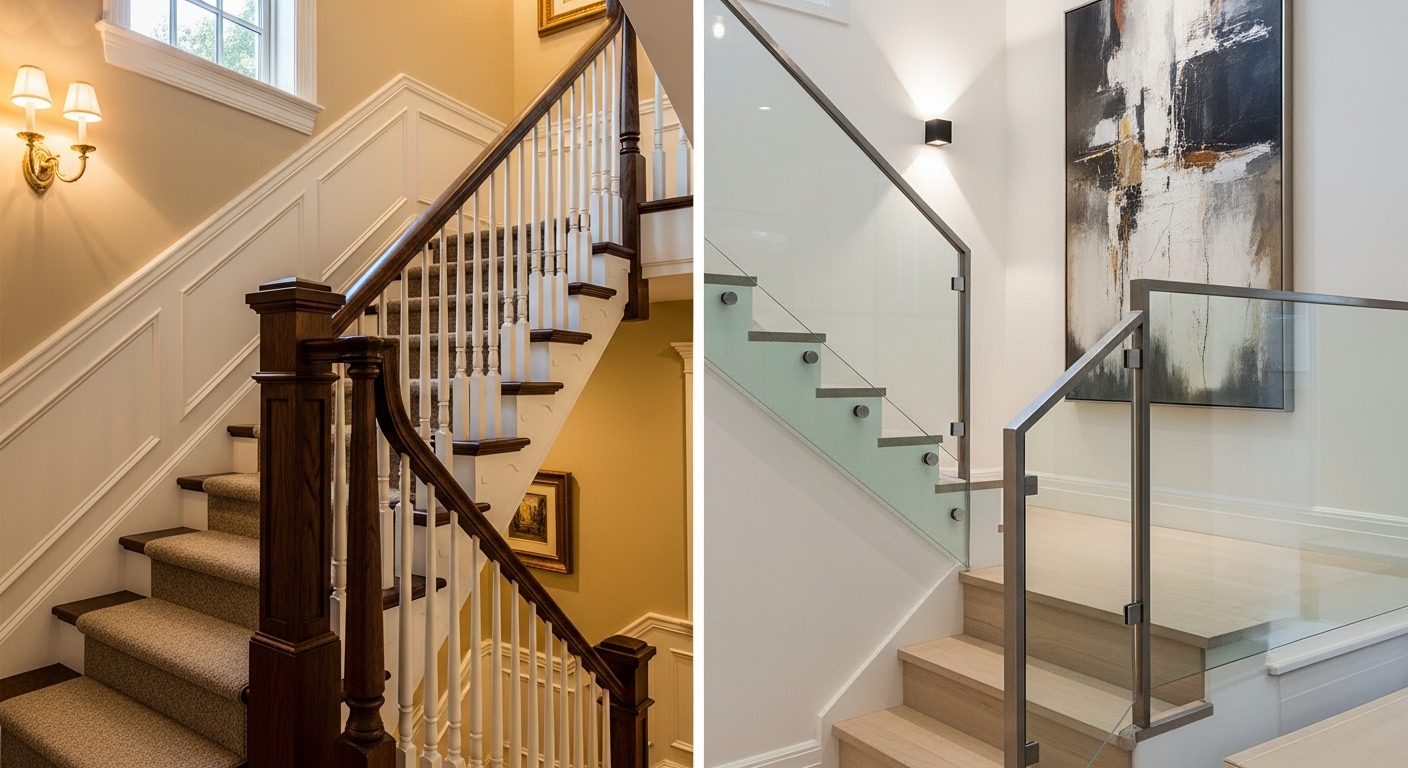
Few features in a home work as hard as a staircase. It moves you from one level to the next, sure — but it’s also one of the first things guests notice when they walk through the front door. A staircase sits in the open, often in an entryway or great room, which means its railing isn’t just a safety feature. It’s a design statement that can either tie your home’s look together or quietly clash with everything around it.
If you’ve ever stood at the bottom of your stairs and felt like something was “off,” there’s a good chance the railing is part of the problem. The good news is that railing style is one of the most impactful — and most overlooked — upgrades you can make to a home’s interior. In this guide, we’ll walk through the major railing styles, how to match them to your home’s existing aesthetic, and the practical details that separate a railing that looks built-in from one that looks bolted on.
Why Your Stair Railing Matters More Than You Think
A stair railing is one of the few architectural elements that touches almost every room it’s near. It’s visible from your entryway, your living room, your hallway, and often your second-floor landing. Unlike a piece of furniture you can swap out on a whim, a railing is a fixed, structural part of your home — which is exactly why getting the style right matters so much.
Think about it this way: a railing has lines, materials, and proportions, just like everything else in your home. A heavy, ornate wrought iron railing in a sleek, minimalist farmhouse can feel like a relic from a different house entirely. Meanwhile, a thin, ultra-modern cable railing in a traditional colonial home can feel cold and out of place. The goal isn’t to pick whatever looks trendy — it’s to choose a style that speaks the same design language as the rest of your home.
This is where working with a team that specializes in custom stair installations pays off. A custom approach means the railing is designed around your home’s actual proportions, lighting, and existing finishes, rather than forced to fit a one-size-fits-all kit from a big box store.
The Major Stair Railing Styles
Before you can match a railing to your home, it helps to understand the broad categories most railings fall into. Each has its own personality, and each tends to pair naturally with certain architectural styles.
1. Traditional Wood Railings
Wood railings are the classic choice, and for good reason. They bring warmth, texture, and a sense of craftsmanship that’s hard to replicate with other materials. Traditional wood railings typically feature turned or square balusters, a substantial handrail profile, and newel posts that act almost like furniture pieces at the top and bottom of the staircase.
This style shines in homes with traditional, colonial, or transitional interiors. It also pairs beautifully with other wood elements throughout the home — crown molding, wood flooring, and cabinetry. If your home already leans toward warm, classic finishes, a wood railing reinforces that feeling rather than fighting it.
2. Modern Metal and Cable Railings
For homes with a cleaner, more contemporary aesthetic, metal and cable railings have become a go-to choice. Thin metal balusters or horizontal cable runs create an open, airy feel that doesn’t visually block sightlines the way a solid wood or iron railing might. This is especially valuable in open-concept homes, where you want the staircase to feel like part of the larger space rather than a separate, boxed-in element.
Metal railings also tend to read as more low-maintenance and minimalist, which suits modern farmhouse, industrial, and contemporary interiors. A black metal railing against light wood treads, for instance, has become one of the most popular pairings in newer home designs — it creates contrast without overwhelming the space.
3. Wrought Iron Railings
Wrought iron sits in its own category because it can swing both traditional and dramatic, depending on the design. Scrollwork and decorative patterns feel at home in Mediterranean, French country, or formal traditional interiors. Simpler, straight-baluster iron designs can lean more transitional, bridging the gap between classic and contemporary.
Iron railings tend to make a statement, so they work best when the rest of the home has enough architectural detail to stand up to them — think arched doorways, detailed trim work, or a grand entry staircase.
4. Glass Panel Railings
Glass railings are the most modern option on this list, often paired with metal or wood handrails and posts. Because glass is transparent, it offers maximum visibility and light flow, making it a favorite for homes with a strong view, a floating staircase design, or a minimalist, loft-style interior.
This style requires a bit more thought in terms of maintenance and child or pet safety, but visually, nothing creates a more open, uninterrupted look. It’s particularly effective in homes where the staircase overlooks a living area, since it doesn’t block the view from either level.
5. Mixed-Material Railings
Many of today’s most popular railing designs actually combine two or more materials — a wood handrail with metal balusters, for example, or a glass panel with a wood cap rail. Mixed-material railings let you bring warmth and softness (usually from wood) together with a cleaner, more current look (usually from metal or glass).
This approach is particularly useful when you’re trying to bridge two design eras in your home — say, a traditional structure with a more updated interior — because it allows you to nod to both styles at once.
Matching Railing Style to Your Home’s Aesthetic
Once you understand the categories, the next step is connecting them to your home’s overall look. Here’s a general guide to get you thinking in the right direction:
Farmhouse and Modern Farmhouse Homes tend to look best with black metal balusters paired with a natural wood handrail. This combination delivers the classic farmhouse contrast — clean, simple lines balanced against warm, natural materials.
Craftsman-Style Homes call for substantial wood newel posts, square balusters, and a handrail with visible joinery. Craftsman design celebrates the structure and the materials themselves, so a railing that hides its construction would feel out of place.
Transitional Homes are the easiest to work with, since this style is built around blending traditional and contemporary elements. A simple wood handrail with thin metal balusters, or a mixed-material design, tends to be the sweet spot here.
Contemporary and Modern Homes generally call for cable or glass railings with minimal hardware and clean, unbroken lines. The less visual “noise” in the railing, the better it fits the overall aesthetic.
Coastal and Coastal Texas Homes often benefit from lighter wood tones or whitewashed finishes paired with simple, uncomplicated baluster patterns — designs that feel breezy and uncluttered rather than heavy or formal.
If you’re unsure where your home falls, it often helps to look at your existing trim, cabinetry, and flooring finishes first. Your stair railing should feel like it was designed alongside these elements, not added as an afterthought.
Wood vs. Metal: A Practical Look
One of the most common decisions homeowners face is whether to go with wood, metal, or a combination of the two. Each material brings its own strengths to the table — wood offers warmth and a traditional feel, while metal offers a sleeker, more contemporary look and tends to require less ongoing upkeep.
We’ve covered this comparison in much more depth in our guide on wood vs. metal stair railings, which breaks down the durability, maintenance, and style considerations of each material for homes in our area. If you’re torn between the two, that resource is a great next stop.
The Details That Make or Break the Look
Choosing a railing style is only half the equation. The details — baluster spacing, handrail profile, and post design — are what take a railing from “fine” to “custom-designed.” A railing with balusters that are too thin for the handrail, or spaced inconsistently, will look unfinished no matter how nice the materials are.
This is where handrail and baluster installations done by an experienced craftsman really show their value. Proper proportion — the relationship between the thickness of the handrail, the spacing of the balusters, and the scale of the newel posts — is what gives a staircase that polished, intentional look. It’s a detail most homeowners notice without being able to name exactly why it works.
Lighting is another detail worth considering. Railings near windows or skylights catch natural light differently depending on the material — metal and glass tend to reflect light and feel airy, while wood absorbs it and feels grounded. If your staircase gets a lot of natural light throughout the day, factor that into your material choice, since it will change how the railing reads at different times of day.
Letting the Railing Talk to the Rest of the Room
A staircase rarely exists in isolation. It’s usually within view of your kitchen, living room, or entryway, which means your railing should feel connected to the cabinetry and built-ins nearby. If your kitchen features rich, dark wood cabinets, a railing in a similar tone helps the spaces feel cohesive rather than disconnected. The same goes for trim — matching or complementary wood tones between your railing, baseboards, and door casings create a sense of flow throughout the home.
This is one of the advantages of working with a team that also handles custom cabinetry and built-ins. When the same craftsmen are responsible for your railing, trim, and cabinetry, the finishes are far more likely to align — same wood species, same stain formula, same attention to joinery — which results in a home that feels designed as a whole, not assembled piece by piece.
Final Thoughts
Choosing a stair railing style isn’t just about picking what looks good in a photo online — it’s about understanding your home’s existing architecture and finishes, then choosing a railing that reinforces that story rather than interrupting it. Whether you’re drawn to the warmth of traditional wood, the clean lines of modern metal, the drama of wrought iron, or a thoughtful mix of materials, the right railing should feel like it was always meant to be there.
If you’re ready to explore railing options tailored to your home’s specific layout and style, our team can walk you through material samples, design proportions, and finish options designed around your space — not a generic template. A well-designed staircase railing isn’t just a safety rail. It’s one of the most visible design decisions you’ll make in your home, and it deserves to be treated that way.


Comments are closed