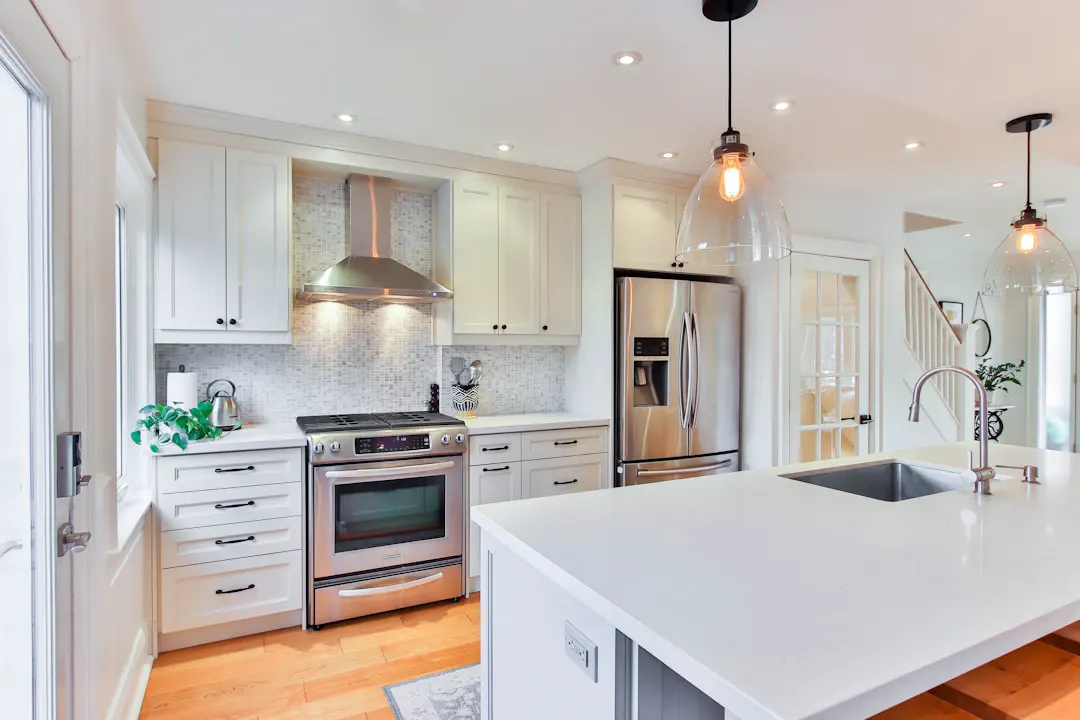
How to Choose a Solid-Surface Countertop
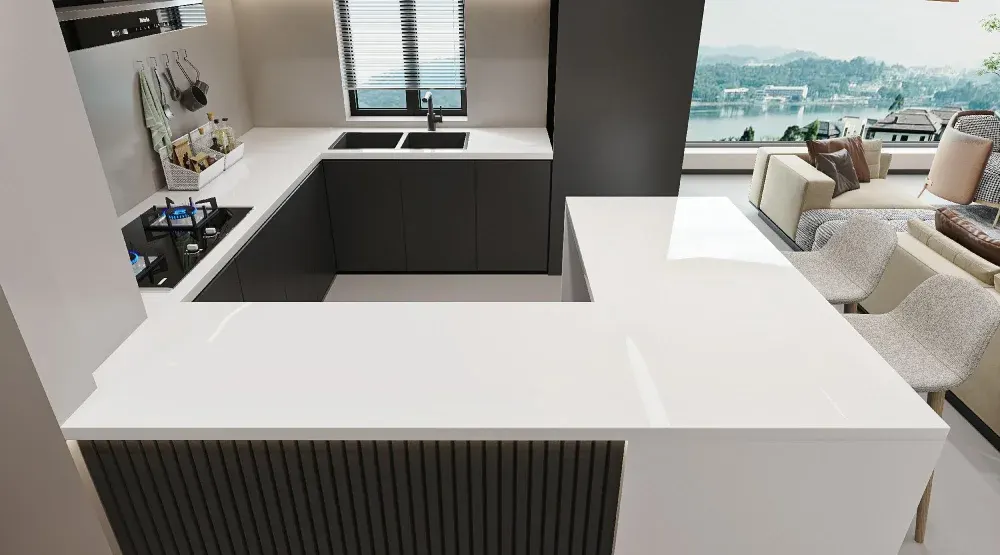
Solid surface has been around long enough that many people remember it from 1990s kitchens, but the material has quietly improved, and it remains one of the most practical countertop options for certain rooms. If you are trying to figure out how to choose a solid-surface countertop, the decision comes down to where it will go, how you use that space and which features matter most, such as seamless joints and integrated sinks.
This guide is for Houston-area homeowners comparing countertop materials for a kitchen, bathroom, laundry room or built-in work surface. We will explain what solid surface is, where it works well, where it does not, and the specific choices you will face, from color and thickness to edge profiles and sink options.
We handle solid-surface countertops as part of our cabinetry and remodeling work, which means we design the top and the cabinets underneath together. That perspective shapes much of the advice below.
What a Solid-Surface Countertop Actually Is
Solid surface is a manufactured material made primarily from acrylic or polyester resins blended with mineral fillers and pigments. It is cast into sheets, typically around half an inch thick, and fabricated much like wood: cut, routed, sanded and joined.
The key characteristics are:
- Color through the body. The pattern is not a printed layer, so scratches and wear can be sanded out.
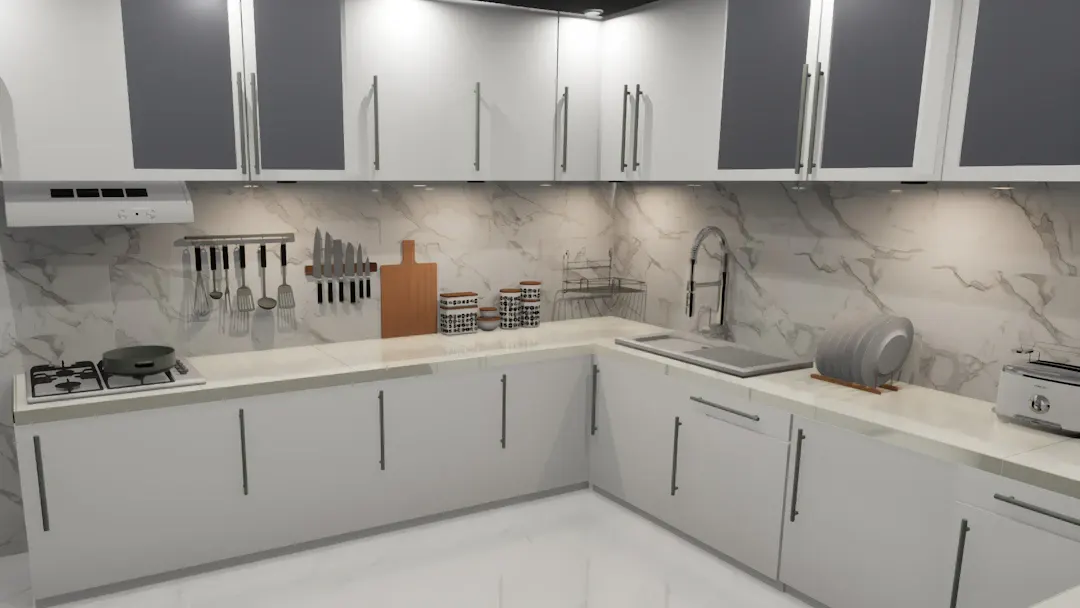
- Inconspicuous seams. Pieces are bonded with a color-matched adhesive and sanded flush, so long runs and L-shapes can look like one piece.
- Non-porous. It does not need sealing and resists staining from most household liquids.
- Thermoformable. Some products can be heated and bent for curved edges or shapes.
- Softer than stone. It scratches more easily and is less heat tolerant than granite or quartz.
That combination makes solid surface strong in some uses and a poor fit in others.
Where a Solid-Surface Countertop Works, and Where It Doesn't
Bathrooms and vanities
Bathrooms are probably the best use for solid surface. An integrated sink molded into the top eliminates the caulk line and rim where grime collects. In Houston's humidity, fewer seams and caulk joints mean fewer places for mildew. It pairs well with custom bathroom vanities, especially in kids' baths and guest baths that need simple upkeep.
Laundry and mudroom work surfaces
Folding counters, utility sinks and drop-zone tops benefit from a material that is easy to clean and easy to repair. A scratch from a toolbox or a dragged laundry basket can be buffed out.
Kitchens with specific needs
Solid surface can work in kitchens where the household values seamless design and sanitation, and is willing to use trivets. It is also popular for butler's pantries, coffee bars and secondary prep areas.
Commercial-style and accessibility needs
Because it can be shaped with coved backsplashes and integrated sinks, solid surface is useful where easy cleaning or a gentle, rounded edge matters.
Where it may not be the best fit
Be realistic about the trade-offs before committing.
- Heavy-duty cooking areas. Setting a hot pan directly on solid surface can scorch or crack it. If your family cooks hard and fast, a stone or quartz surface near the range may be a better choice.
- Knife work directly on the counter. It scratches. Cutting boards are a must.
- High-gloss expectations in a busy kitchen. Glossy finishes show every fine scratch.
- Outdoor kitchens. Many solid-surface products are not rated for prolonged UV exposure.
A useful approach is mixing materials: stone or quartz around the cooking zone and solid surface on a baking station or bar area. Our article on quartz vs granite vs quartzite countertops helps if you are weighing those options too.
Choosing Color, Finish, Edges and Sinks
Color and pattern
Solid surface comes in solid colors, fine speckles and patterns that imitate stone with veining. A few practical points:
- Lighter, speckled patterns hide scratches and water spots better than dark solids.
- Very dark, solid colors look sharp but show every scratch and dull spot.
- Veined patterns may not carry through seams as convincingly as solid or speckled colors, so ask to see a seam sample.
- Look at full samples in your home's light, not under showroom lighting. Houston homes with big west-facing windows get intense afternoon sun that changes how colors read.
Finish sheen
| Finish | Look | Maintenance | Best for |
|---|---|---|---|
| Matte | Soft, low glare | Most forgiving; easy to refresh | Kitchens, kids' baths, laundry |
| Satin / semi-gloss | Slight sheen | Shows some wear | Vanities, bars |
| High gloss | Reflective, polished | Shows scratches quickly; needs care | Low-traffic display areas |
For most households, matte is the practical choice.
Thickness and build-up
Most solid-surface sheets are about half an inch thick. Fabricators build up the front edge to create the look of a thicker top, commonly around 1.5 inches. The top is supported by the cabinets and, depending on the product, may need a substrate or support strips. This is a place where cabinet and countertop planning need to match, especially for overhangs and spans over dishwashers.
Edge profiles
Because the material machines like wood, you have many edge options:
- Eased square: clean and modern, slightly softened corners.
- Bullnose or half bullnose: rounded and kid-friendly.
- Ogee: traditional, works with raised-panel cabinetry.
- Bevel: subtle detail that catches light.
- Coved backsplash: a curved joint between counter and backsplash that is easy to wipe and eliminates a caulk line.
Integrated sinks
An integrated sink is the feature most people choose solid surface for. The sink is bonded to the countertop so there is no rim or caulk joint. Options include single and double bowls for vanities and kitchen-style bowls for laundry rooms. Check the bowl depth and drain position against your faucet choice before ordering.
How Solid Surface Compares to Other Countertops
Seeing the materials side by side helps clarify where solid surface earns its place. The comparison below is general; individual products within each category vary.
| Feature | Solid surface | Quartz | Granite | Laminate |
|---|---|---|---|---|
| Heat tolerance | Low to moderate; use trivets | Moderate; use trivets | High | Low |
| Scratch resistance | Moderate | High | High | Low to moderate |
| Repairability | Excellent; sand and refinish | Limited | Chips can be filled | Poor |
| Visible seams | Nearly invisible | Visible | Visible | Visible |
| Integrated sink option | Yes | Rare | No | No |
| Sealing needed | No | No | Yes, periodically | No |
The takeaway is that solid surface trades some toughness for repairability and seamless design. In a bathroom or laundry room, that trade usually makes sense. In a kitchen, it depends on how you cook.
Caring for Solid Surface Day to Day
Care is straightforward, which is a big part of the appeal:
- Clean with warm water and mild dish soap or a non-abrasive household cleaner.
- Use a cutting board every time, and trivets under hot pans, slow cookers and air fryers.
- Wipe up nail polish remover, hair dye and strong solvents quickly, since some chemicals can mark the surface.
- For a matte finish, a light pass with a gentle abrasive pad, as recommended by the manufacturer, removes fine scratches and evens out the sheen.
- For deeper gouges or a scorch mark, call a fabricator. Most damage can be sanded out and refinished on site.
Cost Planning for a Solid-Surface Countertop
Pricing varies with color group, edge detail, number of seams, integrated sinks, backsplash style and site access. As a general planning range in Greater Houston, installed solid surface often falls somewhere around $40 to $100 per square foot, with integrated sinks, thermoformed shapes and premium colors adding to the total. Those figures are only a planning starting point; your written estimate will reflect the actual layout and materials.
For a side-by-side look at how price tiers differ across countertop materials, see budget vs. premium countertops: what changes.
Questions to ask before you choose
Use this list when comparing options or talking to a fabricator:
- Which product line is being used, and what are the manufacturer's care and heat guidelines?
- Where will the seams fall, and can I see a seam sample in my chosen color?
- What edge build-up and profile are included in the price?
- Is an integrated sink included, and what bowl sizes are available?
- What finish sheen is standard, and how is it maintained?
- How will the top be supported over the dishwasher and any overhangs?
- What is the process if the top is scratched or chipped later?
Matching the Countertop to the Cabinets Underneath
A countertop is only as good as its support. Solid surface is lighter than stone, but it still needs a level, rigid base so seams stay tight. On older Houston homes, especially ranch houses on slab foundations that have settled over the decades, floors are rarely perfectly level. Cabinets need to be shimmed and leveled carefully before any top goes on.
Because our team builds the cabinetry in our own shop and handles the countertop and surface work, we plan cabinet heights, support strips and sink bases together. That avoids the common problem of a countertop installer arriving to find cabinets that are out of level or a sink base that does not fit the chosen bowl. Homeowners in Houston and surrounding areas get one point of contact for both.
Ready to Talk Through Your Countertop Options?
A solid-surface countertop is a smart, practical choice when you want seamless lines, integrated sinks and a surface you can repair rather than replace. It is less suited to heavy heat and knife work, so matching it to the right room is the key decision.
If you are planning a kitchen, bathroom or laundry project and want the countertop and cabinets designed as one system, request a free in-home estimate or call (281) 660-3903. We will look at your space, show you real samples and provide a written estimate.
Frequently asked questions
Is solid surface a good choice for a Houston kitchen?
Can scratches in solid surface be repaired?
How does solid surface compare to quartz?
What finish should I pick for a solid-surface countertop?
Planning a project like this?
Get a free in-home estimate from the team that builds and installs the work.