Choosing a Countertop Edge for a Woodbranch Home

Woodbranch is a small, wooded community in east Montgomery County, close to New Caney and Porter, where many homes sit on larger lots surrounded by tall pines. Kitchens here range from rustic and traditional to modern farmhouse, and many homeowners are updating original builder finishes or planning larger remodels. One detail that often gets decided at the last minute is the countertop edge. Choosing the right countertop edge for a Woodbranch home affects how the kitchen looks, how safe it is for kids, how well it resists chips, and what you pay.
This guide is for Woodbranch and east Montgomery County homeowners picking an edge profile for granite, quartz, quartzite, solid surface or another countertop material. We compare common profiles, explain where each works best, and cover practical issues like chipping, cleaning and cost.
We install countertops as part of our cabinetry and remodeling work, so we plan edges alongside cabinet style, overhangs and hardware. You can learn more about our approach on our countertops and surface work page.
Why the Edge Matters More Than You Think
The edge is the part of the countertop you touch, lean on and bump into most. It frames the countertop visually and sets the tone for the kitchen. A crisp square edge reads modern. A rounded bullnose reads soft and traditional. A thick mitered edge reads substantial and high-end.
The edge also affects:
- Durability: Some profiles resist chipping better than others.
- Safety: Rounded edges are kinder to kids and anyone who bumps into the counter.
- Cleaning: Deep, decorative profiles collect crumbs and grime.
- Cost: Complex profiles take more fabrication time.
Common Countertop Edge Profiles Compared
| Edge profile | Look | Chip resistance | Cleaning | Typical cost |
|---|---|---|---|---|
| Eased (slightly rounded square) | Clean, modern, versatile | Good | Easy | Usually standard |
| Small bevel | Crisp, tailored | Good | Easy | Usually standard |
| Half bullnose | Soft, traditional | Very good | Easy | Often an upgrade |
| Full bullnose | Very soft, casual | Very good | Easy | Often an upgrade |
| Ogee | Formal, decorative | Fair | More effort | Upgrade |
| Dupont | Classic, stepped | Fair | More effort | Upgrade |
| Mitered (thick look) | Substantial, modern | Good | Easy | Premium |
Costs vary by material, fabricator and kitchen size, so treat these as general comparisons and confirm pricing in a written estimate.
Eased edge
An eased edge is a square edge with the sharp corners slightly softened. It is the most popular choice for quartz and granite because it looks clean, works with almost any cabinet style, and resists chipping better than a truly square edge.
Bevel edge
A bevel cuts the top corner at an angle, usually 1/4 to 3/8 inch. It looks crisp and tailored and suits Shaker and transitional cabinets well. A slightly larger bevel can also help disguise minor chips.
Half and full bullnose
A half bullnose rounds the top edge, while a full bullnose rounds both top and bottom. These profiles are soft, safe and easy to clean. They suit casual, farmhouse and traditional kitchens, and they are a practical choice for families with young children.
Ogee and dupont
Ogee has an S-shaped curve; dupont has a step down from the top surface with a rounded lower section. Both are decorative and traditional. They pair with raised-panel cabinets and formal kitchens but take more effort to clean and are more likely to chip on thinner stones.
Mitered edge
A mitered edge joins a strip of stone at 45 degrees to make the countertop appear 2 to 3 inches thick or more. It is popular on islands and with veined quartz or quartzite where the pattern can wrap around the edge. It requires skilled fabrication and extra material, so it costs more.
Choosing a Countertop Edge for a Woodbranch Home's Style
Homes in Woodbranch and the surrounding east Montgomery County area tend toward a few common styles. Here is how edges typically pair:
Rustic and lodge-style kitchens
Homes that lean into the wooded setting, with stained wood cabinets, exposed beams or stone, often look best with a softer edge like a half bullnose or a generous eased edge. These soften stone surfaces and feel more relaxed.
Modern farmhouse
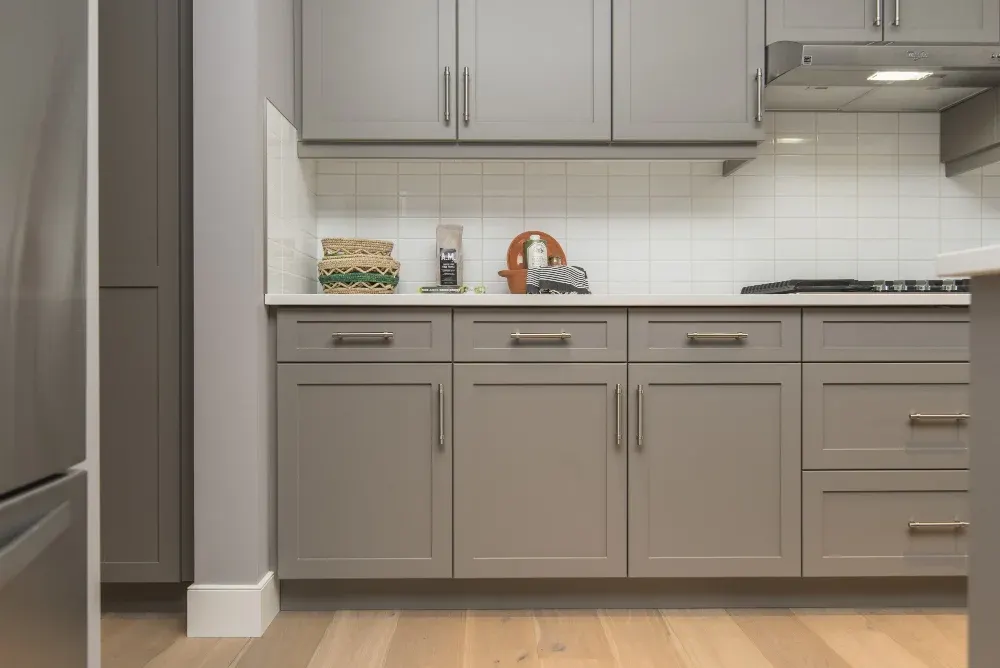
White or painted Shaker cabinets, black or brass hardware and a large island are common in recent remodels. An eased or small bevel edge on the perimeter with a mitered edge on the island is a popular combination.
Traditional kitchens
Raised-panel cabinets, crown molding and warm stained wood suit an ogee, dupont or full bullnose edge. Keep the profile proportional; a heavy ogee on a thin 2 cm countertop can look out of scale.
Contemporary kitchens
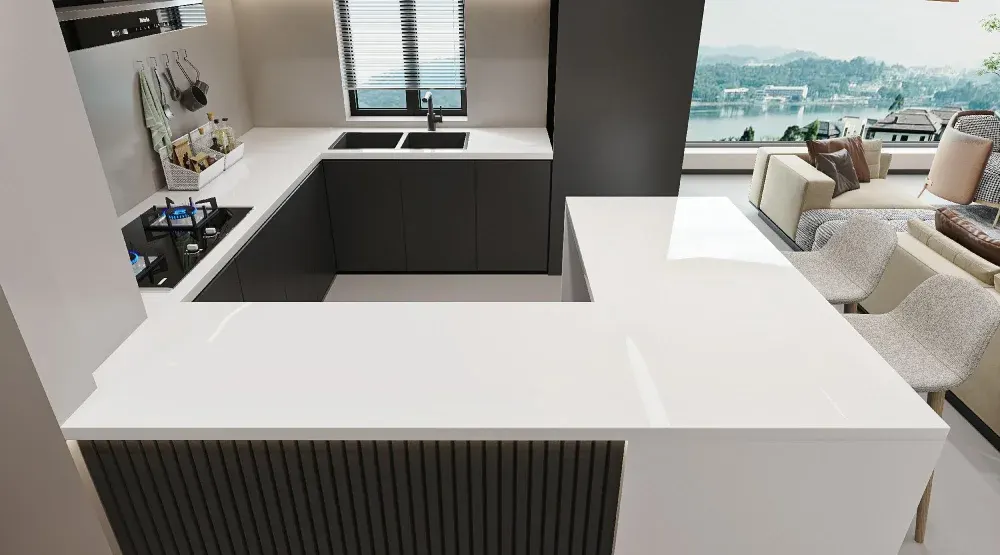
Flat-panel cabinets and minimal hardware look best with a crisp eased edge or a thick mitered edge. Avoid decorative profiles, which fight the clean lines.
For more on how cabinet style relates to the home's architecture, see match cabinet style to your home's architecture.
How Material Affects Edge Choice
Not every edge works equally well with every material.
- Granite: Takes almost any profile. Very decorative profiles may expose natural fissures.
- Quartz: Takes most profiles cleanly. Mitered edges work especially well with veined designs.
- Quartzite: Very hard, which makes complex profiles more time-consuming to fabricate.
- Marble: Softer and more prone to chipping on sharp edges. Rounded profiles are kinder.
- Solid surface: Can be shaped into many profiles and repaired if chipped.
- Laminate: Edge options are more limited, usually a square or rolled front edge.
Thickness matters too. A 3 cm countertop gives more room for decorative profiles. A 2 cm countertop often needs a laminated or built-up edge to look substantial.
For a broader comparison of materials, see quartz vs granite vs quartzite countertops.
Practical Considerations Beyond Style
Families and high-traffic kitchens
Kitchens with young kids, pets or heavy daily use benefit from rounded or eased profiles that resist chips and are gentler on bumps. Square corners at island ends are the most likely spots for injury and damage, so many homeowners choose a radius on outside corners.
Sinks and dishwashers
Edges near undermount sinks and dishwashers see the most wear. Pots, dishes and steam all take a toll. A profile with a small radius or bevel holds up better here than a sharp square edge.
Overhangs and seating
Island overhangs for seating are usually 12 to 15 inches. A rounded or eased edge is more comfortable for forearms resting on the counter. For overhangs beyond about 10 to 12 inches with stone, plan for proper support with corbels or concealed steel brackets, which we build into our custom kitchen cabinets when the island is designed.
Humidity and maintenance
East Montgomery County is humid, and wooded lots can keep homes a little damper than open suburbs. Natural stone needs periodic sealing regardless of edge, but intricate profiles have more surface to seal and more crevices to clean. Simpler edges are easier to maintain over the long term.
Front overhang and exposed ends
The edge also sets how far the countertop projects past the cabinet doors. A typical front overhang is about 1 to 1 1/2 inches beyond the door faces, enough to send drips past the drawer fronts instead of down them. Thick mitered or built-up edges add depth at the front, so check the edge against any drawer pulls mounted near the top of a drawer. A deep edge can crowd fingers reaching for a pull or catch an appliance handle as it opens.
Ends need the same attention. Where a countertop stops beside a slide-in range, a refrigerator or an open end panel, decide whether the exposed end gets the same profile as the front or stays square against the appliance. Settle these details before the fabricator templates, so every exposed end is cut and polished correctly the first time.
Edges for Bathrooms, Bars and Outdoor Kitchens
The kitchen gets most of the attention, but other countertops in the house need edges too, and the right choice is not always the same.
Bathroom vanities
Vanity tops are smaller and closer to body height when you lean over the sink. An eased or small bevel edge is the usual choice, and it pairs well with most vanity styles. In a kids' bathroom, a half bullnose is gentler. Keep the vanity edge consistent with other bathrooms if you want the house to feel cohesive, or match it to the kitchen if the two are visible from each other.
Wet bars and coffee stations
A bar top is a good place for a little more detail, since it is small and often a focal point. A mitered edge or a thicker built-up profile can make a modest bar feel more substantial without the cost of doing the whole kitchen that way.
Outdoor kitchens
Many Woodbranch homes have covered patios that suit an outdoor kitchen. Outdoor counters face sun, rain and pollen from the surrounding pines, so simple, rounded edges that shed water and wipe clean are the practical choice. Granite and some quartzites handle outdoor exposure better than most quartz, which can discolor with prolonged sun.
Choosing an Edge: A Simple Process
If you are stuck between options, these steps help:
- Start with the cabinet style. Shaker and flat-panel cabinets favor clean edges; raised-panel cabinets can carry more detail.
- Consider who uses the kitchen. Young kids and heavy use point toward rounded profiles.
- Look at the material and thickness. Some profiles suit some materials better.
- Decide where to splurge. A mitered island with eased perimeter edges is a common way to control cost.
- See samples. Look at real edge samples in person, run your hand along them, and view them in your kitchen's light.
If you are weighing where premium spending pays off on countertops, our post on budget vs. premium countertops covers edges as part of the bigger picture.
Plan Your Countertop With Your Cabinets
The right countertop edge balances style, safety, durability and budget. For most Woodbranch kitchens, a clean eased or bevel edge is a safe and attractive default, with a mitered or bullnose edge used where it adds the most impact.
We serve Woodbranch, New Caney, Porter and the rest of Montgomery County. If you are planning new countertops or a kitchen remodel, book a free in-home estimate or call (281) 660-3903. We will bring samples, look at your cabinets and layout, and give you a written estimate you can plan around.
Frequently asked questions
What is the most popular countertop edge right now?
Which countertop edge is safest for families with small children?
Do fancy edges cost more?
Does the edge profile affect how the countertop wears?
Planning a project like this?
Get a free in-home estimate from the team that builds and installs the work.