Kids' Cabinetry That Adapts as They Grow
Plan kids cabinetry that grows with your child: adjustable shelves, convertible desks, safe hardware and durable finishes. Request a free in-home estimate.

Cabinetry & Built-Ins
Window seats, bookcase alcoves and cushioned benches built to fit the corner of your house you already like sitting in.
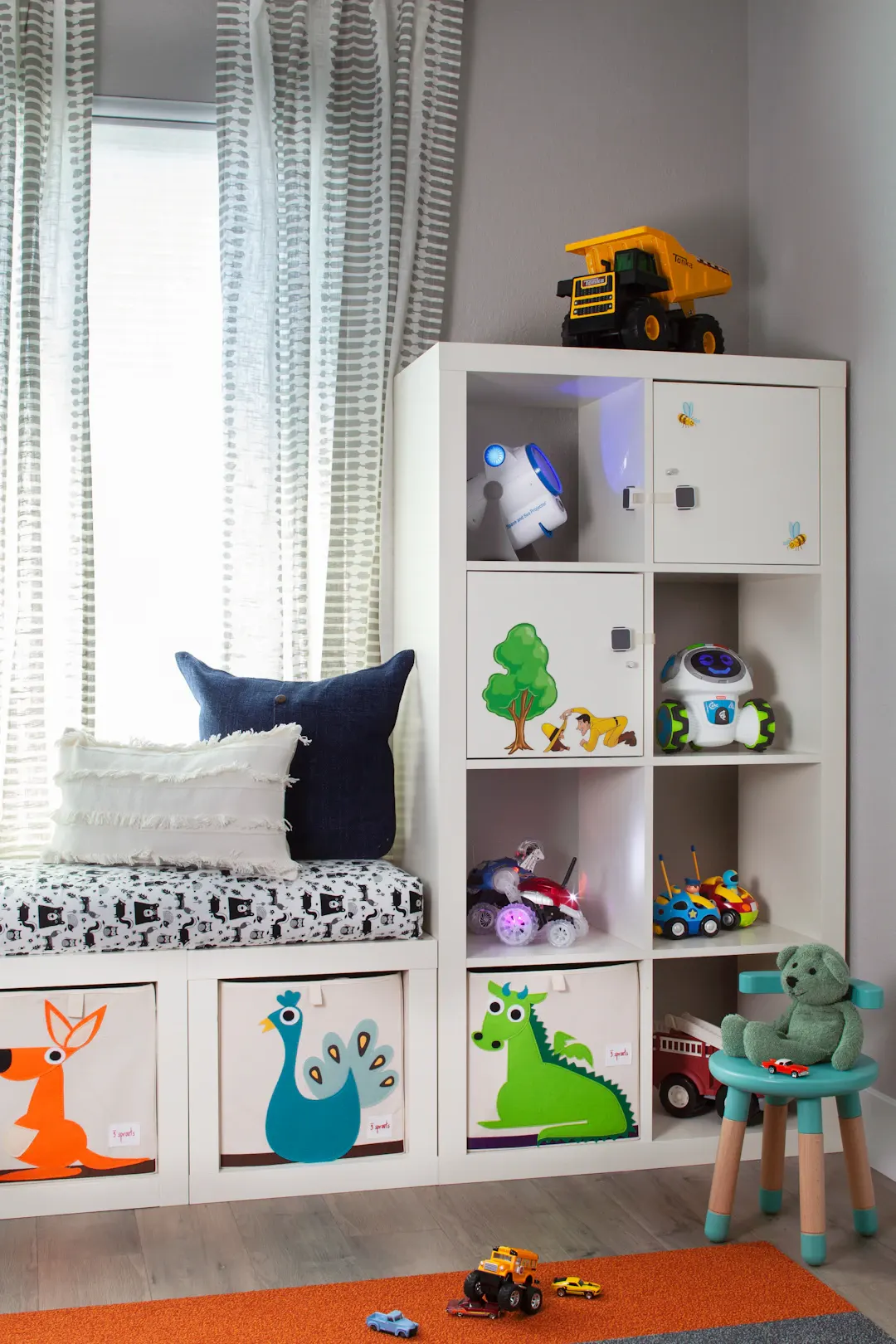
Custom reading nook built-ins turn a bay window, a dead-end hallway or the space beside a fireplace into a seat people actually use. Most nooks we build in Houston combine three parts: a bench deep enough to sit cross-legged on, shelving on one or both sides, and a light you can read by after sunset. Ace Kustoms designs, builds and installs all three with one in-house crew.
The details that make a nook comfortable are small and specific. A finished seat height around 18 inches with a 3 to 4 inch cushion, a bench depth of 20 to 24 inches for sitting or 28 to 30 inches if a child wants to lie down, and side shelves set back so elbows do not hit book spines. We work those numbers out on site rather than from a catalog.
Underneath the seat is storage space that most homes need. We build drawers on full-extension slides or lift-up lids with soft-close lid stays, so blankets, board games and spare pillows have a home instead of piling up in a closet. If you want the nook to match nearby bookcases or a library wall, see our broader custom cabinetry and built-ins work for related options.
We measure the actual opening, sill height and wall depth, then size the bench to the inch. Bay windows with angled walls get mitered bench faces instead of a rectangle box shoved into a polygon.
Drawers on 21-inch full-extension slides or a hinged lid with a soft-close stay give you a place for throws, toys or out-of-season clothes without adding another piece of furniture to the room.
Shelves are 3/4-inch plywood with a hardwood edge or solid hardwood, kept to spans of about 30 inches so they do not sag under paperbacks and heavy art books over time.
We can route a channel for an LED strip under a canopy, mount a swing-arm sconce on a side panel, or add a USB outlet in the bench face. Wiring is coordinated with a licensed electrician before paint.
Profiles, door styles and paint colors can echo existing trim, baseboards and crown molding, so the nook reads as part of the original house rather than an add-on piece that was pushed into the corner later.
The same people who measure your space build it in our Houston shop and install it. That keeps scribes tight against out-of-plumb walls and saves the back-and-forth between separate trades.

As a general planning range, a simple window seat with drawers often lands around $2,500 to $5,000 in Greater Houston, while a full alcove with ceiling-height bookcases and lighting commonly runs $6,000 to $14,000 or more. These figures vary with size, materials and site conditions, so treat them as a starting point and ask for a written estimate after we measure.
Window seats in Houston sit right against the glass that takes the most summer heat, and many older single-pane windows in 1950s to 1970s ranch homes sweat in winter. We leave a small air gap behind the bench back, seal all faces including the underside, and avoid blocking supply vents or returns that often sit under windows. On slab foundations, floors are rarely flat, so benches are built on a leveled base rather than resting directly on tile. Cushions should be on a slatted or vented deck to avoid trapping humidity, which keeps foam from going musty during long humid stretches.
Storage & OrganizationCustom ShelvingFloating shelves, built-in bookcases, pantry and utility shelving made from solid hardwood and plywood, engineered not to sag and installed by our own crew.
Storage & OrganizationCustom Kids' Room StorageBuilt-in storage for kids' rooms, including toy cubbies, reachable closets, window seats and bed surrounds, anchored for safety and built from plywood and hardwood in our Houston shop.
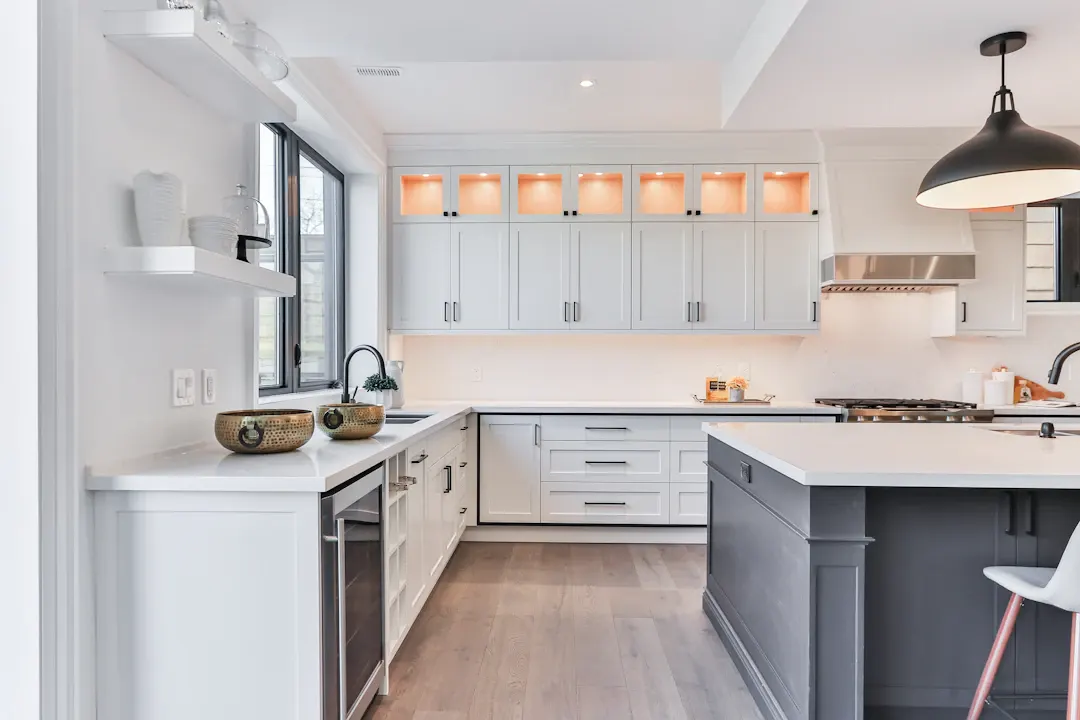 Cabinetry & Built-InsCustom Display Cabinet Built-InsBuilt-in display cabinets with glass doors, integrated LED lighting and adjustable shelves for china, collections, books and art, built in our Houston shop and installed by our crew.
Cabinetry & Built-InsCustom Cabinetry & Built-InsBuilt-in bookcases, window seats, bench storage, wall cabinets and more, designed for your room and built from solid hardwood and furniture-grade plywood.
Cabinetry & Built-InsCustom Display Cabinet Built-InsBuilt-in display cabinets with glass doors, integrated LED lighting and adjustable shelves for china, collections, books and art, built in our Houston shop and installed by our crew.
Cabinetry & Built-InsCustom Cabinetry & Built-InsBuilt-in bookcases, window seats, bench storage, wall cabinets and more, designed for your room and built from solid hardwood and furniture-grade plywood.
We build and install custom reading nook built-ins throughout Greater Houston. Find your community:
Plan kids cabinetry that grows with your child: adjustable shelves, convertible desks, safe hardware and durable finishes. Request a free in-home estimate.
Learn how custom living room built-ins add storage, frame a fireplace or TV and fix awkward layouts in Houston homes. Schedule a free in-home estimate today.
Custom cabinetry ideas for pet owners in Houston: built-in feeding stations, crate cabinets, dog wash bays and scratch-proof finishes. Get a free estimate.
Free, no-pressure estimate
Tell us about your kitchen, bath or built-in project. We usually reply within one business day.
Office hours: Mon–Fri 8:00 AM – 5:00 PM