Walk-In Shower vs Bathtub: Function and Home Value
Walk-in shower vs bathtub for Houston homes: daily function, accessibility, resale value, waterproofing and cost ranges. Get a free remodel estimate.

Surfaces & Lighting
Backsplashes, showers, floors and fireplace surrounds set on proper substrate prep, so the tile stays flat and the water stays out.
Interior tile and stone work looks simple from the finished side, but nearly every tile failure we see starts underneath: a shower built over drywall, a floor set on a slab crack without a membrane, or a backsplash with thinset applied in globs instead of a full trowel. Ace Kustoms handles tile and stone with the same care we bring to cabinetry, starting with flat, sound, properly prepared substrates and ending with clean grout lines and tight transitions.
We install tile and natural stone for kitchen backsplashes, shower walls and floors, bathroom floors, laundry rooms, entries and fireplace surrounds. Materials include porcelain, ceramic, glass, marble, travertine, slate and large-format porcelain panels. Each has its own requirements for trowel size, mortar type and movement joints, and we follow the manufacturer and industry methods rather than shortcuts that save an hour and cost a floor.
Tile work is often part of a bathroom remodel or kitchen project, and we coordinate it with the cabinetry and countertops so backsplashes land cleanly against the top and under the uppers. For a fireplace project, see our custom fireplace surrounds. A free in-home estimate lets us check the floor and wall conditions and recommend the right preparation before you choose tile.
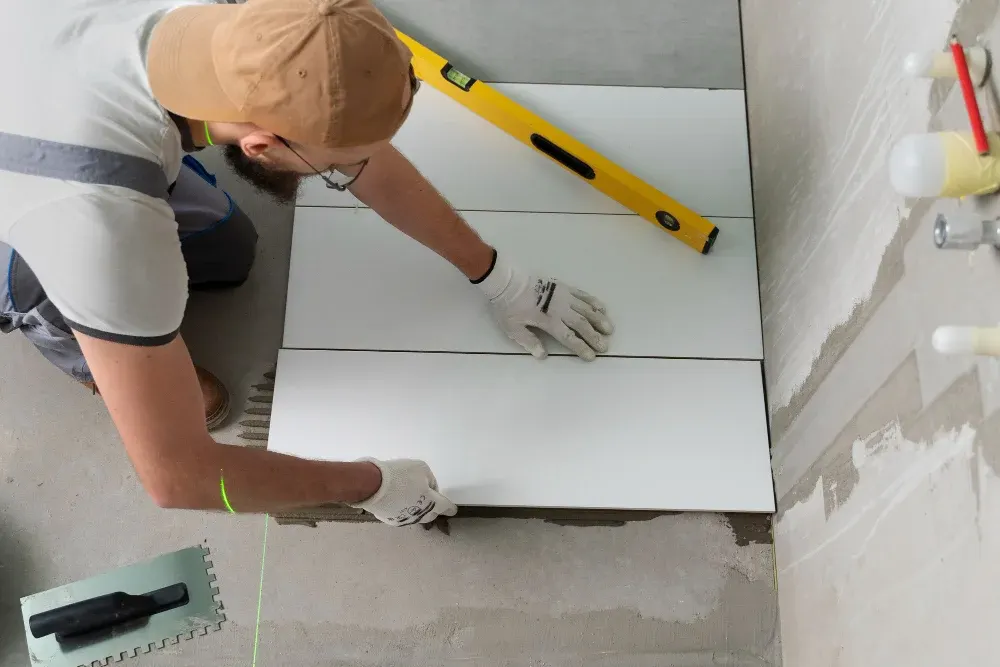
We check floors for flatness, typically within 1/8 inch over 10 feet for large tile, and grind or level where needed. Walls are checked for plumb and flat. Tile only looks as good as the surface it is set on.
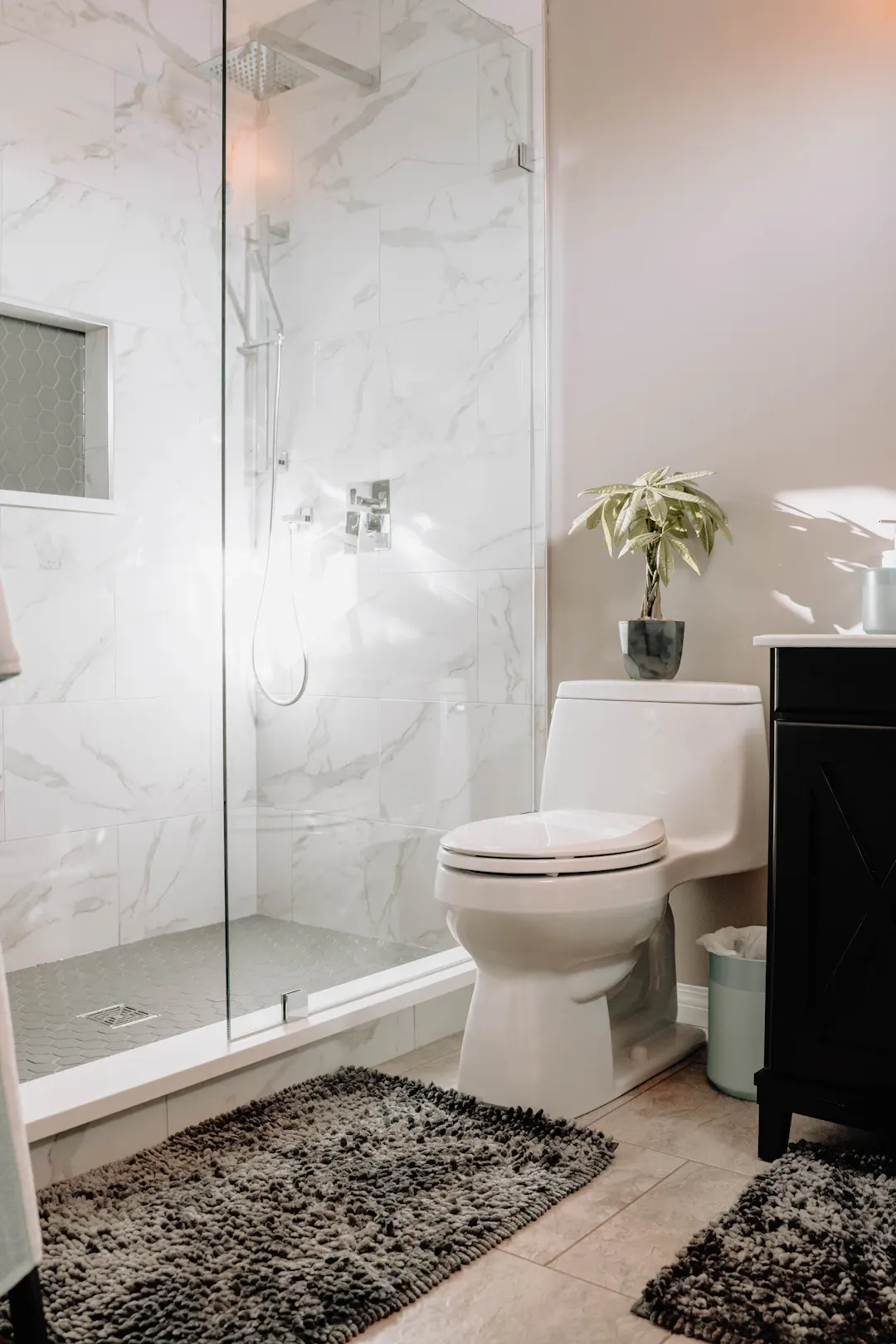
Showers get a continuous waterproofing membrane over cement board or foam panels, with sealed seams and corners, and are flood-tested before tile. Grout is not waterproof, so the membrane is what protects the framing.
Houston slabs develop hairline cracks over time. We apply an uncoupling or crack-isolation membrane over slab cracks before setting tile, so minor movement in the concrete does not telegraph through and crack the finished floor.
We use the right notched trowel and back-butter large tiles to reach full coverage, especially on floors and in showers. Hollow spots under tile lead to cracking and loose pieces, which are a common sign of rushed work.
Before setting tile, we lay out the room to center patterns on focal points, avoid slivers at doorways and corners, and align grout lines with cabinet edges and windows. A good layout is what makes tile look professional.
Metal or stone edge profiles, Schluter-style trims, thresholds and coordinated caulk joints give tile clean edges where it meets wood floors, countertops, cabinets and walls. Movement joints are placed where needed to prevent cracking.
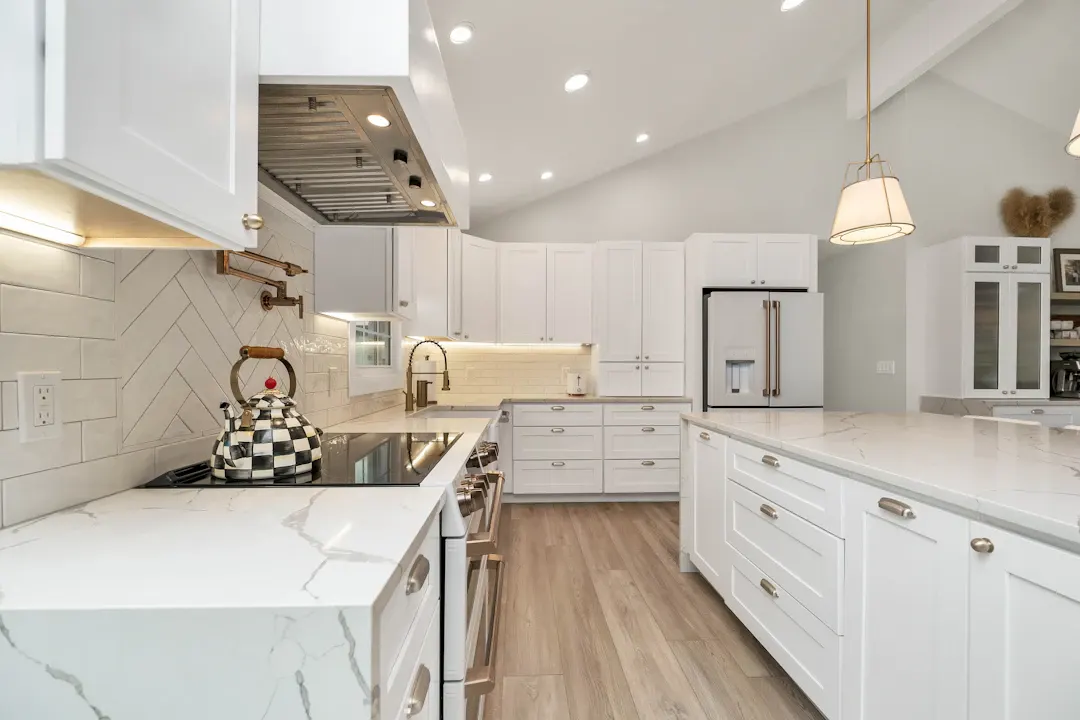
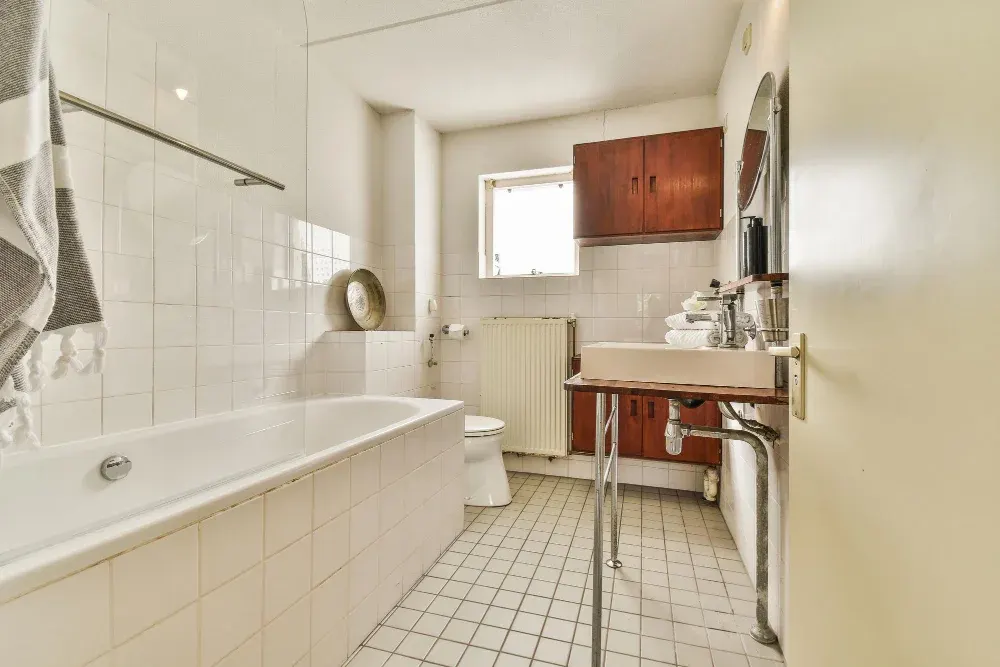
As a general planning range, installed tile in Greater Houston often runs about $15 to $35 per square foot for labor and standard porcelain, and $30 to $60 or more for natural stone, intricate patterns or showers with full waterproofing. A typical kitchen backsplash may run roughly $1,500 to $4,500. Get a written estimate based on your space and materials.
Houston's expansive clay soils cause slab foundations to move slightly with wet and dry seasons, which is why we recommend crack-isolation or uncoupling membranes under floor tile, especially over visible slab cracks. Movement joints at perimeters and in large rooms are also important. High humidity slows mortar and grout curing, so we allow proper cure times before grouting and before showers are used. Bathrooms here need complete waterproofing, since steam and humid air can carry moisture into walls. In older homes from the 1950s to 1970s, original tile is sometimes set in a thick mortar bed, which affects demolition and floor height transitions, so we check before planning new tile.
Kitchens & BathsBathroom RemodelsFull and partial bathroom remodels in Greater Houston, including custom vanities, tile showers, tub replacement, storage and trim, by one in-house team.
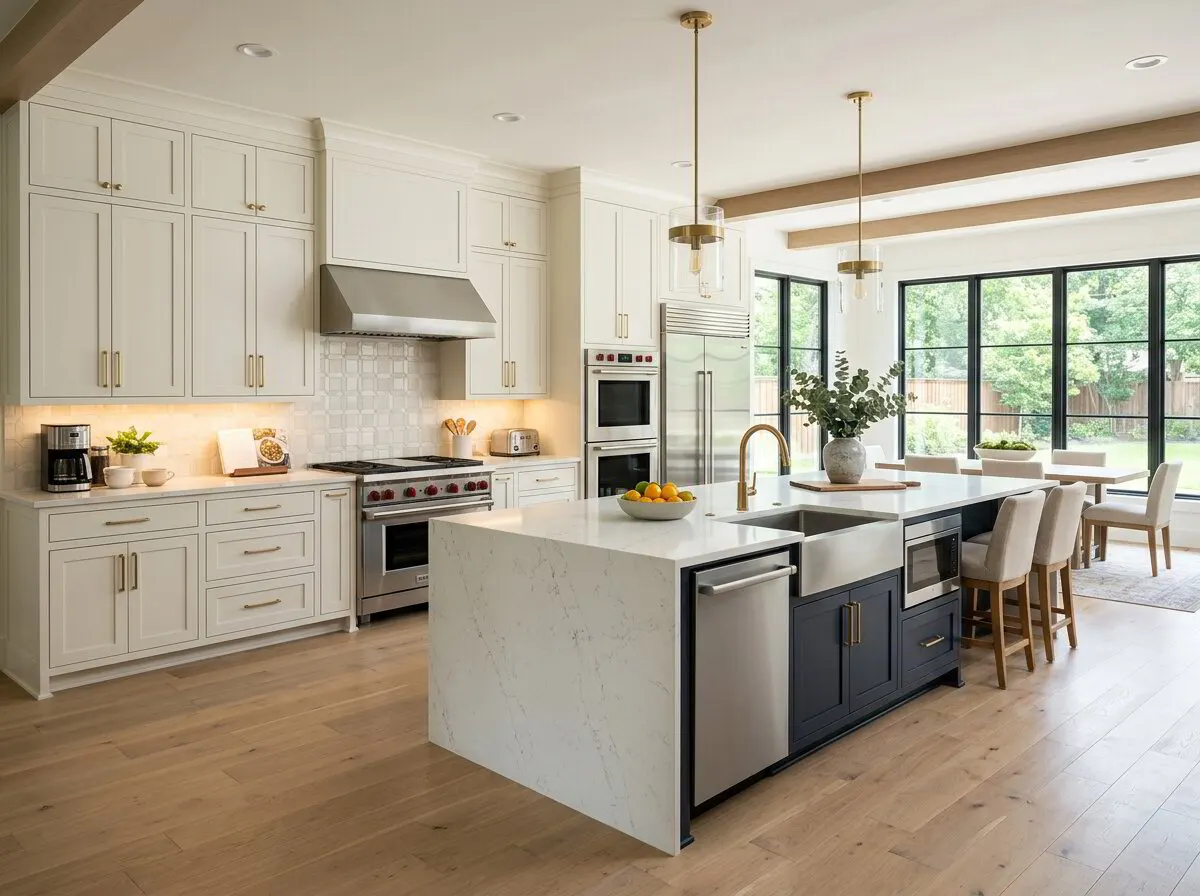 Kitchens & BathsKitchen RemodelsComplete kitchen remodels in Greater Houston, from layout and cabinetry to countertops, backsplash tile, trim and lighting, managed by one in-house crew.
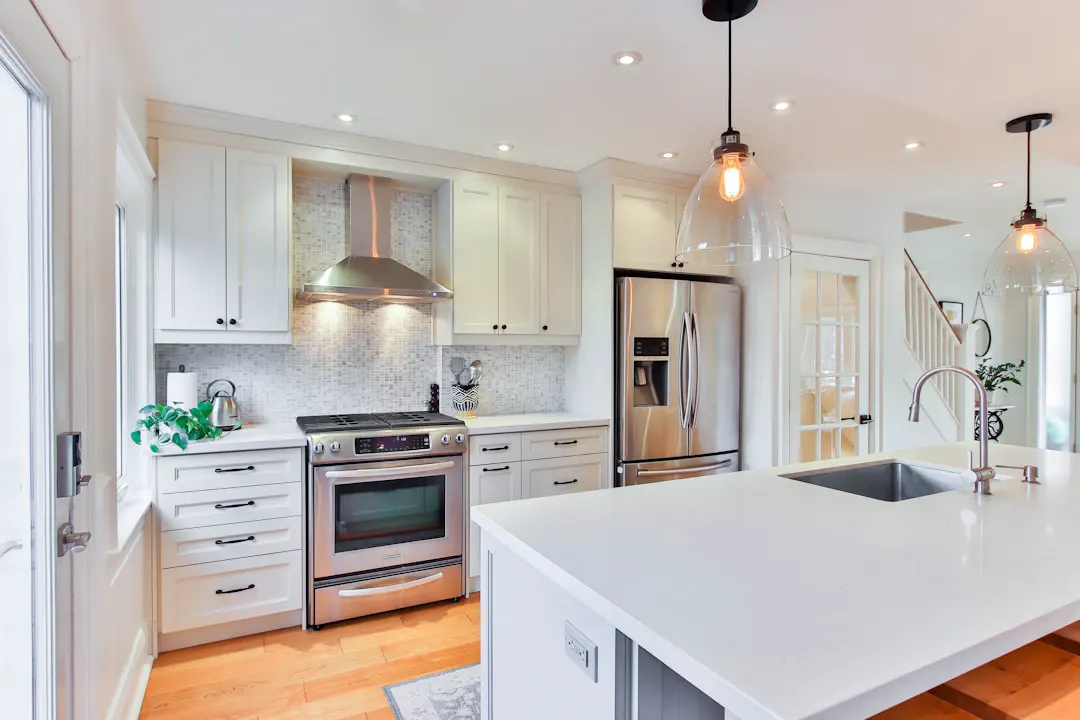 Surfaces & LightingCountertops & Surface WorkCountertops in quartz, granite, marble, solid surface and butcher block for kitchens, baths, bars and built-ins, coordinated with cabinets set dead level.
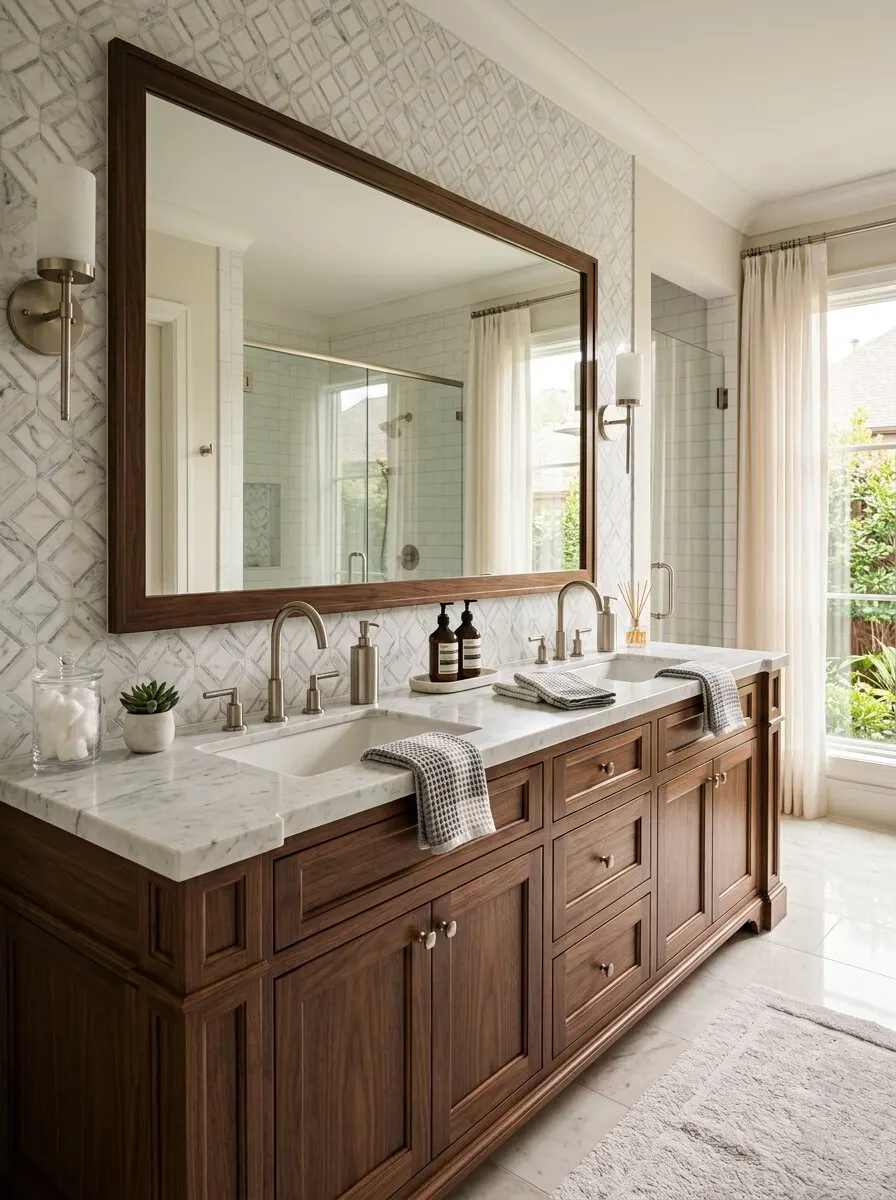 Kitchens & BathsCustom Bathroom VanitiesFloating, furniture-style and double-sink vanities built from plywood and solid hardwood to fit your bathroom exactly, then installed by our own crew.
Walk-in shower vs bathtub for Houston homes: daily function, accessibility, resale value, waterproofing and cost ranges. Get a free remodel estimate.
Small bathroom remodel ideas for Santa Fe, TX homes: vanities, showers, storage, ventilation and humidity-smart materials. Book a free in-home estimate.
The best trim styles for Galveston County ranch homes: baseboard, casing and crown choices that handle coastal humidity. Schedule a free in-home estimate.
Free, no-pressure estimate
Tell us about your kitchen, bath or built-in project. We usually reply within one business day.
Office hours: Mon–Fri 8:00 AM – 5:00 PM