Wood vs Metal Stair Railings for Houston Homes
Wood vs metal stair railings for Houston homes: looks, humidity durability, safety, maintenance and cost ranges compared. Get a free in-home estimate.

Trim, Doors & Stairs
Solid newels, tight balusters and handrails set at the right height, so your stair railing looks good and stays firm.
Handrail and baluster installations change the look of a staircase more than almost any other update, and they carry real safety weight. A railing has to resist a person falling against it, give a hand something solid to grab, and keep small children from slipping through. Ace Kustoms installs handrails, balusters and newel posts with our own licensed crew, and we build custom railing parts in our Houston shop when stock pieces will not work.
Most of Greater Houston follows the international residential code for stairs, with local amendments. In general, handrails sit 34 to 38 inches above the tread nosing, guards at open landings and balconies must be at least 36 inches high, and balusters must be spaced so a 4-inch sphere cannot pass through. Stairs with four or more risers need a handrail, and the rail must be graspable, typically 1-1/4 to 2 inches across for a round profile.
Railing work often goes hand in hand with new treads, so see our custom stair installations if your stairs are being converted from carpet. Common requests include swapping dated wood spindles for iron balusters, replacing a wobbly newel post, adding a wall rail, or installing glass panels for a modern look. A free in-home estimate starts with checking the existing posts and measuring every run and landing.
A wobbly newel post is the most common railing complaint we see. We anchor newels through the floor framing or into the stair structure with concealed bolts or post-mounting kits, so the whole railing feels rigid instead of flexing with every hand on it.
We set handrail height, guard height and baluster spacing to meet the code that applies to your home, including the 4-inch sphere rule between balusters and the 6-inch triangle rule at the tread and riser under the bottom rail.
Handrails must be easy to grip. We install profiles that meet graspability requirements and keep at least 1-1/2 inches of clearance between a wall rail and the wall, so knuckles are not scraped on the drywall.
Balusters are set plumb, evenly spaced and secured top and bottom, with shoes or concealed fasteners. Consistent spacing and alignment are what make a railing look crisp when you see it from the entry.
Curved rail sections, custom newels, oversized cap pieces and matching rails for unusual stairs are built in our shop when stock parts do not fit. That keeps the railing proportional to the stair and the room.
We handle treads, risers, skirt boards and railings with the same crew, so the parts work together. Doing both at once avoids patching around old baluster holes and gives a cleaner finished stair.
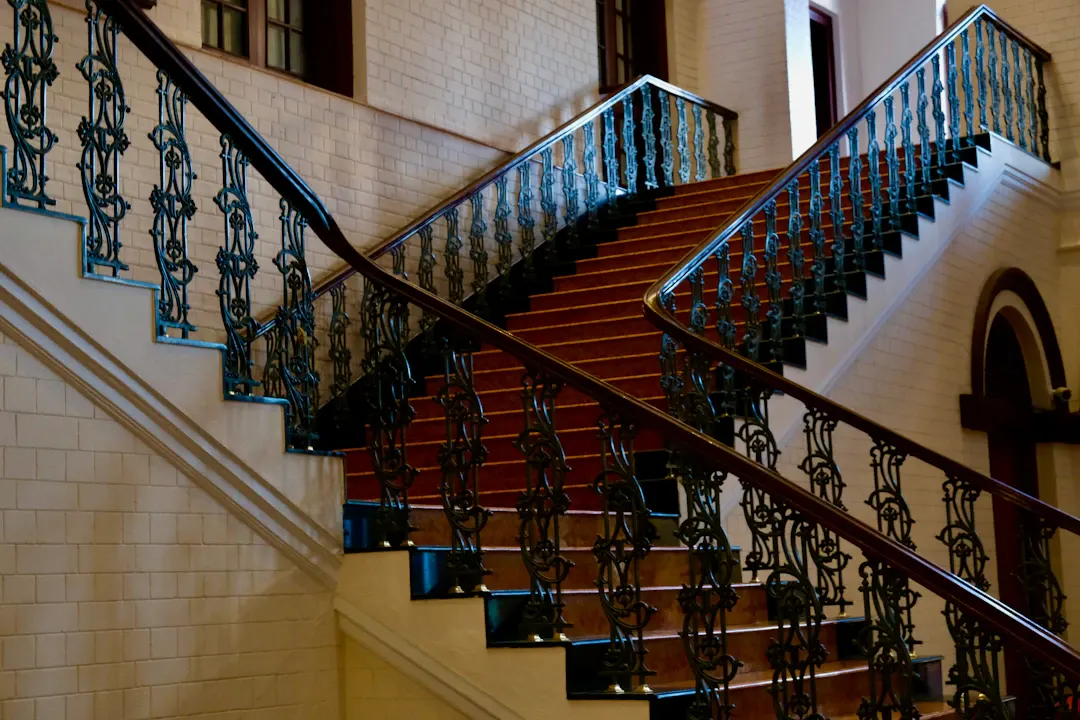
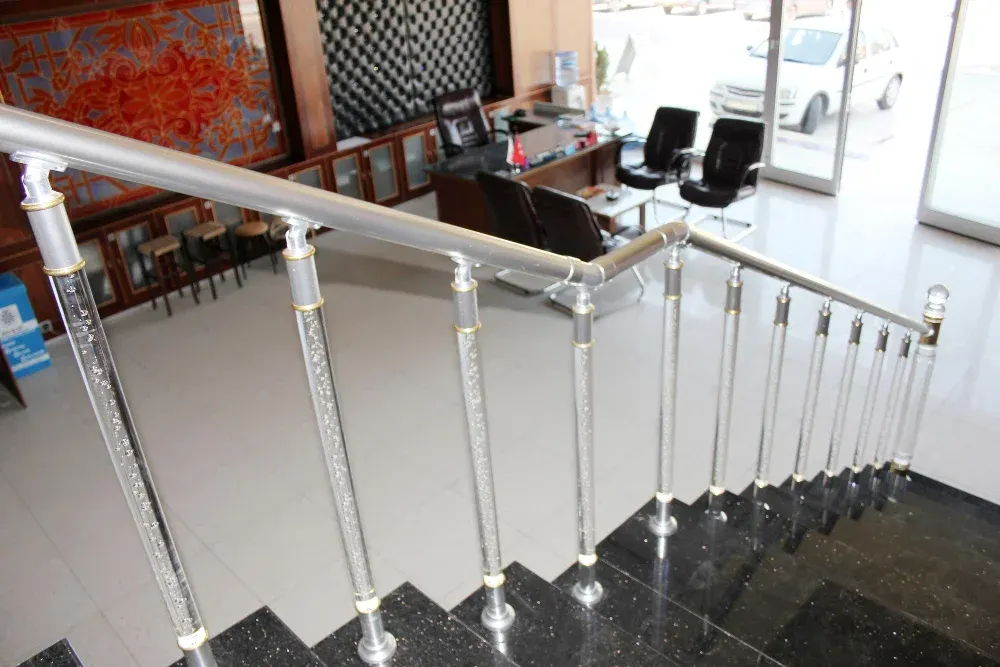
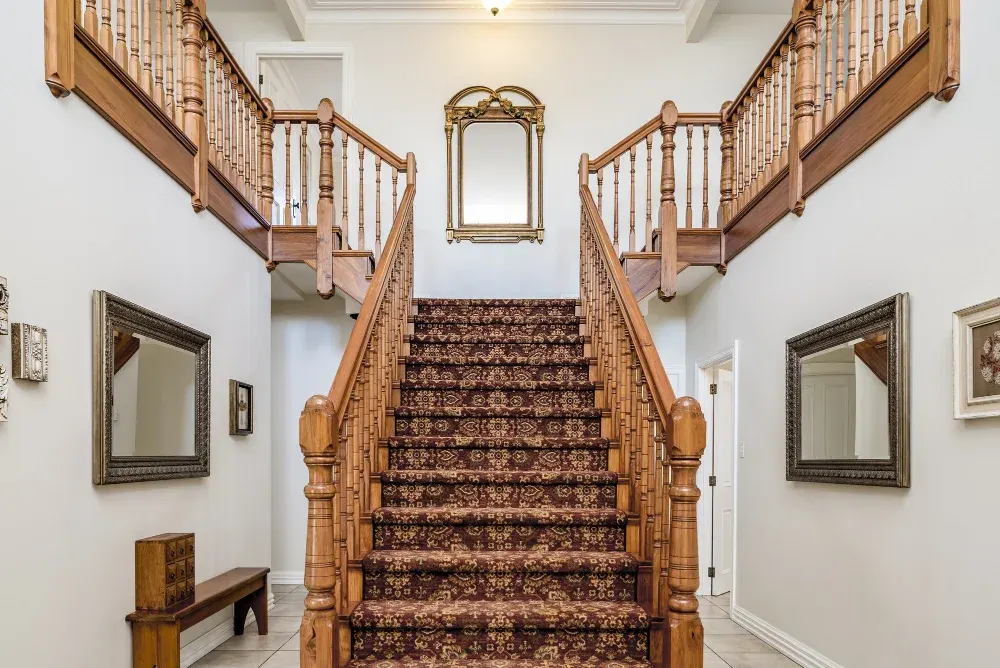
As a general planning range, replacing balusters and handrail on a typical straight stair in Greater Houston often runs about $2,500 to $6,000, while railing projects with balconies, multiple landings or glass panels may run $6,000 to $15,000 or more. Pricing depends on length, materials and site conditions, so please get a written estimate.
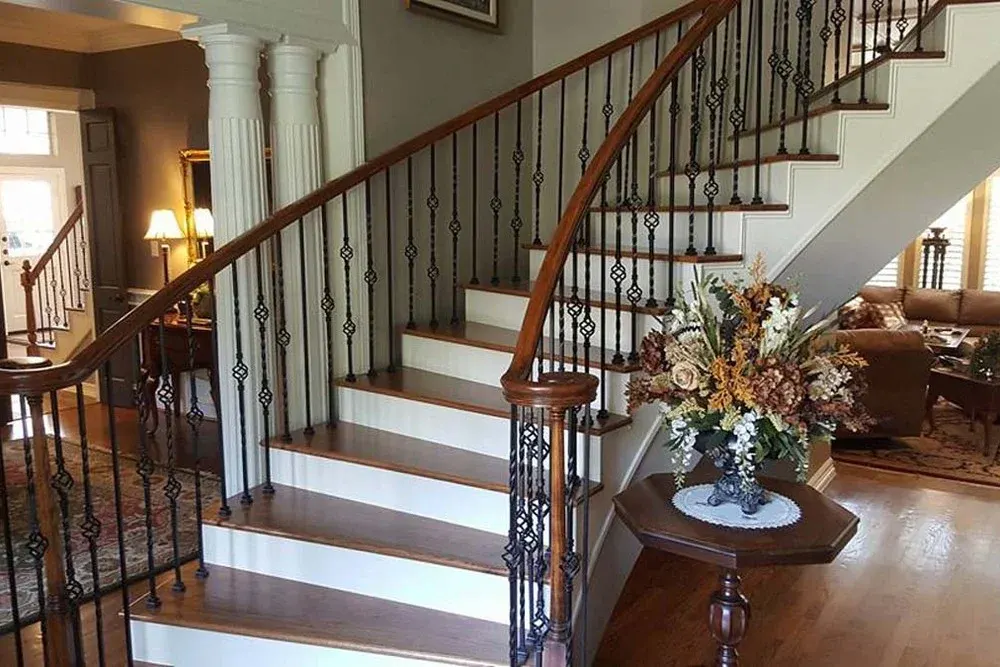
Many two-story homes around Houston were built with builder-grade wood spindles and newels attached with little more than a few screws, which is why loose railings are so common here. We anchor newels into the framing and check balcony guards that overlook the family room or foyer. Humidity can loosen joints in wood railings over time, so we use quality adhesives and mechanical fasteners. Iron balusters are a good choice in humid climates because they do not swell, though exterior or coastal installations need a corrosion-resistant finish. In homes on shifting slabs, we check that the stair has not pulled away from walls before installing new rails.
Trim, Doors & StairsCustom Stair InstallationsHardwood stair treads and risers, carpet-to-wood conversions, stair rebuilds and finishing details, fitted and installed by our own licensed crew.
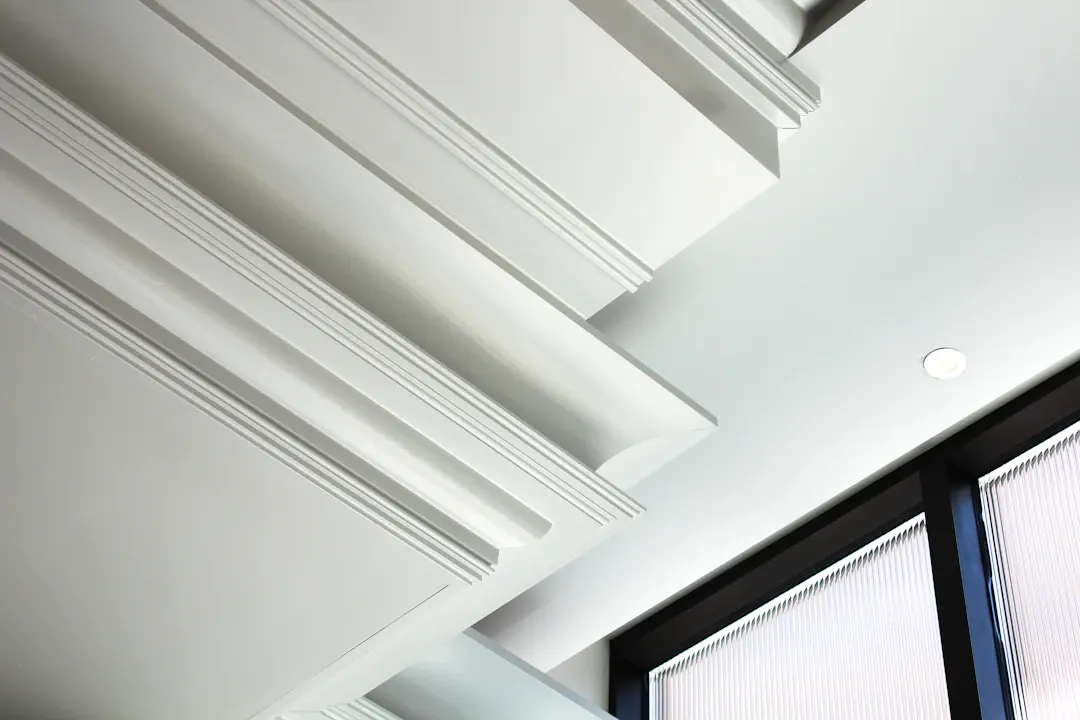 Trim, Doors & StairsCustom Trim & Millwork InstallationCrown molding, baseboards, door and window casing, wainscoting, board and batten, beams and coffered ceilings, installed by our own finish carpentry crew.
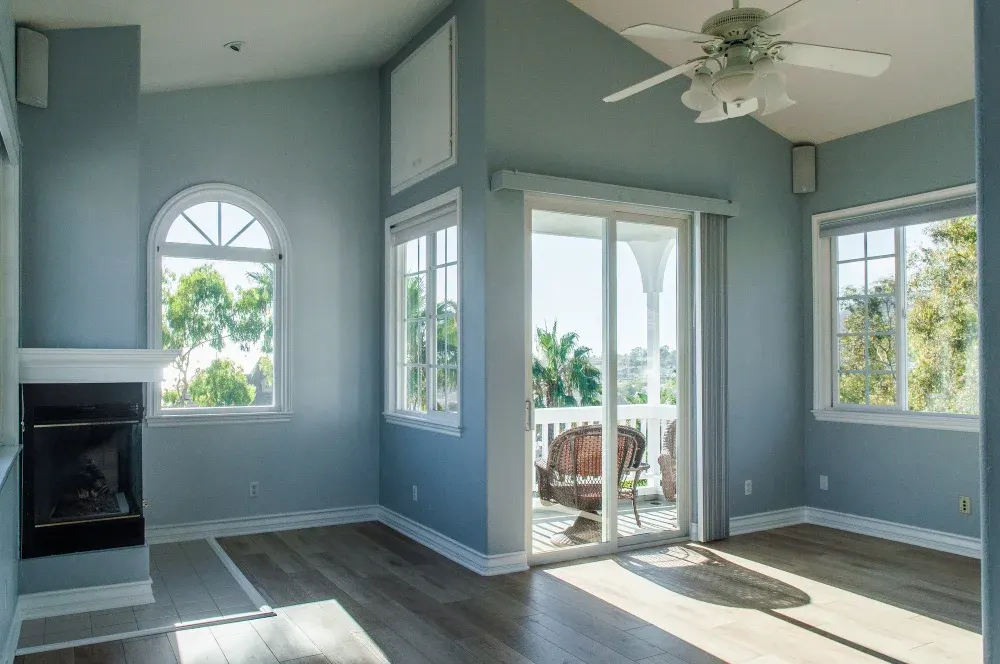 Trim, Doors & StairsInterior & Exterior Door InstallationsInterior and exterior door installation, from solid-core interior doors and pocket doors to entry, French and patio doors, flashed, sealed and trimmed.
 Cabinetry & Built-InsCustom Cabinetry & Built-InsBuilt-in bookcases, window seats, bench storage, wall cabinets and more, designed for your room and built from solid hardwood and furniture-grade plywood.
Wood vs metal stair railings for Houston homes: looks, humidity durability, safety, maintenance and cost ranges compared. Get a free in-home estimate.
How to match cabinet style to your home's architecture, from Houston bungalows and ranch homes to new builds: doors, trim and hardware. Get a free estimate.
Choosing a stair railing starts with grip, height and safety, then style. Learn what makes a handrail comfortable in Houston homes. Get a free estimate.
Free, no-pressure estimate
Tell us about your kitchen, bath or built-in project. We usually reply within one business day.
Office hours: Mon–Fri 8:00 AM – 5:00 PM