Wood vs Metal Stair Railings for Houston Homes
The staircase is often the first thing you see when you walk into a two-story Houston home, and the railing defines how it looks. Many homes built in the 1990s and 2000s still have their original oak handrails and turned wood spindles, and homeowners often ask whether switching to iron or another metal is worth it. Others building or remodeling want to know which material holds up better and costs less over time.
This guide compares wood vs metal stair railings for Houston homes. It is for homeowners updating a builder-grade staircase, finishing a new build, or replacing a damaged railing who want to understand appearance, durability in our humidity, safety, maintenance and cost.
We will cover the main material combinations, how each one handles Gulf Coast conditions, safety basics, and general planning ranges for the work.
The Parts of a Stair Railing
Before comparing materials, it helps to know the pieces, because most railings mix materials.
- Handrail: the rail you hold, running along the stairs and around landings
- Balusters (spindles): the vertical members between the handrail and the stair or floor
- Newel posts: the larger posts at the bottom, top and turns of the stairs
- Shoe rail or base rail: on some designs, a rail at floor level that the balusters sit in
- Fittings: curved or angled pieces where the handrail changes direction
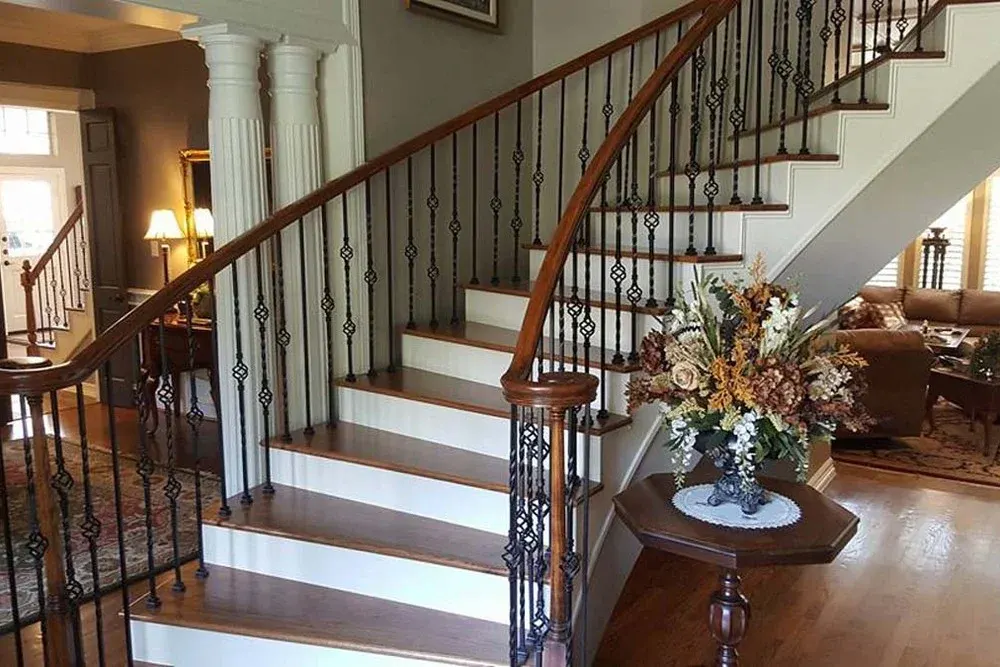
The most common combination in Houston homes today is a wood handrail and newels with metal balusters. All-wood and all-metal designs are also common, along with glass panel systems in modern homes.
Wood vs Metal Stair Railings: Side by Side
| Factor | Wood railings | Metal railings (iron, steel, aluminum) |
|---|---|---|
| Look | Warm, traditional, can be stained or painted | Slim, open; ranges from ornate scrollwork to modern minimal |
| Feel in the hand | Warm, comfortable grip | Can feel cold; most designs still use a wood handrail |
| Durability | Strong; can dent or scratch | Very strong balusters; finish can chip |
| Humidity behavior | Moves slightly with seasons; finish protects it | Stable shape; needs coating to prevent rust |
| Maintenance | Refinish or touch-up paint over time | Touch up chips in powder coat or paint |
| Customization | Turned, square, tapered or carved profiles | Twists, baskets, knuckles, straight bars |
| Typical cost per baluster installed | Lower for simple profiles | Moderate; ornate designs cost more |
Where wood shines
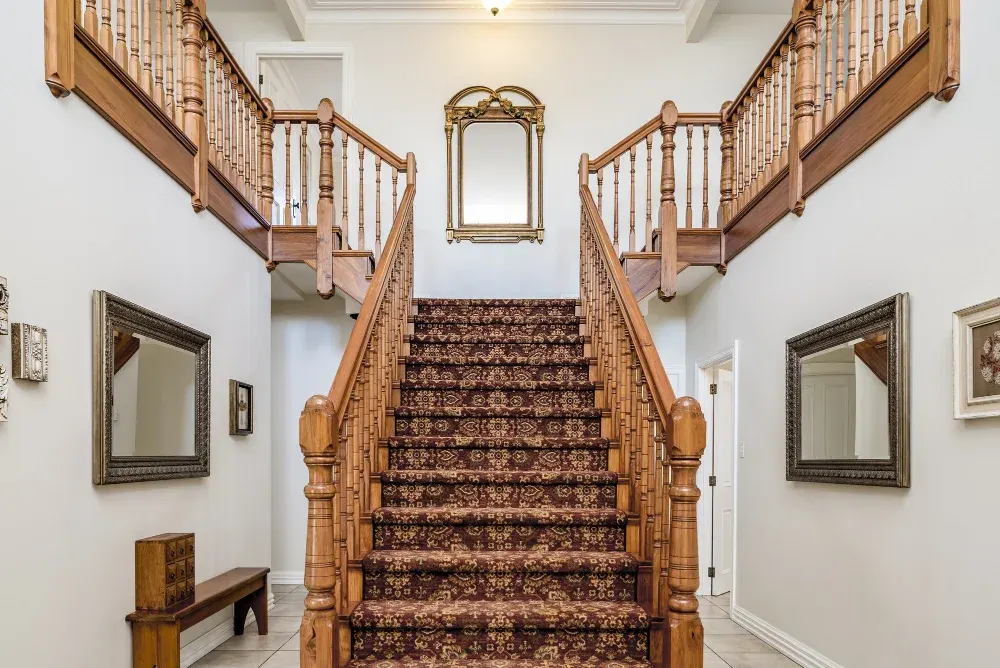
Wood railings suit traditional, farmhouse and craftsman interiors. A stained oak or walnut handrail feels good to grip and pairs with hardwood floors and stair treads. Painted wood balusters with a stained handrail are a classic look that works in many older homes. Wood can also be milled to match existing trim profiles, which is helpful when you are blending a railing with interior trim choices for Houston house styles.
Where metal shines
Metal balusters are slimmer than wood, which makes a staircase look lighter and opens views from the entry to the living room. Iron balusters in a satin black or oil-rubbed bronze finish have been a popular builder upgrade for years, and they come in many patterns. Steel and aluminum allow very thin, modern designs. Metal balusters are also hard to damage, which matters in busy households. For a fully modern look, some homeowners skip balusters entirely in favor of tempered glass panels held by metal posts or clamps, which keeps views wide open but shows fingerprints and needs regular cleaning.
How Houston Conditions Affect Each Material
Inside a conditioned home, both materials do well, but our climate still plays a role.
Wood and humidity
Wood absorbs and releases moisture with seasonal changes. A properly finished handrail barely notices, but unfinished ends or worn spots can absorb moisture, leading to slight swelling, open joints at fittings and loose balusters. Homes that sit closed up with the AC off for extended periods, such as vacation homes, see more movement. Keeping the finish intact and the house reasonably conditioned prevents most issues.
Metal and moisture
Iron and steel rust when moisture reaches bare metal. Indoors, that mainly happens where the finish chips, such as at the base of balusters where vacuums and shoes hit them. A quality powder-coated finish resists this. In coastal homes in Galveston and Brazoria counties, salt air speeds up corrosion, so coated iron or aluminum are better choices than raw or lightly painted steel, and any chips should be touched up promptly.
Slab movement and anchoring
Many Houston homes have slab foundations with some movement over time, and that can loosen newel posts. Regardless of material, the newel posts must be anchored firmly into the framing, not just nailed to the floor surface. A wobbly newel is the most common railing complaint we hear, and the fix is in the anchoring, not the material choice.
Safety and Code Basics
Whether you choose wood or metal, the railing must be safe and meet current code requirements in your jurisdiction. General points to know:
- Handrail height is commonly required to fall between 34 and 38 inches, measured vertically from the stair nosing.
- Baluster spacing must keep openings small enough that a 4-inch sphere cannot pass through.
- Guards at landings and balconies have their own minimum height requirements.
- Handrails must be graspable, with a profile you can wrap your hand around.
- Newels and rails must resist force without excessive movement.
Older staircases sometimes have wider baluster spacing or lower rails than current codes allow. When replacing balusters, it is a good time to bring spacing up to current standards. For more on grip, profile and comfort, see our post on why a stair railing should fit your hand before it fits a mood board.
Wall-side rails and rail ends
Many Houston staircases are open on one side and run along a wall on the other. The open side gets the railing everyone notices, but a wall-mounted handrail on the closed side is just as useful, especially for children, older relatives and anyone carrying a laundry basket. Wall rails attach with metal brackets screwed into studs or solid blocking, typically no more than about 4 feet apart, and never into drywall alone.
Pay attention to how each rail ends. A rail that stops in open air can snag a sleeve or a bag strap, so rails are usually finished with a return that turns back into the wall or newel, or with a volute or turnout at the bottom step. Matching the wall rail's profile and stain to the main handrail makes the two read as one design rather than an afterthought.
Cost Comparison
These are general planning ranges for Greater Houston. They depend on the number of balusters, landings, curves, material and finish.
| Project | General planning range |
|---|---|
| Replace wood balusters with standard iron, keep handrail | $2,500 – $7,000 |
| Replace wood balusters with new wood balusters | $2,000 – $6,000 |
| New handrail and balusters, keep newels | $4,000 – $10,000 |
| Full new railing system (wood handrail, newels, iron balusters) | $5,000 – $15,000 |
| Custom metal or glass railing system | $10,000 – $25,000+ |
| Refinish existing wood handrail and newels | $800 – $2,500 |
Curved staircases, multiple landings and ornate metalwork push costs higher. Refinishing treads at the same time adds cost but delivers a cohesive result. A written estimate after an in-home look is the only figure to rely on.
What a baluster swap involves
Replacing wood spindles with iron is one of the most common stair updates, and it is less disruptive than many homeowners expect. The old balusters are cut out and their ends removed from the handrail and treads or shoe rail. Each new iron baluster is cut to length on site, set into a drilled hole in the tread and the underside of the handrail, and secured with epoxy or a set screw. Decorative shoes slide down to cover the base.
On a typical straight staircase with a landing, the work usually takes one to three days, and the stairs stay usable at the end of each day. The main mess is dust from cutting and drilling, which is contained and cleaned up as we go. If the handrail will be refinished, it is usually done before the new balusters go in so the stain or paint line is clean.
Choosing Between Wood and Metal
Use these questions to narrow the decision:
- What style is the house? Traditional and farmhouse homes often suit wood or wood-and-iron. Modern homes often suit slim metal or glass.
- How much light and view do you want? Metal balusters are thinner and more open.
- Who uses the stairs? Households with young children may prefer vertical balusters and a solid, graspable wood handrail.
- How much maintenance will you do? Both need occasional care, but metal finish touch-ups are quick, while wood refinishing takes more effort.
- What else are you updating? If you are replacing carpet on the stairs with hardwood treads, plan the railing at the same time.
A middle path many homeowners like: keep or replace the wood handrail and newels, stained to match new treads, and use iron balusters in a simple straight or single-knuckle design. It combines the warm grip of wood with the open look of metal.
How We Approach Stair Railings
We start with an in-home consultation to measure the stairs, check newel anchoring and baluster spacing, and talk through style. You choose wood species, stains and baluster designs from real samples. Our in-house crew handles removal and installation, including any wood components milled in our Houston shop, and we finish with a walkthrough to check that every rail is firm. See our handrail and baluster installations and custom stair installations pages for more detail. We work throughout Harris County and the surrounding counties, from older two-story homes in established neighborhoods to new construction in growing suburbs.
Pick the Railing That Fits Your Home
The wood vs metal stair railings decision comes down to style, feel and maintenance more than durability, since both last for decades indoors when well installed. Wood offers warmth and grip; metal offers slim lines and toughness. Many Houston homes get the best of both with a wood handrail and metal balusters.
To talk through your staircase, schedule a free in-home estimate or call (281) 660-3903, Monday through Friday from 8am to 5pm. We will measure, show samples and provide a written estimate.
Frequently asked questions
Can I replace wood balusters with iron without replacing the handrail?
Which lasts longer in Houston humidity, wood or metal railings?
How much does it cost to update stair balusters and railings in Houston?
Are horizontal cable or bar railings allowed indoors?
Planning a project like this?
Get a free in-home estimate from the team that builds and installs the work.