A Stair Railing Should Fit Your Hand Before a Mood Board
Stair railings show up in a lot of inspiration photos. Thin black metal, glass panels, chunky oak, iron scrolls. But a railing is not wall art. It is something your hand holds dozens of times a day, sometimes in the dark, sometimes carrying laundry, sometimes helping a parent or grandparent down the steps. Choosing a stair railing should start with how it feels and how safely it works, then move on to how it looks.
This article is for Houston-area homeowners replacing a dated railing, upgrading balusters in a newer build, or planning stairs as part of a larger remodel. It walks through grip, height, spacing, materials and climate before getting to style.
If you follow this order, you will end up with a railing that looks good in the photos and also does its job for decades.
Why Function Comes First When Choosing a Stair Railing
A handrail is a safety device. People reach for it without thinking when they trip or miss a step. If the rail is too thick to grab, too low, or interrupted by a newel post halfway down, it fails at the moment it matters most.
Function also affects daily comfort. A rail that fits the hand makes stairs feel easier, especially for kids and older adults. A rail that is awkward to hold gets ignored, and that defeats its purpose.
That is why we start every stair project by asking who uses the stairs, how often, and what they carry. Style comes after.
Grip: The Shape Your Hand Actually Holds
The most important part of a railing is the part you touch. A comfortable grip lets your fingers and thumb wrap around most of the rail.
- Round profiles around 1.25 to 2 inches across are the easiest to grip.
- Shaped wood profiles, like a classic "6010" style rail, have a finger recess on each side so you can hold them securely.
- Flat or wide rails look clean but can be hard to grab firmly. Building codes limit how wide a rail can be without a graspable recess.
Try this test: close your eyes, reach out, and grab the sample. If your fingers slip or you cannot wrap your hand around it, it is the wrong rail for a primary staircase, no matter how good it looks.
Height, Continuity and Spacing
Handrail height
Residential handrails are typically installed 34 to 38 inches above the tread nosing, measured vertically. Guards along open balconies and landings are usually taller. Your local building department sets the final rules, so we always confirm requirements for the specific city.
Continuity
A good handrail runs the full length of the flight without forcing you to let go. Large newel posts in the middle of a run, or a rail that stops short of the bottom step, break that continuity. Where a newel is needed for structure or style, plan the rail so it transitions smoothly with an easing or a turnout.
Baluster spacing
Openings between balusters are limited by code so that a small child cannot slip through. A common rule is that a 4-inch sphere should not pass through any opening. That affects how many balusters you need and how much the project costs.
| Element | Typical residential guideline |
|---|---|
| Handrail height above nosing | 34 to 38 inches |
| Round rail diameter | About 1.25 to 2 inches |
| Clearance between rail and wall | At least 1.5 inches |
| Maximum baluster opening | Under 4 inches |
| Guard height at open landings | Often 36 inches or more, per local code |
These are general guidelines for planning. The installer should verify the exact numbers against current code where you live.
Materials and Houston Humidity
Houston's humidity and long air-conditioning season affect stairs just like they affect cabinets and trim.
Wood
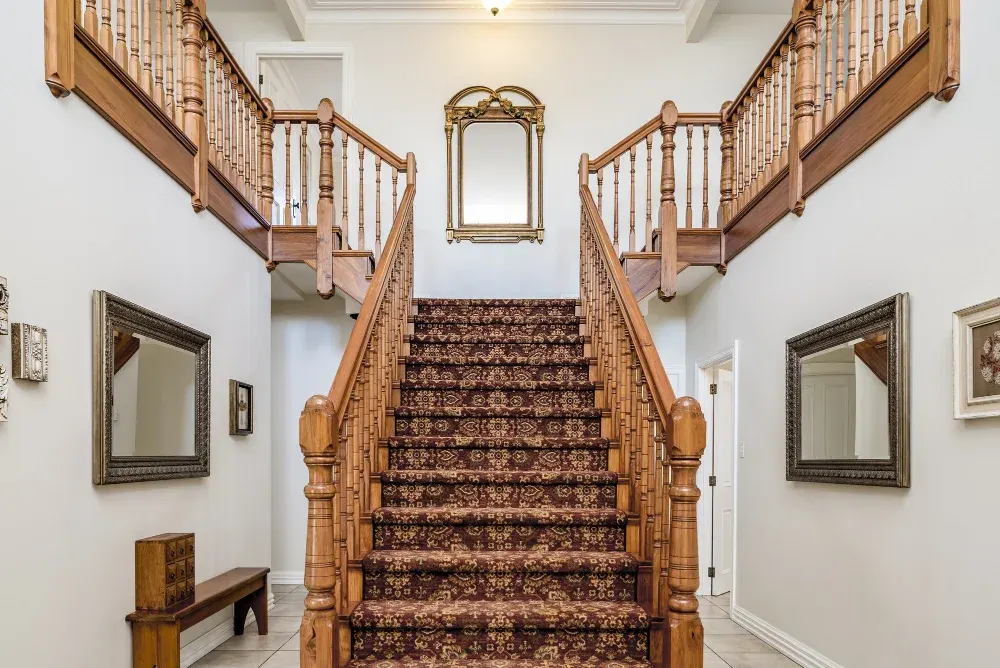
Oak, maple and walnut are common for rails and newels. They feel warm in the hand and can be shaped into comfortable profiles. Wood moves with humidity, so joints need to be glued and fastened well, and the finish should seal every surface. A well-finished hardwood rail can last the life of the house.
Iron and steel
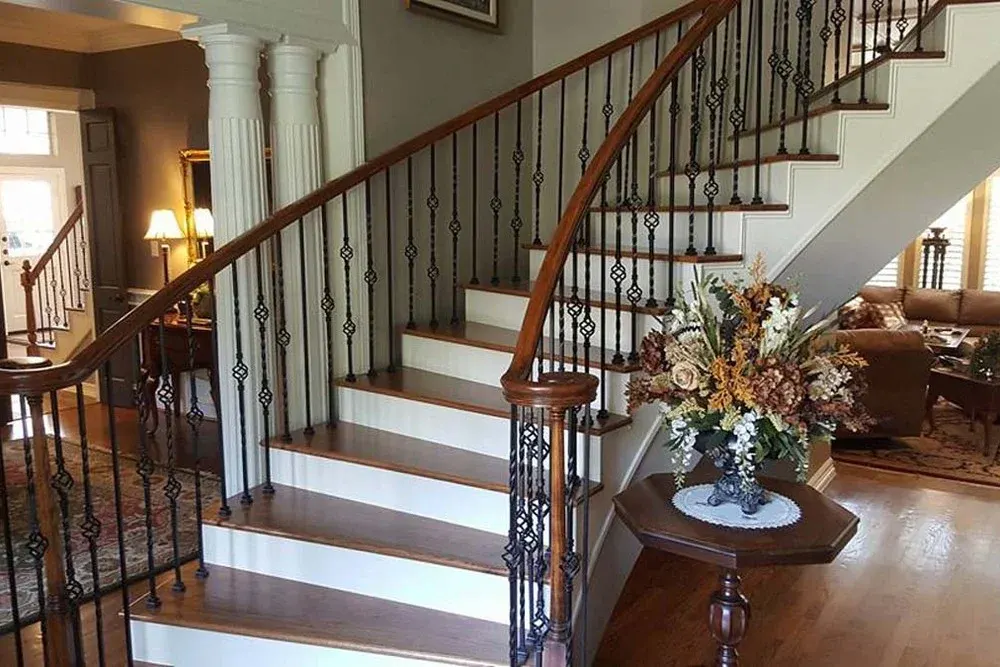
Iron balusters are a popular upgrade, especially in new-construction homes that came with plain wood spindles. They are durable and slim. For the rail itself, many homeowners keep a wood cap on top of iron balusters, which gives the best of both: the look of metal with a warm, graspable top.
In coastal areas like Galveston, League City and parts of Brazoria County, salty air can attack metal finishes faster. Powder-coated or properly primed and painted metal holds up better there. Our wood vs. metal stair railings guide goes deeper on that comparison.
Glass
Glass panels open up a stairwell and let light through. They need a solid top rail or a separate wall-mounted handrail, because the glass itself is not something to grip. Glass also shows fingerprints and requires regular cleaning.
Matching the Railing to the House
Once grip and safety are settled, style becomes the fun part. The goal is a railing that belongs to the house rather than to a trend.
- Traditional homes: Turned wood balusters, a profiled oak or painted rail, and box newels with caps.
- Ranch and mid-century homes: Simple square balusters, slim rails, and minimal newels.
- Transitional new builds: Iron balusters with a stained wood rail and painted box newels are a common, durable combination.
- Modern homes: Horizontal cable or bars (where local code allows), glass panels, or flat steel with a wood rail cap.
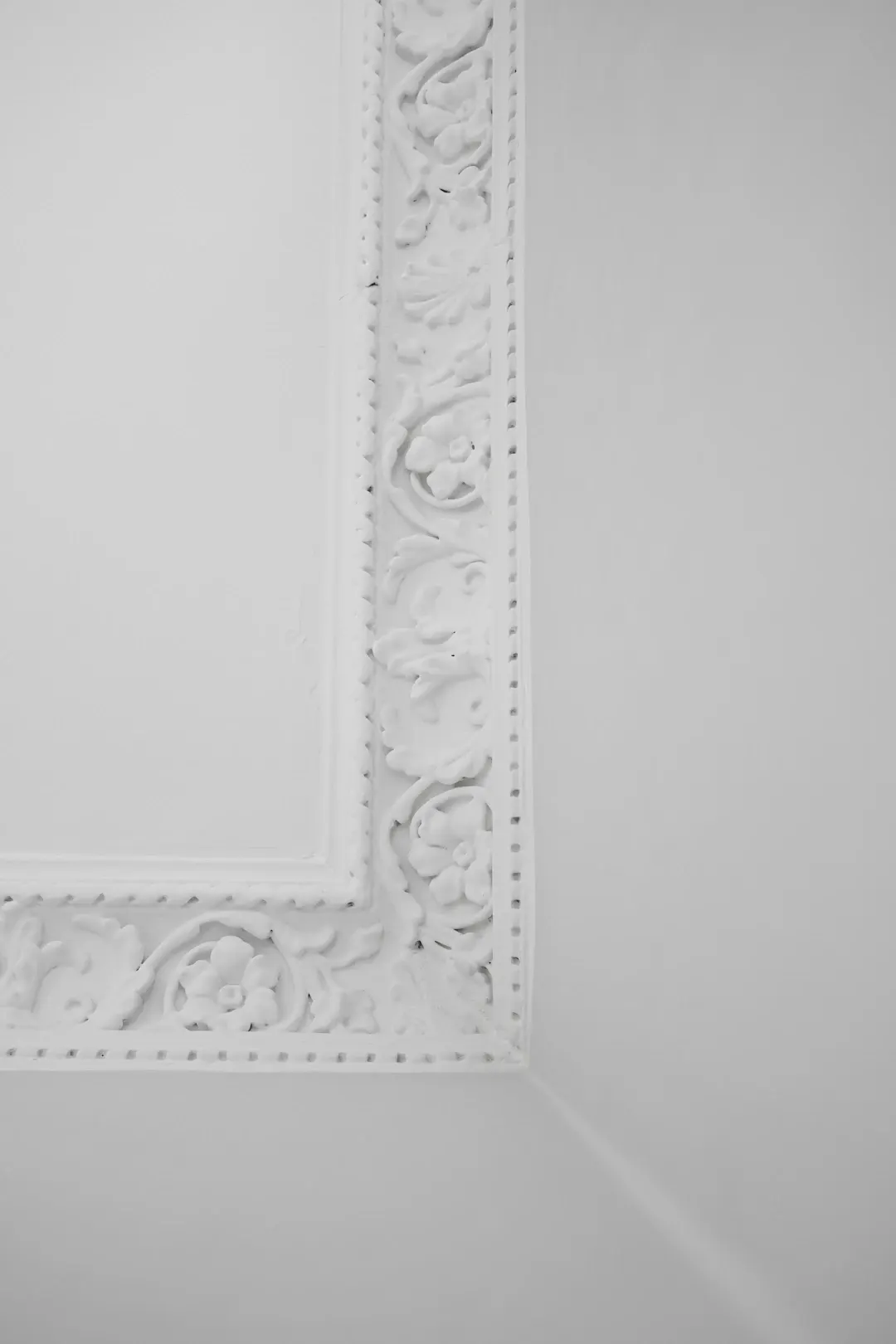
Coordinate the stair with nearby trim. Skirt boards, baseboards and newel posts should feel related to the casing and base in the entry. Our custom trim installations page explains how we tie these pieces together, and our guide to choosing interior trim for Houston house styles covers matching profiles to architecture.
Common Mistakes to Avoid
Some problems show up again and again on stair projects:
- Picking a rail that is too big to grip. It looks substantial but nobody can hold it.
- Skipping the wall-side handrail. On enclosed stairs, a wall-mounted rail may be the only rail. Make it comfortable.
- Mixing too many finishes. Stained rail, painted newels, black balusters and gold accents can get busy fast.
- Ignoring the landing. Guards at the top landing are just as important as the rail on the stairs.
- Retrofitting without checking structure. Older newel posts may be loose or poorly anchored. A new railing is only as solid as what it attaches to.
Who Uses Your Stairs Every Day
A railing that suits a young couple may not suit the same house fifteen years later. It helps to picture the people on the stairs, now and down the road.
Kids
Young children hold rails lower and need openings small enough that they cannot slip through or get a head stuck. Horizontal bars can act like a ladder, which is one reason many families avoid them. Smooth, splinter-free wood and rounded edges matter more than you might think when small hands are on the rail every day.
Older adults and anyone with limited mobility
A rail on both sides of the stair is a big help for older family members or anyone recovering from an injury. Many Houston two-story homes have only one rail, often on the open side, with a bare wall on the other. Adding a wall-mounted rail with sturdy brackets anchored into framing is a simple, affordable safety upgrade.
Rails that extend a little past the top and bottom steps also help. They give a person something to hold as they step on and off the stair, which is when many falls happen.
Pets and deliveries
Dogs that race up and down stairs can knock into balusters, so the connections at rail and tread need to be solid. If you regularly move furniture or laundry baskets up the stairs, keep newels and rail returns from jutting into the path.
Lighting
A comfortable rail does less good on a dark stair. Consider step lights, a fixture at the landing, or a switch at both top and bottom. Good lighting makes the rail easier to find and the treads easier to see.
Planning and Cost Considerations
Stair railing cost depends on the number of balusters, the rail material, the number of newels and turns, and whether the existing structure is sound. Swapping wood balusters for iron on a straight run is a smaller project than replacing rails, newels and treads on a curved staircase.
As general planning guidance, a baluster swap on a typical straight staircase is usually a modest project, while a full rail, newel and baluster replacement with stained hardwood costs considerably more. Prices in Greater Houston vary widely, so get a written estimate based on your specific stairs and materials.
If you are refreshing the whole entry, it can be efficient to combine railing work with trim, doors and paint. Our handrail and baluster installations and custom stair installations pages describe both levels of work.
Start With Your Hand, Then Build the Look
Choosing a stair railing goes well when you settle comfort and safety first: a rail your hand can wrap around, set at the right height, running continuously from top to bottom, with balusters spaced to keep kids safe. After that, materials and style can follow the house and your taste.
Ace Kustoms builds and installs stair rails, balusters and trim across Greater Houston, from Fort Bend County to Montgomery County. If you would like to try samples in your own hand and get a plan for your stairs, book a free in-home estimate or call (281) 660-3903.
Frequently asked questions
What is a comfortable handrail size?
How high should a stair handrail be?
Are wood handrails or metal handrails better in Houston?
Can I replace balusters without replacing the handrail?
Planning a project like this?
Get a free in-home estimate from the team that builds and installs the work.