Under-Cabinet Lighting Types Explained
Under-cabinet lighting types explained: LED tape, pucks, linear bars, color temperature, CRI and power options for Houston kitchens. Get an estimate.

Surfaces & Lighting
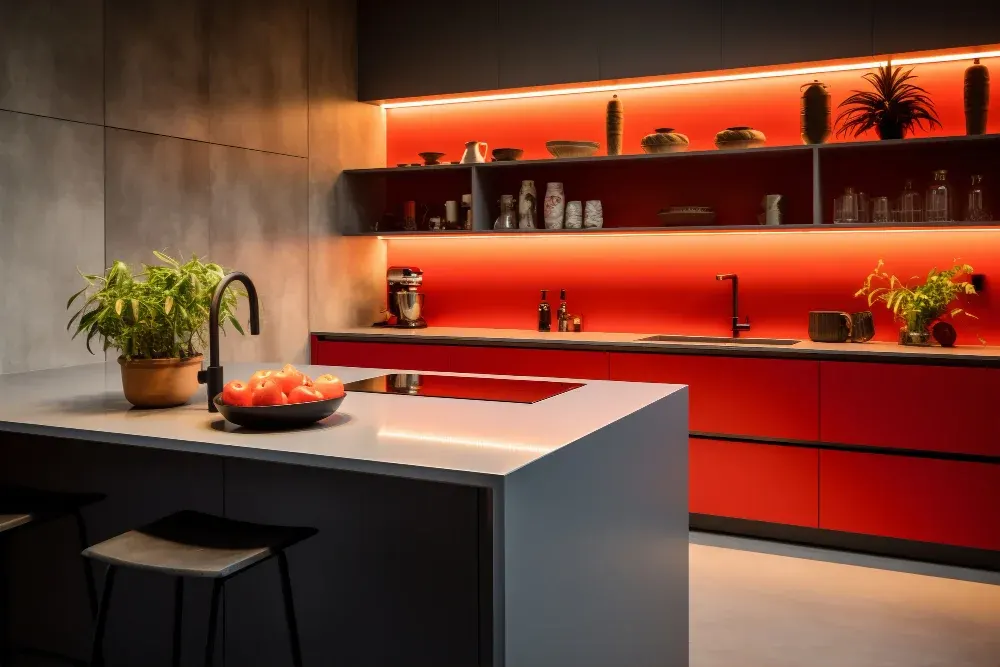
Even task light on the counter, a soft glow above the uppers and lit interiors, with every wire and driver hidden in the cabinetry.
Under and over cabinet lighting fixes the most common kitchen lighting problem: ceiling cans behind you cast your own shadow onto the cutting board. A continuous LED strip under the upper cabinets puts light right where you work. Above the uppers, an uplight washes the ceiling and makes the room feel taller. Ace Kustoms builds both into cabinetry, along with toe-kick and in-cabinet lighting.
The difference between a clean install and a messy one is in the woodwork. We recess LED channel into the cabinet bottom or hide it behind a light rail, drill wire paths through the box before finishing, and leave a ventilated spot for the driver where it can be reached later. No stick-on pucks with cords running down the backsplash.
We do this on new custom kitchen cabinets and on existing cabinets that are in good shape. The same approach works in bathrooms, butler's pantries, home bars, closets and display cabinets. Your licensed electrician handles the line-voltage connection and switch, and we coordinate the details ahead of time so the tile setter and electrician are not guessing where the wires and drivers need to land.
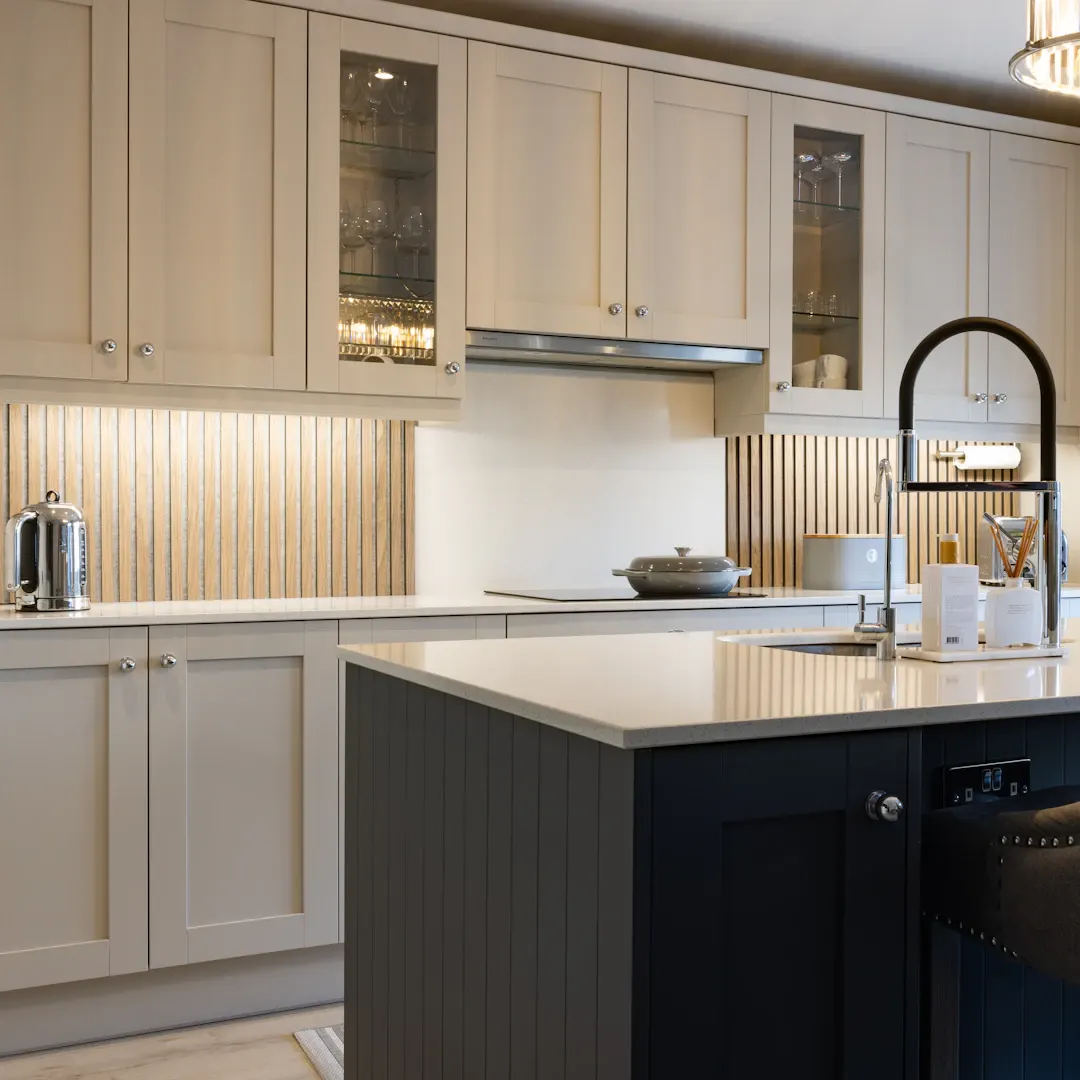
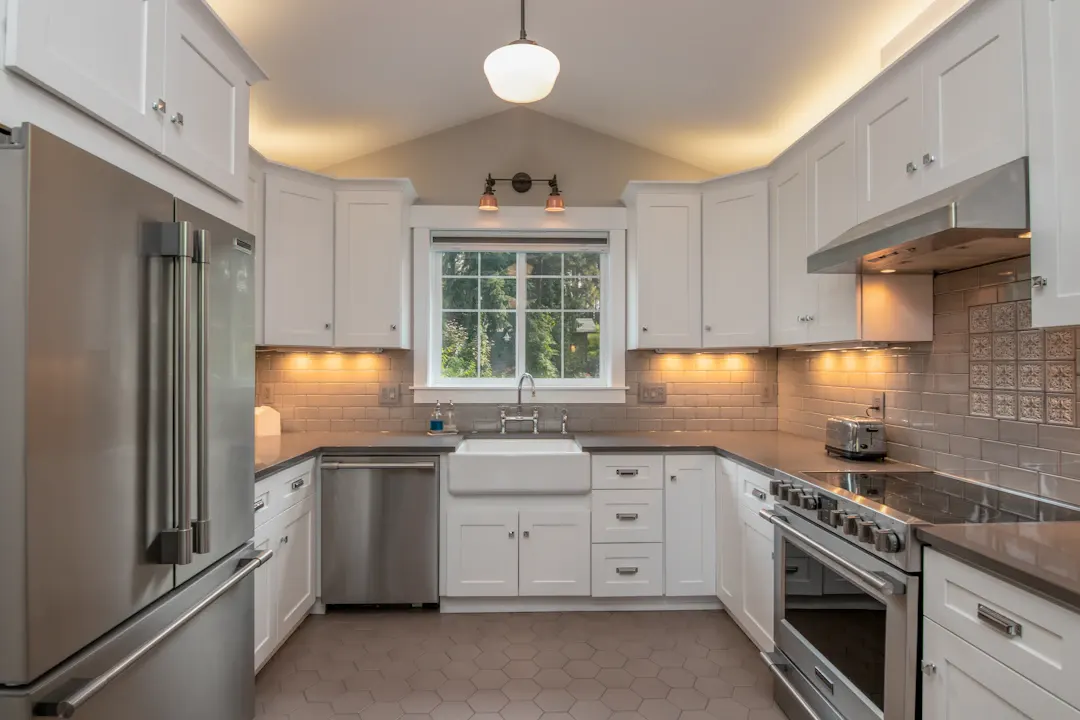
A continuous strip mounted toward the front of the upper cabinet bottom lights the full counter depth, so chopping, reading recipes and wiping up are not done in your own shadow.
Channels are recessed or hidden behind a 3/4 to 1-1/2 inch light rail, and wires run through drilled cabinet sides and bottoms. From a seated or standing position you see light, not hardware.
Uplighting on top of the uppers bounces off the ceiling. In kitchens with an open gap above the cabinets, it turns dead space into a soft perimeter glow that helps 8 and 9-foot ceilings.
Low LED strips in the toe kick let you walk to the fridge at night without turning on overheads. On a motion sensor or a separate dimmer, they double as a nightlight for kids and guests.
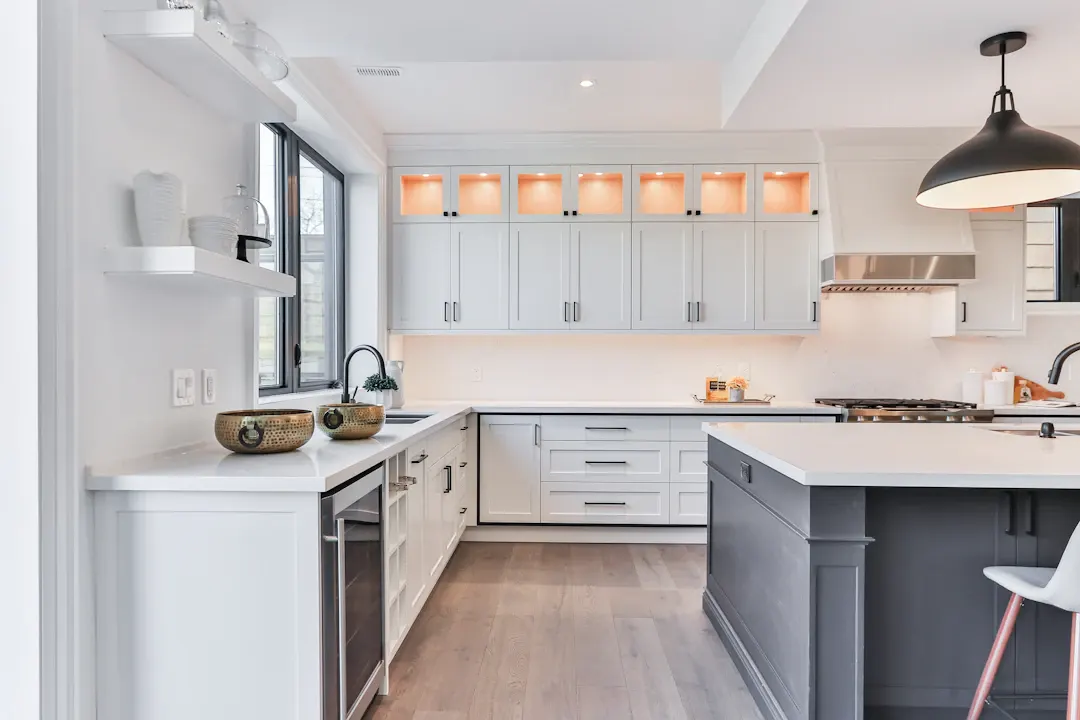
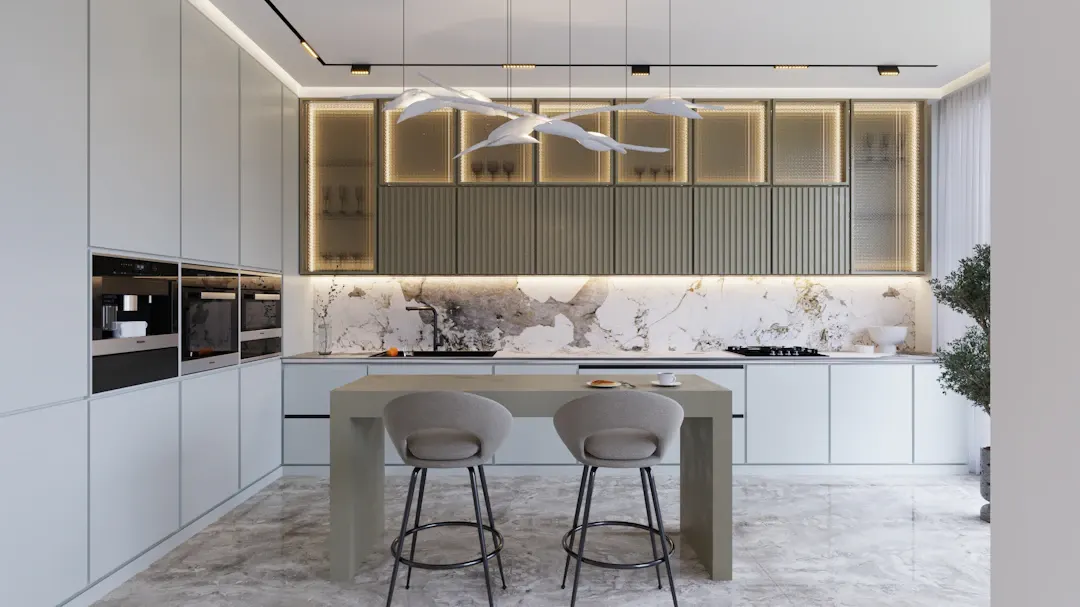
In-cabinet lighting behind glass doors or under floating shelves shows off dishes, glassware and collections. Door-activated switches can turn on drawer, pantry and corner cabinet lights only when they are opened, then shut them off again.
Drivers are placed in ventilated, reachable spots such as above a microwave cabinet or in a sink base side panel, so replacing one years from now does not mean pulling cabinets.
For general planning, under-cabinet LED lighting in a typical Greater Houston kitchen often runs about $800 to $2,500 when installed with new cabinets, and $1,500 to $4,000 or more as a retrofit with toe-kick and over-cabinet zones. Electrical work may be priced separately. Your actual cost depends on run lengths, controls and access, so ask us for a written estimate.
Many Houston kitchens sit on slab foundations, so feeding power to a new island or a run of lower cabinets can mean trenching through concrete. We plan lighting routes through walls and upper cabinets first. LED drivers dislike heat, and a driver closed up above a microwave or next to a range can cook in summer, so we place them in ventilated compartments away from heat sources. Older 1950s to 1970s homes may have limited circuits in the kitchen, and your electrician may recommend a dedicated lighting circuit. In humid weather, aluminum channel and sealed cabinet edges keep tape adhesive from loosening.
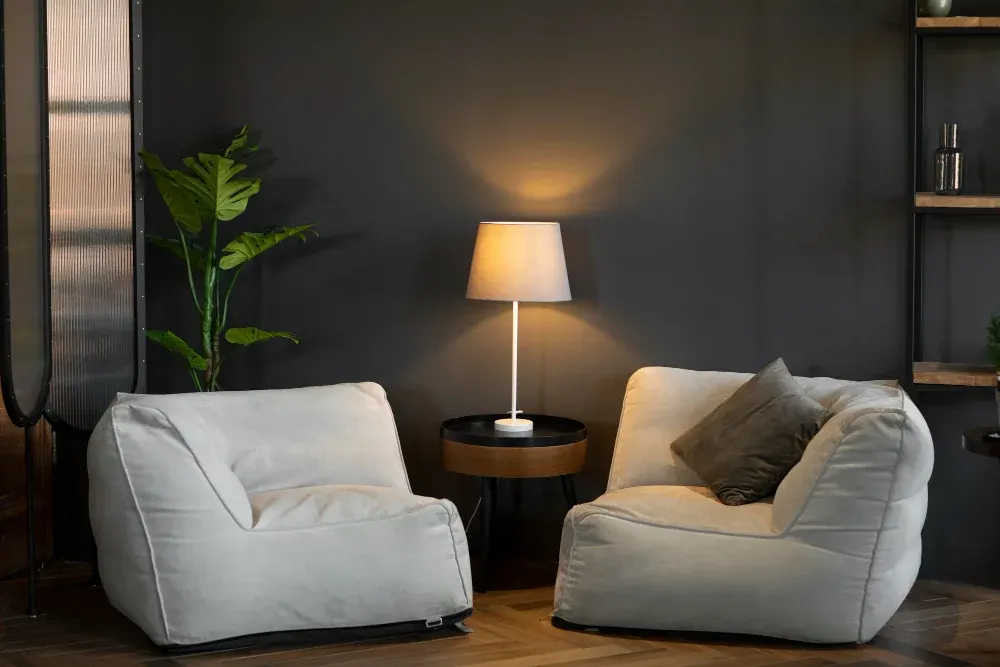 Surfaces & LightingLighting & Accent FeaturesAccent lighting tied to millwork: crown coves, lit bookshelves, sconce backers, beams and slat walls, built in our Houston shop and coordinated with your electrician.
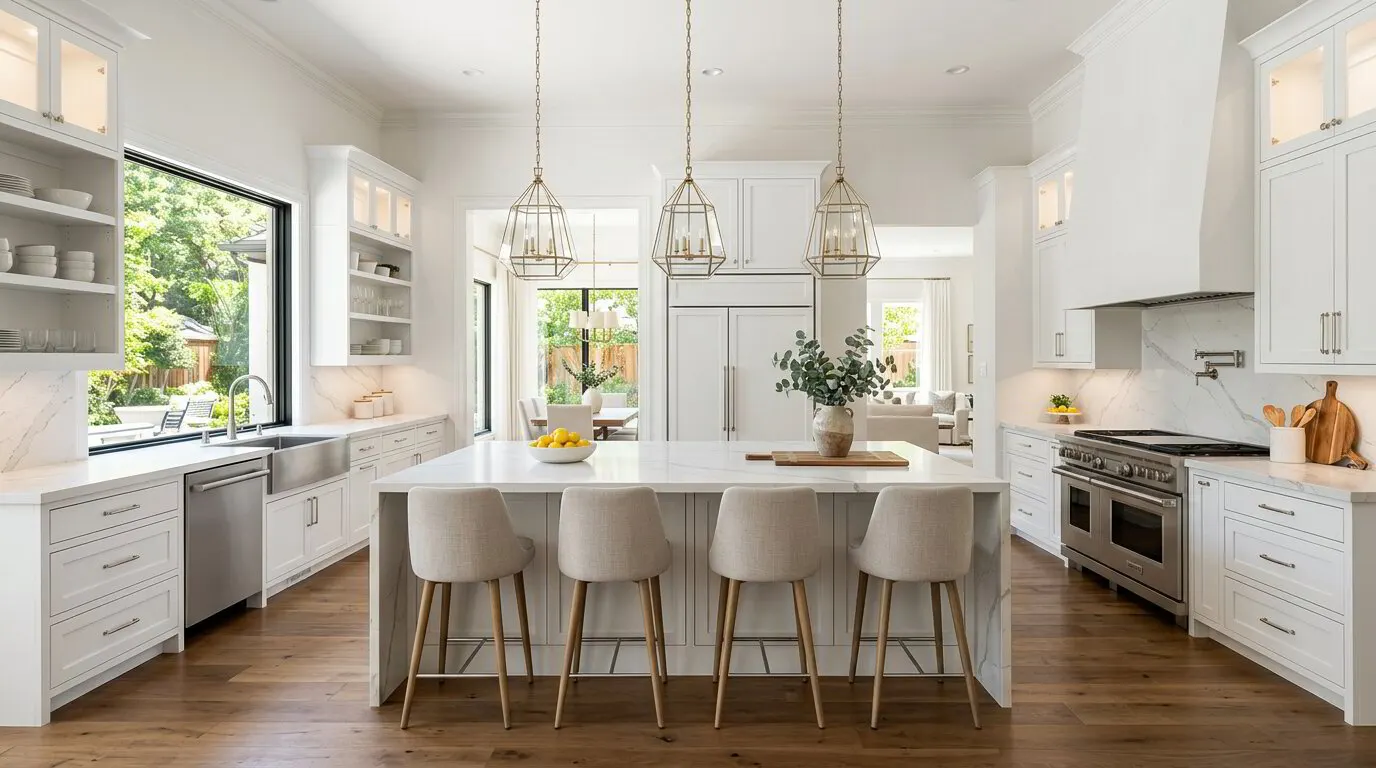 Kitchens & BathsCustom Kitchen CabinetsSolid hardwood and furniture-grade plywood kitchen cabinets, sized to your walls and appliances, built locally and installed by our own team.
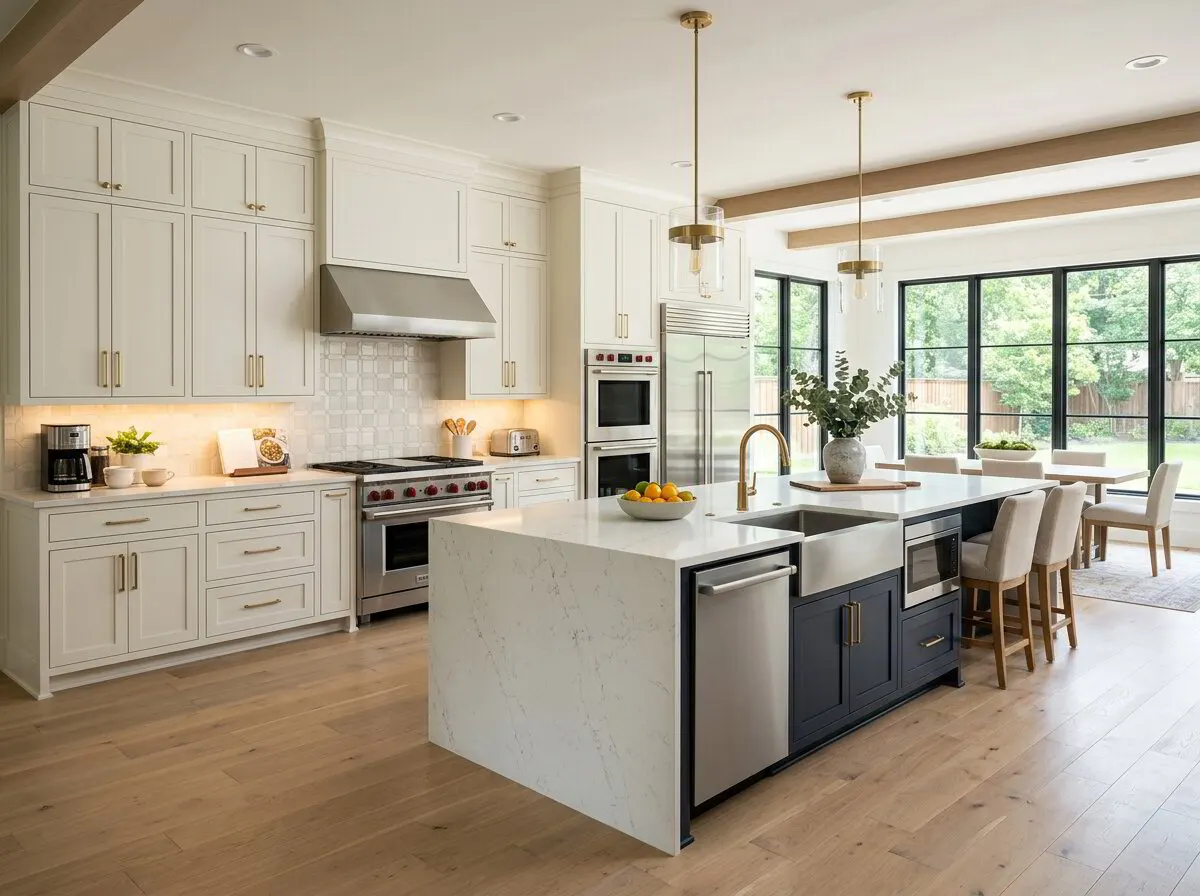 Kitchens & BathsKitchen RemodelsComplete kitchen remodels in Greater Houston, from layout and cabinetry to countertops, backsplash tile, trim and lighting, managed by one in-house crew.
Cabinetry & Built-InsCustom Display Cabinet Built-InsBuilt-in display cabinets with glass doors, integrated LED lighting and adjustable shelves for china, collections, books and art, built in our Houston shop and installed by our crew.
Kitchens & BathsKitchen RemodelsComplete kitchen remodels in Greater Houston, from layout and cabinetry to countertops, backsplash tile, trim and lighting, managed by one in-house crew.
Cabinetry & Built-InsCustom Display Cabinet Built-InsBuilt-in display cabinets with glass doors, integrated LED lighting and adjustable shelves for china, collections, books and art, built in our Houston shop and installed by our crew.
Under-cabinet lighting types explained: LED tape, pucks, linear bars, color temperature, CRI and power options for Houston kitchens. Get an estimate.
Houston kitchen cabinet trends worth trying, from white oak to two-tone islands, plus simple ways to test each one at home first. Book a free in-home estimate.
A custom cabinet maintenance guide for Houston homes: how to clean finishes, check hinges and seals, and act early on humidity issues. Schedule a free estimate.
Free, no-pressure estimate
Tell us about your kitchen, bath or built-in project. We usually reply within one business day.
Office hours: Mon–Fri 8:00 AM – 5:00 PM