Custom Cabinet Maintenance Guide: Clean, Check, Act
Custom cabinet maintenance does not need to be complicated, but it does need to be regular. Well-built cabinets made from plywood and solid hardwood can last for decades. Whether they actually do depends a lot on what happens after installation day: how they are cleaned, whether small issues are caught early, and how the home handles Houston's humidity.
This guide is for homeowners who have invested in custom cabinetry, or are about to, and want it to stay in good shape. We use a simple framework: clean the right way, check a few key items on a schedule, and act early when something changes. It works for kitchens, bathroom vanities, laundry rooms and built-ins.
None of this takes much time. A few minutes a week and a short seasonal check will prevent most of the problems we see on older cabinetry.
Why Custom Cabinet Maintenance Matters in Houston
Houston's climate is hard on wood. Long, humid summers and air conditioning that runs much of the year create cycles of moisture moving in and out of cabinet doors and panels. Slab foundations shift a little between wet and dry seasons, which can nudge doors out of alignment. Kitchens see cooking grease and steam, and bathrooms see daily humidity spikes.
In coastal areas like Galveston, League City and the Brazoria coast, salt air adds a corrosion risk for hinges, slides and pulls.
Good construction handles most of this. Furniture-grade plywood boxes and solid wood faces with a durable finish resist moisture far better than particleboard. Maintenance protects that investment and catches small issues before they become repairs.
Step 1: Clean the Right Way
Most cabinet finishes are damaged not by dirt, but by the wrong cleaning products.
Everyday cleaning
- Use a soft microfiber cloth dampened with warm water
- Add a few drops of mild dish soap for greasy areas
- Wipe in the direction of the wood grain
- Dry immediately with a second clean cloth
- Pay attention to areas near the range, the trash pullout, and handles
Avoid these products
- Abrasive pads, scouring powders or magic eraser-style sponges, which can dull or burn through finish
- Ammonia-based glass cleaners
- Bleach or harsh disinfecting sprays used directly on wood
- Oil soaps that leave residue on modern finishes
- Silicone-based furniture polishes, which can build up and interfere with later touch-ups
- Steam cleaners
Tackling grease buildup
Cabinets near the cooktop collect a film of grease over time, especially if the range hood is undersized or not used consistently. A solution of warm water and dish soap, applied with a soft cloth and allowed to sit for a minute, loosens most buildup. For stubborn areas, repeat rather than scrubbing harder. Run your range hood every time you cook to reduce how fast grease accumulates.
Interior cleaning
Empty and wipe drawers and shelves a couple of times a year. Crumbs, spilled spices and sticky bottles attract pests and can stain the finish. Shelf liners in drawers that hold oils and cleaning supplies make cleanup easier. Wipe the bottoms of oil bottles and honey jars before putting them back, since sticky rings are one of the most common causes of finish damage inside cabinets.
Step 2: Check Key Items on a Schedule
A seasonal check catches small problems early. Use this checklist:
| What to check | How often | What to look for |
|---|---|---|
| Door alignment | Every 6 months | Uneven gaps, doors rubbing or not closing fully |
| Hinge screws | Every 6 months | Loose mounting screws, sagging doors |
| Drawer slides | Every 6 months | Grinding, drawers not closing fully, soft-close not engaging |
| Sink base | Every 3 months | Drips, damp spots, swelling, musty smell |
| Finish near range and sink | Every 3 months | Dulling, peeling, white haze, raised grain |
| Dishwasher side panels | Every 3 months | Steam damage, swelling at edges |
| Hardware | Every 6 months | Loose knobs and pulls, corrosion in coastal homes |
| Caulk and seals | Yearly | Gaps between countertop and backsplash, sink edges |
Under-sink inspections
The sink base is the most vulnerable cabinet in any kitchen or bathroom. Supply lines, shutoff valves, the drain trap, the dishwasher hose and the disposal are all potential leak points. Take everything out every few months, look for moisture, and run your hand along the cabinet floor. A drip tray or waterproof liner is an inexpensive layer of protection.
Dishwasher and appliance areas
Opening the dishwasher right after a cycle releases a cloud of steam onto the adjacent cabinets and countertop edge. Over time this can damage finishes. Let the dishwasher cool for a few minutes before opening, or pull the rack out once the steam has cleared.
Keep a simple cabinet record
A few minutes of record keeping makes every future repair faster. Start a folder, paper or digital, with the installation date, the finish name and sheen, the paint or stain color, and the brand and model of the hinges and drawer slides. Note slide lengths too, since a replacement has to match the drawer depth, commonly 18 or 21 inches in base cabinets.
Add photos of the sink base plumbing taken before anything is stored under it. If a stain shows up later, you can compare against the photo to tell whether it is new. Keep the warranty paperwork and any leftover touch-up paint in the same place, and write the purchase date on the can lid. Paint and finish products age, so a can that is several years old may need replacing before it is used for a touch-up.
Step 3: Act Early When Something Changes
Most cabinet repairs are small if they are handled early. Here is how to respond to common issues.
Doors out of alignment
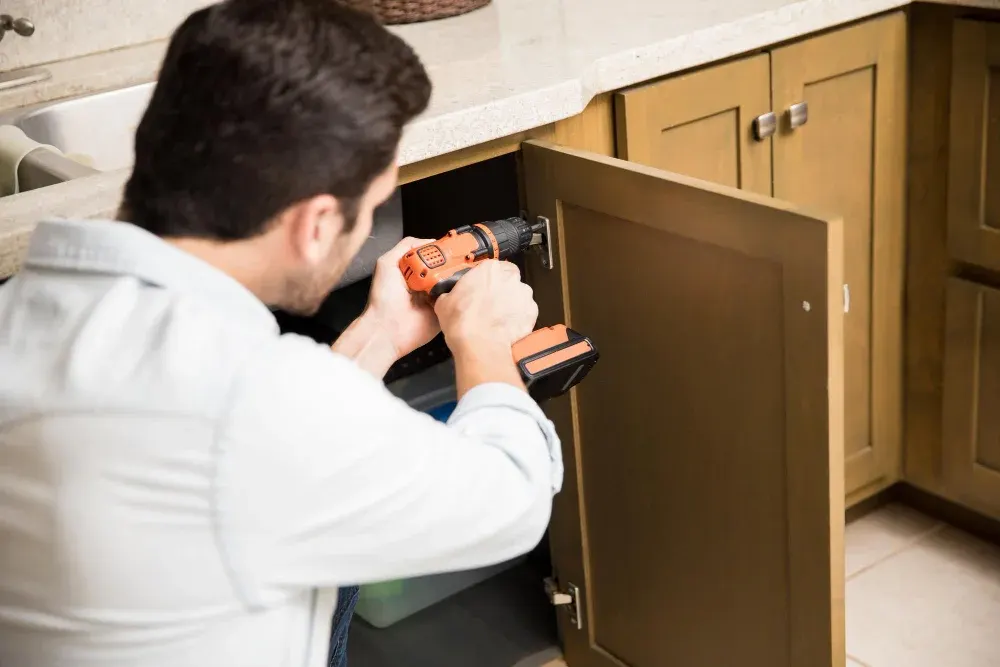
Concealed European-style hinges have adjustment screws that move a door side to side, up and down, and in and out. A quarter turn often fixes a door that has drifted. If a mounting screw spins without tightening, the hole may be stripped. A wood glue and toothpick fill, or a slightly larger screw, often solves it. If unsure, call your installer.
Sticky or noisy drawers
Clean the slides with a dry cloth to remove crumbs. Check that the drawer is not overloaded beyond the slide rating. If soft-close stops working, the mechanism may need adjusting or replacement, which is usually a simple swap.
Finish damage
Small scratches in painted cabinets can be touched up with matching paint, ideally supplied by your cabinetmaker. For stained finishes, touch-up markers or fill sticks can hide minor marks. Larger areas of worn or peeling finish near the sink or range are best evaluated by a professional, since a proper repair may need sanding and refinishing a door.
Moisture or swelling
If you find swelling, delamination or a musty smell, stop the source first. Then dry the cabinet completely with the doors open and a fan running. Plywood recovers much better than particleboard, but any cabinet that has been wet for long periods should be checked. Call your cabinetmaker if the floor of the cabinet is soft, stained or warped.
Humidity Control: The Maintenance You Do Not See
Indoor humidity has a bigger effect on cabinets than most cleaning routines. A few practical habits help:
- Keep indoor relative humidity in a moderate range, generally somewhere around 40 to 55 percent, with air conditioning or a dehumidifier
- Run bathroom exhaust fans during and for 20 to 30 minutes after showers
- Use the range hood while cooking, especially when boiling water
- Avoid shutting off air conditioning entirely in a vacant home during summer
- In vacation or second homes on the coast, consider a dehumidifier set to run while the home is empty
Seasonal shifts can cause solid wood panels to expand and contract slightly. Small hairline lines at panel edges in winter are normal wood movement, not a defect. A cheap digital hygrometer on a kitchen shelf tells you what your indoor humidity really is, which is more useful than guessing from how the air feels.
Coastal homes: extra steps for salt air
Homes in Galveston, on Bolivar, or near the Brazoria coast deal with salt in the air. Hardware is the first place it shows. Extra steps:
- Wipe hinges, pulls and slides occasionally with a dry cloth
- Inspect for surface rust twice a year and replace corroded hardware early
- Keep exterior doors closed when the wind is off the water
- Choose stainless or coated hardware for any replacements
For more on materials suited to these conditions, read our guide to the best cabinet materials for Galveston coastal homes, or see our Galveston County service area page.
Maintaining Vanities, Built-Ins and Specialty Cabinetry
The same clean, check, act routine applies beyond the kitchen:
- Bathroom vanities: Wipe splashes promptly, especially around the faucet base. Our post on how to care for a custom bathroom vanity goes deeper.
- Laundry cabinets: Check behind and under the washer for leaks, and keep detergents in trays.
- Built-ins and media walls: Dust shelves regularly, and keep electronics vented so heat does not build up inside enclosed cabinets.
- Garage cabinets: Sweep beneath them and watch for water intrusion during heavy rain.
- Outdoor kitchens: Follow the specific care instructions for outdoor-rated materials.
When to Call a Professional
Some issues are beyond routine maintenance. Call your cabinetmaker if you see:
- Cabinet boxes separating from the wall or from each other
- Soft or sagging cabinet floors
- Widespread finish failure on multiple doors
- Shelves bowing under normal loads
- Damage after a significant leak or flood
Ace Kustoms backs its work with a craftsmanship warranty on joinery and finish, and our in-house team that built your cabinets is the same team that can assess and fix them. If you are planning new cabinetry, see our custom kitchen cabinets and custom bathroom vanities pages for how we build for Houston conditions.
Keep Your Cabinets in Good Shape for Years
Custom cabinet maintenance comes down to three habits: clean gently, check on a schedule, and act early. Add sensible humidity control and a watchful eye on the sink base, and well-built cabinets will look and work well for a long time.
If you have questions about caring for your cabinets, or you are ready to plan new ones, schedule a free in-home estimate or call (281) 660-3903. We are happy to look at what you have and give honest advice.
Frequently asked questions
What is the best everyday cleaner for custom cabinets?
How often should I tighten cabinet hinges?
Should I use furniture polish on my cabinets?
What should I do if a cabinet gets wet from a leak?
Planning a project like this?
Get a free in-home estimate from the team that builds and installs the work.