Houston Kitchen Cabinet Trends Worth Testing at Home
Houston kitchen cabinet trends move fast on social media, and it is easy to fall for a look that seems perfect in a photo and then feels wrong in your own kitchen a year later. The better approach is to test a trend before you commit thousands of dollars to it. Live with a sample door, tape out a layout, or try a feature in a small way first, and you will know whether it fits how you actually cook and live.
This post is for Houston homeowners planning new cabinets who are drawn to current styles but do not want to regret them. We will look at the trends we see homeowners asking about most often, explain what makes each one appealing, flag what to watch for in our climate, and give a simple at-home test for each.
When you are ready to move from ideas to drawings, our custom kitchen cabinets page explains how we design, build and install in-house.
Why Test Houston Kitchen Cabinet Trends at Home First
Trends look different in Houston homes than in staged photos for a few reasons.
- Light. Strong Gulf Coast sunlight, often through large west-facing windows, warms colors and highlights wood grain. A gray that reads cool in a photo can look green or blue in your kitchen.
- Humidity. Long humid summers affect some finishes and materials more than others, especially open shelving and certain painted surfaces.
- House style. A 1960s ranch in Meyerland, a 1920s bungalow in the Heights and a new two-story in Cypress each pair differently with the same cabinet style.
- Daily use. A look that photographs well may not suit a family that cooks every night, has pets, or entertains often.
Testing at home closes the gap between the photo and your reality. It costs little and can save you from an expensive change later.
Six Trends Homeowners Ask About, and How to Test Each
The trends below come up again and again in design conversations. None is right or wrong on its own. What matters is whether it suits your house, your light and your habits.
Trend 1: Natural Wood, Especially White Oak
After years of painted white kitchens, natural wood has come back strongly. White oak is the most requested species right now, with its straight grain and warm, slightly golden tone. Walnut and rift-sawn oak are also popular for islands and accent pieces.
Why it works: Wood adds warmth, hides small dings better than paint, and pairs well with both modern and traditional homes.
What to watch for: Oak changes color slightly as it ages, generally warming over time. Stains that are very gray or very light may look dated faster than a natural clear finish.
How to test it: Ask for sample doors in two or three finishes, such as natural clear, a light wire-brushed finish, and a warmer stain. Put them next to your floor and counter samples and look at them morning, midday and evening for a week.
Trend 2: Two-Tone Kitchens and Colored Islands
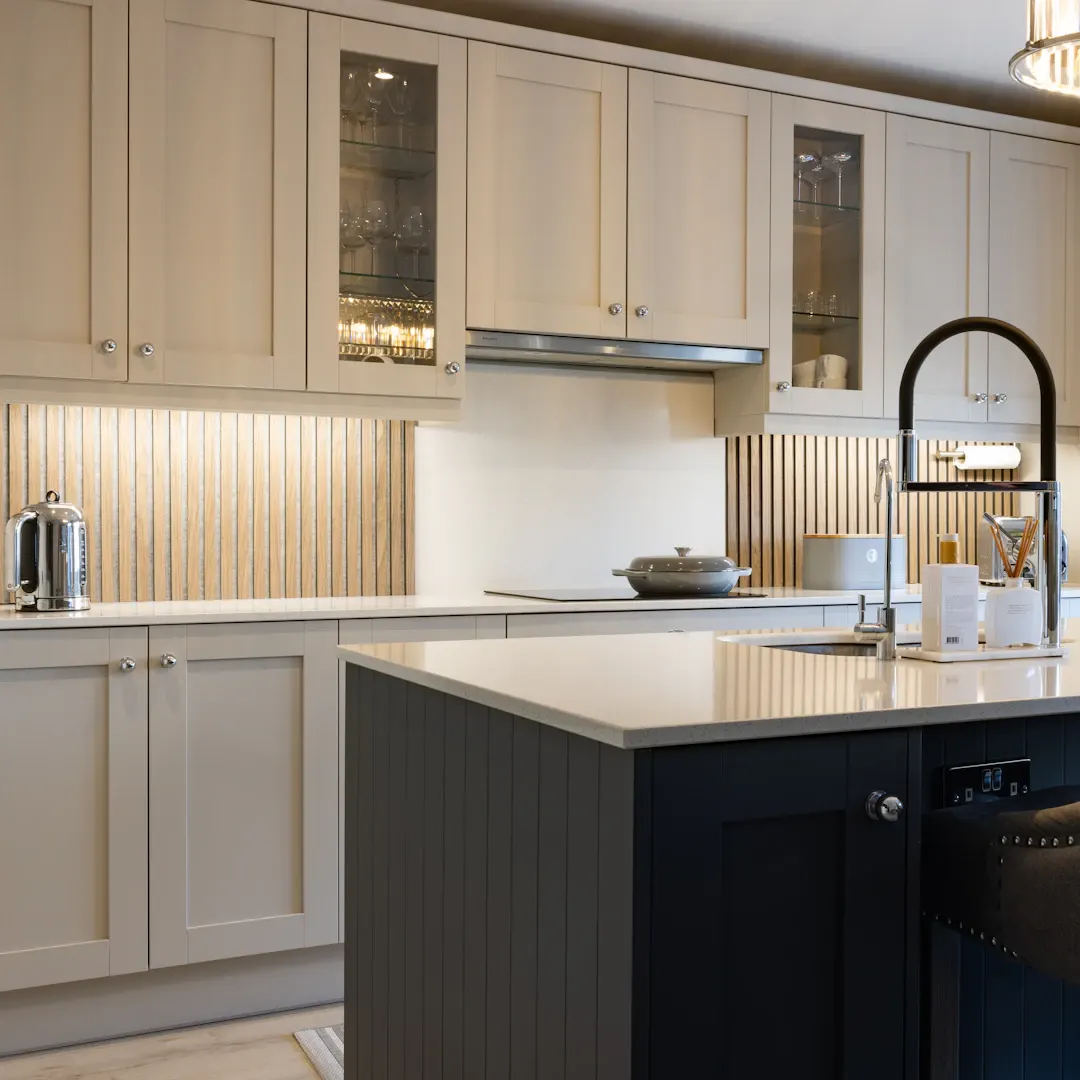
Two-tone kitchens remain popular, typically with an island in a contrasting color or wood and perimeter cabinets in a lighter finish. Deep navy, forest and olive greens, and warm grays are common island colors. Wood uppers over painted lowers is another version of the same idea.
Why it works: Contrast defines zones in an open floor plan and lets you try a bold color without committing every cabinet to it.
What to watch for: Too many contrasts, such as different colors for uppers, lowers, island and pantry, can feel busy. Two finishes is usually plenty.
How to test it: Paint a large poster board in the island color and lean it against your current island. Live with it for a few days. If you still like it, ask for a finished sample door to confirm. The island is also the easiest piece to refinish later if tastes change.
Trend 3: Slim Shaker and Flat-Panel Doors
The classic Shaker door is evolving. Slim Shaker doors, with narrower rails and stiles, have become a popular middle ground between traditional and modern. Flat-panel slab doors in wood veneer or paint are common in contemporary kitchens.
Why it works: Simple door profiles look clean, are easier to wipe down, and adapt to many hardware and color choices.
What to watch for: Very narrow frames can feel delicate on large doors. Flat slabs show every fingerprint in dark paint.
How to test it: Compare full-size sample doors side by side, not small corner samples. Open and close them, touch them, and imagine them across a full wall. Our breakdown of Shaker vs. flat-panel vs. raised-panel cabinets explains the differences in detail.
Trend 4: Ceiling-Height Cabinets and Statement Hoods
Uppers that run to the ceiling, often with a small stacked upper row, are common in new construction around Greater Houston, where 9- and 10-foot ceilings are typical. Paired with a plaster, wood or paneled hood over the range, they make a strong focal wall.
Why it works: Eliminates the dust shelf above cabinets, adds storage and makes ceilings feel taller.
What to watch for: The top row is hard to reach and best for rarely used items. Make sure the hood is vented outdoors, which is especially important in Houston's humid climate.
How to test it: Use painter's tape to mark the outline of ceiling-height cabinets and the hood on your wall. Stand back and see how it changes the room. Then check which items you would actually store up high.
Trend 5: Open Shelving and Glass-Front Uppers
Open shelves and glass-front cabinets break up long runs of solid doors and give a place to display dishes.
Why it works: Lightens the look of a kitchen and keeps everyday dishes within easy reach.
What to watch for: Open shelves collect dust and cooking grease, especially near the range. In humid weather, items on shelves may need more frequent washing. Glass fronts need tidy contents.
How to test it: Take the doors off one upper cabinet for a month. If you like the look and do not mind the extra wiping, open shelving may suit you. Our post on open shelving vs. upper cabinets in a working kitchen covers the trade-offs further.
Trend 6: Integrated Lighting and Mixed Hardware
Lighting built into cabinets, including under-cabinet strips, interior lights in glass uppers and toe-kick lighting, has become a common request. Hardware is shifting toward warm metals like brushed brass and bronze, and toward mixing finishes, such as brass pulls with black faucets.
Why it works: Lighting improves task visibility and adds evening atmosphere. Hardware is a small part of the budget with a big visual effect.
What to watch for: Lighting needs to be planned before cabinets are built, so wiring channels and transformers fit. In coastal areas like Galveston, unlacquered brass and some metal finishes tarnish faster in salty air.
How to test it: Buy a couple of inexpensive stick-on LED strips and place them under your current uppers. Pick up two or three sample pulls and tape them to a sample door.
Comparing the Trends at a Glance
| Trend | Longevity outlook | Easiest way to test | Climate note |
|---|---|---|---|
| Natural white oak | Strong; classic species | Sample doors for a week | Seal all surfaces |
| Two-tone with colored island | Good if limited to two finishes | Painted poster board | Fine with good finish |
| Slim Shaker or flat panel | Strong; simple profiles last | Full-size sample doors | Fine with good finish |
| Ceiling-height uppers | Strong in tall-ceiling homes | Painter's tape outline | Vent the hood outside |
| Open shelving | Personal; depends on habits | Remove one door for a month | More dust and grease |
| Integrated lighting, warm hardware | Lighting strong; hardware trends rotate | Stick-on LEDs, sample pulls | Watch metals near the coast |
If resale is part of your thinking, our post on timeless vs. trendy renovation choices for resale helps sort which choices tend to age well.
Balancing Trends With a Kitchen That Lasts
A good rule is to put the trendiest choices in the places that are easiest to change. Hardware, paint color on an island, and open shelf styling are relatively low-cost to update. Cabinet boxes, layout and the overall door style are expensive to change, so lean toward simpler, durable choices there.
Construction matters no matter which trend you choose. Solid hardwood and furniture-grade plywood hold up through Houston humidity, and a quality finish applied to every surface keeps doors stable. Those fundamentals will outlast any style cycle.
A simple way to divide the decisions:
- Keep classic: cabinet construction, layout, overall door profile, and perimeter cabinet color
- Have fun with: island color, hardware finish, open shelf styling, and decorative lighting
- Plan carefully either way: integrated lighting and ceiling-height stacks, since both are built into the cabinets and hard to undo
Following that split, a kitchen can feel current on the day it is finished and still look settled ten years later. When a trend fades, you swap pulls or refinish an island instead of starting over.
Try Trends With Real Samples in Your Home
Testing Houston kitchen cabinet trends at home is easier when you have real materials to work with. During a free in-home estimate, we bring wood and finish samples so you can see them in your own light, next to your own floors and counters. If your project includes layout or lighting changes, our kitchen remodel team handles the full scope, and we serve homeowners throughout Houston and the surrounding counties.
Schedule your free in-home estimate, or call (281) 660-3903 Monday through Friday, 8am to 5pm.
Frequently asked questions
How can I test a cabinet color before committing?
Is white oak a passing trend?
Should I do a two-tone kitchen?
Are open shelves practical in a Houston kitchen?
Planning a project like this?
Get a free in-home estimate from the team that builds and installs the work.