Crown Molding vs. Cove Molding: What's the Difference?
The difference between crown molding vs. cove molding comes up often when homeowners start planning trim. Both sit where the wall meets the ceiling. Both soften a hard corner. But they look different, install differently, and suit different rooms. Picking the wrong one can make a room feel either fussy or unfinished.
This guide is for Houston-area homeowners updating trim in a ranch home, a builder-grade new build, or a remodeled kitchen. We will explain what separates the two profiles, where each makes sense, and how our humid climate and slab foundations affect installation and material choice.
If you are standing in a trim aisle wondering whether you need "crown" or just "cove," this should help you decide in a few minutes.
Crown Molding vs. Cove Molding: The Basic Difference
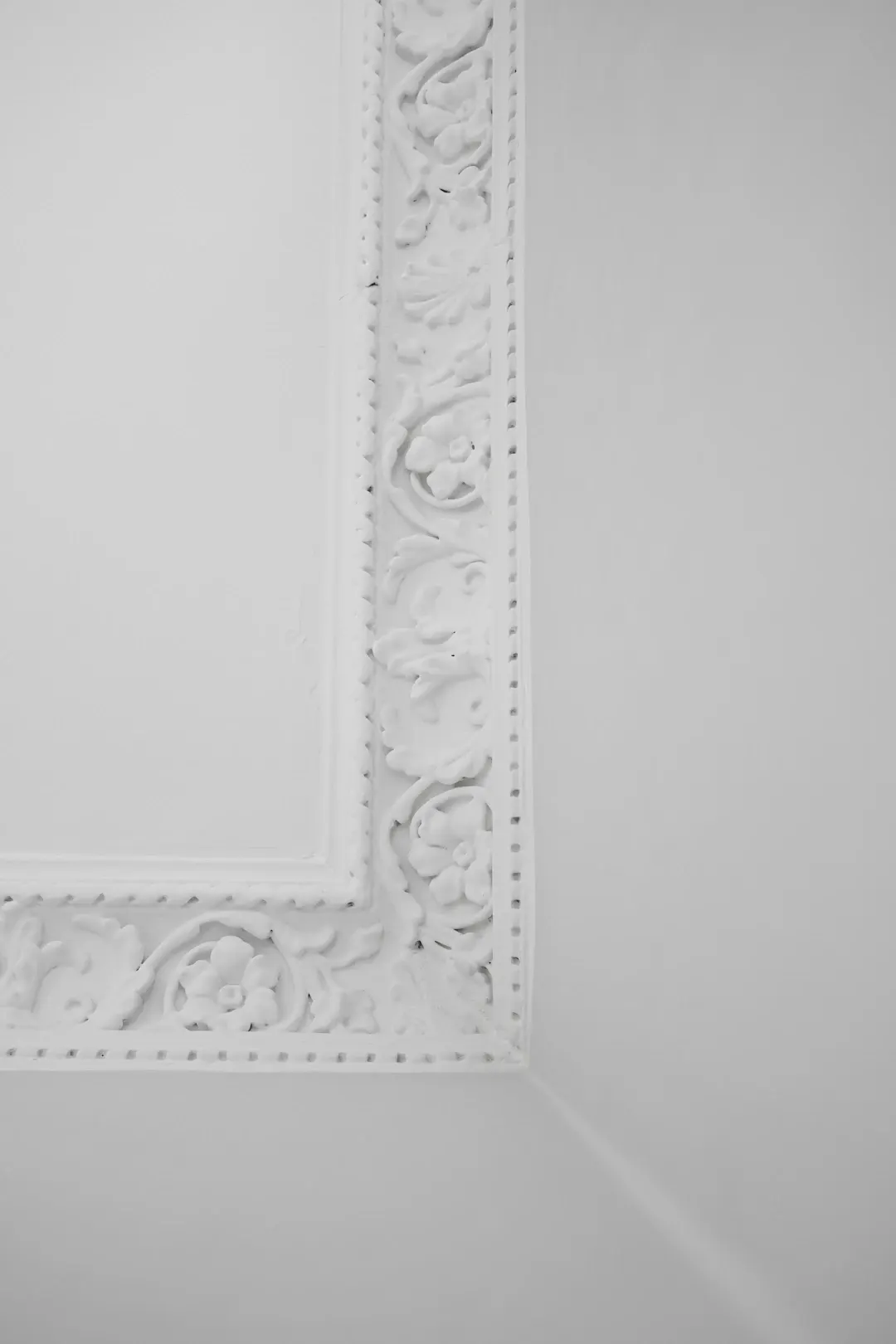
Crown molding is a decorative profile that typically combines curves, steps and flats. It is installed at an angle, "sprung" between wall and ceiling, so there is an open triangle of air behind it. Common crown profiles include ogee curves, beads and fillets that cast distinct shadow lines.
Cove molding has a simple concave profile, a smooth inward curve. It can be installed sprung like crown or, in smaller sizes, nailed flat into a corner. It reads as a soft, single curve rather than a series of details.
A quick way to tell them apart: if the profile has multiple steps and an S-curve, it is crown. If it is one clean scoop, it is cove.
Side-by-side comparison
| Feature | Crown molding | Cove molding |
|---|---|---|
| Profile | Complex: curves, beads, flats | Simple concave curve |
| Typical sizes | 3 to 7+ in, or built-up | 3/4 to 4 in, larger available |
| Visual weight | Moderate to heavy | Light |
| Style fit | Traditional, colonial, transitional | Mid-century, modern, minimal, craftsman |
| Install difficulty | Higher: spring angle, coped corners | Lower in small sizes |
| Hides ceiling imperfections | Well, due to shadow lines | Somewhat |
| Common other uses | Cabinet tops, mantels, built-ins | Under shelves, cabinet tops, transitions |
Where Crown Molding Works Best
Crown molding is the more formal option. It shines in rooms where you want a defined, finished edge:
- Formal living and dining rooms in traditional homes
- Two-story suburban homes from the 1980s-2000s with 9-foot or taller ceilings
- Primary bedrooms and entries where the ceiling line is visible on entry
- Kitchens where cabinets run to the ceiling and need a crown that relates to the room
Crown scales well. You can stack a crown with a flat frieze board and a small bed mold for a large room, or use a modest single piece in a smaller one. For sizing guidance across house types, see our post on choosing interior trim for Houston house styles.
Crown on cabinets
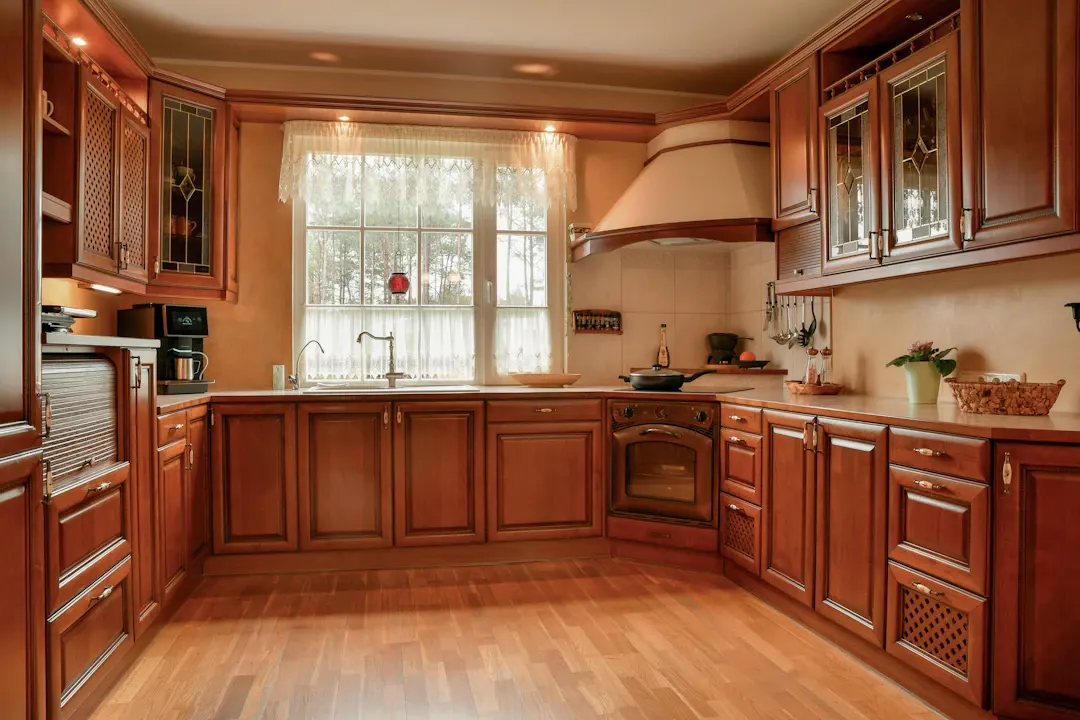
Cabinet crown is often a smaller, related profile. When upper cabinets stop short of the ceiling, crown on top finishes them. When cabinets go to the ceiling, a small crown or a scribe molding closes the gap against an uneven ceiling. Our custom kitchen cabinets are typically finished this way, matched to the door style.
Where Cove Molding Works Best
Cove has a quieter presence. It works well when:
- Ceilings are 8 feet and a full crown would feel heavy
- The home is a 1950s-70s ranch where simple lines suit the architecture
- The style is modern, minimal or mid-century
- You want a soft transition in a small room like a powder bath or hallway
- You need a small trim to cover a gap without adding visual weight
Cove molding is also a workhorse for other spots: under a floating shelf, beneath a countertop overhang on an island, or at the transition between cabinet tops and a soffit.
Large cove as a design feature
A larger cove, around 3 to 5 inches, can create a smooth, curved transition that makes a ceiling feel lifted. Some homeowners use a sprung cove with space behind it for LED tape to create indirect cove lighting. That approach suits media rooms and bedrooms where soft ambient light is welcome.
Installation Differences That Affect Cost and Results
Crown and cove both need care in Houston homes, but crown is more demanding.
Crown installation involves:
- Setting the correct spring angle consistently around the room
- Coping inside corners so joints stay tight as walls shift
- Gluing and pinning outside miters
- Adding backing blocks or nailers where studs and joists do not line up
- Scribing or caulking along wavy ceilings
Cove installation, in smaller sizes, involves:
- Simpler cuts, though inside corners still benefit from coping
- Fastening into the wall plate and ceiling
- Less sensitivity to spring angle
Older ranch homes in areas like Pasadena, Baytown and inner-loop Houston often have ceilings that dip between joists and walls that are out of plumb. In these rooms, a simpler cove can be more forgiving, while a sharp crown may highlight every wave. That is not a reason to avoid crown, but it changes how much fitting the installer needs to do.
Materials and Houston humidity
Both profiles come in similar materials:
- Primed MDF: stable, smooth, economical; fine in conditioned living spaces, not ideal in damp rooms
- Finger-jointed pine or poplar: good painted-trim options with better moisture tolerance
- Solid hardwood: for stained finishes, often matched to cabinets or built-ins
- Polyurethane or PVC: lightweight, moisture resistant; useful in bathrooms and humid areas
In coastal parts of Galveston County and Brazoria County, or any room that sees steam, choose a moisture-tolerant material and seal cut ends before installation. Let all wood trim acclimate indoors for a few days before it goes up.
Slab foundations can shift slightly between wet and dry seasons. Small gaps may open at joints over time. Glued joints, coped corners and quality flexible caulk keep this to a minimum, and touch-ups are simple.
How to Choose Between Them
Run through these questions:
- What style is the house? Traditional leans crown. Modern and mid-century lean cove.
- How tall is the ceiling? At 8 feet, a modest crown or a cove. At 9 feet and up, either works, scaled to fit.
- What else is in the room? Raised panel doors, wainscoting or detailed cabinetry suggest crown. Flat panel cabinets and simple casings suggest cove.
- How even are the walls and ceiling? Very uneven surfaces may favor a forgiving profile.
- Do you want to integrate lighting? A sprung cove is easier to light from behind.
If you are planning trim throughout the house, keep the choice consistent within connected rooms. A crown in the dining room and a cove in the adjoining living room can work, but only if the change happens at a natural break such as a cased opening. Our room-by-room trim selection test can help.
Room-by-Room Suggestions
General rules help, but it is often easier to think room by room. These are starting points, not requirements.
Living and family rooms
In a traditional two-story home with 9-foot or taller ceilings, a 4-1/2 to 5-1/2 inch crown gives the room a finished frame. In a single-story ranch with 8-foot ceilings, a 3 inch cove or a small crown keeps the room from feeling compressed. If you have a vaulted ceiling, trim usually stops at the vault line or runs only along the flat walls.
Kitchens
Kitchens are often where crown and cove meet. Cabinets may carry their own crown, and the rest of the room may have a different profile. A good approach is to let the cabinet crown lead and keep the room trim simple, or to match them exactly where cabinets meet the ceiling. A cove under the edge of an island countertop is a quiet detail that hides the seam between top and base.
Bathrooms
Steam is the deciding factor. Use moisture-tolerant materials such as PVC, polyurethane or well-sealed wood, and consider a small cove instead of a large crown so there are fewer horizontal ledges to catch dust and condensation. Good exhaust ventilation matters more than any trim profile.
Bedrooms and hallways
Bedrooms usually follow the main living areas but can step down one size. Hallways with 8-foot ceilings and many door openings often look best with cove or no ceiling trim, since crown interrupted by many doors and returns can look busy.
Built-ins and media walls
Bookcases, entertainment centers and window seats can carry their own crown or cove at the top. Matching the room profile, or using a smaller version of it, ties the built-in into the architecture so it looks original to the house.
Other Ceiling Trim Options Worth Knowing
Crown and cove are not the only choices:
- Bed molding: a small crown-like profile, often used as part of built-up crown
- Quarter round and ogee: small transitional profiles
- Flat frieze boards: a craftsman-style band below the ceiling
- No ceiling trim: common in modern homes with crisp drywall corners
For larger statements, see our comparison of crown molding vs. coffered ceilings in Houston homes.
Get the Right Profile for Your Rooms
The choice between crown molding vs. cove molding comes down to architecture, ceiling height and the look you want. Crown adds depth and formality. Cove adds a clean, soft line. Both last when they are installed with care and with materials suited to Houston's humidity.
Our in-house crew handles custom trim installations throughout Harris County and the surrounding counties. Request a free in-home estimate or call (281) 660-3903, and we will bring profile samples to hold up in your rooms before you decide.
Frequently asked questions
Is cove molding cheaper than crown molding?
Can I use cove molding on kitchen cabinets?
Does cove molding look dated?
Why do crown molding corners need coping?
Planning a project like this?
Get a free in-home estimate from the team that builds and installs the work.