
Crown Molding vs. Coffered Ceilings in Houston Homes
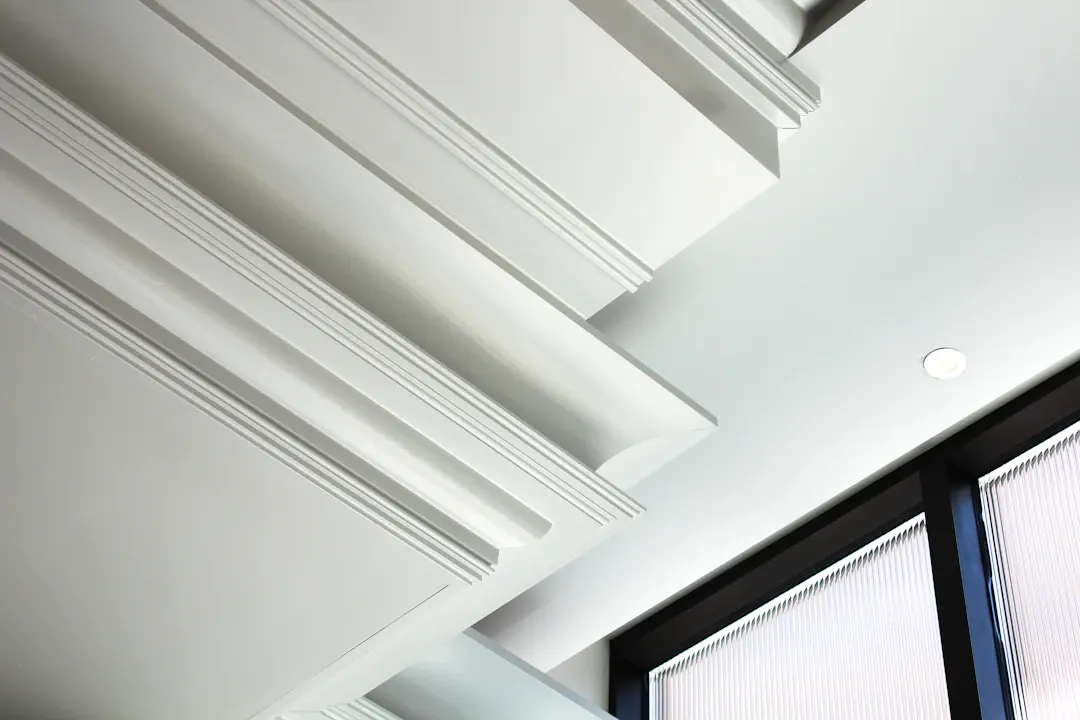
Crown molding vs. coffered ceilings is a common question once a Houston homeowner decides the ceiling deserves more than flat drywall and a fan. Both add architectural detail overhead. Both can make a room feel more finished. But they differ a lot in cost, in how much ceiling height they need, and in how they suit different house styles.
This post is for homeowners in Greater Houston weighing ceiling details for a living room, dining room, study or primary suite. We will compare the two side by side, explain where each one works and where it struggles, and cover the practical issues that come with our climate and slab-on-grade construction.
You do not have to choose only one. Many coffered rooms also have crown at the perimeter. But knowing what each brings helps you spend where it shows.
Crown Molding vs. Coffered Ceilings: Definitions and Comparison
What each option actually is
Crown molding is a profiled trim installed where the wall meets the ceiling. It can be a single piece or a built-up assembly of two or three moldings for a larger look. It runs around the room perimeter and frames the ceiling plane.
A coffered ceiling is a grid of beams applied to the ceiling, forming recessed panels, or coffers. Beams are usually built as hollow boxes from plywood or MDF and wrapped with trim. The inside of each coffer can be plain drywall, painted, wallpapered, or fitted with beadboard or wood panels. Crown or smaller moldings often trim the inside edges of each coffer.
Coffered ceilings are a larger carpentry project. They involve layout, framing or blocking, beam fabrication and a lot of finish trim. Crown molding is mostly a finish carpentry job.
Side-by-side at a glance
| Factor | Crown molding | Coffered ceiling |
|---|---|---|
| Typical ceiling height | Works at 8 ft and up | Best at 9 ft and up |
| Visual impact | Subtle to moderate | Strong, room-defining |
| Scope | Perimeter only | Entire ceiling plane |
| Lighting coordination | Minimal | Significant; plan wiring first |
| Time on site | Usually a day or two per room | Often several days or more per room |
| General planning cost | Lower | Several times the cost of crown for the same room |
| Style range | Traditional to transitional; minimal versions exist | Traditional, transitional, craftsman |
Costs vary with room size, profile, material, ceiling height and paint versus stain. Treat any figure as a planning range and get a written estimate for your room.
When Crown Molding Is the Better Choice
Crown molding makes sense in more rooms and more houses. It is a good fit when:
- Your ceilings are 8 feet, as in most 1950s-70s ranch homes and many second floors
- You want to tie together several connected rooms with a consistent detail
- The budget is better spent on cabinets or flooring this round
- The house style is traditional or transitional and needs a finished edge
- You have kitchen cabinets running to the ceiling and want the room crown to relate to cabinet crown
On 8-foot ceilings, keep crown modest, typically 3 to 4-1/2 inches. On 9 and 10-foot ceilings, larger single profiles or built-up crown suit the scale. For more on sizing trim to rooms, see our guide to choosing interior trim for Houston house styles.
Crown in older ranch homes
Many older Houston ranches have ceilings that are not flat or level and walls that lean. A skilled installer will cope inside corners rather than relying on miters, fasten into blocking, and use caulk to manage small gaps along a wavy ceiling. In some of these homes, a simpler cove or small crown looks more natural than a tall, sharp profile.
When a Coffered Ceiling Is Worth It
Coffered ceilings are a statement. They work best in rooms that already have height and purpose:
- Formal dining rooms and studies with 9 to 12-foot ceilings
- Large open living rooms where the ceiling feels like a blank expanse
- Primary bedrooms in newer homes in Fulshear, The Woodlands, Sugar Land and similar areas with taller ceilings
- Rooms where you want to define zones within an open plan
A coffered ceiling can also hide imperfections in a large flat ceiling, because the eye reads the grid rather than the drywall.
Getting the grid right
Layout is everything. Coffers should be square or close to it, centered on the room or on a key feature such as a fireplace or window. Beams that land awkwardly against a wall or cut through a light fixture look like a mistake. A good design starts with a measured drawing and sometimes a cardboard mockup of a beam section to judge depth.
Typical beam proportions are 4 to 8 inches wide and 4 to 8 inches deep. Shallower beams suit lower ceilings, while deeper beams suit tall rooms.
Houston-Specific Considerations
Our climate and construction methods affect both options:
- Humidity. Painted MDF crown is stable in conditioned rooms but should not go in bathrooms or areas that stay damp. Wood beams and trim should acclimate in the house before installation.
- Attic heat. Ceilings below hot attics see temperature swings. Good insulation and sealed penetrations for lighting help reduce movement in coffered ceilings.
- Slab foundations. Homes on slabs move a little with seasonal soil changes. Expect occasional hairline gaps at joints and plan on simple touch-ups. Glued joints and backing blocks reduce how often this happens.
- Coastal homes. In homes closer to the water, choose paint-grade materials and fasteners that tolerate moisture, and keep beams away from areas exposed to outdoor air.
Lighting and mechanical coordination
Coffered ceilings change how you light a room. Recessed fixtures typically sit in the center of each coffer, and some designs add LED tape inside the beam edges for indirect light. That wiring must be planned before beams go up.
Steps to coordinate:
- Finalize the coffer layout on paper
- Mark fixture locations at the center of each coffer
- Have an electrician run wiring and set boxes
- Build and install beams
- Finish trim, caulk, paint, then install fixtures
Crown molding can also hide LED tape for cove lighting if the profile has room behind it. Our lighting and accent features page shows the kinds of lighting we integrate with millwork.
Combining Crown, Coffers and Other Millwork
The strongest rooms often combine details in proportion. A few combinations that work:
- Crown at the perimeter with coffers in the center of a large living room
- Coffered ceiling over a dining table with wainscoting below a chair rail
- Crown in the main rooms and a coffered ceiling only in a study or library with custom built-ins
- A beamed ceiling (beams in one direction only) as a lighter alternative to a full coffer grid
Rooms that also have a fireplace or media wall need special care so ceiling lines align with the built-ins below. Our post on planning living room built-ins around a fireplace and TV covers that coordination.
Materials and Finish Choices for Each Option
What you build with affects both price and how the ceiling ages.
Crown molding materials
- Primed MDF crown is the most common choice for painted rooms. It is consistent, smooth and easy to paint. Keep it out of bathrooms and laundry rooms.
- Finger-jointed pine and poplar hold up better to occasional moisture and take paint well. Poplar is a little harder and keeps crisp edges.
- Stain-grade hardwood crown in oak, maple or walnut suits libraries, studies and rooms with stained cabinetry. It costs more and needs careful joinery because there is no paint to hide gaps.
Coffered ceiling materials
- Beam boxes are commonly built from plywood or MDF, which keeps them light and stable. Solid wood is used where beams will be stained.
- Coffer panels can stay as painted drywall, or be fitted with beadboard, shiplap or wood veneer panels for more texture.
- Inside trim at the coffer edges is usually a small crown or bed molding, which ties the ceiling back to any perimeter crown in the room.
Paint versus stain is a big cost lever on coffered ceilings. Painted coffers allow filling and caulking at joints. Stained coffers need tighter fits and matched grain, which takes more shop time.
Finish sheen
Ceiling trim is rarely touched, so a satin or semi-gloss enamel is common. Painting coffer panels a slightly different color or sheen from the beams adds depth without additional carpentry.
Making the Decision
If you are still torn, start with these questions:
- Is the ceiling at least 9 feet? If not, crown is usually the safer choice.
- Is this a room you use daily and want to feel special, or a pass-through?
- Does the rest of the house have enough detail to support a coffered ceiling without it feeling out of place?
- Would the same budget make a bigger difference somewhere else, such as cabinets or built-ins?
Homeowners across Fort Bend County, Harris County and Montgomery County often begin with crown throughout the main living areas and add a coffered ceiling to one room where it will be appreciated most.
Talk Through Your Ceiling With a Craftsman
Crown molding is the dependable, flexible choice for most rooms and most ceiling heights. Coffered ceilings deliver a bigger architectural statement in taller, purposeful rooms, with more planning and cost involved. Either one should be scaled to the room and installed with Houston's humidity and slab movement in mind.
Our in-house team handles custom trim installations from simple crown to full coffered ceilings. Request a free in-home estimate or call (281) 660-3903, and we will measure your rooms, show you samples, and give you a written price for the option that fits.
Frequently asked questions
What is the minimum ceiling height for a coffered ceiling?
Is a coffered ceiling worth it for resale in Houston?
Can you add recessed lights to a coffered ceiling?
Will crown molding crack in a Houston house?
Planning a project like this?
Get a free in-home estimate from the team that builds and installs the work.