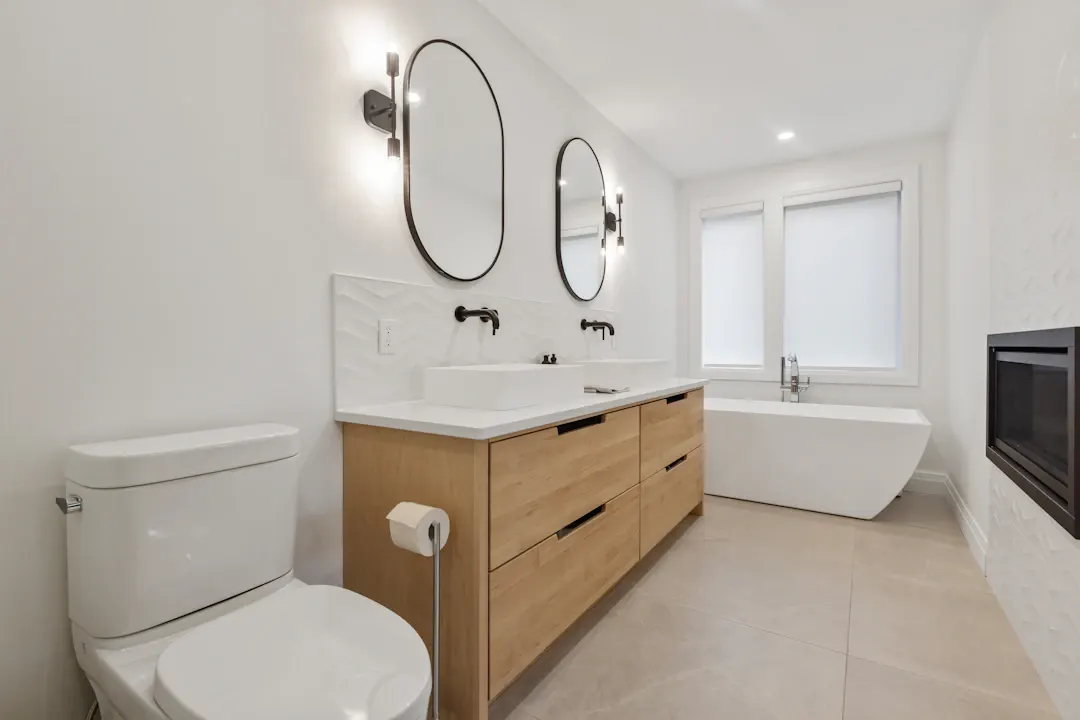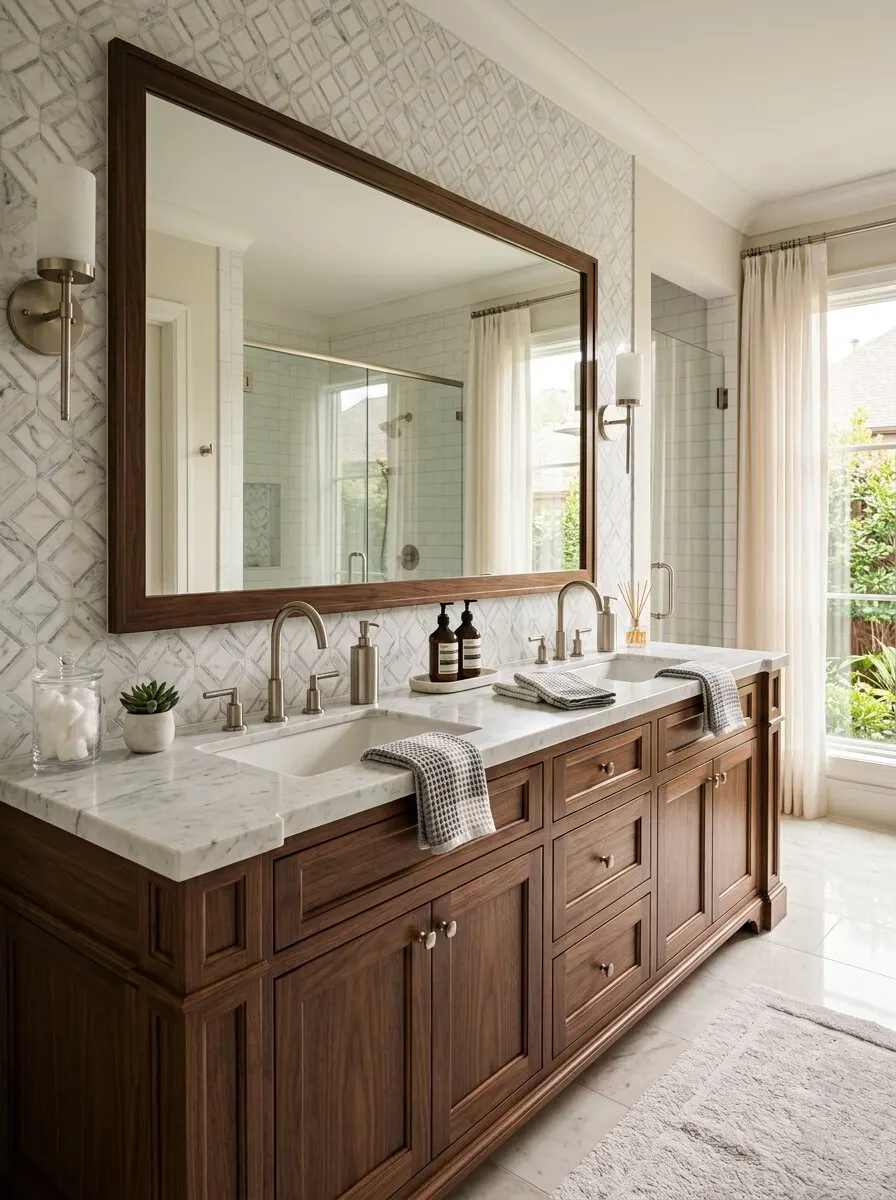
Best Materials for Custom Bathroom Vanities
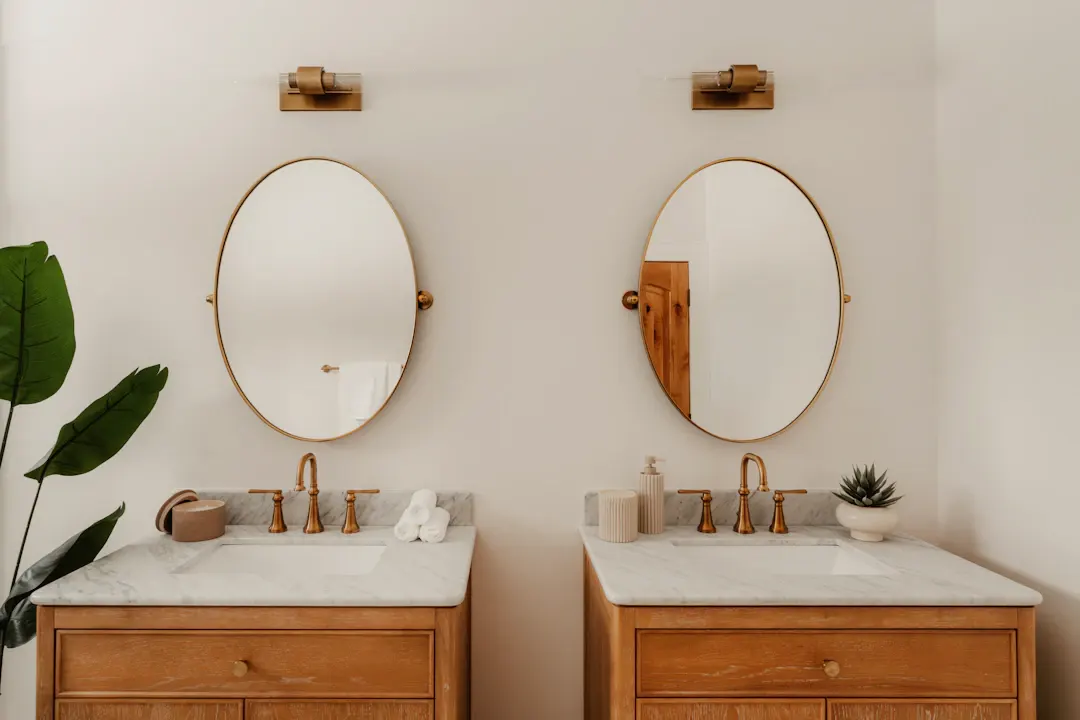
A bathroom vanity lives in the hardest room in the house for cabinetry. It sits under running water, next to a steaming shower, and gets splashed every morning and night. In Houston, it also battles year-round humidity. Choosing the best materials for custom bathroom vanities is what separates a vanity that looks good for twenty years from one that swells at the sink base in three.
This guide is for Houston-area homeowners planning a new vanity, a bathroom remodel, or an upgrade from a builder-grade unit. We will cover box construction, wood species for doors and face frames, finishes, countertops and hardware, with an eye on what actually lasts in humid Gulf Coast bathrooms.
Style still matters, of course. But every style looks better when it is built from materials that stay flat, tight and dry.
Why Material Choice Matters More in Bathrooms
Kitchen cabinets deal with moisture around the sink and dishwasher. A bathroom vanity deals with moisture everywhere. Steam from showers settles on every surface. Water splashes from faucets and drips from hands. Cleaning products and cosmetics add chemical wear.
In Houston, add humidity that rarely lets up and air conditioning that dries the air for part of the year, then lets it swing back. Wood and wood products respond by swelling and shrinking. Over time, weak materials fail in predictable ways:
- Particleboard swells and crumbles near the sink.
- Thin veneers lift at edges.
- Painted MDF bubbles where water reaches a raw edge.
- Cheap hinges and slides rust or loosen.
The fix is not a single magic material. It is a combination of a stable box, solid fronts, a sealed finish and quality hardware.
The Best Materials for Custom Bathroom Vanities: Box Construction
The box is the structure. It holds the sink, the countertop, and the weight of everything stored inside. It also sits closest to the plumbing.
| Box material | Moisture performance | Strength | Our view |
|---|---|---|---|
| Particleboard | Poor; swells and crumbles when wet | Low screw-holding strength | We do not use it |
| MDF | Fair; edges swell if exposed | Moderate | Better for painted panels than boxes |
| Furniture-grade plywood | Very good | High; holds hinges and slides well | Our standard for vanity boxes |
| Solid wood | Good if finished, but moves seasonally | High | Used for face frames and fronts more than full boxes |
Furniture-grade plywood is our standard for vanity boxes. Its cross-laminated layers resist swelling and stay flat, and it holds screws for hinges and slides much better than particleboard. Every surface, including the inside of the sink base and the back, should be finished.
How to spot weak construction
If you are comparing a custom vanity with a showroom unit, a few quick checks reveal a lot:
- Look at the cut edge inside the sink base. Plywood shows layers; particleboard shows compressed chips.
- Check the drawer boxes. Dovetailed or doweled solid wood or plywood drawers last; stapled particleboard drawers often fail at the front.
- Open and close a drawer fully. Quality slides run smoothly and close without a bounce.
- Feel the back panel. A thin hardboard back stapled on is a sign of cost-cutting.
- Look for raw, unfinished surfaces inside the box.
Builder-grade vanities in many newer Houston-area homes fail one or more of these checks, which is why they are a common upgrade.
Wood for Doors, Drawer Fronts and Face Frames
Doors and drawer fronts are what you see and touch every day. Solid hardwood is durable, repairable and attractive.
Maple
Maple is hard, tight-grained and stable. It is an excellent choice for painted vanities because it gives a smooth surface with minimal grain showing through. It also takes stain, though it can look blotchy without a careful process.
White oak
White oak is naturally more resistant to water than many species, thanks to its closed cell structure. It works beautifully in natural, light and rift-sawn finishes, which suit modern and coastal bathrooms. It is a favorite for floating vanities.
Red oak
Red oak is strong and affordable, with prominent grain. It takes stain well and suits traditional and transitional bathrooms.
Walnut
Walnut offers rich, dark color and a refined look. It is stable and works well in primary baths where you want a furniture-like piece.
Cherry
Cherry darkens over time to a warm reddish tone. It is a classic choice for traditional bathrooms but can show sun-related color change if exposed to strong window light.
Seeing each species with your chosen stain or paint is the best way to decide, since finish changes how grain and color read.
Finishes That Hold Up to Steam and Splashes
The finish is the vanity's first line of defense. Look for:
- A hard, shop-applied finish. Catalyzed finishes such as conversion varnish resist moisture, chemicals and wear better than brush-on paint.
- Every surface sealed. Backs, edges, interiors and the underside of the box should all be finished.
- Panels finished before assembly. This keeps bare wood from showing when panels shrink in drier months.
- Appropriate sheen. Satin and semi-gloss clean easily. Very flat finishes can show water marks.
Painted vanities in navy, green, gray and white are popular. Stained and natural wood vanities tend to hide small dings and seasonal movement better. Both can perform well with the right finish system. For more on finishes in humid homes, see our guide to the best cabinet finishes for Pasadena, TX humidity.
Countertop Materials for Vanities
The vanity top takes water, toothpaste, makeup, hair products and cleaning chemicals. Common options:
- Quartz: Resists stains, needs no sealing, wide color range. A popular all-around choice.
- Solid surface: Seamless, repairable, and available with integrated sinks that eliminate the crevice where grime collects. See our solid surface countertops page.
- Granite: Durable natural stone with real variation. Needs periodic sealing.
- Quartzite: Hard natural stone with a marble-like look. Some varieties need sealing.
- Marble: Beautiful and classic, but etches from acidic products and can stain. Honed finishes hide wear better.
- Cultured marble: Common in older and builder-grade baths. Affordable but can crack or dull over time.
Sinks and faucets
The sink choice affects both the top and the cabinet below. Undermount sinks are the easiest to keep clean because there is no rim to trap grime, but they need a solid-surface, quartz or stone top. Vessel sinks sit on top of the counter and need a lower vanity so the rim lands at a comfortable height. Integrated solid surface sinks remove the seam entirely.
Faucets matter too. A wall-mounted faucet frees up counter space and keeps water off the deck behind the sink, which is where many vanity tops collect standing water. Whatever faucet you choose, make sure the spout reaches well into the bowl so water does not run down the back of the sink.
Think about how the top meets the wall. A matching backsplash or a well-sealed tile joint keeps water from running down behind the vanity.
Hardware and Protective Details
Hinges, slides and pulls
Bathroom humidity is tough on metal. Quality hardware pays for itself:
- Hinges: Choose soft-close concealed hinges from reputable makers with corrosion-resistant coatings.
- Drawer slides: Full-extension, soft-close undermount slides keep drawers smooth and hidden from splashes.
- Pulls and knobs: Solid brass, stainless steel and well-plated hardware resist tarnish and pitting. Homes in Galveston and Brazoria counties see more salt air, so this matters even more there.
Our cabinet hardware guide covers mechanisms and finishes in more detail.
Design details that protect materials
Material choice works best alongside smart design:
- U-shaped drawers around the sink trap keep storage usable without blocking access to plumbing.
- A sink base liner or drip tray catches small leaks before they reach the wood.
- A recessed toe kick or legs keep the vanity bottom off wet floors.
- Proper ventilation with a fan vented outdoors reduces humidity on every surface.
- Scribed edges against uneven walls close gaps where water and dust collect.
Matching Materials to Your Bathroom
Different bathrooms need different priorities:
Primary bath
This is where you can invest in premium wood such as walnut or white oak, quartz or quartzite tops, and features like makeup stations and linen towers. Separate his-and-hers vanities, each at its own height, are a common primary bath request.
Kids' or hall bath
Durability and easy cleaning come first. Painted maple or stained oak with a quartz or solid surface top handles heavy use well.
Powder room
Powder rooms see less moisture, so you can choose more delicate materials such as marble or a highly figured wood veneer.
Older Houston homes
In 1950s to 1970s ranch homes, original vanities are often low and shallow, with dated laminate or cultured marble tops. Replacing them with plywood-box custom vanities at comfort height is one of the most noticeable upgrades in a hall bath.
Choose Materials Built to Last
The best materials for custom bathroom vanities are a furniture-grade plywood box, solid hardwood fronts, a hard sealed finish on every surface, a top suited to how the bathroom is used, and corrosion-resistant hardware. Together, they create a vanity that stays solid through Houston's humid summers and decades of daily use.
Ace Kustoms designs and builds custom bathroom vanities in our Houston shop and installs them with our own crew, as part of standalone projects or full bathroom remodels across Harris County and nearby counties. To see wood, finish and countertop samples in your own bathroom, schedule a free in-home estimate or call (281) 660-3903.
Frequently asked questions
What is the best wood for a bathroom vanity?
Is plywood or MDF better for a bathroom vanity?
What countertop material is best for a vanity?
How do I keep a wood vanity from getting water damage?
Planning a project like this?
Get a free in-home estimate from the team that builds and installs the work.