How a Custom Vanity Can Improve Bathroom Style
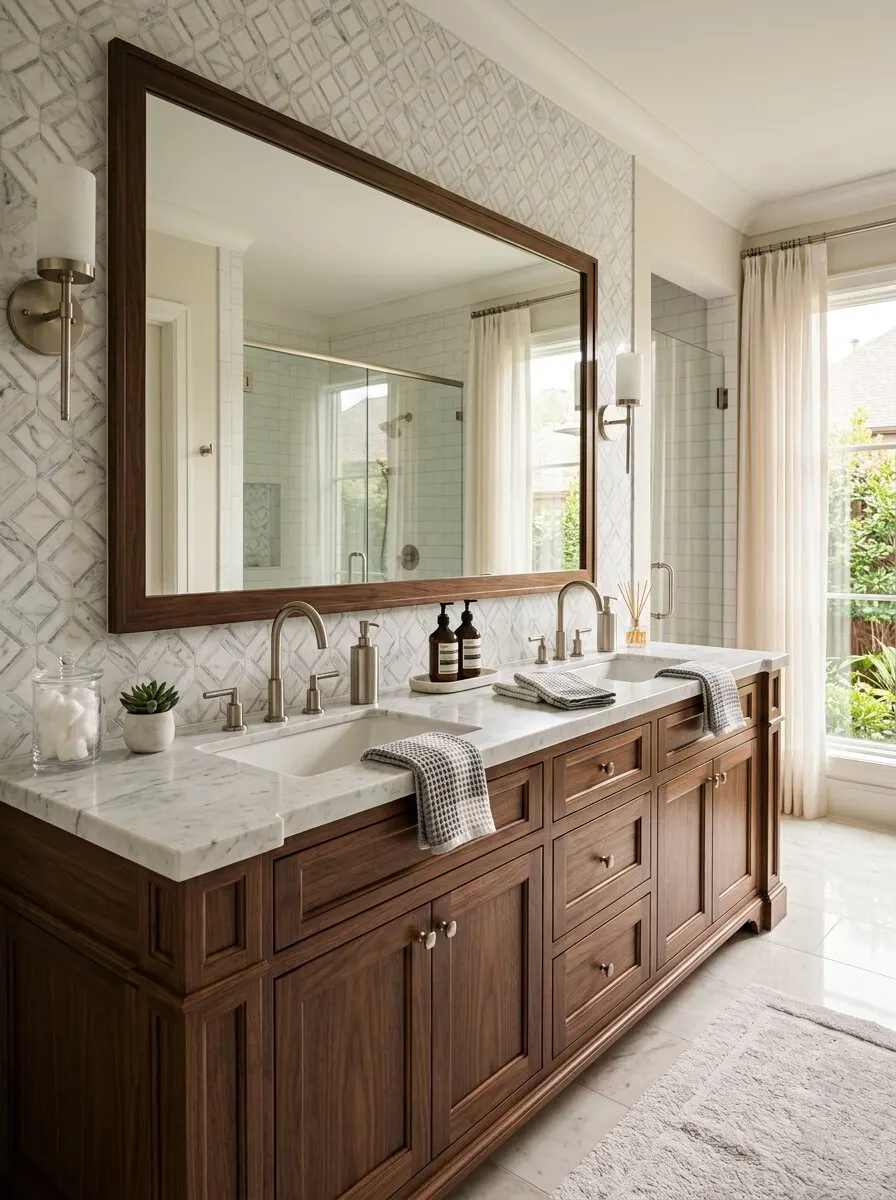
A custom vanity does more for a bathroom's style than almost any other single choice. It is usually the largest piece in the room, it sits at eye level when you walk in, and it anchors the mirror, lighting, countertop and tile around it. A stock vanity forces the room to work around a fixed size and a handful of finishes. A custom piece lets the room's proportions, the home's architecture and your own taste drive the design.
This post is for Houston homeowners updating a primary bath, guest bath or powder room who care about how the space looks and want it to feel finished rather than assembled from a catalog. We will look at the style decisions a custom vanity puts in your hands, from overall form and proportion to wood, finish, hardware and lighting, with notes on what holds up in our humid climate.
For a look at how we design and build vanities from start to finish, see our custom bathroom vanities page.
Proportion: The Style Choice Most People Overlook
The most important style decision is one most people never think about: proportion. A vanity that is slightly too wide, too short or too deep for the room looks off even if every finish is beautiful.
With a custom build, you can tune:
- Width to leave balanced space on each side, or run wall to wall for a built-in look
- Height, typically 32 to 36 inches, to suit the people using it and the style you want
- Depth, often 18 to 22 inches, so a narrow bath does not feel crowded
- Toe kick or legs, which change whether the piece reads as a cabinet or as furniture
- Drawer and door sizes, so the face layout feels balanced rather than dictated by stock sizes
A powder room with a 30-inch-wide floating vanity can feel open and modern. The same room with a 36-inch boxy vanity can feel cramped. Small adjustments make a large difference.
Proportion in older Houston homes
Bathrooms in Houston ranch homes from the 1950s through the 1970s are often narrow, with a tub at one end and the vanity squeezed beside the toilet. Walls are rarely perfectly plumb, and floors on older slabs may have settled slightly. A stock vanity leaves awkward gaps in those rooms, or forces a filler strip that looks like an afterthought. A custom vanity can be scribed to the wall, built a few inches shallower to clear the door swing, and sized to the exact space so it looks like it was always there.
Choosing a Form That Fits the House
Vanity forms fall into a few broad categories. Each brings a distinct feel.
| Vanity form | Style it suggests | Works well in |
|---|---|---|
| Built-in with toe kick | Classic, tailored | Traditional and transitional homes; long primary baths |
| Furniture style with legs | Vintage, airy, collected | Older homes, bungalows, guest baths |
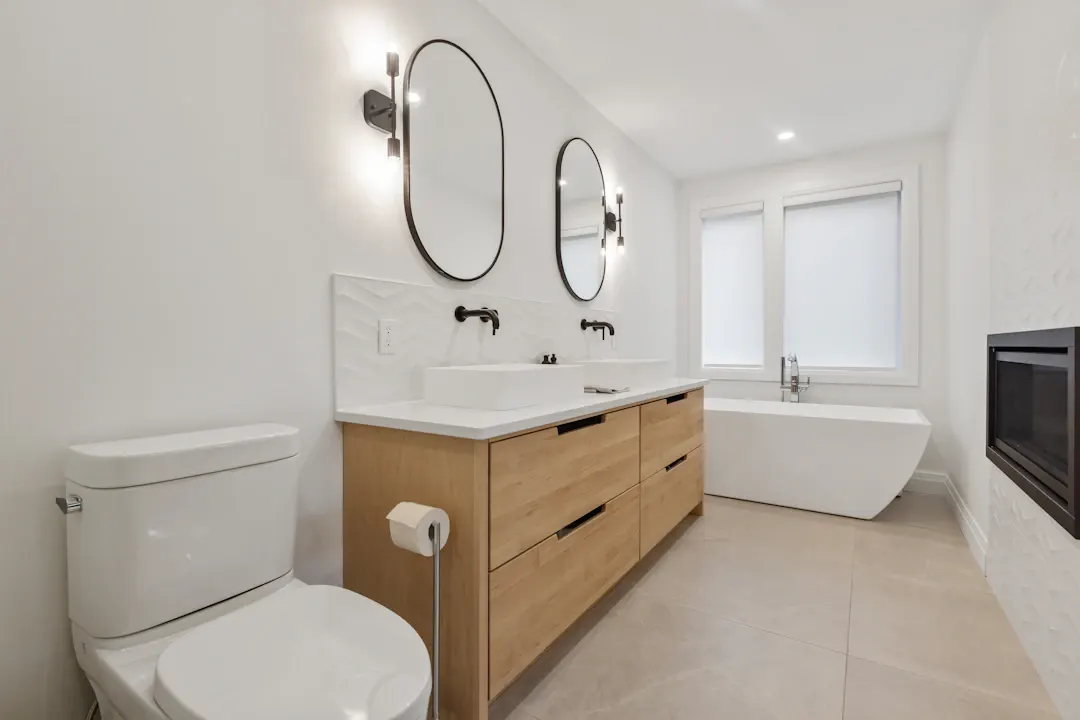
| Floating (wall-hung) | Modern, clean | Contemporary homes, small baths, powder rooms |
| Open-shelf or console | Light, spa-like | Guest baths; homes with storage elsewhere |
| Split vanities with tower | Structured, symmetrical | Large primary baths with long walls |
Matching the form to the house's architecture makes a big difference. A 1950s ranch home in Bellaire might pair well with a simple furniture-style vanity or a clean built-in, while a new contemporary build might call for a floating walnut piece. Our post on matching cabinet style to your home's architecture covers this in more depth.
Different rooms, different style goals
Each bathroom in a house can carry a slightly different personality while still feeling related.
- Primary bath: This is the room you use most, so durable, calm choices tend to wear best. Generous drawer storage, a comfortable height and a finish you will not tire of come first.
- Guest or hall bath: A balance of practicality and character. Kids and guests are hard on finishes, so a wipeable sheen and sturdy hardware matter.
- Powder room: The place for bold moves. A deep painted color, a striking wood, a vessel sink or a sculptural mirror all work well in a room people visit briefly.
Planning all three together, even if you build them at different times, keeps the house feeling cohesive.
Wood, Paint and Finish
Material and finish drive the overall character of a custom vanity more than anything except its shape.
Natural wood
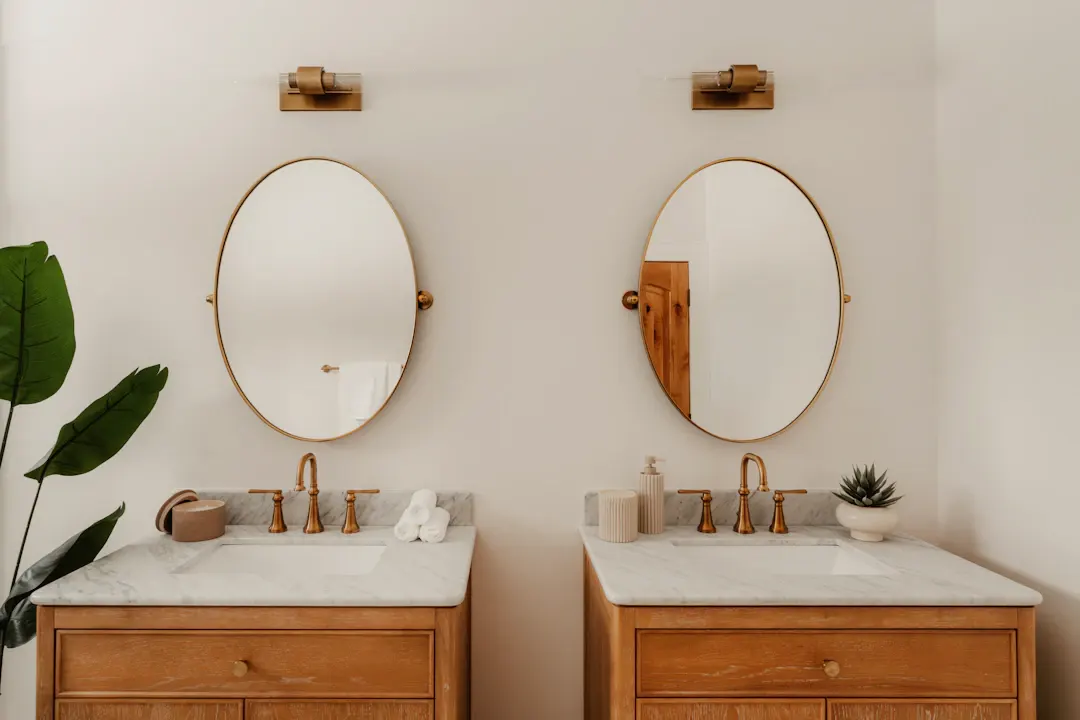
Stained or clear-finished wood brings warmth and texture. White oak reads light and relaxed, walnut reads rich and modern, and cherry reads traditional and warm. Rift-sawn and quarter-sawn oak give a linear, refined grain that suits both modern and traditional rooms.
Painted finishes
Paint offers almost unlimited color. Soft whites and warm grays stay calm and versatile. Deeper colors like navy, forest green or charcoal make a vanity the focal point of the room, which works especially well in powder rooms where a bold choice does not have to be lived with every morning.
Finish sheen and durability
Satin and matte sheens hide fingerprints and water spots better than gloss. In Houston's humid climate, the finish should be applied to every surface, including the back of doors and the inside of drawer boxes, so wood does not absorb moisture unevenly and warp. We build vanities from solid hardwood and furniture-grade plywood, which tolerate bathroom moisture far better than particleboard.
Door Styles and Details
Door profile is a quieter style choice, but it shapes the whole piece.
- Shaker doors are versatile and fit traditional, farmhouse and transitional baths
- Slab doors with no profile suit modern and minimalist rooms, especially in wood veneer
- Inset doors, set flush inside the face frame, read as fine furniture and suit older homes
- Beaded or fluted details add texture and a hint of period character
- Reeded or slat panels have become popular in modern baths for a tactile, spa-like feel
Small details add up: a mitered countertop edge, a scribed side panel that meets an uneven wall, a furniture-style base molding, or a decorative valance between legs. These are the touches that make a vanity look built for its room.
The best details serve a purpose as well as a look. A furniture base molding hides an uneven floor line. A scribed panel closes a gap against an out-of-plumb wall. A slightly thicker countertop edge stands up better to daily bumps from hair tools and cosmetics.
Countertop, Sink and Faucet Pairings
The vanity top and sink are part of the overall look. A few pairings that tend to work:
- Undermount sink with quartz or stone for a clean, classic look that is easy to clean
- Vessel sinks on wood or stone for a more sculptural, spa-like feel
- Integrated solid surface tops for seamless modern lines with no visible sink rim
- Stone slab with a mitered thick edge for a substantial, high-end look
Faucet finish ties into hardware and lighting. Wall-mounted faucets free up counter space and look streamlined, though they require planning the plumbing behind the wall. If your remodel includes new tile or stone, our interior tile and stone work team can coordinate the backsplash and floor with the vanity.
Hardware, Mirrors and Lighting
Hardware is the jewelry of a vanity. A change from chrome knobs to unlacquered brass pulls can shift a vanity from builder-basic to custom-looking. Some general guidance:
- Bar pulls suit modern and transitional vanities
- Cup pulls and bin pulls suit traditional and farmhouse styles
- Knobs on doors with pulls on drawers is a classic combination
- Edge pulls or integrated finger grooves keep slab fronts clean
In coastal homes near Galveston or in Brazoria County, choose finishes rated for humid and salty conditions, since some raw metals tarnish quickly there. Our guide on how to choose cabinet knobs, pulls and hardware has more detail.
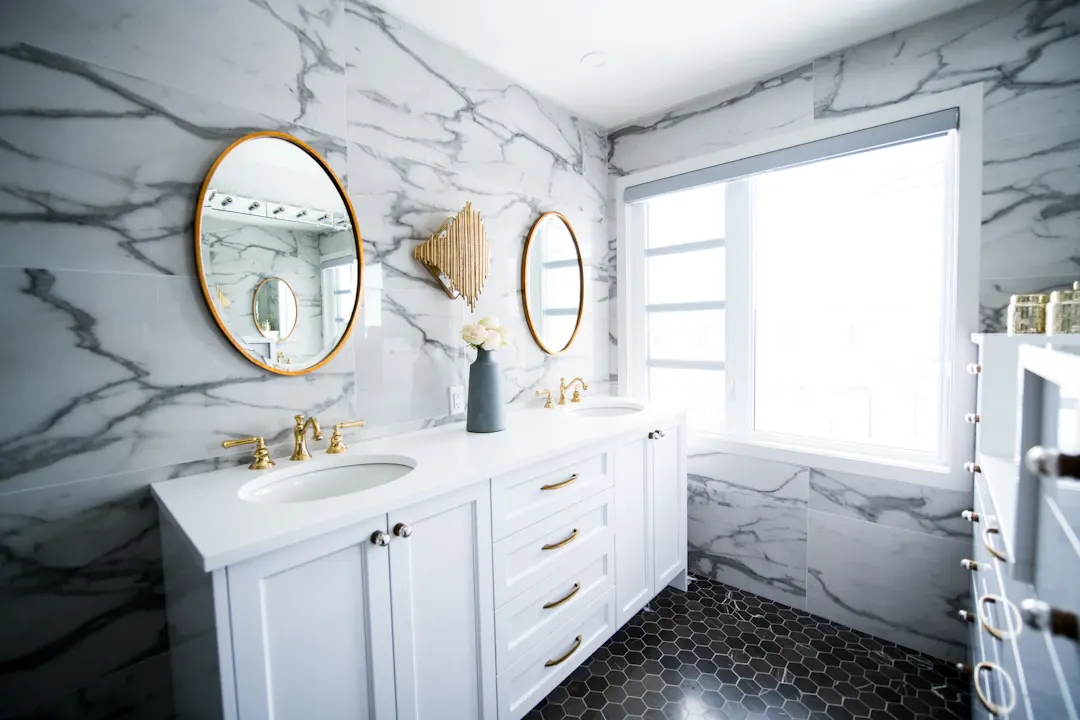
Mirrors and lighting should be planned with the vanity. Two mirrors over a double vanity emphasize symmetry. A single wide mirror makes a room feel larger. Sconces at face height on either side of a mirror give even, flattering light, while a single fixture overhead can cast shadows. Integrated lighting, such as an LED strip under a floating vanity, adds a soft glow at night.
Letting a Custom Vanity Pull the Room Together
A custom vanity sets the tone for the rest of the bathroom. When planning, think about the room as a whole:
- Repeat a wood tone from the vanity in a shelf, mirror frame or trim
- Keep metal finishes consistent or deliberately mixed, but not random
- Let one element be the star, whether that is the vanity, the tile or the mirror
- Choose a color palette of two or three main tones plus accents
Style and function go hand in hand. A beautiful vanity that does not store what you need will frustrate you every morning. Our companion post on how custom vanities transform a bathroom focuses on the storage and layout side of the same decision. If you are updating the whole room, our bathroom remodel service handles tile, plumbing changes and lighting alongside the vanity.
Start With a Free In-Home Estimate
The right custom vanity is designed for the room it lives in. Our team will measure your bathroom, talk through the look you want, bring real wood and finish samples, and give you a written estimate. We build every vanity in our Houston shop and install it with the same crew.
Request a free in-home estimate, or call (281) 660-3903 Monday through Friday, 8am to 5pm.
Frequently asked questions
What vanity style works best in a small bathroom?
Should my vanity match my kitchen cabinets?
Is a stained wood vanity a good idea in a humid bathroom?
How much does the vanity affect the overall look of a bathroom?
Planning a project like this?
Get a free in-home estimate from the team that builds and installs the work.