Semi-Custom vs Custom Cabinets: Houston Value Test
When homeowners start pricing new kitchen cabinets, they usually find two camps. Semi-custom lines from large manufacturers, sold through showrooms and dealers, and true custom cabinets built by a local shop. The question is not which is "better" in the abstract. It is which one gives you more value for your specific kitchen and how long you plan to live with it. That is what this semi-custom vs custom cabinets value test is for.
This post is for Houston-area homeowners comparing quotes, whether you are upgrading builder-grade cabinets in a newer home or replacing worn originals in an older one. Instead of repeating marketing claims from either side, we will lay out a series of practical tests you can apply to any two quotes.
We build custom cabinets, so we have a point of view. But semi-custom is the right answer for some kitchens, and we will say where.
What You Are Actually Comparing
The terms get used loosely, so here is how we define them.
Semi-custom cabinets are factory-built from a catalog of standard box sizes, typically in 3-inch width increments. You choose from a set list of door styles, finishes and wood species. Most lines allow modifications, such as reduced depth, extended stiles or added end panels, each for an upcharge. Box construction varies by line and tier.
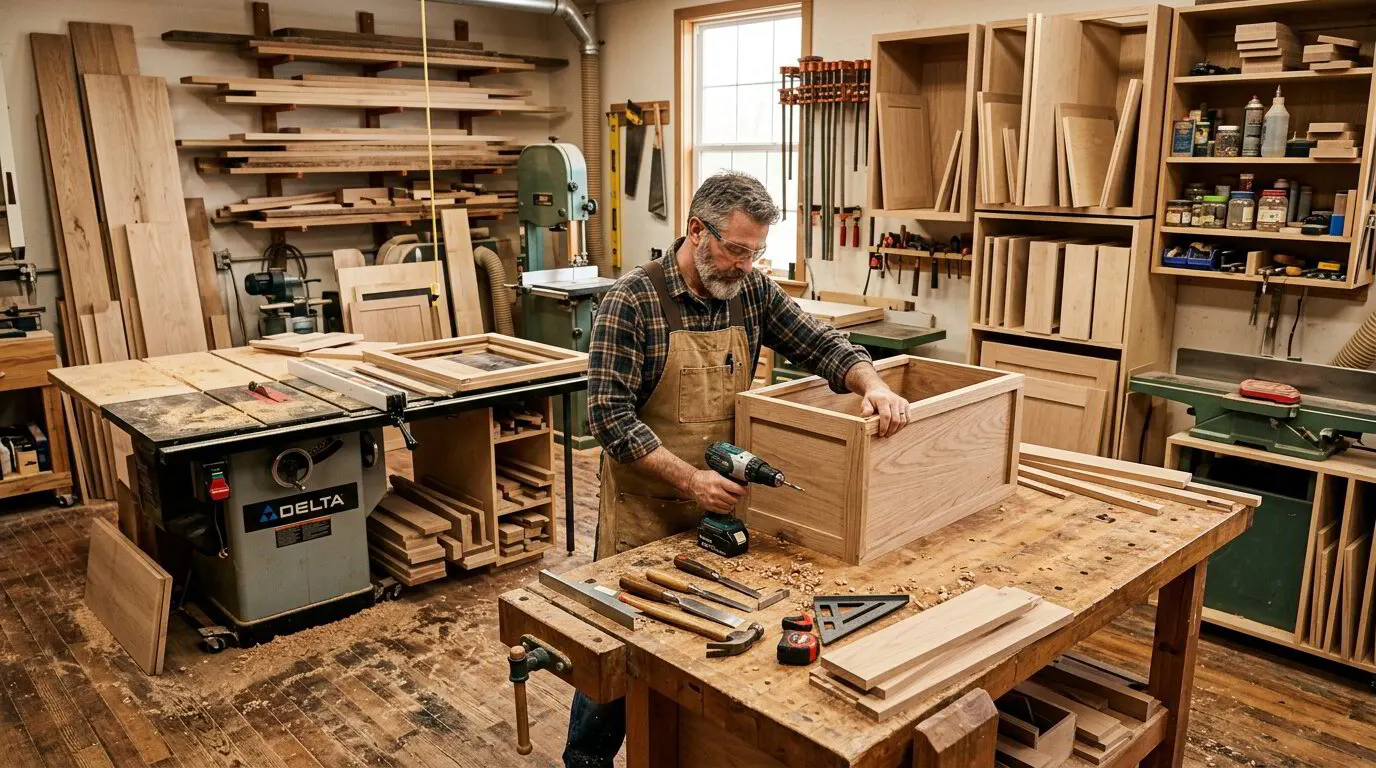
Custom cabinets are designed for your room and built to order. Width, height and depth can be any dimension. Materials, door profiles, finishes, interior fittings and details like integrated panels are all selected for your project. Quality depends heavily on the shop building them.
For a wider view that includes stock cabinets, see stock vs semi-custom vs fully custom cabinets.
Semi-Custom vs Custom Cabinets: The Six-Part Value Test
Each of the tests below can be applied to any pair of quotes. None of them requires you to trust a salesperson. They just require asking specific questions and getting specific answers in writing.
Test 1: Does the Room Fit Standard Sizes?
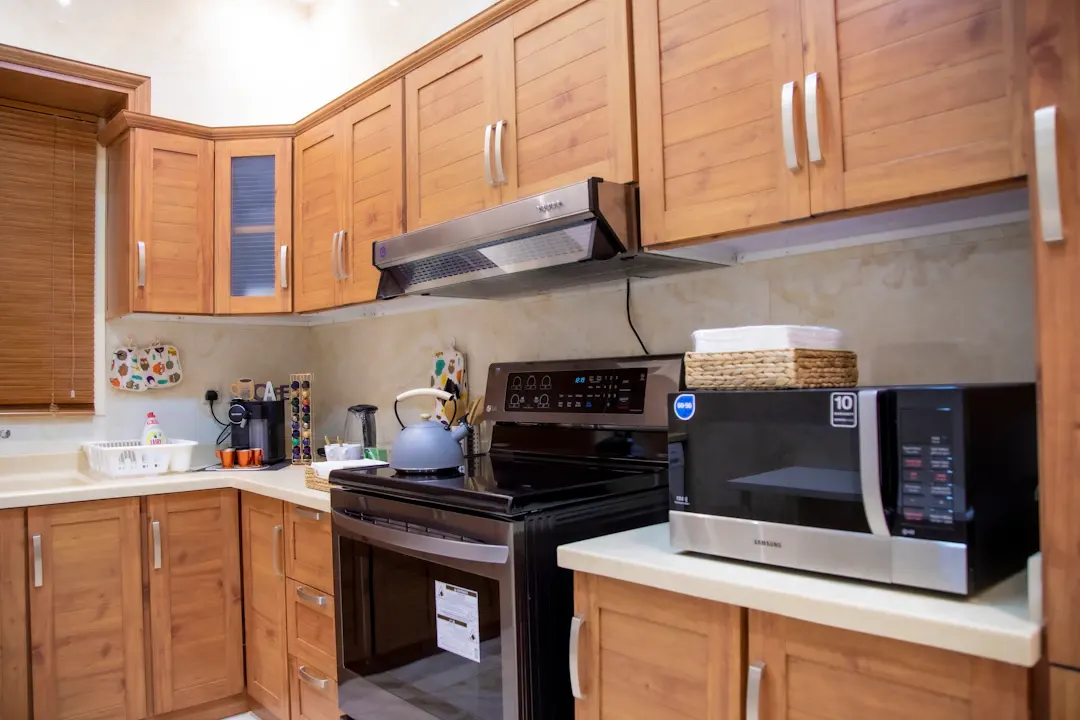
Semi-custom cabinets work best in rooms with straight walls, square corners and dimensions that land close to 3-inch increments. Any leftover space gets covered with filler strips.
Houston kitchens often do not cooperate. Older ranch homes from the 1950s through the 1970s frequently have walls that bow, corners that are not square and floors that have settled on the slab. Even new construction can have openings that are off by a fraction of an inch.
A few fillers are normal. But when a layout needs wide fillers at both ends of a run, around a window or next to appliances, you lose usable storage and the kitchen looks less finished. Custom cabinets are sized to the actual wall, so the space goes to drawers and doors instead of filler.
How to apply the test: Ask each supplier to show you the total filler width in the layout. If it adds up to more than a few inches across the kitchen, that is storage and appearance you are giving up.
Test 2: What Are the Boxes Made Of?
This is where Houston conditions matter most. Our air is humid for much of the year, and kitchens see steam from cooking, dishwashers and sinks. Boxes made from particleboard or low-density fiberboard can swell when water gets in at an edge, and swelling does not reverse.
Many semi-custom lines offer plywood boxes as an upgrade rather than the default. Ask specifically about:
- Box sides, back and bottom material
- Sink base construction
- Shelf thickness and material
- Drawer box construction (dovetailed solid wood vs. stapled)
- Face frame material
We build with solid hardwood face frames and furniture-grade plywood boxes as standard. When you compare quotes, make sure both are priced with the same box material, or the comparison is not fair.
Test 3: How Much Storage Do You Actually Get?
Two kitchens with the same footprint can hold very different amounts. Storage depends on drawer count, interior organization, corner solutions and how tall the uppers go.
Custom builds can take uppers to the ceiling, which eliminates the dust shelf above standard 30- or 36-inch cabinets. They can use a full-depth pantry with roll-outs sized to your containers, or drawers sized for a specific set of pots. Semi-custom lines offer many of these accessories too, but within standard box sizes and often at a premium per item.
Count the usable drawer and shelf space in each design, not just the number of cabinets.
Test 4: Cost Per Year of Use
Upfront price is the number everyone compares. Cost per year of use is the more honest number.
The table below uses general planning ranges for a mid-size Houston kitchen of roughly 25 to 30 linear feet of cabinets. These are not quotes. Real costs vary widely by size, materials, finish and site conditions.
| Factor | Semi-custom (mid tier) | Custom (local shop) |
|---|---|---|
| Cabinets installed, planning range | $15,000-$35,000 | $20,000-$50,000+ |
| Standard box material | Often particleboard, plywood upgrade | Plywood standard (at our shop) |
| Sizing | 3-inch increments plus fillers | Any dimension |
| Modifications | Upcharge per item | Built in |
| Typical expected service life | 10-20 years, depending on materials | 20-30+ years with care |
| Repair and adjustment | Through dealer or manufacturer | Directly with the builder |
If a semi-custom kitchen costs $25,000 and needs replacement or major repair at 15 years, that is about $1,667 per year. If a custom kitchen costs $35,000 and lasts 30 years, that is about $1,167 per year. Your numbers will differ, but running this math with your own quotes and plans often changes the conversation.
Test 5: Who Installs, and Who Answers the Phone Later?
Installation quality determines how cabinets look and function as much as the cabinets themselves. Semi-custom cabinets are usually installed by a dealer's subcontractor or a separate contractor. When something goes wrong, the dealer, the manufacturer and the installer may each point at the others.
With a local custom shop, the same team often designs, builds and installs. At Ace Kustoms, our in-house crew installs everything we build, with no subcontracted install crews. If a door needs adjusting a year later, there is one number to call.
Ask both suppliers:
- Who will install the cabinets, and are they employees or subcontractors?
- Who handles warranty issues, and what does the warranty cover?
- Who levels and scribes the cabinets to the walls and floor?
- Who coordinates countertop templating?
Test 6: Will the Finish Hold Up?
A cabinet's finish takes daily abuse: wet hands, cleaning sprays, grease near the range, and the constant opening and closing of doors. In Houston, humidity adds another stress, because wood moves slightly as moisture levels change through the year. A brittle finish can crack at the joints of a painted door, and a thin finish wears through at the edges near the sink and trash pull-out.
Ask each supplier what finish system they use, how many coats are applied, and whether it is sprayed in a controlled booth or applied on site. Ask how painted doors are built, since a five-piece painted door will show a hairline at its joints as the seasons change, and that is normal wood movement, not a defect. Find out what the warranty says about finish wear. Finally, ask whether touch-up kits or matching finish will be available years later. With a local shop, matching an existing finish for a new piece or a repair is usually much easier than ordering from a factory line that may have been discontinued.
When Semi-Custom Is the Smart Choice
Semi-custom wins in some cases, and it is worth being clear about them:
- Short ownership. If you plan to sell within a few years, the lifespan advantage of custom matters less.
- Straightforward layouts. A square room with standard appliance openings fits catalog sizes well.
- Rental properties. Durable, simple semi-custom cabinets can be a sensible choice for a rental.
- Tight budget with plywood upgrade. A mid-tier semi-custom line with plywood boxes can be good value if the layout is simple.
When Custom Delivers More Value
Custom tends to pull ahead when:
- The kitchen has odd dimensions, sloped ceilings, or out-of-square walls
- You want specific storage like a baking center, appliance garage or full-height pantry
- You plan to stay in the home for ten years or more
- You want a particular wood species, stain or painted finish not in a catalog
- The project includes matching pieces elsewhere, like a bar, built-ins or a vanity
- Humidity and moisture resistance are priorities, as they should be in Houston
For more on this decision, read when custom cabinets are a worthwhile investment. If you live west of the city, custom vs. semi-custom cabinets in Katy covers new-construction scenarios common there.
How to Run the Test With Your Own Quotes
Gather at least two quotes and put them side by side. Make sure each one lists:
- Box, shelf and face frame material
- Door style and species
- Drawer box construction and slide type
- Hinge type (soft-close concealed vs. standard)
- Total filler width
- Installation, including who performs it
- Delivery, demolition and disposal
- Warranty terms
If one quote is missing items, ask for them before comparing totals. Quotes often differ more in what they include than in the price of the cabinets themselves.
Test Your Kitchen With a Free In-Home Estimate
The value test is easiest to run with real numbers for your actual kitchen. Ace Kustoms has built cabinets across Greater Houston for over 15 years, using solid hardwoods and furniture-grade plywood, built in our own Houston shop and installed by our own team. Our custom kitchen cabinets page shows what we offer, and our kitchen remodels page covers full projects.
Schedule a free in-home estimate and bring your semi-custom quote along. We will walk through the comparison with you honestly. Contact us or call (281) 660-3903 Monday through Friday, 8am to 5pm.
Frequently asked questions
What is the main difference between semi-custom and custom cabinets?
Are custom cabinets always more expensive than semi-custom?
Do semi-custom cabinets hold up in Houston humidity?
How long does it take to get custom cabinets?
Planning a project like this?
Get a free in-home estimate from the team that builds and installs the work.