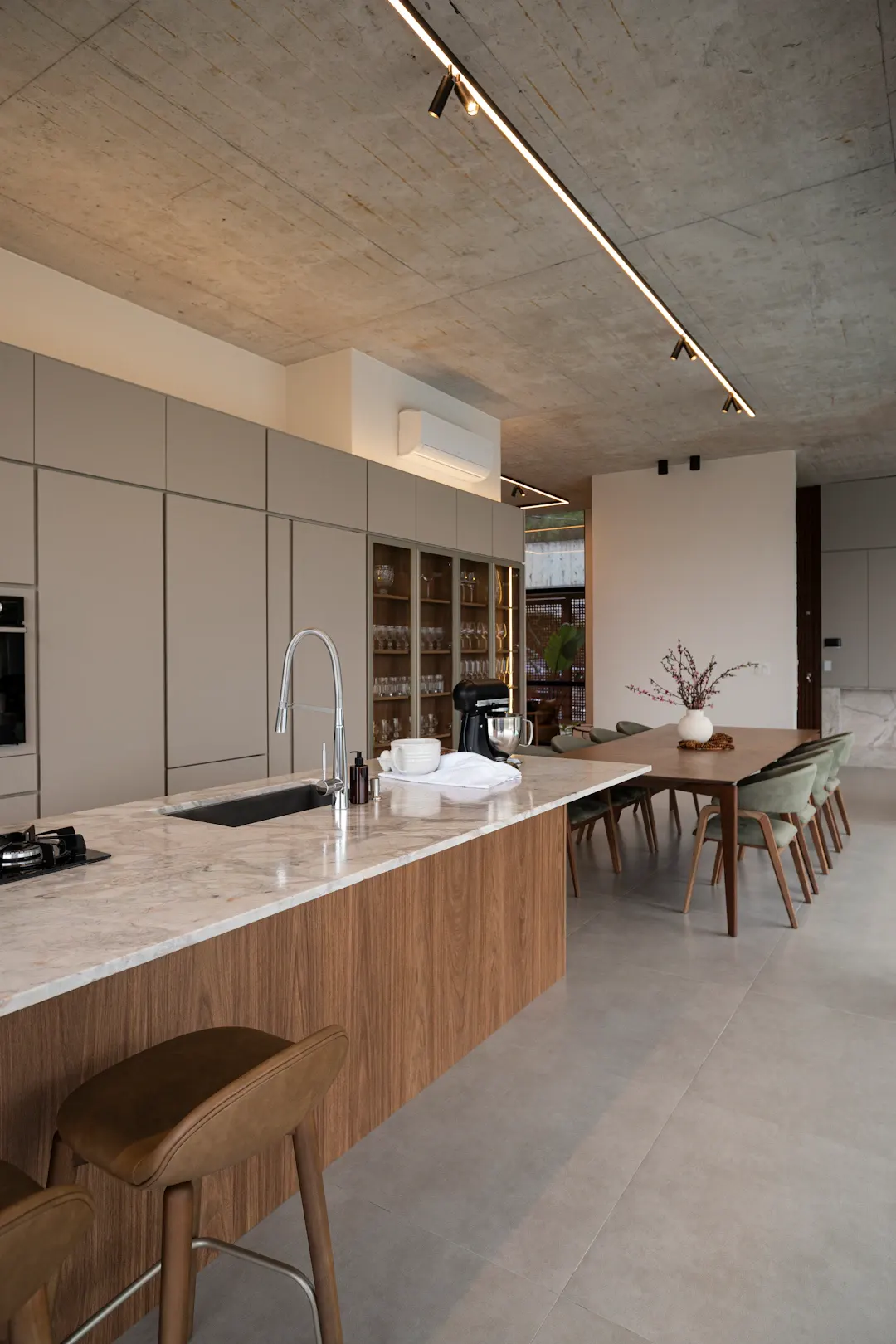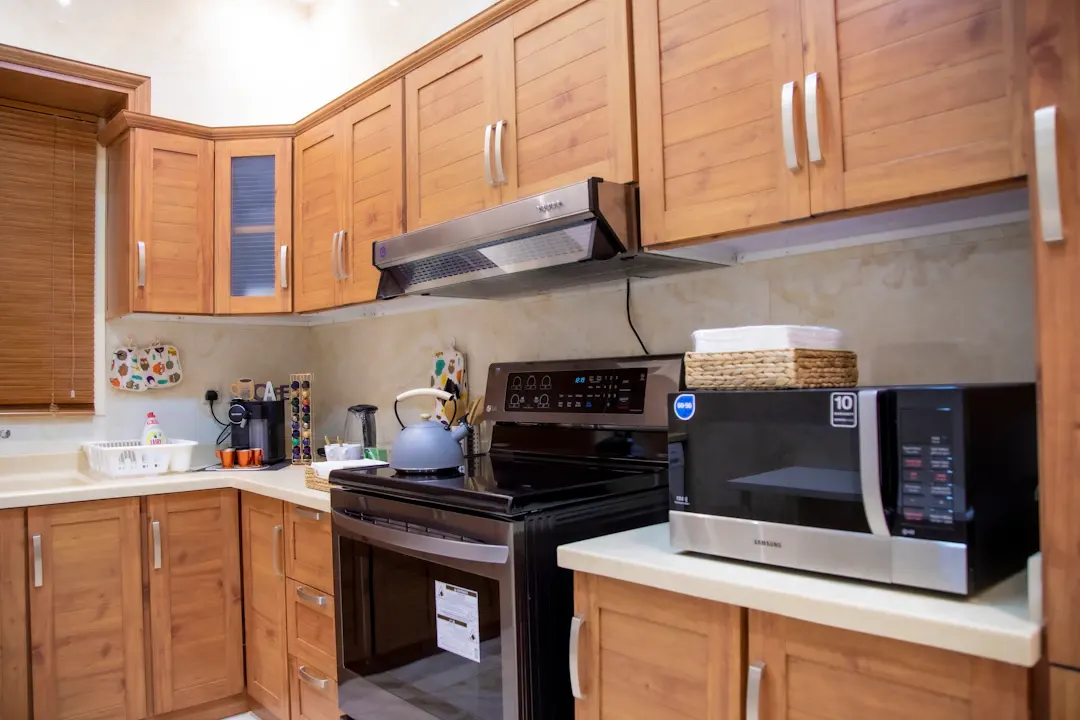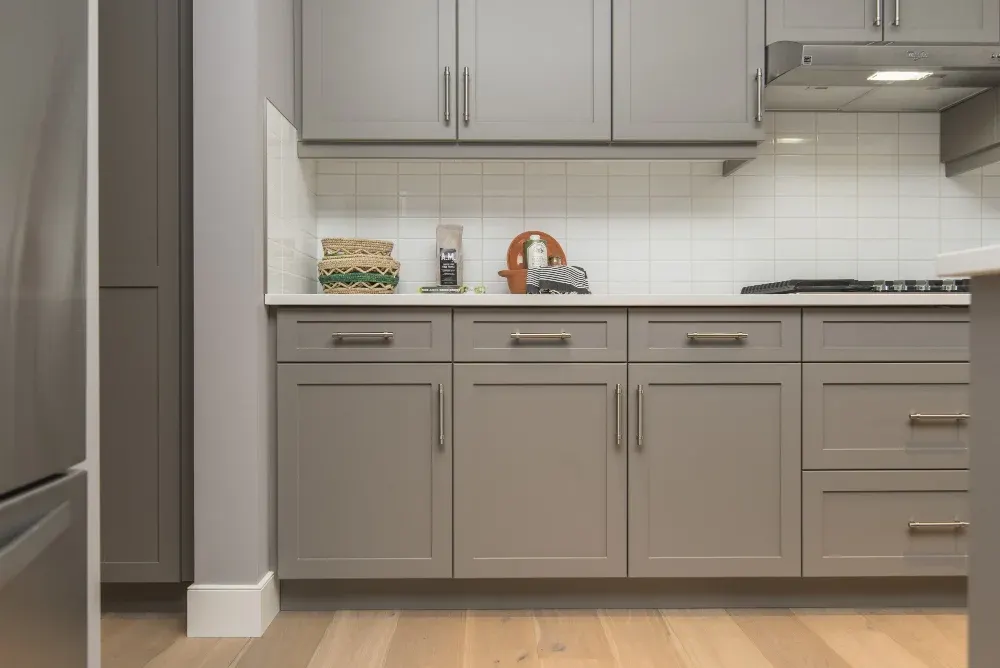
Stock vs Semi-Custom vs Fully Custom Cabinets
Shopping for cabinets means sorting through three broad categories, and each one is sold with its own vocabulary. Stock cabinets sit in warehouse boxes, semi-custom cabinets come from a factory catalog with options, and fully custom cabinets are designed and built for one room. Understanding stock vs semi-custom vs fully custom cabinets helps you read quotes correctly and decide where your budget does the most good.
This guide is for Houston-area homeowners at the start of a kitchen, bathroom or built-in project who want a clear picture of the three tiers before visiting showrooms. We will explain how each type is made, what you can and cannot change, typical planning costs, how each holds up in a humid climate, and where each one makes the most sense.
You do not have to use the same tier throughout the house. Plenty of homes mix them based on how hard each room works.
The Three Tiers in Plain Terms
Stock cabinets
Stock cabinets are made in high volume in a fixed set of sizes, usually in 3-inch width increments, with a short list of door styles and finishes. Big-box stores carry many of them, and some are available the same week. Assembly ranges from fully assembled to flat-pack.
What you get is what is in the catalog. If your wall is 113 inches long, you combine standard boxes to get close and fill the gap with filler strips.
Semi-custom cabinets
Semi-custom cabinets also start from standard box sizes, but with a much larger catalog of styles, species, finishes and accessories. Most lines allow modifications such as reduced depth, taller uppers, or extended stiles, usually at an added cost for each change. Box material often comes in tiers, with plywood as an upgrade.
Fully custom cabinets
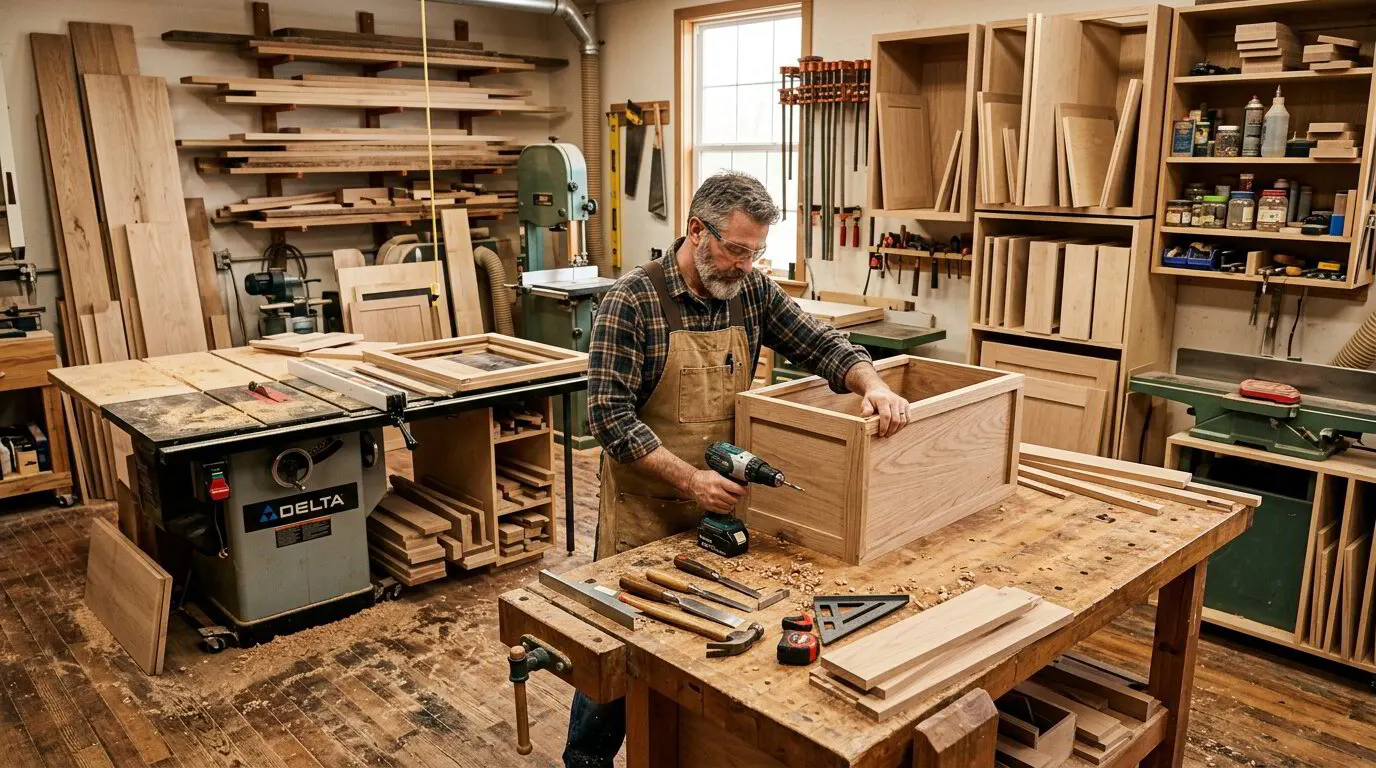
Fully custom cabinets are built to order for a specific room. Every dimension is set by your walls, ceiling and appliances. You choose the wood species, door profile, finish, interior layout and details. A local shop like ours designs, builds and installs them, so the cabinets are made to fit conditions found during the in-home measure, not just a drawing.
Stock vs Semi-Custom vs Fully Custom Cabinets: Comparison Table
The table below lays out the main differences. Cost ranges are general planning numbers for a mid-size Greater Houston kitchen with cabinets installed, not including countertops. Actual pricing varies by size, materials, finish and site conditions, so always get a written estimate.
| Factor | Stock | Semi-custom | Fully custom |
|---|---|---|---|
| Sizing | Fixed, 3-in. increments | Standard plus modifications | Any dimension |
| Styles and finishes | Limited | Wide catalog | Unlimited within shop capability |
| Typical box material | Particleboard | Particleboard or plywood (upgrade) | Plywood at quality shops |
| Drawer boxes | Stapled or basic | Varies by tier | Dovetailed or quality joinery |
| Lead time | Days to a few weeks | Several weeks | Several weeks, design included |
| Installed planning range | $6,000-$15,000 | $15,000-$35,000 | $20,000-$50,000+ |
| Best fit | Rentals, utility spaces, tight budgets | Standard layouts, mid budgets | Odd spaces, long ownership, specific needs |
How Construction Differs
The door is what you see, but the box is what determines how long a cabinet lasts. This is where the three tiers separate most clearly.
Box material. Particleboard is dense and flat but weak when wet. Once water gets into an edge, at the sink base or beside the dishwasher, it swells and crumbles. Plywood is made from layered veneers, holds screws better and tolerates moisture far better. In Houston, where humidity is high and kitchens see steam daily, this difference shows up within a few years.
Face frames. Many stock and semi-custom lines use thin frames or frameless construction with particleboard edges. Solid hardwood face frames add rigidity and give hinges a strong mounting surface.
Drawer construction. Stapled drawer boxes with thin bottoms are common in stock cabinets and can loosen under heavy loads. Dovetailed or well-joined drawer boxes on full-extension slides handle pots, pans and daily use for decades.
Finishes. Factory finishes on stock cabinets are often thin. Higher-end semi-custom and custom finishes are typically multi-coat systems that resist moisture and wear.
We build every box from furniture-grade plywood with solid hardwood face frames. No particleboard boxes. Our custom kitchen cabinets page describes the materials and options in more detail.
Fit, Fillers and Odd Spaces
Houston homes are full of conditions that do not match a catalog. Older ranch homes have settled slabs and walls that bow. Newer homes may have soffits, angled walls or windows placed close to corners. Second-floor game rooms and bonus spaces often have sloped ceilings.
Stock cabinets handle these with fillers, which cost storage and can look improvised. Semi-custom cabinets handle many of them with modifications, though each adds cost and lead time. Fully custom cabinets are drawn around the room from the start, which is why they shine in:
- Kitchens with uneven walls or out-of-level floors
- Built-ins around fireplaces, windows or under stairs
- Bathrooms with narrow or unusual vanity walls
- Rooms with sloped ceilings or tall ceilings that call for stacked uppers
- Spaces where a few extra inches of storage make a real difference
Beyond kitchens, the same reasoning applies to custom cabinetry and built-ins throughout the house, and to custom bathroom vanities for tight or irregular bathrooms.
Where Each Tier Makes Sense
Each tier earns its place somewhere. Here is a simple way to match them to projects:
- Stock cabinets are a reasonable choice for a garage workbench area, a basic utility room, a rental property or a short-term fix before selling, as long as you understand the material limits.
- Semi-custom cabinets work well for kitchens with standard dimensions where you want a wider selection of styles and can upgrade to plywood boxes.
- Fully custom cabinets make the most sense for kitchens you plan to keep for many years, rooms with irregular dimensions, specialty storage needs, and built-ins that need to look like part of the house.
Mixing tiers across one house
Many households do not need the same level of cabinetry in every room. A practical approach is to rank spaces by how hard they work and how visible they are. The kitchen is usually at the top: it sees water, heat, heavy loads and constant use, and it is the room buyers look at first. Primary bathroom vanities and living room built-ins come next, because they are visible and need to fit their walls precisely.
Lower on the list are spaces like a garage, a storage room or a rental unit, where function matters more than finish and a simpler cabinet may be fine. Even there, think about conditions. A Houston garage gets hot and humid in summer, and particleboard cabinets in a garage that floods occasionally will not last. Plywood or purpose-built custom garage cabinets may be worth it if the space gets real use.
The one place to avoid mixing is within a single room. Matching a custom island to stock perimeter cabinets, or vice versa, rarely works because finishes, door details and reveal gaps differ.
If you are comparing pre-made options more broadly, our post on custom cabinets vs pre-made options goes deeper, and custom cabinets vs. IKEA in Houston covers the flat-pack question specifically.
Hidden Costs Between the Tiers
Comparing sticker prices can be misleading. Lower-tier cabinets sometimes carry costs that show up later or elsewhere.
Installation labor. Stock and flat-pack cabinets may need assembly, more shimming and more filler work. Installers often charge more to make them fit well.
Modifications. In semi-custom lines, each modification adds up. A kitchen with many changes can approach custom pricing.
Replacement timeline. A cabinet that needs replacement in 10 years instead of 25 costs more over the life of the home.
Repairs. Swollen sink bases, failed drawer bottoms and stripped hinge screws are common repair calls with lower-grade materials.
Countertop risk. Natural stone is heavy. Weak boxes on an uneven slab foundation can flex, and a flexing base is one of the causes of cracked stone near sink cutouts.
Living with compromises. This cost does not show on an invoice. A corner that cannot be reached, a drawer too shallow for your pots, or a pantry with no room for the stand mixer are small daily frustrations that add up over years of ownership. Planning storage around what you actually own is one of the quiet advantages of building to order.
For a direct look at upfront cost versus long-term value, see our semi-custom vs custom cabinets value test.
Questions to Ask Any Cabinet Supplier
Whatever tier you lean toward, ask the same questions of every supplier so you can compare fairly:
- What are the box sides, bottom and back made of?
- What is the face frame material?
- How are drawer boxes built, and what slides are used?
- Are hinges soft-close concealed hinges?
- What finish system is used, and how many coats?
- How much filler is in my layout?
- Who installs, and are they employees or subcontractors?
- What does the warranty cover, and for how long?
Get the answers in writing. Quotes that leave these out are hard to compare.
Talk Through Your Options With a Free Estimate
The right cabinet tier depends on your room, your budget and how long you plan to stay. Ace Kustoms has been building custom cabinetry in Greater Houston for more than 15 years. Our in-house team handles design, shop fabrication and installation, using solid hardwoods and furniture-grade plywood, and we will tell you plainly if a simpler option makes more sense for a particular space.
Schedule a free in-home estimate to see real samples and get a written quote for your project. Contact us or call (281) 660-3903 Monday through Friday, 8am to 5pm.
Frequently asked questions
What are stock cabinets?
Can I combine stock, semi-custom and custom cabinets in one house?
Do fully custom cabinets take longer to get?
Which cabinet type is best for resale?
Planning a project like this?
Get a free in-home estimate from the team that builds and installs the work.