Sustainable Cabinet Color Schemes That Age Well
Most people think of sustainability in cabinetry as a materials question: what the boxes are made of and where the wood came from. Color matters just as much. A kitchen painted in a color you tire of in four years is likely to get repainted, refaced or torn out long before the cabinets wear out. Sustainable cabinet color schemes are the ones you can live with for decades, which keeps materials out of the landfill and money in your pocket.
This post is for Houston-area homeowners choosing colors and finishes for new cabinets, built-ins or vanities who want a scheme that ages gracefully. We will cover what makes a color last, which palettes tend to hold up, how finish type and maintenance fit in, and how Houston light and humidity affect the choice.
Nothing here is about avoiding personality. It is about putting bold choices where they are easy to change and keeping the long-lived parts of the room calm.
What "Sustainable" Means for Cabinet Color
A sustainable color scheme does three things.
- It outlasts trends. You still like it in fifteen years, so you do not replace sound cabinets for appearance alone.
- It wears well. The finish hides normal use and can be touched up or refreshed rather than stripped.
- It works with fixed elements. It suits your flooring, countertops, trim and architecture, so it does not force other replacements.
The most wasteful kitchen is one with perfectly good boxes that gets torn out because the color no longer feels right. Cabinets built from solid hardwood and furniture-grade plywood can last for decades. A color scheme should be chosen to match that lifespan. For more on materials and finishes, see our eco-friendly custom cabinetry planning guide.
Build so the color can change later
The most sustainable scheme also plans for its own future. Even a well-chosen color may need to change someday, whether because of a new countertop, a shift in taste or a sale. Cabinets built from solid wood and plywood can be sanded, primed and refinished, sometimes more than once. Particleboard boxes wrapped in thermofoil or vinyl usually cannot. Once the wrap peels or yellows, the only option is replacement.
A few construction choices make future refinishing easier:
- Solid hardwood face frames that can be sanded without breaking through a thin veneer
- Doors and drawer fronts made from materials that accept paint or stain well
- Removable hardware with standard hole spacing, so new pulls fit the old holes or the holes can be filled cleanly
- Shop-applied finishes with a known system, so the same finish can be matched or recoated
Thinking this way turns the cabinets into a long-term asset rather than a single-use product. If the color does change in fifteen years, the boxes, frames and drawers keep working underneath.
Sustainable Cabinet Color Schemes That Hold Up
Some palettes have a long track record of staying comfortable. Here are the families we see age best in Houston homes.
Natural wood tones
White oak, red oak, walnut, maple and cherry in clear or lightly tinted finishes are hard to date. Wood also changes gracefully as it ages: cherry darkens to a rich red-brown, and oak mellows. Wood tones hide fingerprints and small dings better than solid paint, and a worn area can often be refreshed without refinishing the whole door.
Warm whites and soft off-whites
A bright, cool white can feel stark and shows every smudge, but warmer whites and creams tend to stay pleasant. They pair with nearly any countertop and floor. The tradeoff is cleaning: light painted cabinets show grime near handles and the trash pull-out, so a durable finish matters.
Muted greens and blues
Sage, olive, slate blue and soft navy have become popular, and the muted versions tend to hold up better than bright, saturated ones. These colors have a long history in traditional kitchens, which is part of why they do not feel trendy.
Warm grays and greige
Cool, blue-leaning grays were everywhere in the 2010s and can now feel dated in some homes. Grays with warm undertones, closer to greige or taupe, have aged better and work with both wood floors and stone.
Two-Tone Schemes That Stay Balanced
Two-tone kitchens can age well if the combination is anchored by something timeless. The most durable pattern pairs one quiet, long-lived color with one accent, and puts the accent where it is easier to change.
| Approach | Example | Why it ages well |
|---|---|---|
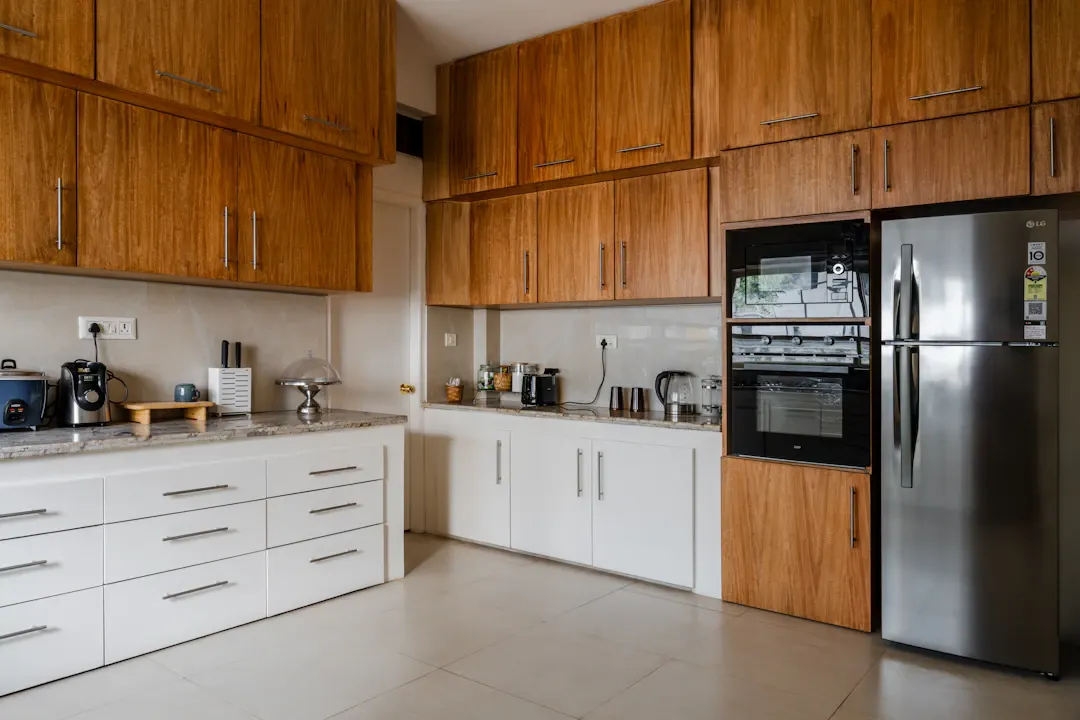
| Wood uppers, painted lowers | Walnut uppers, warm white lowers | Wood stays timeless; lower paint can be refreshed |
| Painted perimeter, wood island | Off-white perimeter, white oak island | Island adds warmth without dominating |
| Painted perimeter, colored island | Soft white perimeter, navy or green island | Accent is limited to one piece |
| Wood perimeter, painted island | Natural oak perimeter, muted sage island | Island color can change without touching walls |
A good rule is that the accent color should cover no more than about a third of the cabinetry. Then, if you tire of it, refinishing an island is a far smaller job than redoing the whole kitchen.
Colors and Choices That Date Quickly
Trends are not bad. They just belong in places that are easy to change. Be cautious with:
- Very saturated colors across all cabinets, such as bright teal or primary red
- High-gloss lacquer in a busy family kitchen, which shows every scratch and fingerprint
- Stark black-and-white contrast with no warm element to soften it
- Heavily distressed or glazed finishes, which tie a kitchen to a specific era
- Trend-specific hardware finishes paired with trend-specific colors, which compound each other
If you love a bold color, consider using it on a custom bar, a laundry room, a mudroom bench or a powder room vanity. These spaces are smaller, easier to refinish and still give you a place to enjoy the color. For a broader look at this tradeoff, see timeless vs trendy renovation choices for resale.
Finish Type, Wear and Refinishing
Color is only part of the scheme. The finish determines how the color looks after years of daily use.
Stained or clear-coated wood. Wear tends to blend into the grain. Touch-up is usually simple, and a full refinish involves cleaning, light sanding and a new topcoat rather than stripping.
Painted wood or MDF. Paint gives a clean, uniform look, but chips at edges show more, especially on light colors. A shop-applied, multi-coat finish is much tougher than paint brushed on site. Keep a small amount of matching finish for touch-ups.
Sheen level. Matte and satin finishes hide fingerprints and small scratches better than gloss. Very flat finishes can be harder to clean, so many kitchens land on a satin or low-sheen finish.
Low-VOC and waterborne finishes. Many modern shop finishes release fewer fumes and still perform well on cabinets when applied correctly. Ask your cabinetmaker what they use and how it holds up to cleaning.
How Houston Light and Humidity Affect Color
Color choices made in a showroom often look different at home. Houston conditions add a few specific considerations.
Strong sun. Bright afternoon light through west-facing windows can make warm colors look yellow and can fade some stains over time. UV-filtering window film or shades help protect finishes.
Humidity and wood movement. Painted five-piece doors may show hairline lines at joints as wood expands and contracts through Houston's seasons. This is normal, but on dark painted colors those lines can be more noticeable. Stained wood hides this movement more easily.
Coastal air. In Galveston and Brazoria County, salt air can affect hardware finishes and some coatings. Durable finishes and corrosion-resistant hardware matter more near the coast.
Lighting. Under-cabinet LEDs come in different color temperatures. A warm white light flatters wood and warm paint colors, while very cool light can make whites look blue and grays look cold.
Always look at real samples in your own room, in morning and evening light, before committing. A sample door next to your flooring and countertop tells you more than any photo.
A Practical Way to Choose Your Scheme
Here is a step-by-step approach that keeps the result calm and long-lasting:
- List fixed elements. Flooring, countertops, fireplace stone, trim color and anything else you are not replacing.
- Pick the long-lived base. Choose a wood tone or quiet neutral for the main run of cabinets.
- Decide where an accent goes, if any. An island, a bar or a single built-in.
- Choose hardware last and keep it in a finish that suits the house, such as brushed brass, bronze or nickel.
- Test samples at home in different light.
- Think about cleaning. Be honest about kids, pets and cooking habits.
For more on how color affects the feel of a room, see cabinet color psychology without the overselling. If you are planning cabinetry in other rooms too, our custom cabinetry and built-ins page shows how a consistent scheme can carry through a home.
Choose Colors in Your Own Space
Choosing a color scheme is much easier with real samples in your own light. During a free in-home estimate, Ace Kustoms brings wood and finish samples so you can see how they look against your floors, walls and countertops. We build custom kitchen cabinets and built-ins in our Houston shop from solid hardwoods and furniture-grade plywood, finish them in the shop, and install them with our own team.
To plan a scheme that ages well, contact us to schedule a visit, or call (281) 660-3903 Monday through Friday, 8am to 5pm.
Frequently asked questions
What makes a cabinet color scheme sustainable?
Are stained wood cabinets more sustainable than painted ones?
Which cabinet colors tend to age best?
Do low-VOC finishes hold up on kitchen cabinets?
Planning a project like this?
Get a free in-home estimate from the team that builds and installs the work.