How to Design Cabinets for High-Traffic Areas
Some cabinets get opened a few times a week. Others get opened forty times before lunch. The trash pull-out, the drawer under the coffee maker, the mudroom locker and the island cabinet at the end of the walkway all take far more abuse than the rest of the kitchen. Designing cabinets for high-traffic areas means planning those spots differently, with tougher materials, stronger hardware and layouts that keep people from colliding with open doors.
This post is for Houston homeowners with busy households: families with kids, homes where everyone cooks, houses that host often, and anyone whose back door sees more traffic than the front. If your current cabinets have worn edges, sagging doors or drawers that no longer close properly, this is a guide to building the next set so it lasts.
We will cover where the wear actually happens, what materials and finishes stand up to it, which hardware is worth the upgrade and how layout can prevent damage in the first place.
Find the Real High-Traffic Zones
Every home has a few cabinets that take most of the wear. Before choosing materials, identify them. Common hot spots include:
- The sink base and trash pull-out, opened constantly and exposed to water.
- The drawer nearest the dishwasher, where silverware and dish towels live.
- The coffee or breakfast station, used several times each morning.
- Island ends and corners, where people pass, bump with hips and lean.
- Pantry doors and pull-outs, used by every member of the house.
- Mudroom lockers and benches, hit with backpacks, sports gear and boots.
- Lower cabinets near the back door, which see kicks, pet claws and mop water.
Spend a few days paying attention to which doors and drawers get used most. Those are the places to spend more on construction and hardware, while lightly used cabinets can stay simpler.
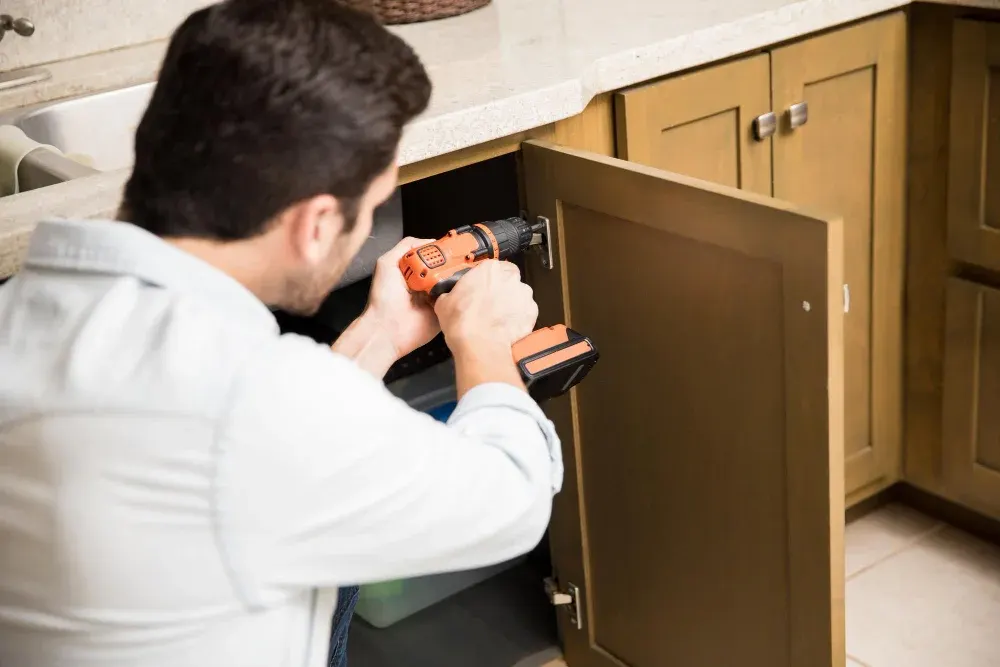
Look at your current cabinets for clues, too. Finish worn through at the edge of one drawer, a door that has dropped out of line, a toe kick with the veneer peeling off or a shelf bowed under canned goods all point to where the next set needs to be stronger. In many Houston-area homes built in the 1990s and 2000s, the original builder-grade cabinets show the same pattern: the sink base fails first, then the drawer bank by the range, then the pantry shelves.
It also helps to think about who uses each spot. A drawer that small kids open will be yanked to full extension and slammed shut. A cabinet that a teenager raids after practice will be opened with one hand while holding a bag in the other. Designing around those habits, rather than around ideal use, is what makes a cabinet last.
Materials for Cabinets in High-Traffic Areas
The construction under the finish matters as much as the finish itself.
Cabinet boxes
Furniture-grade plywood is the right foundation for any high-use cabinet. It holds screws tightly, which keeps hinges and slides from loosening over years of use, and it resists swelling when water gets splashed or a sink line leaks. Particleboard, common in builder-grade cabinets, loses screw-holding strength as hinges are repeatedly loaded, which is why doors on cheaper cabinets begin to sag.
Doors, drawer fronts and face frames
Dense hardwoods resist dents and dings far better than softer species. Here is how common choices compare for busy spaces:
| Wood | Hardness | Dent resistance | Good fit for high traffic? |
|---|---|---|---|
| Hard maple | Very hard | Excellent | Yes, top choice for painted or clear finishes |
| White oak | Hard | Very good | Yes, grain hides wear well |
| Red oak | Hard | Very good | Yes, strong grain hides scuffs |
| Hickory | Very hard | Excellent | Yes, rustic look |
| Cherry | Medium | Fair | Better for low-traffic or accent pieces |
| Walnut | Medium | Fair | Better for furniture-style built-ins |
| Alder | Soft | Poor | Avoid in busy zones |
Open-grain woods like oak hide small scratches better than smooth maple because the texture breaks up the light. That is worth considering if appearance after years of wear matters as much as day-one looks. For more detail, see our guide on how to choose wood for custom cabinets.
Drawer boxes
Drawers in busy zones should be solid hardwood or high-quality plywood with dovetail or dowel joinery. Stapled particleboard drawer boxes fail at the corners under heavy loads. A drawer full of pots or canned goods can carry a lot of weight every day.
Finishes That Resist Wear and Moisture
Houston humidity makes finish choice more important. Moisture cycles cause finishes to soften, swell and crack at joints over time.
A catalyzed lacquer or conversion varnish is much harder and more chemical resistant than standard lacquer or brush-on paint. It tolerates frequent cleaning, hand oils and splashes without breaking down. For high-traffic cabinets, it is the best finish category to ask about.
Some additional finish strategies:
- Stained or two-tone lowers. Darker or mid-tone lower cabinets hide scuffs, while lighter uppers keep the room bright.
- Eased edges. Slightly rounded edges on doors and drawer fronts chip less than sharp, square edges.
- Textured or wire-brushed finishes. These show fewer fingerprints and scratches than smooth high-gloss surfaces.
- Avoid high-gloss in busy zones. Gloss shows every fingerprint and scratch.
- Touch-up kit. Ask for a small amount of matching finish for future touch-ups.
If you are weighing finishes, our post on cabinet finishes for Pasadena humidity goes deeper on moisture performance.
Hardware: Where Upgrades Pay Off
Hinges and slides are the moving parts of a cabinet, and in high-use zones they wear out first.
Drawer slides
Full-extension undermount slides with soft-close are the standard for quality cabinets. For heavy-use drawers, choose slides rated for 75 to 100 pounds or more. Pot drawers and pantry pull-outs especially benefit from heavier ratings. Side-mounted economy slides wobble and wear faster.
Hinges
Concealed hinges with integrated soft-close stop doors from slamming, which protects both the hinge and the face frame. Look for hinges with three-way adjustment so doors can be realigned over the years without replacing anything.
Pulls and knobs
Solid metal pulls fastened with machine screws through the door hold up better than hollow or decorative hardware. Bar pulls spread the load over two screws instead of one, so they loosen less than knobs on heavily used drawers. Our cabinet hardware guide covers sizes and placement in detail.
Layout Choices That Prevent Damage
The best way to protect a cabinet is to keep people from running into it.
Give walkways enough room
A common planning guideline is about 42 inches between counters in a one-cook kitchen and closer to 48 inches where two people work or a main path runs through. Tight aisles mean open doors get hit, dishwasher doors block traffic and hips bump island corners.
Put drawers where doors would collide
In tight spots, drawers are better than doors. They do not swing into walkways and are easier to reach without bending down to see what is in the back.
Protect island corners and ends
Island ends take the most bumps. Consider decorative end panels that can be refinished or replaced, slightly rounded countertop corners and avoiding sharp countertop overhangs near main traffic paths.
Separate the zones
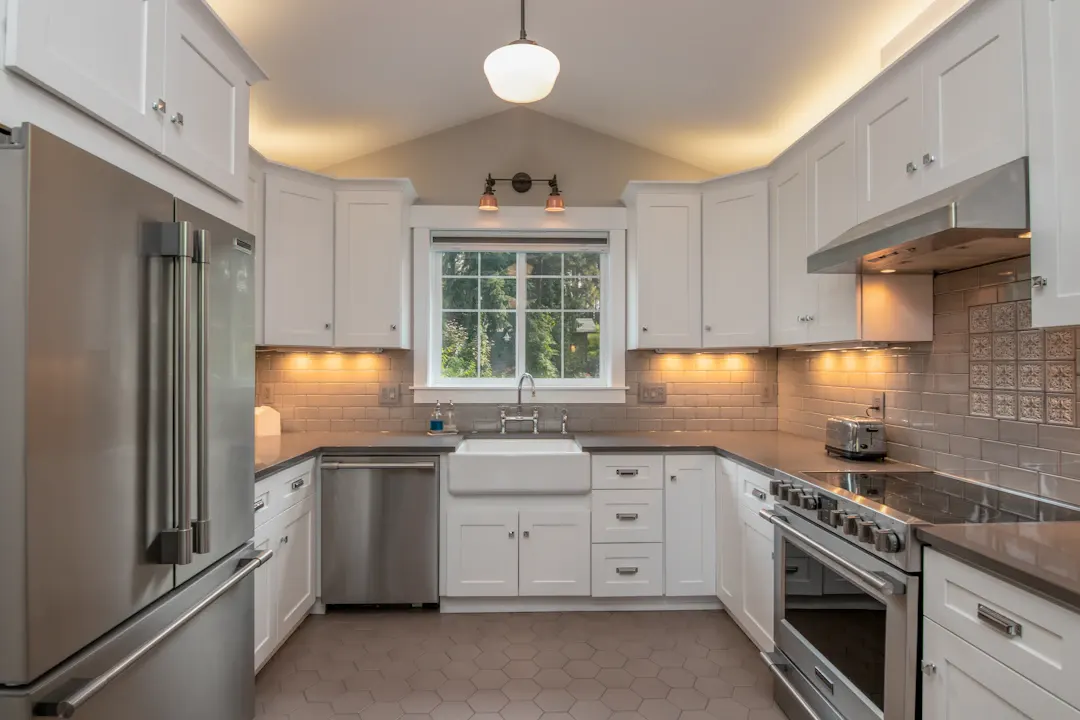
Kids grabbing snacks should not have to cross the cooking zone. A snack drawer or beverage center on the outside of the work triangle keeps traffic away from the stove. Our custom kitchen cabinets are planned with that kind of zoning in mind from the first sketch.
Mudrooms, Laundry Rooms and Entries
The back entry is often the hardest-working space in a Houston home. Kids drop backpacks, dogs come in from the yard and everyone kicks off shoes in the same few square feet.
For custom mudroom builds, consider:
- Benches with solid hardwood or laminate tops that stand up to wet bags and sports gear.
- Open lockers instead of doors for kids, since doors get left open and hit.
- Sealed or metal-capped toe kicks that can handle mop water and muddy shoes.
- Hooks rated for heavy loads, screwed into solid blocking rather than drywall anchors.
- Washable bins in cubbies so the cabinet itself is not getting scraped.
Homes across Harris County with slab foundations have the advantage of solid floors for heavy built-ins, but they also tend to have entries opening directly from the garage, which means extra dirt and moisture. Durable finishes and plywood boxes are worth it here.
Planning for Long-Term Maintenance
Even well-built cabinets need occasional attention in heavy-use zones. Plan for:
- Adjusting hinges once or twice a year as wood settles with seasonal humidity changes.
- Tightening pulls when they begin to loosen.
- Cleaning drawer slides of crumbs and debris.
- Wiping up water at the sink base promptly.
- Touching up chips before moisture gets under the finish.
Cabinets built with adjustable hardware, solid joinery and replaceable parts can be maintained for decades rather than replaced.
Build It to Take the Wear
The cabinets that get used the most deserve the most attention in design. Dense hardwoods, plywood boxes, a hard finish, heavy-duty hardware and a layout that keeps traffic flowing will keep those spots looking and working well long after builder-grade cabinets would have worn out.
If your kitchen, mudroom or laundry is showing its age or you are planning a new one around a busy household, we can help you design for the way you actually use it. Request a free in-home estimate or call (281) 660-3903 to set up a visit.
Frequently asked questions
What is the most durable wood for high-traffic cabinets?
Are painted cabinets a bad idea in a busy kitchen?
How much clearance should a kitchen walkway have?
Which cabinet hardware lasts longest under heavy use?
Planning a project like this?
Get a free in-home estimate from the team that builds and installs the work.