Built-In vs. Freestanding Bookshelves: Which Wins?

A wall of books changes how a room feels. The question is how to hold them. When homeowners weigh built-in vs freestanding bookshelves, they are really comparing two different approaches: furniture you can take with you, or millwork that becomes part of the house. Each has a place, and the right answer depends on your room, your plans and your budget.
This guide is for Houston-area homeowners deciding how to shelve a living room, home office, bedroom or hallway. We compare cost, storage capacity, durability, appearance and flexibility, with practical notes about humidity, slab floors and the older and newer homes common across Greater Houston.
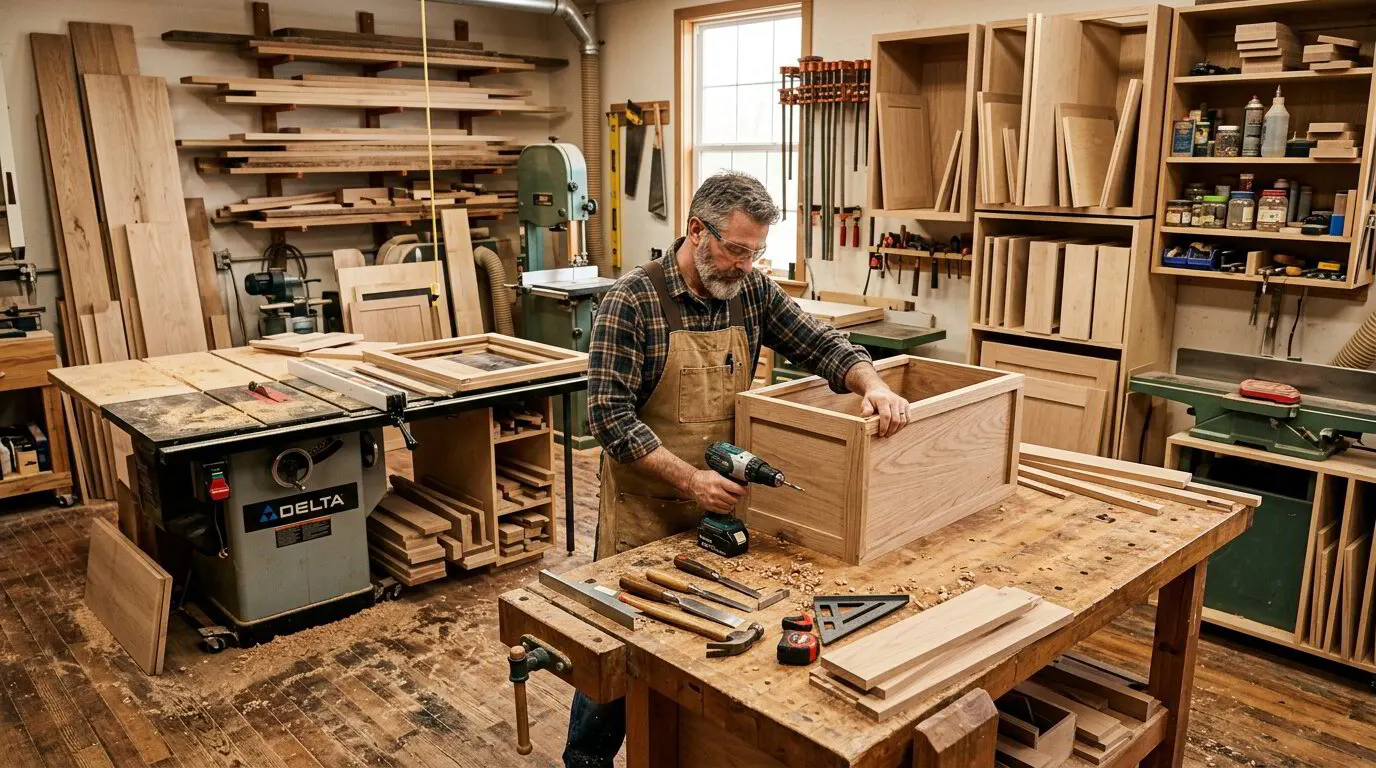
We design and build custom shelving and built-ins in our own Houston shop, but we will be honest about when a freestanding bookcase is the smarter choice. You can see examples of our custom shelving work if you want a sense of what built-ins look like in practice.
Built-In vs Freestanding Bookshelves: The Quick Answer
If you plan to stay in the home for years, want to use an entire wall, or have an awkward space around windows, a fireplace or a sloped ceiling, built-ins usually win. If you rent, move often, need only a few feet of storage, or like to rearrange furniture, freestanding shelves are usually the better fit.
Most of the decision comes down to permanence and fit. Built-ins use every inch of wall space and look like part of the architecture. Freestanding units are portable, cheaper upfront, and easier to change.
Here is how the two compare across the factors homeowners ask about most.
| Factor | Built-in bookshelves | Freestanding bookshelves |
|---|---|---|
| Upfront cost | Higher | Lower |
| Use of wall space | Floor to ceiling, wall to wall | Gaps at top, sides and baseboards |
| Stability | Anchored and scribed to walls | Must be anchored to prevent tipping |
| Shelf strength | Solid wood or plywood, sized for books | Varies widely; many sag over time |
| Fit to odd spaces | Built to the exact opening | Standard widths only |
| Portability | Stays with the house | Moves with you |
| Look | Matches trim and architecture | Reads as furniture |
| Humidity resistance | Depends on materials; plywood and hardwood perform well | Often particleboard, which swells |
Where Built-Ins Clearly Win
Using the whole wall
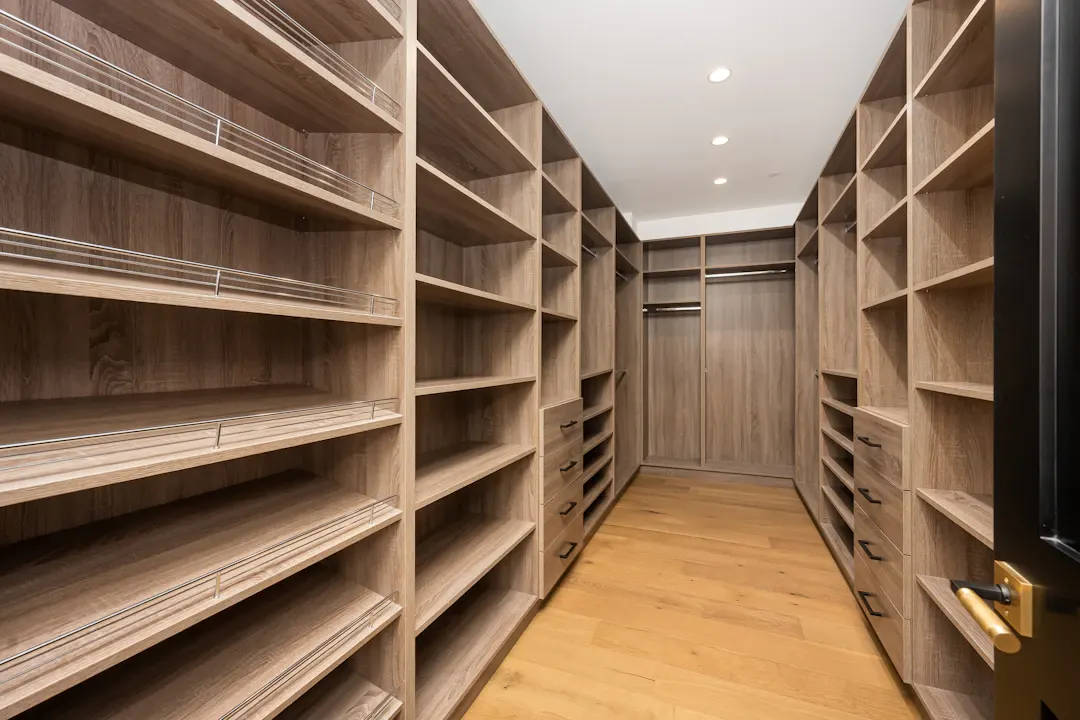
A freestanding bookcase leaves dead space: a few inches between units, a gap above the top shelf, and an awkward space where baseboard meets the back of the case. Built-ins run to the ceiling and wall to wall, often capturing 20 to 30 percent more usable storage on the same wall.
Working around architecture
Houston homes are full of walls that resist standard furniture. Older ranch homes have low windows and wide openings. Newer two-story homes in Katy, Cypress and The Woodlands often have tall ceilings, niches beside fireplaces, and walls interrupted by vents and outlets. A built-in can wrap around a window to create a reading seat, frame a fireplace, or fill a niche exactly.
Strength and durability
Built-in shelves are typically made from furniture-grade plywood or solid hardwood, with a hardwood face edge that stiffens each shelf. Spans are designed for the weight of books, usually 30 to 36 inches between supports. That makes sagging rare.
A finished, architectural look
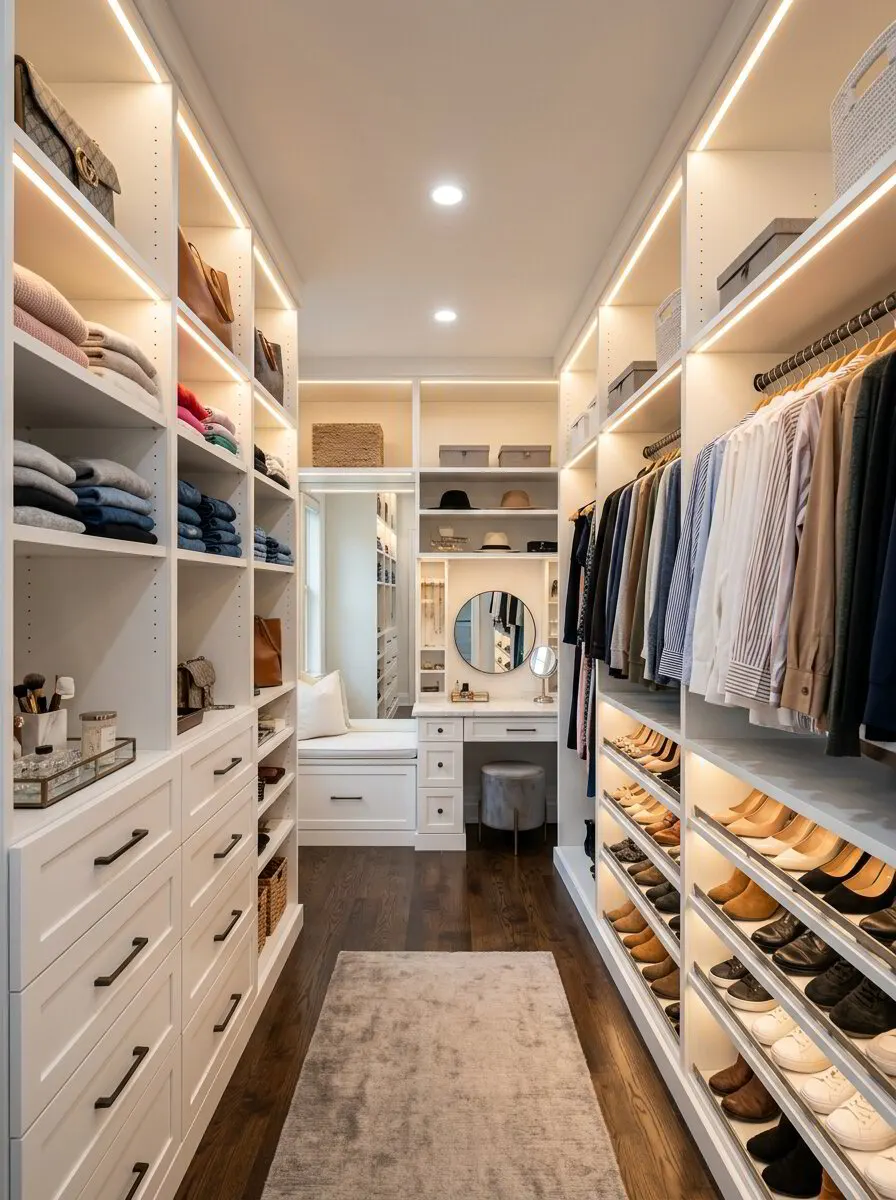
Built-ins can match your existing trim, crown and paint colors, so they look like they were always part of the house. Adding lower cabinets with doors gives closed storage for items that do not look good on open shelves.
Rooms that do double duty
Built-ins shine in rooms that have to do more than one job. A guest room can get a wall of shelves with a fold-down desk. A child's bedroom can get a window seat with cubbies below and books above, which our kids' room storage designs often include. A hallway that is just wide enough can take shallow 8 to 10 inch shelves that would be too narrow for most furniture. In each case the built-in solves a space problem, not just a storage one.
Resale and long-term value
Buyers tend to notice well-made built-ins, particularly in living rooms and offices. That said, taste varies, and a built-in that is highly personalized may not appeal to everyone. Neutral finishes, adjustable shelves and a design that matches the home's existing trim keep built-ins appealing to future owners. Build them first for how you live, and treat any resale benefit as a bonus.
Where Freestanding Shelves Make More Sense
Built-ins are not always the right call.
- Renters cannot usually build in, and the investment would stay behind.
- Short-term owners planning to sell in a year or two may not recover the cost.
- Small needs like a few feet of shelving in a child's room can be met cheaply.
- Flexible rooms that change use often benefit from movable furniture.
- Antique or heirloom pieces may carry meaning a built-in cannot replace.
If you go freestanding, look for solid wood or plywood construction, shelves no wider than about 30 inches, and a full back panel for rigidity. Always anchor tall bookcases to wall studs to prevent tipping, especially in homes with children.
Cost Comparison and Planning Ranges
Freestanding bookcases range from inexpensive flat-pack units to solid wood furniture costing as much as a modest built-in. Built-ins are priced by linear foot, height, depth, materials and features.
As general planning ranges for Greater Houston:
- Flat-pack freestanding bookcases: often under a few hundred dollars per unit
- Solid wood freestanding bookcases: often several hundred to a couple thousand dollars per unit
- Painted built-in bookshelves: often several hundred to over a thousand dollars per linear foot, depending on height, depth and lower cabinets
- Stain-grade hardwood built-ins with lighting: typically higher
These are planning figures only, and they vary with design, finish and site conditions. Get a written estimate based on your actual wall.
Keep in mind that a built-in often replaces several freestanding pieces, may add closed storage and lighting, and does not need to be replaced when the cheaper units wear out.
Houston-Specific Considerations
Humidity and materials
Houston humidity is hard on particleboard. Many inexpensive bookcases are particleboard with a thin laminate or paper finish. Once humidity gets into exposed edges, shelves soften and sag. Built-ins made from plywood and hardwood, finished on all exposed surfaces, hold up much better.
Slab floors and uneven walls
Most Houston homes sit on concrete slabs, and many have shifted slightly over time. A freestanding bookcase on an uneven floor may lean or rock, pulling away from the wall at the top. Built-ins are leveled on a base and scribed to the walls, so they sit tight even when the house is not perfectly square.
Air conditioning and ventilation
Avoid blocking supply vents or return air grilles with any shelving. A good built-in design routes around HVAC openings or incorporates grilles into the base, which a standard bookcase cannot do.
Design Tips for Either Choice
Whether you go built-in or freestanding, a few principles make shelving more useful.
- Size shelves to what you own. Measure your tallest books and plan some shelves at 12 to 14 inches high and others at 10 inches.
- Use adjustable shelves. Shelf pins let you adapt as your collection changes.
- Add closed storage below. Doors on the lower 30 to 36 inches hide clutter and give kids' items or files a home.
- Plan lighting early. Integrated LED strips or puck lights must be wired before installation. Our lighting accent features can be built into shelving.
- Think about depth. Standard shelves at 12 inches hold most books. Going deeper wastes space and lets things get lost behind.
- Leave breathing room. Not every shelf needs to be full. Some open space with a few objects makes the wall feel calm.
For room-level planning ideas, see how custom built-ins can transform a living room and our guide to personalized home office built-ins.
Hybrid Options
There is a middle ground. Some homeowners install freestanding bookcases, then add trim, a base and crown to make them look built in. This can work, but it needs careful execution: the units must be level, anchored and joined so the trim does not crack as the cases move. Particleboard units are poor candidates because the trim cannot hold onto them well and the shelves will still sag.
Another option is a partial built-in: built-in lower cabinets with a countertop, plus open shelves above. This approach gives you the closed storage and permanence of a built-in at a lower total cost than full-height custom millwork.
Questions to ask before deciding
Before you commit either way, answer a few questions honestly:
- How long do you expect to live in this home?
- How many linear feet of books and objects do you actually need to store?
- Does the wall have windows, vents, outlets or a fireplace to work around?
- Do you want closed storage, lighting, or a desk built in?
- Is the floor level enough for tall furniture to stand without leaning?
If most of your answers point to long-term use and an irregular wall, built-ins are probably the better investment.
Make the Right Choice for Your Space
Built-in bookshelves win when you want permanence, full use of a wall, and a look that matches the house. Freestanding shelves win when you value flexibility, portability and a lower upfront cost. Either way, solid materials and smart sizing make the difference between shelves that sag and shelves that last.
If you are leaning toward built-ins, our custom cabinetry and built-ins are designed, built and installed by one team out of our Houston shop. Request a free in-home estimate or call (281) 660-3903, and we will measure your wall and give you a written estimate you can compare with any other option.
Frequently asked questions
Are built-in bookshelves worth the cost?
Do built-in bookshelves add value to a house?
How deep should bookshelves be?
Why do freestanding bookshelves sag?
Planning a project like this?
Get a free in-home estimate from the team that builds and installs the work.