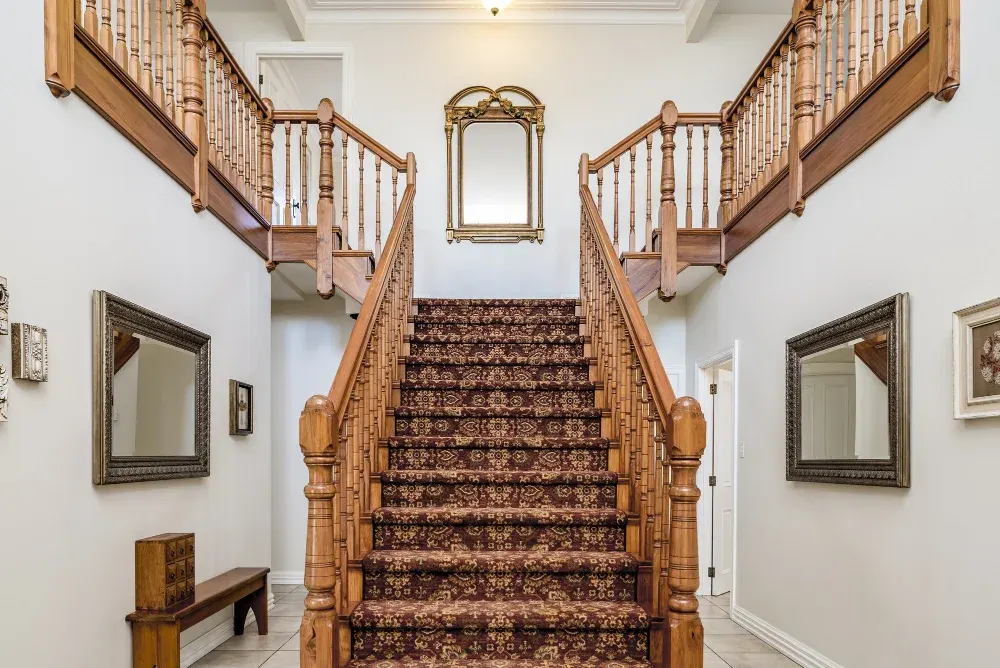
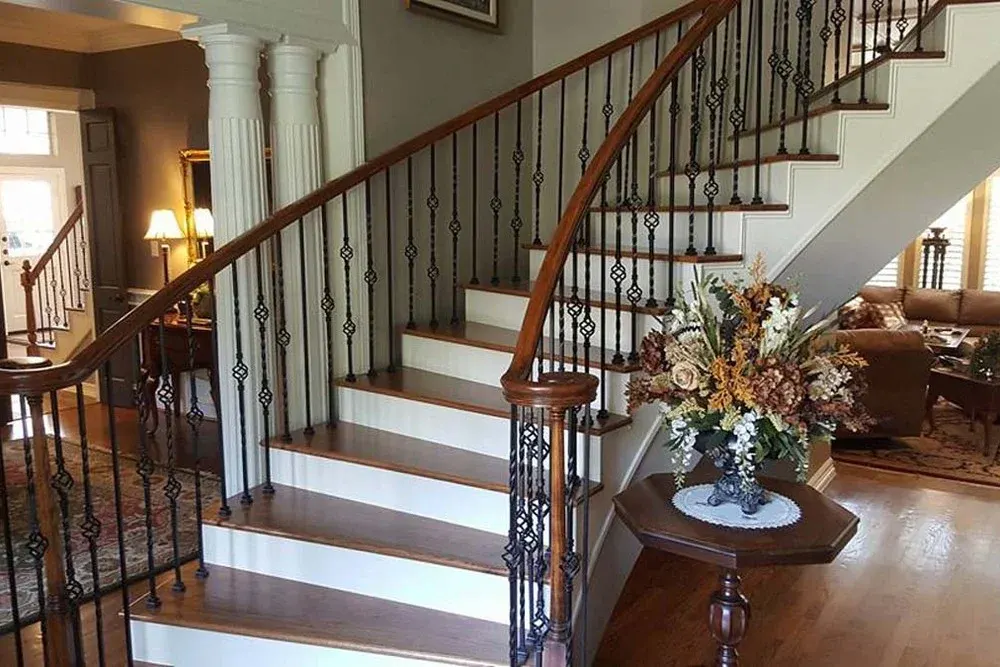
Wood vs Metal Stair Railings for Houston Homes
Wood vs metal stair railings for Houston homes: looks, humidity durability, safety, maintenance and cost ranges compared. Get a free in-home estimate.

Fort Bend County · Trim, Doors & Stairs
From straight runs to curved staircases, we build and install stairs across Fort Bend County. Richmond homeowners get one licensed team from measure to final coat.
Richmond is the Fort Bend County seat, set on the Brazos River southwest of Sugar Land. Its historic downtown holds county government buildings and older homes, while newer subdivisions and master-planned communities spread out around it. It borders Rosenberg to the west, and US 59 and US 90A connect it to Houston.
Richmond has historic homes near downtown, mid-century houses and many newer subdivisions. Older homes can have pier-and-beam floors and plaster walls, calling for careful leveling and trim matching, while newer homes want builder-grade upgrades, scullery pantries and mudroom drop zones. Rural properties nearby often need garage and shop storage.
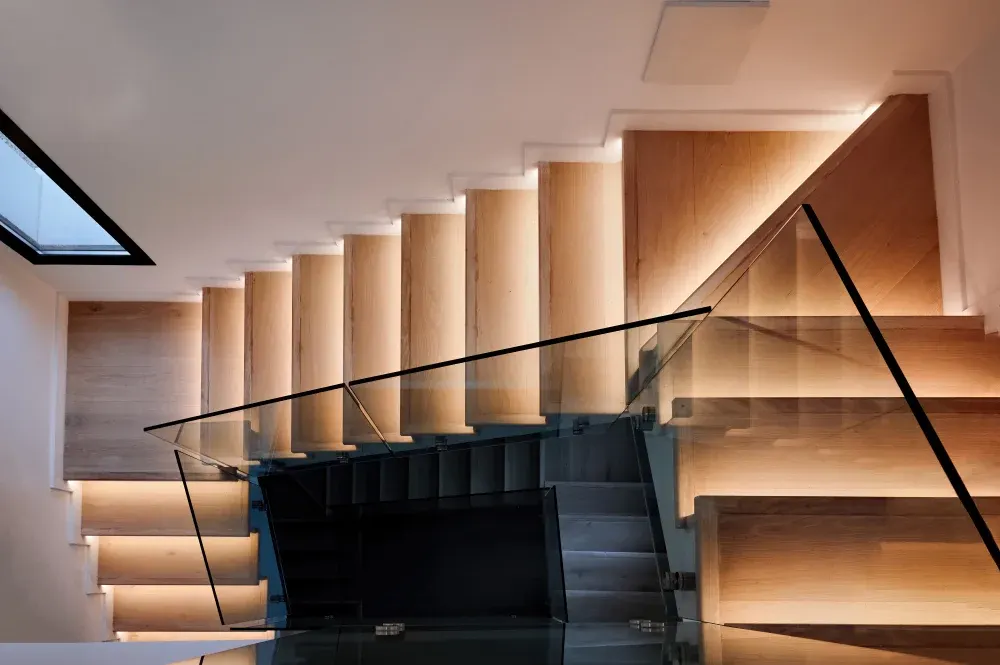
In smaller Richmond homes and townhomes, stairs are often steep, narrow or include winders to save space. We work within those constraints, building custom winder treads and improving riser consistency where possible. Under-stair storage or lighting can also make the most of the space, turning a tight staircase into a feature instead of a problem. Good lighting helps steep stairs feel safer.
Every project starts with an in-home measurement in Richmond. We build in our Houston shop and the same crew handles installation, so the person you talk to at the estimate is accountable for the result. Learn more about our full custom stair installations service.
Curved stairs, winders, bullnose starting steps and odd-sized treads are built in our shop. When stock parts do not fit, we make them, rather than forcing a standard piece into a non-standard stair.
Stairs carry real safety risk, and we treat them that way. Ace Kustoms is licensed and insured, and our own crew handles stair work from start to finish without subcontracted installers.
We install solid hardwood treads, typically 1 inch or thicker, in red oak, white oak, hickory, maple or walnut. Solid treads take sanding and refinishing over the decades, unlike veneered caps or laminate overlays that wear through.
We measure every rise and run, correct uneven first and last steps caused by flooring changes, and keep riser heights consistent within code tolerances. Consistent steps are what keep people from tripping, especially in the dark.
Many Houston two-story homes have stairs built over a slab with a first riser that sits directly on concrete, and flooring changes on that slab often throw off the first step height. We measure and correct this so the first riser matches the rest. Humidity causes wood to move, so we acclimate hardwood treads in the home before installation and leave room for seasonal expansion at the skirt. Builder-grade stairs in the area are often built with stringers and pine or particleboard treads intended for carpet, which need inspection before hardwood goes on. Stairwell walls in two-story homes can be tall, so we plan scaffolding or ladders safely around them.
Fort Bend sits on flat, low ground along the Brazos River and its creeks, and humidity stays high most of the year. We use plywood boxes and stable door construction to handle seasonal swelling. For homes in areas that have seen high water, we can discuss raised toe kicks, moisture-resistant bases in laundry rooms and garages, and finishes that tolerate wipe-downs. Good ventilation in bathrooms protects vanity finishes over time.
As a general planning range, a straight carpet-to-hardwood stair conversion in Greater Houston often runs about $150 to $350 per step for treads, risers and finishing, so a typical 14-step stair may land roughly between $2,500 and $5,500 before railing work. Curved stairs and custom parts cost more. Get a written estimate after an in-home measure.
Wood vs metal stair railings for Houston homes: looks, humidity durability, safety, maintenance and cost ranges compared. Get a free in-home estimate.
Choosing a stair railing starts with grip, height and safety, then style. Learn what makes a handrail comfortable in Houston homes. Get a free estimate.
Trim installation cost in Hitchcock and La Marque, TX: planning ranges for baseboard, crown, casing and wainscoting. Request a free in-home estimate.
Free, no-pressure estimate
Tell us about your kitchen, bath or built-in project. We usually reply within one business day.
Office hours: Mon–Fri 8:00 AM – 5:00 PM