Open Shelving vs Closed Cabinets: Choose by Contents
The open shelving vs closed cabinets question usually gets argued as a matter of style: open is airy and modern, closed is clean and traditional. That framing misses the point. The better question is what you plan to store, how often you use it, and how much time you want to spend keeping it tidy. Answer that and the choice mostly makes itself.
This guide is for Houston-area homeowners planning a kitchen, bathroom, living room, office or any built-in where both options are on the table. We sort common contents into categories, look at how dust, grease and humidity affect each choice in a Gulf Coast home, and lay out hybrid approaches that give you the look of open storage without the upkeep.
If you already know you want built-in storage, our custom shelving page shows what we build in our Houston shop.
Open Shelving vs Closed Cabinets: Why Contents Decide
Open shelves and closed cabinets each have strengths, and those strengths depend on what goes on them.
- Open shelving is fast to use, shows off attractive items, and makes small rooms feel larger. It also exposes everything to dust and requires constant editing to look good.
- Closed cabinets hide clutter, protect contents from dust, grease and sunlight, and hold mismatched items without visual noise. They take a moment longer to open and can make a room feel heavier if overused.
The mistake is choosing based on a photo. A styled photo of open shelving has twelve matching bowls and a plant. Real life has a stack of plastic containers, a pill bottle and a stray phone charger.
Sort Your Contents Into Four Groups
Before deciding, list what you plan to store in the space and sort it.
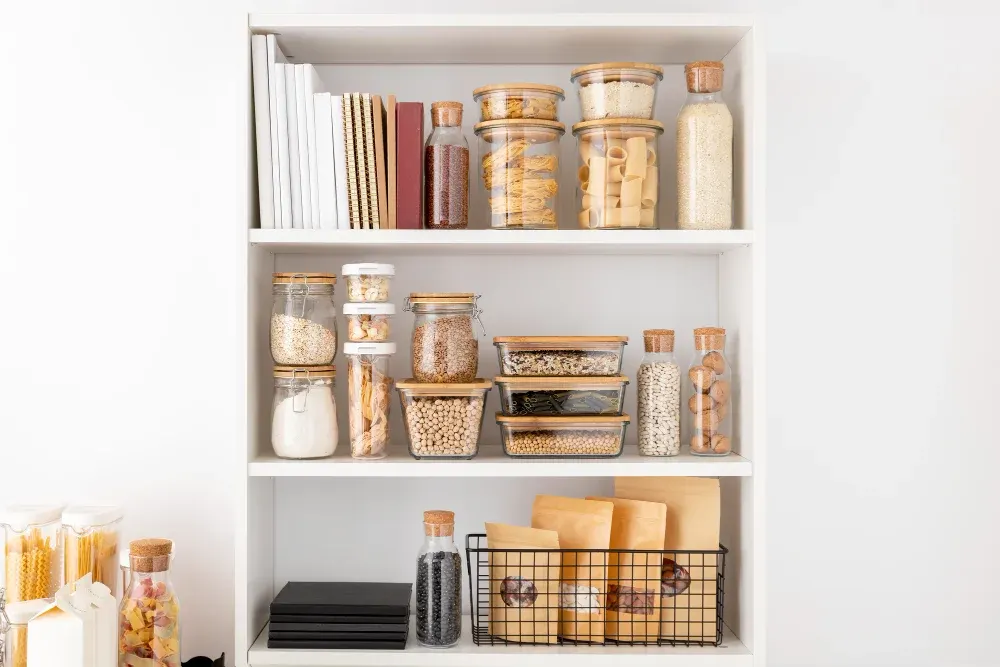
- Daily-use and attractive. Everyday plates, glasses, mugs, a coffee setup, favorite books. Good candidates for open shelves because they cycle through often and look fine on display.
- Daily-use but messy. Plastic containers, food in packaging, medications, chargers, cleaning supplies. Belongs behind doors or in drawers.
- Occasional and attractive. Serving pieces, collections, heirloom dishes, art objects. Good for glass-front cabinets, which display them while keeping dust off.
- Occasional and messy. Seasonal items, spare supplies, small appliances, paperwork. Closed cabinets, often higher or deeper in the room.
| Content type | Use frequency | Looks good grouped? | Best storage |
|---|---|---|---|
| Everyday dishes and glasses | Daily | Usually | Open shelf or glass-front |
| Food storage containers | Daily | No | Drawer or closed cabinet |
| Cookbooks and books | Weekly | Yes | Open shelf |
| Serving pieces and platters | Occasional | Yes | Glass-front or closed |
| Small appliances | Varies | No | Closed cabinet or appliance garage |
| Cleaning supplies | Weekly | No | Closed cabinet |
| Collections and art | Rarely moved | Yes | Glass-front or lit open shelf |
| Paperwork and electronics | Daily | No | Closed cabinet or drawer |
Room-by-Room Guidance
The same rules apply everywhere, but each room has its own conditions.
Kitchens
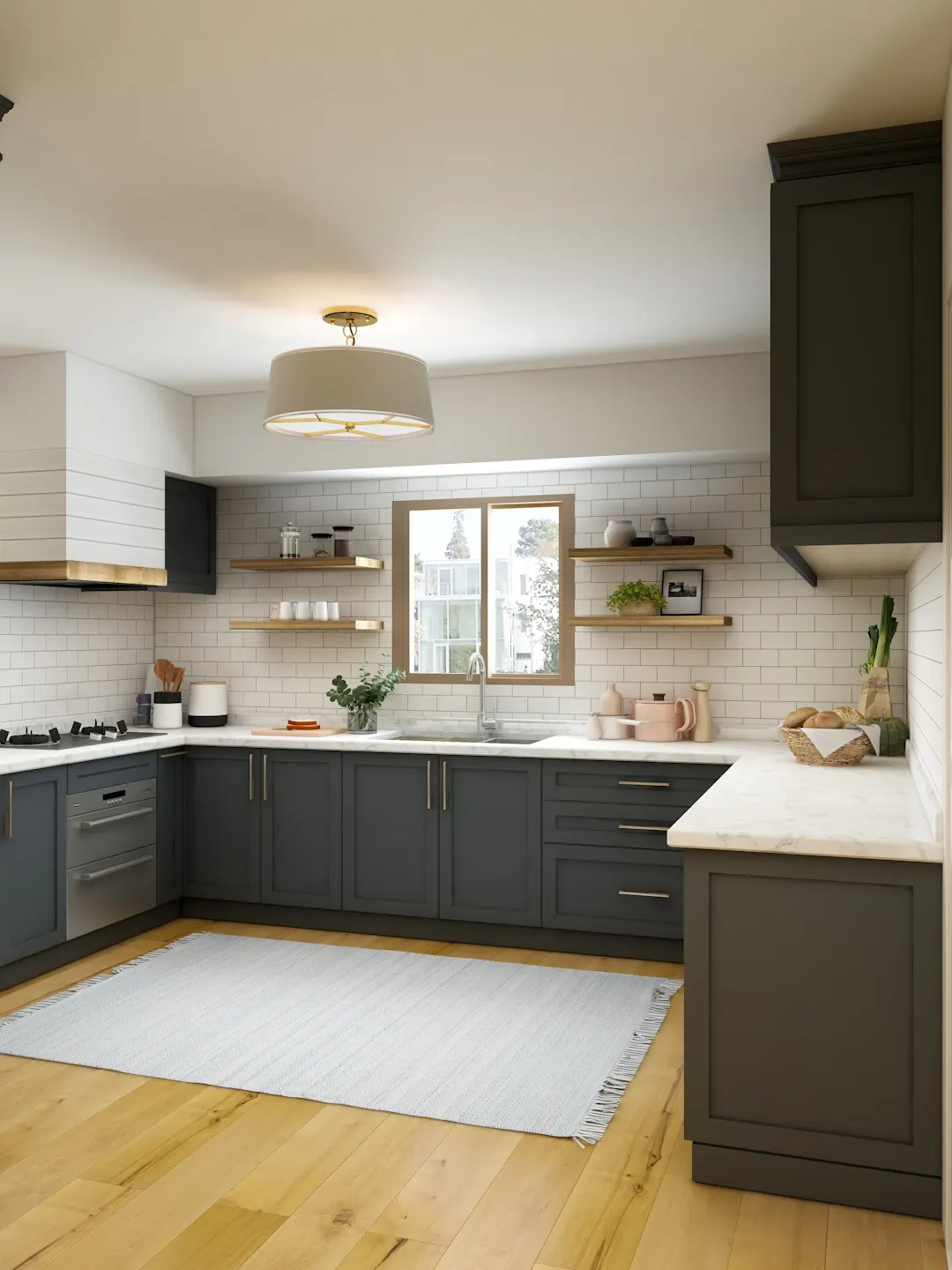
Kitchens are where the open shelving vs closed cabinets debate matters most, because they combine high use, grease and heat. A few open shelves near the sink or coffee station for everyday dishes can work well. Open shelves near the range collect a sticky film quickly. For a deeper dive specific to cooking spaces, read our post on open shelving vs upper cabinets in a working kitchen. Our custom kitchen cabinets can combine both.
Bathrooms
Bathroom humidity and spray from sinks make open shelving a challenge. Towels and a few baskets look good on open shelves, but toiletries, medications and cleaning supplies belong behind doors. Open shelves in bathrooms should be sealed well and placed away from the shower.
Living rooms and family rooms
Living rooms are the best place for open shelving. Books, art and a few objects suit open built-ins, while closed lower cabinets hide games, remote controls, media equipment and kids' things. A common built-in layout uses open shelves above and closed cabinets below. Our guide on built-in vs freestanding bookshelves covers more on this.
Home offices
Offices tend to accumulate paper, cables and supplies, which look messy on open shelves. Use open shelving for reference books and a few personal items, and closed storage for files, printers and supplies.
Laundry rooms and garages
These rooms are about function. Open shelving is fine for detergent bottles and baskets you reach for daily, but closed cabinets keep dust and lint off folded items and hide supplies. In garages, closed cabinets also keep chemicals out of children's reach.
Houston Conditions: Dust, Grease, Humidity and Sun
Local conditions affect both choices.
- Dust: Houston homes run the air conditioning much of the year, which moves a lot of air and dust. Open shelves need dusting more often than many people expect.
- Grease: In kitchens, cooking grease travels and settles on nearby surfaces. Open shelves within a few feet of the range need frequent wiping.
- Humidity: Solid wood shelves move with humidity changes. Well-built shelves from solid hardwood or edged plywood, properly finished on all sides, stay flat. Long, thin shelves without support can sag or cup.
- Sun: Open shelves near west-facing windows expose books, art and wood finishes to strong afternoon sun, which fades spines and changes wood color.
In coastal homes in Galveston or Brazoria County, salt air adds another factor, as metal brackets and hardware on open shelving can corrode faster than enclosed hardware.
Be honest about upkeep
The real cost of open shelving is time. Everyday dishes on a shelf by the sink stay clean because they are washed and returned constantly. A row of decorative bowls or a stack of rarely used serving pieces needs dusting every week or two, and in a kitchen, a periodic wash to remove grease film. Closed cabinets need a wipe-down of the door fronts and an occasional interior cleaning, and that is about it.
If you enjoy rearranging and styling shelves, that upkeep feels like part of the fun. If you would rather not think about it, keep open shelving to a minimum and put your effort into a few well-lit glass-front cabinets instead.
Cost considerations
Open shelves are not always cheaper. A short run of solid hardwood shelving with hidden steel brackets anchored into studs can cost about the same as a basic upper cabinet of the same width, and you lose the storage behind doors. Removing uppers to add open shelves also leaves wall areas that need new tile or paint. Price both options for the same wall before deciding, and get a written estimate.
Hybrid Options That Balance Both
You do not have to choose one or the other for an entire room. Some of the best designs mix them.
Glass-front cabinets
Glass doors display contents while keeping out dust and grease. They suit dishware, glassware and collections. Adding interior lighting makes them a focal point at night. Our display cabinet built-ins page shows options, and our post on how lighting enhances custom cabinetry covers lighting design.
Open shelves above, closed below
A classic pattern for living rooms and offices. The eye-level shelves display, the lower cabinets hide clutter.
A short run of open shelving
In kitchens, one or two short open shelves at the end of a run, near the sink or coffee bar, give the open look without the upkeep of a whole wall.
Open end shelves
A few open shelves on the end of an island or cabinet run hold cookbooks or decorative items without taking away closed storage.
Doors with open niches
A cabinet with an open niche in the middle, for a microwave, coffee maker or display, combines both in a single unit.
Building Open Shelves That Last
If you choose open shelving, construction matters more than with cabinets because shelves are fully exposed.
- Material: Solid hardwood or plywood with a solid hardwood front edge. Avoid particleboard, which sags and swells.
- Thickness: At least 1 inch for spans over about 30 inches, or add a support or a thicker front edge.
- Support: Hidden steel brackets, cleats or full-depth side supports. For heavy dishes, hidden brackets must anchor into wall studs.
- Finish: Finish all sides, including the bottom and back edges, to reduce cupping as humidity changes.
- Depth: 10 to 12 inches for dishes and books; deeper shelves collect clutter in the back.
A Simple Decision Checklist
When choosing for any wall, ask:
- Will the items here be used at least weekly?
- Do they look good together?
- Are they kept away from grease, steam and direct sun?
- Am I willing to dust or rearrange them regularly?
- Is there enough closed storage elsewhere for the messy items?
If the answer to most of these is yes, open shelving can work well. If not, closed cabinets or glass-front doors are the better choice.
Plan the Right Mix With a Free In-Home Estimate
The right answer to open shelving vs closed cabinets depends on what you are storing. Display the attractive, frequently used items; hide the messy and occasional ones; and use glass-front doors or a hybrid layout where you want both. Build open shelves from solid material with hidden support and a durable finish so they stay flat in Houston humidity.
Ace Kustoms designs and builds shelving, cabinets and built-ins in our Houston shop, and our own team installs them throughout Houston and the surrounding counties. Request a free in-home estimate or call (281) 660-3903 to plan the right mix for your space.
Frequently asked questions
Is open shelving harder to keep clean?
What should go on open shelves?
Are glass-front cabinets a good compromise?
How deep should open shelves be?
Planning a project like this?
Get a free in-home estimate from the team that builds and installs the work.